Roborock Saros 20 Flow review: the Saros that takes mopping seriously
The Saros 20 Flow pairs 36,000 Pa of suction with a self-cleaning roller mop that washes floors instead of just wiping them. Reviewers found it excellent on stains, pet hair and thresholds. Corners are its weak spot, its spill detection can be fooled, and it sits a little taller than its siblings.
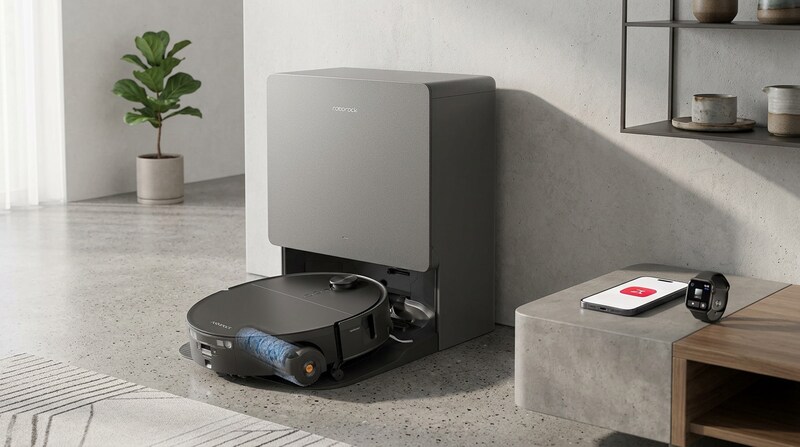
In this review
The Roborock Saros 20 Flow treats floor washing as a main job instead of an extra. Its SpiraFlow 2.0 roller mop cleans itself as it goes, and independent testers saw it lift ketchup, barbecue sauce, dried coffee and muddy paw prints with little water left behind. It also handles long hair well and climbs thresholds most robots can't. The trade-offs are weaker corner cleaning, spill detection that can't be fully trusted and a $1,699.99 price. If hard floors, kids and pets are your daily reality, it's one of the best two-in-one robots you can buy.
Roborock Saros 20 Flow at a glance
- The roller mop is the star: testers saw it lift ketchup, sauces and dried coffee while leaving floors only slightly damp.
- Vacuuming is strong in open areas, and long hair didn't tangle in testing, but expect to touch up corners.
- It misread ketchup as something to vacuum in one test, so clean up big spills yourself.
- It climbs raised thresholds well, though some owners report noisy, clumsy lifts and long run times.
- Other reviewers rated it 9/10 (House Digest) and 9.2/10 (Just A Dad Approved).
Roborock Saros 20 Flow pros and cons
- Self-cleaning roller mop that washes rather than smears
- Removed ketchup, sauces and dried coffee in independent tests
- Long hair didn’t wrap around the split main brush
- 36,000 Pa of advertised suction
- Climbs double thresholds up to 3.46 inches
- Roller lifts and gets covered on carpet, so rugs stay dry
- Dock washes with 212°F water and dries with warm air
- Two-part dirty water tank is easier to clean
- Works with Matter, Alexa, Siri and Google Home
- No extending side brush, so crumbs stay in corners
- Vacuumed up ketchup instead of recognizing it as a spill
- Side brushes may keep spinning through liquids
- At 3.54 inches, taller than the Saros 20 and Sonic
- Can be loud and clunky when it lifts over thresholds
- App has little onboarding
- Some owners report very long run times
- No detergent in the box
Who should buy the Roborock Saros 20 Flow?
- Kitchens and living areas with tile, hardwood or vinyl
- Families who deal with daily spills and sticky marks
- Pet owners, including homes with heavy shedders
- People with long hair that tangles cheaper robots
- Homes with raised thresholds between rooms
- Anyone who wants a hygienic mop setup
- Homes with lots of deep carpet
- Very low furniture with under 3.6 inches of clearance
- Rooms with many tight corners
- Anyone who expects the robot to spot every spill
- Buyers on a tight budget
What the Roborock Saros 20 Flow is
The Saros 20 Flow is the mopping-focused member of Roborock's 2026 Saros 20 family.
The base Saros 20 uses two spinning mop pads, and the Saros 20 Sonic uses a vibrating pad. The Flow swaps both for a roller mop, the approach that has become the hottest trend in robot mopping.
That's what I find most interesting about it.
Most robot mops treat washing as a secondary job, a damp pad dragged behind a vacuum. The Flow puts floor washing at the center of the design.
Roborock calls the system SpiraFlow 2.0. It's a roller about 10.6 inches wide that spins at 240 rpm and presses down with roughly 3.4 pounds of force.
Sixteen water jets keep it wet, and the robot scrapes dirty water off the roller as it goes, so the floor gets clean water rather than recycled grime.
The rest of the spec sheet is flagship material. Roborock quotes 36,000 Pa of suction, the same as the base Saros 20, which puts it among the most powerful robot vacuums of 2026.
Navigation uses a retractable lidar sensor, plus AI obstacle recognition for more than 300 object types. A lifting chassis lets it climb double thresholds up to 3.46 inches tall.
Roborock launched the Flow in the US on September 14, 2026, after showing it at the IFA trade show in Berlin.
Roborock's tech names, decoded
Saros 20 Flow design and dock
The robot is a dark, round disc with a retractable lidar sensor on top. When it needs to slip under furniture, the sensor drops down and a rear-facing view takes over navigation.
Even so, the Flow is 3.54 inches tall, about four-tenths of an inch taller than the base Saros 20 and the Sonic. The roller module is the reason.
That small difference matters if you have a sofa or bed with tight clearance.
Tip: Slide a tape measure under your lowest sofa, bed and TV console before you order. You want at least 3.6 inches of clearance for the Flow. If you're short, the 3.13-inch Saros 20 is the safer pick.
The dock, which Roborock calls the RockDock, is a tall, dark gray tower that needs a permanent spot near an outlet.
It empties the dust bin into a bag, dispenses detergent from a cartridge, monitors the dirty water and fast-charges the robot. It also refills the robot with warm water during a run.
Just A Dad Approved liked the redesigned dirty water tank, which separates into two halves so you can actually reach inside to clean it.
The dust bag sits below the water tanks, which makes it easier to swap when the dock is tucked under a counter or shelf.
The wash tray lifts out and wipes clean easily. It has no suction of its own, though, so some debris collects there between cleanings.
EFTM found setup easier than on older Roborocks. One thing to budget for: no detergent comes in the box.
The Flow dock needs a permanent spot near an outlet, so plan the location first.
Saros 20 Flow mopping performance
Mopping is the reason to buy the Saros 20 Flow, and the published tests back that up.
Stains and spills
House Digest tested it for five days on hardwood, luxury vinyl plank, tile and carpet in a home with a toddler, a cat and a dog.
Regular runs left floors noticeably cleaner, with very little moisture behind. In a deliberately messy kitchen test, ketchup and Japanese barbecue sauce came up cleanly from vinyl plank.
An old smear of sour cream was greatly reduced on the first pass and gone after a later run.
EFTM found jam and ketchup cleared quickly on the highest mop setting, while a thick, salty spread needed a couple of passes. German site Netzwelt reported that dried coffee and ketchup were removed completely.
Just A Dad Approved gave mopping a 9.4 out of 10, its highest sub-score. In side-by-side home use, the reviewer found the Flow cleaned better than the Roborock Qrevo Curv 2 Flow while using less water.
That's a strong showing for the kind of messes that build up in a real kitchen.
In Just A Dad Approved's advertised-versus-reality test, the Flow didn't recognize a ketchup spill as a wet or solid stain. It vacuumed it up, which made more work, not less. Owners on Reddit also pointed out that the side brushes don't lift or stop spinning when they hit liquid, so they can spread a spill. The Flow mops sticky residue very well once it's in mopping mode. It just can't be trusted to spot every spill first.
Tip: Wipe up big wet spills like juice, sauce or pet accidents with a paper towel, then let the Flow mop the sticky film that's left. That plays to its strengths and keeps the brushes and bin clean.
How the roller cleans itself
The self-cleaning process is different from most robots. Instead of only scrubbing the mop in a dock tray, the dock pipes hot water into the robot's own system.
The roller is washed on board, a scraper strips off the dirt, and the dirty water goes into a separate tank. Back at the dock, warm air up to 145°F dries the roller.
One caveat: the 212°F figure describes the dock's wash water. It doesn't mean the roller stays that hot the whole time it's mopping.
Edges and moisture
The roller slides out up to about 1.7 inches toward walls and furniture.
Netzwelt measured it reaching to within about a quarter inch of the edge, with only slight residue left in corners.
House Digest noted that wood floors were left with little moisture, which matters if you're cautious about water on hardwood.
When the Flow drives onto a rug, it lifts the roller and covers it so it doesn't drag water across the pile. That's a big plus in homes that mix hard floors and rugs.
Hygiene
This is where the roller design pays off. Spinning pads tend to spread dirty water around, while the Flow scrapes the roller clean during the run.
Combined with the hot-water wash in the dock, it's one of the more hygienic setups available.
Roller or pads still depends on your floors. For tile with deep grout lines, a pad that presses into the grout can sometimes do better. For large areas of smooth hard floor, the roller is the stronger choice.
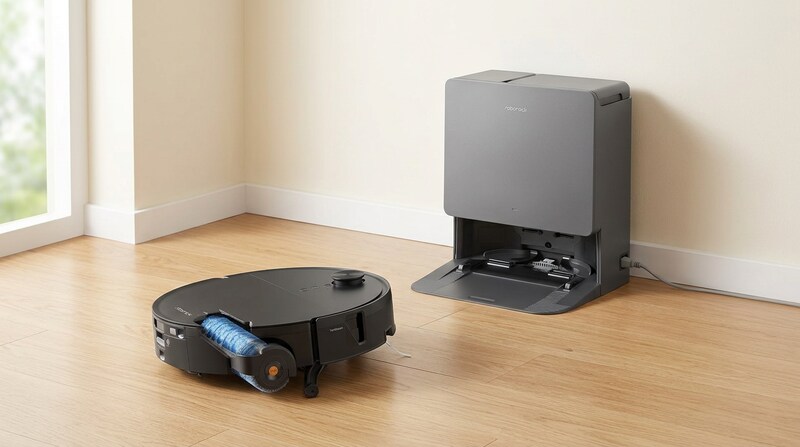
The roller mop is built for regular washing of large areas of hard floor.
Saros 20 Flow vacuuming and pet hair
With 36,000 Pa of advertised suction, the Flow has plenty of power on paper. In open areas, it delivers.
In House Digest's home, it handled crumbs, glitter, pet fur, muddy paw prints and everyday debris across hardwood, vinyl plank, tile and carpet. The reviewer estimated it got floors about 90 percent of the way to fully clean.
EFTM found that two passes at max suction picked up all the crumbs in the open on carpet. Just A Dad Approved had no trouble with everyday debris on hard floors and liked its mapping and cleaning patterns.
The bin can fill fast. House Digest saw it head back to auto-empty mid-run, but it always returned and finished the job.
Pet hair and long hair
Hair is where the Flow really earns its keep. Its split DuoDivide main brush is designed so hair slides off instead of wrapping around the roller.
Just A Dad Approved tested long hair directly, and it was picked up without tangling. Only a few strands stayed embedded in carpet. The reviewer scored the hair-tangle test 9.2 and carpet cleaning 9.0 out of 10.
In House Digest's home with a cat and a dog, the robot didn't leave clumps of fur behind or push kitchen messes around the floor.
That said, it isn't a full replacement for deep carpet cleaning. Netzwelt rated its deep carpet cleaning as weak, and some hair stayed in the pile in other tests.
Pet owner tip: During shedding season, schedule a quick vacuum-only run every day and a full vacuum-and-mop run every two or three days. Daily passes keep fur from working its way deep into rugs, where the Flow is weakest.
Noise
It's quieter than a typical upright vacuum, but it isn't silent. Carpet Boost raises the suction and the noise along with it.
No outlet published decibel measurements. In practice, it's best scheduled while you're out rather than during a movie or a phone call.
Edge and corner cleaning: the main compromise
The Flow's most consistent cleaning weakness is that it has no extending side brush.
Many premium robots, including the base Saros 20 with its FlexiArm brush, swing a side brush outward to reach deep into corners. The Flow uses two conventional side brushes instead, and the longer one reverses direction in corners to flick debris inward.
It works reasonably well, but not perfectly. Just A Dad Approved found crumbs left in corners in controlled testing, House Digest still needed to sweep along walls, and EFTM found crumbs left along cabinets.
Reddit commenters were critical of this at a $1,700 price. Others argued that a simpler brush is more durable, since there's one less moving arm to break.
Both sides have a point. How much it matters depends on your layout: a room with lots of tight corners and crumb-collecting baseboards will show the weakness more than an open floor plan.
Bottom line: if perfect edges are your top priority, the base Saros 20 is the better vacuum. If you mostly want clean, washed floors in the open areas, the Flow's trade-off is easy to live with.
Navigation, obstacles and thresholds
EFTM described mapping as fast and accurate. Just A Dad Approved found the first map reliable, with clear room layouts.
There were quirks, though. Room names were sometimes wrong, and map edits occasionally added stray sections. House Digest reported that the robot got lost once during testing.
Obstacle avoidance
Obstacle avoidance looks solid. Just A Dad Approved scored it 8.8 out of 10 after the Flow passed its clutter test, and Netzwelt found it handled small objects and cables reliably.
House Digest found it worked around the everyday clutter of a busy family home.
Roborock says the system recognizes more than 300 object types and detects items at least 1.2 inches wide and tall. As the ketchup test showed, liquids are a different story.
Thresholds
Thresholds are a real strength. The AdaptiLift Traverse 3.0 chassis is rated for single steps of about 1.7 inches and double-layer thresholds up to 3.46 inches.
Just A Dad Approved saw it climb thresholds smoothly. Netzwelt watched it clear thresholds of nearly 2.75 inches.
House Digest saw it cross thresholds and even a baby gate, but the chassis raised and lowered with a noticeable bang, and it landed with a thud on the other side.
Good to know: Don't count on the Flow climbing over a baby gate. House Digest saw it happen, but the landing was rough. Add a no-go line in the app at gates and pet barriers instead.
Owners on Reddit reported rougher experiences. One said the lifting system got confused and the robot slid along on its front while trying to vacuum.
If your home has raised transitions between rooms, the Flow can reach rooms many robots can't. Just expect the movement software to need some more polish.
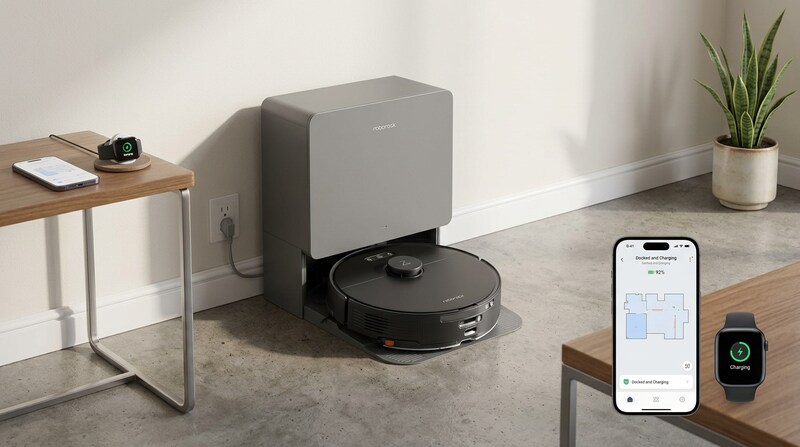
Mapping is quick, but expect to tidy up room names in the app.
Maintenance, app and smart home
The dock handles most of the routine work. It empties the bin, washes and dries the roller, dispenses detergent and refills the robot with warm water. Roborock says the dust bag lasts up to 65 days.
It still isn't hands-free. The roller, dirty water tank, dock tray and consumables all need regular attention. Both House Digest and Just A Dad Approved found that manageable for a roller-mop robot.
EFTM noted slow charging, at about 150 minutes for a full battery.
The Roborock app
App feedback is mixed. Just A Dad Approved called it intuitive, with reliable first mapping, clear room layouts and plenty of settings.
House Digest liked the features but found little guided onboarding and some settings hard to find. Expect to dig through the menus to set up vacuum-only runs, dock behavior and automated routines.
If you like to fine-tune, you'll enjoy it. If you want a simple guided setup, there's a learning curve.
Smart home
The Flow works with Matter, Alexa, Siri and Google Home, and it has Roborock's offline voice assistant.
House Digest found the voice assistant mostly unresponsive, so I'd treat it as a bonus rather than a reason to buy.
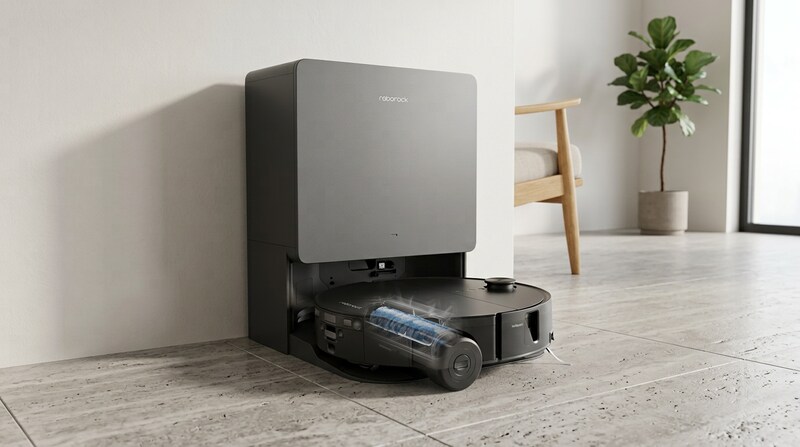
The dock washes the roller with hot water and dries it with warm air after each run.
What other reviewers scored it
The hands-on reviews are strongly positive. House Digest gave the Flow 9 out of 10, and Just A Dad Approved gave it 9.2 out of 10.
Here's how Just A Dad Approved's sub-scores break down.
Our 8.4 is a little lower because we weigh value and the reported reliability issues more heavily than a short hands-on test can.
What owners on Reddit say
Early owner feedback shows the gap between a controlled review and life at home.
Several commenters felt a robot at this price should have one. Others preferred the simpler, sturdier design.
The ketchup test result drew criticism, along with concern that the side brushes keep spinning through liquids.
One owner returned it after cleaning sessions took around 10 hours, compared with about 5 hours for an older robot in the same home. They also had trouble with the threshold-lifting system.
One owner with two German shepherds, muddy paw prints and heavy shedding called the roller mop exceptionally effective.
Another commenter said recent reviews had turned positive, possibly after a firmware update.
A handful of Reddit posts can't tell you how often these problems happen. The 10-hour run time, for example, is one owner's experience, not a battery benchmark.
They do show that firmware, home layout and settings can make a big difference. They also reflect a fair worry about paying a premium for brand-new technology before it has a long track record.
Buying tip: Buy from a retailer with an easy return window, and run the Flow in your busiest rooms during the first two weeks. Install firmware updates as soon as the app offers them.
Where the Saros 20 Flow fits best
Because the Flow is built around its roller mop, the type of home matters more than usual. Here's where I think it makes the most sense.
Kitchens and open-plan living areas
This is the Flow's natural territory. Large stretches of tile, vinyl or sealed hardwood are exactly what a roller mop handles best, because it washes a wide strip in each pass.
Kitchens also produce the sticky, dried-on marks the published tests focused on, from sauces to coffee.
Homes with young children
House Digest tested it in a home with a toddler, and that's a good match. Spills happen daily, and a robot that can wash the floor every evening keeps the mess from building up.
The threshold climbing also helps if you have raised sills between rooms.
Pet owners
Muddy paw prints and water splashes around bowls are routine jobs for a mopping robot. The anti-tangle brush handles fur well, and the hot-water roller wash keeps odors down.
If your pets shed heavily onto thick rugs, a model with stronger deep-carpet results may suit you better.
Where I'd think twice
I'd hesitate in a home that is mostly carpet, because the roller spends most of its time lifted and deep carpet cleaning isn't the Flow's strongest side.
I'd also skip it for rooms with lots of tight corners, or if your lowest furniture has less than 3.6 inches of clearance.
How to get the best results from the Saros 20 Flow
A robot like the Saros 20 Flow rewards a little setup work at the start. These are the steps I'd take in the first week.
- 01Pick the dock spot carefullyPut the dock on a hard floor, against a wall, with clear space in front of it. The robot needs room to drive on and off the ramp, and the lidar needs a clear view when it leaves.
- 02Check the map before you trust itAfter the first mapping run, fix room borders and names, then add no-go zones around tasseled rugs, pet bowls, cable clusters and baby gates.
- 03Match the settings to your floorsUse a higher water level for kitchens and entryways and a lower one for hardwood. Turn on carpet detection so the roller lifts, and save Carpet Boost for high-traffic rugs.
- 04Find the hidden settingsSpend 10 minutes exploring the app's menus for vacuum-only mode, dock behavior and routines. House Digest found these easy to miss.
- 05Buy detergent up frontNo detergent comes in the box, and Roborock recommends its own solution. Ordering a bottle with the robot means automatic dosing works from day one.
- 06Keep up with the small jobsEmpty the dirty water tank, rinse the dock tray every week or two and check the brushes for hair. That keeps the roller performing the way the tests describe.
Is the Roborock Saros 20 Flow worth the money?
The Saros 20 Flow lists at $1,699.99, $100 more than the base Saros 20. Roborock ran a launch price of $1,499.99, so watch for deals.
The real question isn't whether it's capable. It's whether its extra features are worth the premium over cheaper robots.
If most of your home is tile, hardwood or vinyl, you deal with regular spills and you have raised thresholds, the roller mop and lifting chassis are a real upgrade. That's where the extra money goes.
If you have a lot of carpet, lots of tight corners or you care most about crisp edge vacuuming, the base Saros 20 is the better buy for less.
Deal tip: Robot vacuum prices move a lot, and big shopping events like Black Friday and Prime Day often bring flagship models close to their launch price. If you can wait, a few hundred dollars off changes the value picture.
I'd also check your furniture clearance, since the Flow is the tallest of the Saros 20 models. Then check the current price on Amazon before you buy.
Saros 20 Flow vs Saros 20
The base Saros 20 is the Flow’s closest rival, and the main difference is the mop.
| Saros 20 Flow | Saros 20 | |
|---|---|---|
| Mop | Roller (SpiraFlow 2.0) | Dual spinning pads |
| Suction | 36,000 Pa | 36,000 Pa |
| Height | 3.54 in | 3.13 in |
| Navigation | Retractable lidar | StarSight 2.0, no lidar |
| Side brush | Two brushes, lift but don’t extend | Extends, doesn’t lift |
| List price | $1,699.99 | $1,599.99 |
Pick the Flow if mopping matters most. Pick the Saros 20 if you want better edge vacuuming and a lower profile for low furniture.
Roborock Saros 20 Flow specifications
From Roborock's published specifications, the Amazon listing and independent reviews.
Best Roborock Saros 20 Flow alternatives
If the Flow doesn't fit your home or budget, these are the models I'd look at.
The Saros 20 has the same suction, a lower profile and better edge cleaning, with spinning mop pads. It's the pick for very low furniture.
The Saros 20 Sonic uses a vibrating pad that scrubs in place and suits homes with lots of tile.
The Roborock Qrevo Curv 2 Flow also has a roller mop and costs considerably less, potentially around half the price. Just A Dad Approved called it reliable. The Saros 20 Flow mops more efficiently, climbs higher thresholds and is easier to maintain, but it doesn't clean twice as well.
The Dreame X60 Ultra is another premium option with a lower profile. Just A Dad Approved scored it 9.0 out of 10, just behind the Flow's 9.2, so your own priorities could tip it either way.
For less money, the Qrevo Edge 3 Pro also has 36,000 Pa and a hot-water dock with spinning mops.
How I researched and rated the Roborock Saros 20 Flow
This is a researched review, not a long-term test of our own.
I started from Roborock's published specifications and the Amazon listing, then compared the hands-on results published by House Digest, Just A Dad Approved, EFTM and Netzwelt. I also read early owner discussion on Reddit.
Where those sources disagreed, I say so above. I treat individual owner reports as warning signs, not as proof of how often a problem happens.
- Mopping (9.0): stain removal, spill handling, edge reach and how hygienic the roller stays between runs.
- Vacuuming (8.2): pickup on hard floors, carpet and pet hair, plus edge and corner results.
- Navigation (8.4): mapping, obstacle avoidance and threshold climbing.
- Value (7.8): price against features, and against the Saros 20 and other alternatives.
The overall score of 8.4 is an editorial rating.
Roborock Saros 20 Flow FAQ
Is the Roborock Saros 20 Flow worth it?
Yes, if you have mostly hard floors and want serious mopping. It rates 8.4 out of 10 in our review for its roller mop, threshold climbing and dock. If you mainly need vacuuming or spotless corners, the base Saros 20 is better value.
What is SpiraFlow 2.0?
It's Roborock’s pressurized roller mop: a roller about 10.6 inches wide that spins at 240 rpm with about 3.4 pounds of downward pressure, fed by 16 water jets and scraped clean during the run.
Can the Saros 20 Flow detect spills?
Not reliably. In one test it vacuumed up ketchup instead of treating it as a stain, and owners say the side brushes keep spinning through liquids. Wipe up large spills first, then let it mop.
Is it good for pet hair and long hair?
Yes. Its split main brush kept long hair from tangling in testing, and reviewers with cats and dogs found it didn’t leave clumps of fur behind. A few hairs can stay embedded in carpet.
How tall is the Saros 20 Flow?
3.54 inches, about four-tenths of an inch taller than the Saros 20 and Saros 20 Sonic. Plan for at least 3.6 inches of clearance under furniture.
Does the Saros 20 Flow work on carpet?
Yes. It lifts the roller about 0.6 inch and covers it on carpet so rugs stay dry. Reviewers found deep carpet cleaning weaker than its mopping, so it suits homes that are mostly hard floor.
How high can it climb?
Roborock rates the AdaptiLift Traverse 3.0 chassis for single steps of about 1.7 inches and double thresholds up to 3.46 inches. Netzwelt saw it climb thresholds of nearly 2.75 inches.
Does it clean corners well?
Not as well as robots with an extending side brush. Several reviewers found crumbs left in corners and along cabinets.
Saros 20 Flow or Saros 20?
Choose the Flow for mopping and the Saros 20 for edge vacuuming and a lower profile.
Does it work with Alexa, Google and Matter?
Yes. It supports Matter, Alexa, Siri and Google Home.


- Roborock US: Saros 20 Flow product page
- Android Authority: Saros 20 Flow launch
- House Digest: Saros 20 Flow review
- Just A Dad Approved: Roborock Saros 20 Flow review
- EFTM: Saros 20 Flow review
- Netzwelt: Saros 20 Sonic and Flow test
- Reddit owner discussion of the Saros 20 Flow, October 2026
- Amazon product listing for the Roborock Saros 20 Flow (ASIN B0H5KB6625), October 2026
- Images: illustrations created from Roborock's product photo, not photos from testing
- Added Just A Dad Approved test results and Reddit owner feedback, plus new sections on spill detection, corners, pet hair and noise.
- Review published.