Roborock Saros 20 Sonic review: a carpet star with a hit-or-miss mop
The Saros 20 Sonic pairs 36,000 Pa of suction with a vibrating VibraRise 5.0 mop, a threshold-climbing chassis and a slim 3.13-inch body. Lab tests put its carpet cleaning near the very top. Its mopping is inconsistent, though, and some owners report navigation and software hiccups that are hard to accept at this price.
In this review
The Roborock Saros 20 Sonic is one of the best carpet cleaners you can buy. Vacuum Wars measured 92 percent sand removal from carpet with zero hair tangles, and Mashable’s month-long home test backed that up with a 4.4 out of 5 rating. The rest is less consistent. Its vibrating mop scored poorly on dried stains in the lab, its chassis can bob up and down for no clear reason, and some owners report collisions, map glitches and slow support. For a robot that costs around $1,500 to $1,700, that’s a real caveat. Buy it for carpet, tangle-free brushes and threshold climbing, not for best-in-class mopping.
Roborock Saros 20 Sonic at a glance
Saros 20 Sonic lab scorecard
Vacuum Wars ran the Sonic through its standard lab tests. Here’s how it compares with the class average at a glance.
Higher is better for every row except hair tangles. Inch, ounce and square-foot figures are rounded conversions.
Roborock Saros 20 Sonic pros and cons
- 92% carpet sand removal, among the best Vacuum Wars has recorded
- Zero hair tangles in lab testing
- Picked up about 98% of a tough single-pass rug mess in Mashable’s test
- Above-average obstacle avoidance (19 of 24)
- Climbed a 2.24-inch threshold, tied for best tested
- Slim 3.13-inch body reaches under low furniture
- 212°F mop wash, warm-air drying and full dock automation
- Better-than-average battery efficiency
- Weak dried-stain score in lab testing
- Below-average compressed pet-hair pickup
- Small 7.7 fl oz robot bin
- Can leave debris along rug edges
- Mop sometimes retracts too early in corners
- Chassis sometimes lifts and lowers for no reason
- Mixed owner reports on navigation, software and support
Who should buy the Roborock Saros 20 Sonic?
- Homes with a mix of carpet and hard floors
- Households with long hair
- Homes with raised door tracks or thick rugs
- Rooms with low sofas and beds
- Pet owners who want live video and pet-finding
- Everyday wiping of dust, paw prints and light spills
- Kitchens with lots of dried-on spills
- Heavy shedders on wall-to-wall carpet
- Homes with expensive, easily scratched furniture
- Rooms full of loose cables
- Anyone who wants set-and-forget reliability at this price
- Buyers on a tight budget
What the Roborock Saros 20 Sonic is
The Saros 20 Sonic is one of three main versions of Roborock’s 2026 flagship robot vacuum and mop.
The base Saros 20 uses two spinning mop pads, the Saros 20 Flow uses a roller, and the Sonic uses a single flat pad that vibrates.
Roborock calls that pad VibraRise 5.0. It vibrates 4,000 times per minute, up from 3,000 on the previous version, and presses down with about 3 pounds of force.
The idea is to copy the way you’d scrub a floor by hand with a cloth, working into the surface instead of skimming over it.
The rest of the robot matches the base Saros 20: 36,000 Pa of advertised suction, a retractable lidar turret, the AdaptiLift Chassis 3.0 and Reactive AI 3.0 obstacle avoidance.
Roborock unveiled the Sonic at CES 2026, and it sells in the US for roughly $1,500 to $1,700.
Good to know: “Pa” (pascals) is the suction unit every robot vacuum brand uses, including in the US. Treat it as a rough guide only. The lab results below tell you far more about real cleaning than the suction number does.
Saros 20 Sonic design and dock
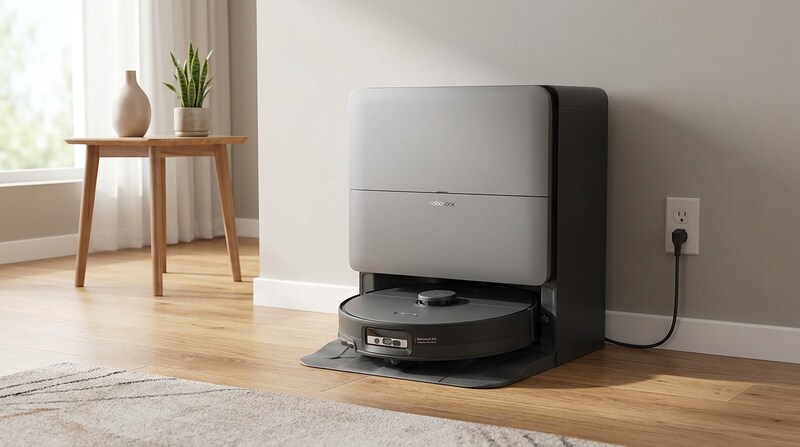
The robot is a dark, low disc. Its lidar turret drops down so the body is just 3.13 inches tall, low enough to reach under many sofas and beds that taller robots can’t.
The vibrating pad sits underneath. It can slide out toward walls and furniture, lift when the robot rolls onto carpet, or stay behind in the dock for vacuum-only runs.
The dock, which Roborock calls the RockDock, is a tall gray tower that handles almost everything:
- Empties the robot’s bin into a 2.6-quart dust bag that Roborock says lasts around 65 days
- Washes the pad with 212°F water
- Dries the pad and the dust channel with 131°F air
- Dispenses detergent and refills the robot’s water automatically
- Removes the pad for vacuum-only runs, and can wash it while the robot keeps vacuuming
The clean and dirty water tanks hold about 1.1 gallons and 0.8 gallon.
The robot’s own bin is small, at 7.7 fluid ounces. Vacuum Wars noted the average robot it has tested holds about 12.7 fluid ounces.
Tip: Place the dock against a wall on a hard, level floor, with open space on both sides and a clear path in front. Check Roborock’s manual for the exact clearances. A cramped spot is a common cause of failed docking.
The dock washes the vibrating pad with 212°F water and dries it with warm air.
Saros 20 Sonic vacuuming performance
Vacuuming is the Saros 20 Sonic’s biggest strength, especially on carpet. That stands out at a time when many high-end robots pour their engineering into mopping and let vacuuming slide.
Carpet deep cleaning in the lab
Vacuum Wars embeds sand in medium-pile carpet and measures how much a robot removes. The Sonic pulled out 92 percent, the fourth-best result it had recorded at the time of testing.
Carpet sand removal, Vacuum Wars testing.
That tells you the Sonic pulls up grit that’s worked deep into the pile, not just the dust you can see on top.
Carpet in a real home
Mashable’s month of home testing matched the lab. After letting cat hair and debris build up on rugs, the reviewer found the Sonic handled fur, human hair, cardboard shavings, crumbs and dry chia seeds very well.
In one deliberately tough single-pass test on a fluffy rug, it collected about 98 percent of the mess. It also slipped between narrow furniture legs without trouble.
Where it misses
Mashable noticed debris, including sprinkles, sometimes left along rug edges where hard floor meets carpet.
The FlexiArm Arc side brush extends toward walls to help with edges, but it doesn’t fully solve that transition zone.
Tip: If you see crumbs left along rug edges, add a second pass to that room or turn on edge-focused cleaning in the app. Running a quick spot clean along the rug border after meals works well in dining areas.
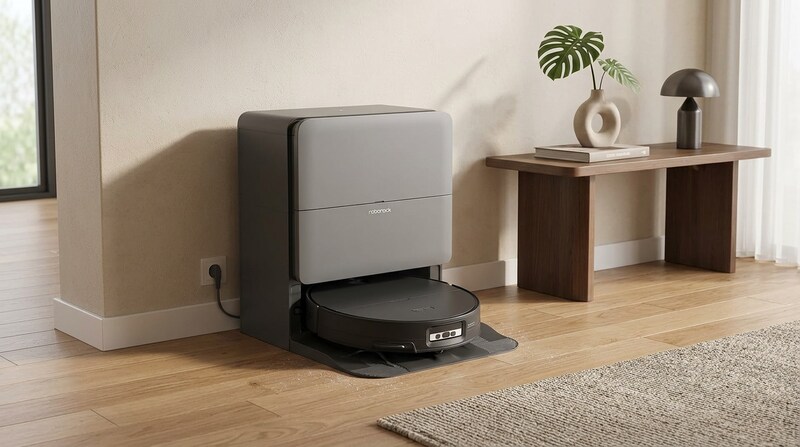
The low 3.13-inch body is built to reach under sofas and beds.
Hair tangles and pet hair: two different stories
It’s easy to assume a robot that never tangles must also be great at pet hair. The Sonic shows why those are separate questions.
Tangles: perfect score
The DuoDivide main brush steers hair toward a central opening instead of letting it wrap around the roller, and the side brush has its own anti-tangle design.
Vacuum Wars uses 7-inch strands of hair for its tangle test. The Sonic finished with 0 percent tangled, against a category average of 26 percent.
If anyone in your home has long hair, that means far fewer sessions cutting hair off the brush with scissors.
Pet hair: below average in the lab
Picking up compressed pet hair from carpet is a different test, and here the Sonic was weaker.
Compressed pet hair removed from carpet, Vacuum Wars testing.
Mashable’s experience with cat hair on rugs and hard floors was more encouraging. The gap likely comes down to flooring, hair type and how the hair is spread out.
The practical takeaway: the brush stays clean, but some fur that’s ground deep into carpet may stay behind.
Pet owner tip: With a small 7.7 fl oz bin, heavy shedders can fill it mid-run. In the app, set the robot to return and empty between rooms during shedding season, and run a deep-clean pass on rugs where your pet sleeps.
Saros 20 Sonic mopping performance
Mopping is the Sonic’s headline feature, and also its most controversial one. How well it works depends a lot on the kind of mess.
The lab results
Vacuum Wars gave the Sonic a dried-stain score of 62. The base Saros 20, with its two spinning pads, scored 116.
Dried-stain mopping score, Vacuum Wars testing. Higher is better.
Its combined mopping score was 15.8, below the 20.3 average and well behind the Saros 20’s 25.2.
There was one bright spot. The Sonic left about a third less water on the floor than the average robot, close to the base Saros 20. Floors dry faster, although less water may also be part of why stubborn stains stayed put.
The home tests
Mashable’s results were kinder. Over a month of use, the Sonic cleaned up oily residue, hair conditioner, syrup, crystal cat litter dust and paw prints. Hot water and downward pressure helped, and the damp pad picked up fine dust and pet hair from hard floors.
Senses.se and Netzwelt also rated its everyday mopping highly, with dried stains often needing a second pass.
The quirks
Mashable saw the mop retract too early when the robot turned, leaving some corners undercleaned.
Its automatic re-mop feature caught some spills but not others, and the app gave less control over how often the pad gets washed than the reviewer wanted.
How I read it
The Sonic is good for routine wiping, dust, paw prints and fresh sticky spills. It isn’t the right pick if dried-on grime is your main problem.
Tip: Wipe up drinks and sauces within a day, and schedule mopping every two or three days. The Sonic handles fresh messes far better than old, dried ones, so frequent light mopping plays to its strengths.
If deep mopping is your priority, compare it with the base Saros 20 or the roller-mop Saros 20 Flow.
Thresholds, chassis and low furniture
Physically, the Sonic is one of the most capable robots you can buy.
Threshold climbing
Vacuum Wars measured a maximum single threshold of about 2.24 inches, tying the base Saros 20 for the best result it had seen. That beats Roborock’s own rating of 1.77 inches.
Roborock also advertises up to 3.46 inches for certain stepped, two-level thresholds. Don’t confuse that with the single-threshold figure.
In practice, that means sliding-door tracks, raised transitions between rooms and thick rugs are rarely a barrier. Senses.se found thresholds over about 1.6 inches sometimes took two to three minutes of retries, but the robot never got stuck.
The chassis can overthink it
The AdaptiLift chassis isn’t always well behaved. Mashable saw it raise and lower itself repeatedly with no threshold or rug in sight.
That slows cleaning down and feels unpolished on a premium robot. The hardware is excellent; the software controlling it needs more work.
Rugs
Senses.se found that rug fringes triggered extra passes and that the robot could push thin, lightweight rugs around.
Tip: Put a non-slip rug pad under thin rugs and runners, and tuck fringes under or add a narrow no-go strip along them. Both keep runs shorter and stop the robot from bunching rugs up.
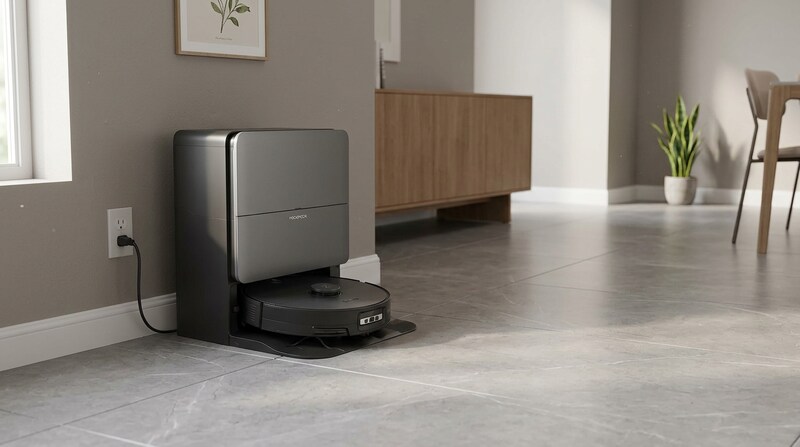
Thresholds over about 1.6 inches can take a few retries, but reviewers didn’t see it get stuck.
Obstacle avoidance: good scores, mixed homes
Reactive AI 3.0 combines an RGB camera, 3D structured light and side-facing sensors to recognize more than 300 types of objects.
In testing
Vacuum Wars counted 19 of 24 obstacles avoided, better than the base Saros 20’s 17 and the 16 average.
Mashable’s robot correctly recognized shoes, slippers, laundry, cords, recycling bags and even the reviewer’s cats. Live video and two-way audio make it handy for checking on pets while you’re out.
In owners’ homes
Owner reports on Reddit paint a less tidy picture. One owner described bumps into furniture, chair legs and sliding-door tracks that left scratches, even with gentle navigation turned on.
Others said their robot avoided open areas, skipped rooms it could reach, drove over cables or got confused by furniture it had already mapped.
Plenty of owners had no problems after months of use, and some fixed issues by adjusting avoidance settings or switching off certain AI features.
These are individual accounts, so they can’t tell you how common the problems are. They do show that a strong lab score doesn’t guarantee a collision-free robot in every home.
Protect your furniture: For the first week, run the robot while you’re home and watch how it handles chair legs, glass tables and door tracks. Add felt pads or bumper guards to anything delicate, and use no-go zones around spots where it struggles.
Battery life and coverage
The Sonic uses its 6,400 mAh battery efficiently.
For most US homes, that’s enough to clean an entire floor on one charge. It’s a little slower than average, so runs take longer, but it rarely needs to stop and recharge mid-job.
Maintenance, app and smart home
The dock handles most routine chores, and some owners on Reddit praised how quiet the emptying is compared with older Roborock docks. Senses.se, on the other hand, found it loud, and nobody has published decibel measurements yet.
The dock still needs some help from you. Owners mentioned tight corners and small parts that are fiddly to clean by hand.
One owner also wished the robot had a bigger onboard water tank for cleaning multiple floors without a trip back to the dock.
A bug worth watching
Senses.se reported that its robot kept cleaning with a full bin and showed no error. With a 7.7 fl oz bin, that’s worth checking, and it’s the kind of issue a firmware update can fix.
App and smart home
The Roborock app offers room-by-room settings, scheduling, map editing, no-go zones, SmartPlan, live video and a pet-finding feature. The Sonic also works with Matter, Alexa, Google Home and Siri, and has a built-in voice assistant.
More automation doesn’t always mean a smoother experience, though. Several owners reported the wrong cleaning mode being used, corrupted maps, unexpected stops, unfinished runs and long, erratic cleaning paths. One said turning off some AI features made it behave better.
Tip: Back up your map in the app once it’s right. If a map gets corrupted, restoring a saved copy is much faster than remapping the whole house.
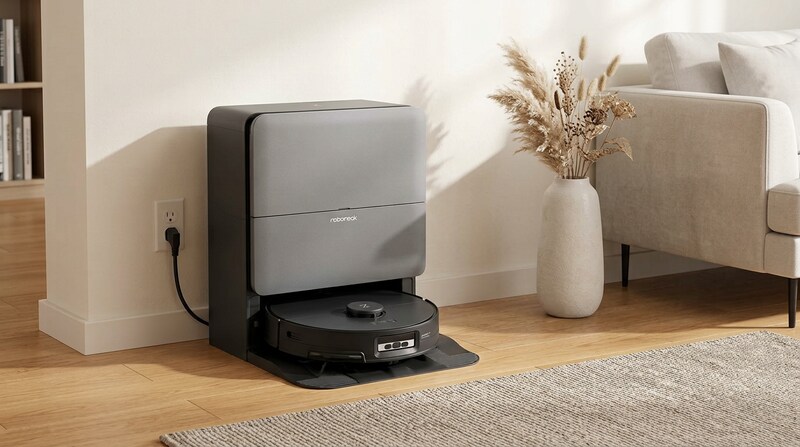
Check the bin now and then: one reviewer saw it keep cleaning when the bin was full.
What owners report: reliability and support
The biggest concerns come from the gap between the Sonic’s premium price and some owners’ day-to-day experience.
- Quiet, hands-off emptying
- Strong carpet results
- Reliable navigation for months in some homes
- Responsive support for some buyers
- Collisions and scratched furniture
- Corrupted maps and wrong cleaning modes
- Unexpected stops and unfinished runs
- Long support exchanges without a fix
One Reddit owner described poor support after reporting furniture damage. Another went through repeated failures and long back-and-forth with support without a satisfying answer. Others said their robots worked well and support was quick.
Based on the accounts available, customer service quality looks inconsistent.
Before you buy: Check the return window at your retailer and keep the box for at least the first month. Problems with navigation or software usually show up in the first few weeks, while you can still send it back easily.
Where the Saros 20 Sonic fits best
The Sonic makes the most sense in homes that split time between carpet and hard floors.
Living rooms with area rugs
Its carpet results are the strongest in the Saros 20 family, and the pad can stay in the dock for carpet-only runs.
Homes with long hair
Zero tangles in lab testing is a big deal if anyone in the house has long hair.
Older homes with raised thresholds
Door tracks and raised transitions that stop other robots rarely stop this one.
Tiled bathrooms and entryways
A vibrating pad suits tile and paw prints, as long as you’re dealing with everyday dirt rather than old, dried spills.
Where I’d think twice
If your kitchen sees a lot of sticky, dried-on spills, or you have a heavy shedder on wall-to-wall carpet, the base Saros 20 is the safer bet. And if you have delicate furniture or lots of cables, plan on some setup work.
How to get the best results from the Saros 20 Sonic
A little setup work goes a long way with the Saros 20 Sonic.
- Update the firmware first
Install any updates before the first full run. Several of the bugs reviewers and owners reported are the kind updates tend to fix.
- Clear the floor for the mapping run
Pick up cables, socks and small toys, and open every door. A clean first map prevents a lot of navigation problems later.
- Watch the first few runs
Make sure the dock empties properly, and note where the robot bumps furniture or skips areas. Add no-go zones where needed.
- Tune the AI features
If it avoids open areas or behaves erratically, try changing the obstacle-avoidance level or turning off individual smart features one at a time.
- Leave the pad home on carpet days
For carpet-heavy rooms, let the robot drop the pad in the dock. It keeps moisture off rugs and speeds up vacuum runs.
- Clean the parts it can’t
Rinse the dock tray, empty the dirty water and check the brushes every week or two.
A sensible cleaning schedule for the Saros 20 Sonic
Here’s how I’d set up the Saros 20 Sonic in a typical family home with carpet and hard floors.
| How often | What to run | Why |
|---|---|---|
| Daily | Vacuum only, pad left in the dock | Plays to its carpet strength, faster and quieter |
| Every 2–3 days | Vacuum and mop kitchens, baths, entryways | Stops spills from drying into tough stains |
| Weekly | Deep clean high-traffic rugs, second mop pass in the kitchen | Catches embedded pet hair and stubborn spots |
| Monthly | Rinse tanks, clean dock tray, check brushes and bag | Keeps the hot-water wash and emptying working |
This routine leans on the Sonic’s strengths and works around its weaker spots.
Is the Roborock Saros 20 Sonic worth the money?
The Saros 20 Sonic lists at $1,699.99 and has often sold for $1,499.99. At that price you’re paying for dependable automation, not just strong cleaning.
You get class-leading carpet cleaning, zero tangles, excellent threshold climbing, a slim body and a very complete dock.
You don’t get the strongest mop for dried-on stains, and some owners haven’t gotten the polished, trouble-free experience they paid for.
Mashable rated it 4.4 out of 5 but concluded that the Dreame X60 Max Ultra Complete is the more reliable all-around package for a little less money. Vacuum Wars found the base Saros 20 much stronger at mopping.
If carpet is a big part of your home, the Sonic’s trade-offs are worth it. If your floors are mostly hard and spills are your main headache, spend on the Flow or save with the base Saros 20.
Prices move a lot, so check the current price on Amazon before you buy.
Deal tip: Flagship robot vacuums often drop a few hundred dollars around Prime Day, Black Friday and Cyber Monday. If you’re not in a hurry, those are the best times to buy.
Saros 20 Sonic vs Saros 20
Vacuum Wars tested both, which makes for a clear comparison with the base Saros 20.
| Saros 20 Sonic | Saros 20 | |
|---|---|---|
| Mop | VibraRise 5.0 vibrating pad | Dual spinning pads |
| Carpet sand removal | 92% | 89% |
| Pet hair pickup | 78% | 88% |
| Obstacles avoided | 19 of 24 | 17 of 24 |
| Dried-stain score | 62 | 116 |
| Combined mopping score | 15.8 | 25.2 |
| Max single threshold | 2.24 in | 2.24 in |
| Height | 3.13 in | 3.13 in |
Pick the Sonic for carpet, tangle-free brushes and slightly better obstacle avoidance.
Pick the Saros 20 for much stronger mopping on dried stains and better pet-hair pickup.
Roborock Saros 20 Sonic specifications
From Roborock’s published specifications, the Amazon listing and independent reviews. US units are rounded conversions.
Best Roborock Saros 20 Sonic alternatives
The Saros 20 is the best alternative if you want stronger mopping and better pet-hair pickup.
The Saros 20 Flow is the pick for serious floor washing, thanks to its roller mop.
The Dreame X60 Max Ultra Complete is worth a look if reliability matters most. Mashable preferred it as the more dependable all-around package for slightly less money.
If you want a vibrating mop for less, the older Saros 10 uses VibraRise 4.0 and is often heavily discounted.
How I researched and rated the Roborock Saros 20 Sonic
This is a researched review, not a long-term test of our own.
I started from Roborock’s published specifications and the Amazon listing, then compared Vacuum Wars’ lab results with Mashable’s month-long home test, hands-on reviews from Senses.se and Netzwelt, and owner discussions on Reddit. Where those sources disagreed, I say so above.
Owner reports are anecdotal. I use them to flag possible problems, not to judge how often they happen.
- Vacuuming (9.0): carpet deep cleaning, real-world debris pickup, pet hair and tangle resistance.
- Navigation (8.0): obstacle avoidance, mapping, threshold climbing and owner-reported reliability.
- Mopping (7.2): dried-stain removal, edge reach, water residue and how reviewers rated everyday mopping.
- Value (7.2): price against features, reliability reports and rivals like the Saros 20, Saros 20 Flow and Dreame X60 Max Ultra Complete.
The overall score of 8.0 is an editorial rating.
Roborock Saros 20 Sonic FAQ
Is the Roborock Saros 20 Sonic worth it?
Yes, for homes with plenty of carpet. It rates 8.0 out of 10 in our review for its excellent carpet cleaning, zero tangles and threshold climbing. If dried-on stains or rock-solid reliability matter most, the Saros 20, the Saros 20 Flow or the Dreame X60 Max Ultra Complete may suit you better.
What is VibraRise 5.0?
It’s Roborock’s vibrating mop: a flat pad that vibrates 4,000 times per minute, presses down with about 3 pounds of force and extends toward edges.
How good is the Saros 20 Sonic on carpet?
Excellent. Vacuum Wars measured 92 percent sand removal from carpet, one of its best results ever, and Mashable saw it pick up about 98 percent of a tough rug mess in one pass.
Does the Saros 20 Sonic mop well?
It’s good for everyday dirt, paw prints and fresh sticky spills. Vacuum Wars found it weak on dried stains, scoring 62 against 116 for the base Saros 20.
Is the Saros 20 Sonic good for pet hair?
It never tangled in testing, so the brush stays clean. But it was below average at pulling compressed pet hair out of carpet, so heavy shedders may need extra deep-clean passes.
Is the Saros 20 Sonic reliable?
Lab and home testers had few problems, but some owners report collisions, map errors, unfinished runs and slow support. Others report months of trouble-free use. Buy from a retailer with an easy return policy.
How tall is the Saros 20 Sonic?
3.13 inches, with the lidar turret lowered.
How high can it climb?
Roborock rates it for 1.77-inch single thresholds and 3.46-inch stepped thresholds. Vacuum Wars saw it climb a 2.24-inch single threshold.
Saros 20 Sonic or Saros 20 Flow?
Choose the Sonic for carpet and tangle-free brushes, and the Flow for mopping large hard floors.


- Vacuum Wars: Saros 20 Sonic review
- Vacuum Wars: Saros 20 Sonic launch
- Mashable: Roborock Saros 20 Sonic review (month-long home test)
- Senses.se: Saros 20 Sonic review
- Netzwelt: Saros 20 Sonic and Flow test
- Owner discussions on Reddit about the Roborock Saros 20 Sonic, 2026
- Amazon product listing for the Roborock Saros 20 Sonic (ASIN B0G64XBNWY), October 2026
- Images: illustrations created from Roborock’s product photo, not photos from testing
- Added Mashable home testing and Reddit owner reports, a lab scorecard, test charts and tips. Converted all measurements to US units. Score revised from 8.2 to 8.0.
- Review published.