Robot mop pressure (newtons) and rotation speed: does it matter?
Robot mop specs now list newtons, pascals, RPM and scrubs per minute. I explain what each number means, what brands publish, and when extra pressure actually changes how clean your floors get.
We choose products independently. We may earn a commission through links on this page; your price stays the same. Affiliate policy
On this page
The short answer
- Mop pressure matters for dried, sticky messes, and barely at all for daily dust. Any modern powered mop has enough force for routine cleaning.
- Newtons measure total force; pascals measure force per area. You can't compare one brand's N figure with another's Pa figure.
- Published examples: more than 6 N and 3,000 scrubs per minute on a vibrating mop, 200 RPM on spinning pads, and 3,800 Pa at 220 RPM on a roller mop.
- Mop cleanliness, water control and repeat passes affect results more than a slightly higher pressure number.
Why mop pressure became the new suction number
A few years ago, robot mops were basically a damp cloth dragged behind the vacuum. They picked up light dust and left dried coffee drips exactly where they were.
Now spec sheets quote mopping pressure in newtons or pascals, rotation speeds in RPM and vibration rates in scrubs per minute. It is the same arms race suction went through, just a few years later.
I wanted to know whether those numbers actually change what ends up on my floor. So I dug into what each figure means physically, what brands publish, and how pressure and speed fit into the bigger picture of how cleaning works.
Short version: they matter for dried, sticky messes, they barely matter for daily dust, and they matter far less than mop cleanliness and water control.
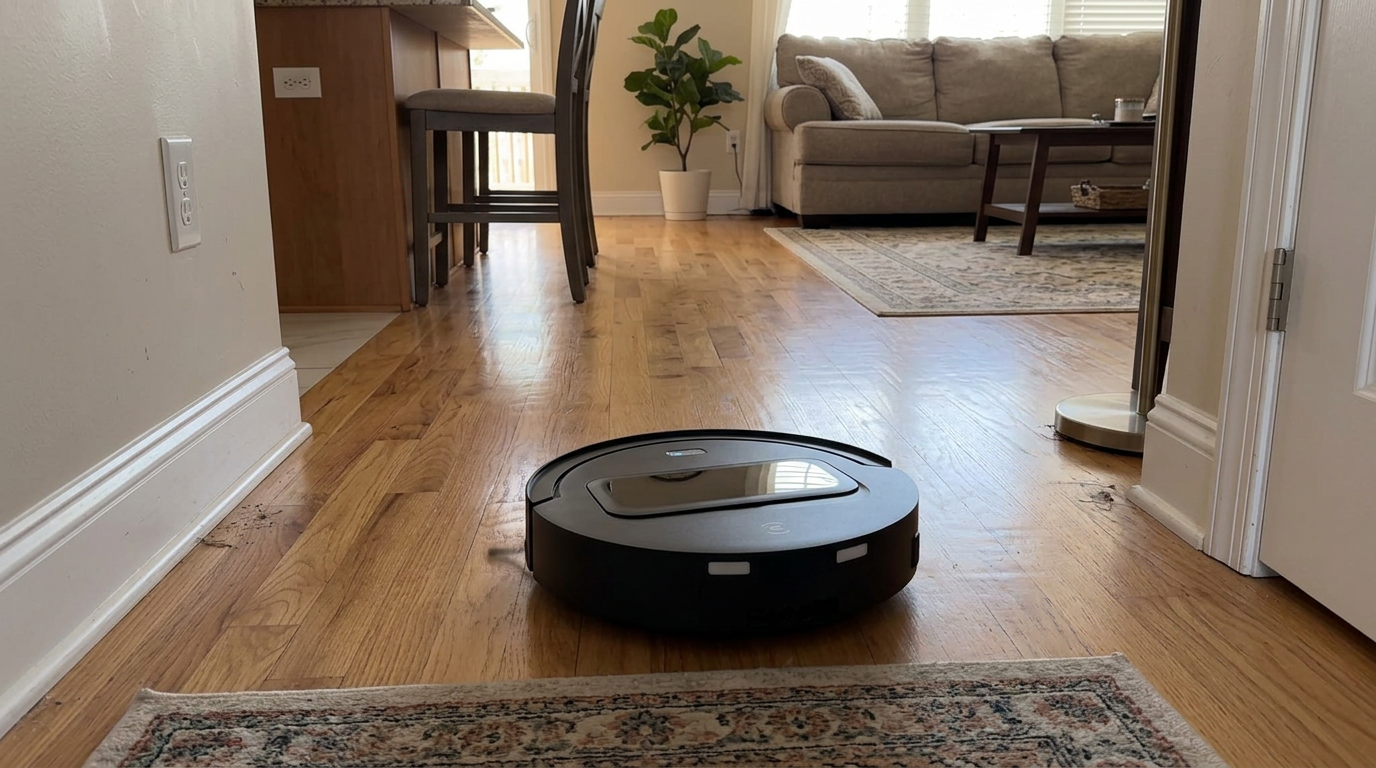
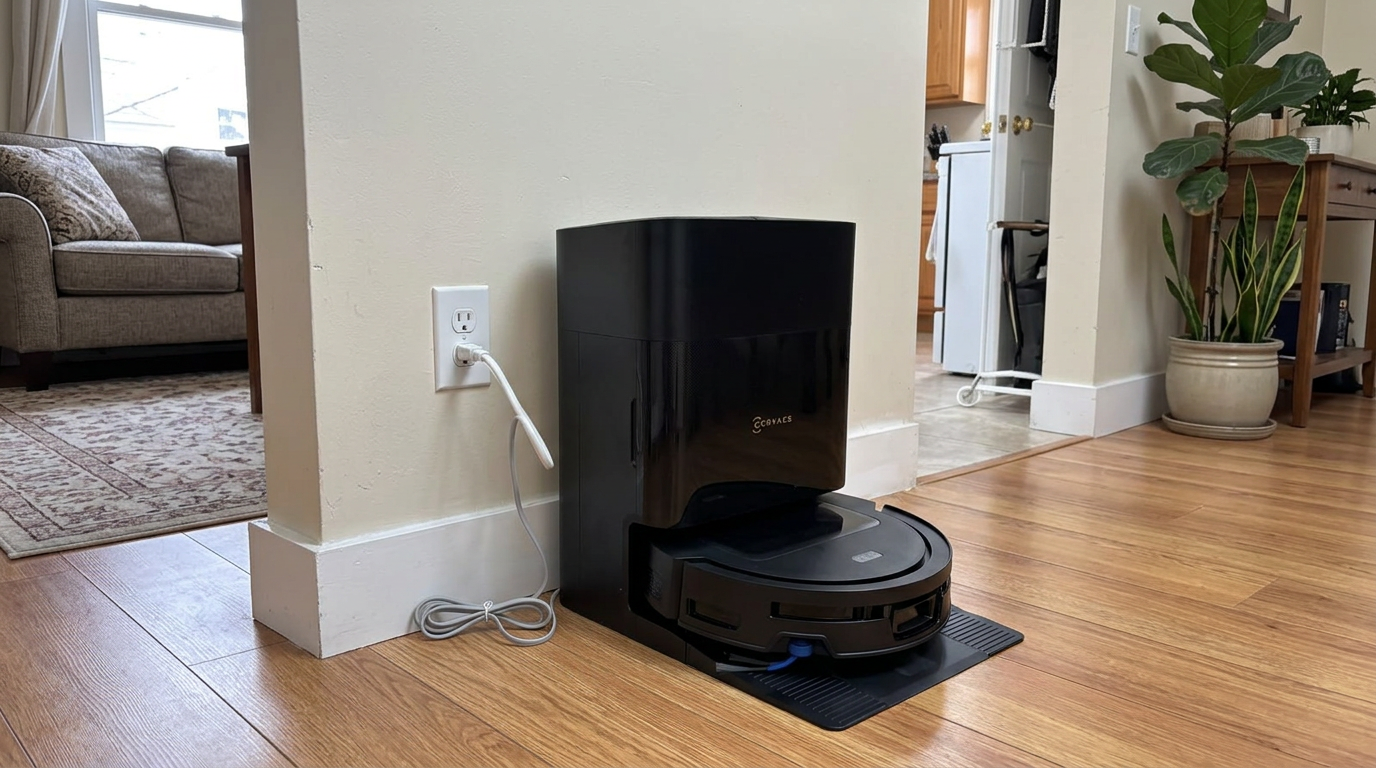
The DEEBOT T90 PRO OMNI uses a long spinning roller mop instead of round pads, one of several designs competing on scrubbing force. Read my ECOVACS DEEBOT T90 PRO OMNI review →
Newtons vs. pascals: what mop pressure actually measures
Newtons and pascals get mixed up all the time, so here is the difference in one sentence: newtons measure total force, pascals measure how concentrated that force is.
A newton (N) is a unit of force. One newton is about the weight of a small apple, or roughly 0.22 pounds of force. So 6 N is about 1.35 pounds pressing down.
A pascal (Pa) is force divided by area. Press the same 6 N onto a small contact patch and the pressure is high. Spread it across a big pad and the pressure is low.
| Unit | What it describes | Everyday equivalent |
|---|---|---|
| 1 N | Force | About 0.22 lb of downward push |
| 6 N | Force | About 1.35 lb, roughly two small cans of soup |
| 1,000 Pa | Pressure | About 0.15 psi |
| 3,800 Pa | Pressure | About 0.55 psi |
This is why I don't compare a newton figure from one brand with a pascal figure from another. They describe different things, and without the contact area you cannot convert between them.
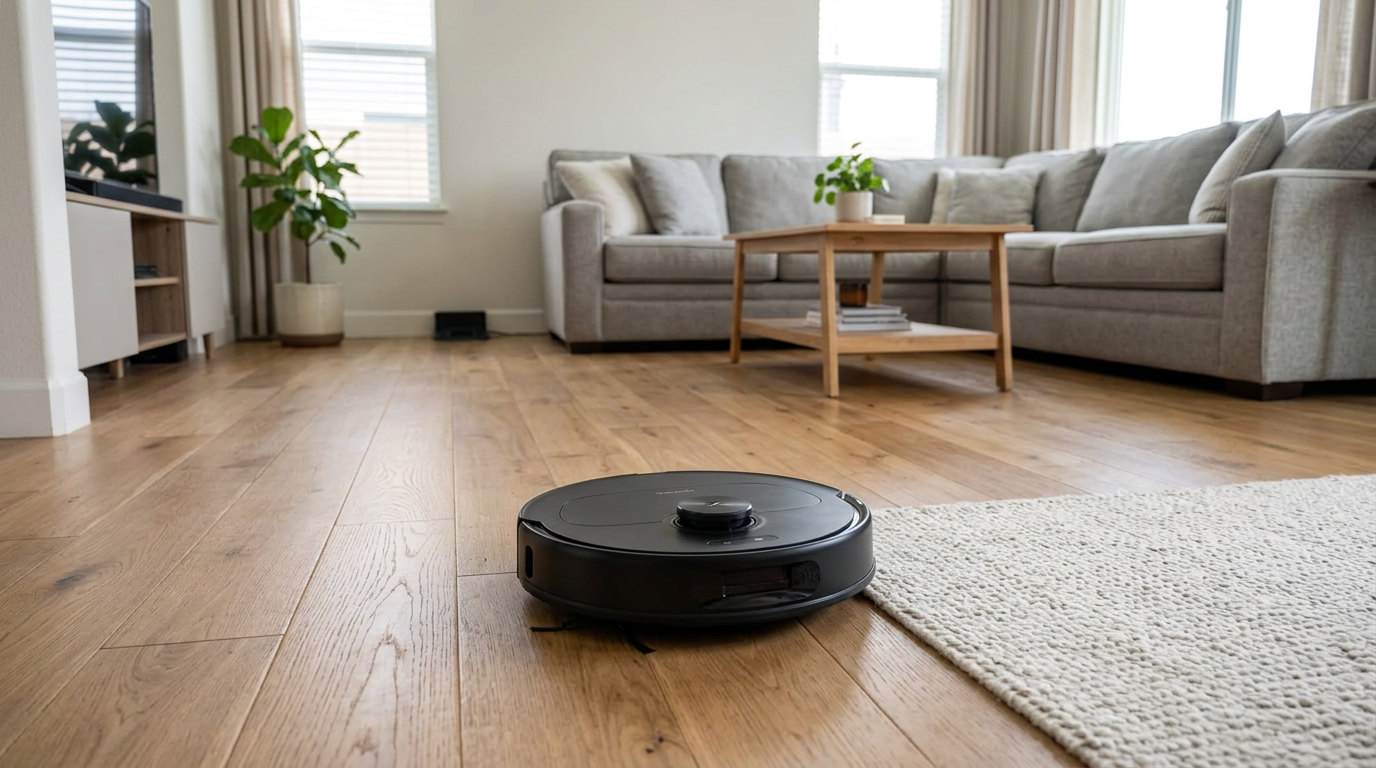
Spinning-pad robots like the Qrevo S Pro press two round pads into the floor; the published spec is rotation speed rather than force. Read my Roborock Qrevo S Pro review →
The four mop designs and the numbers each one publishes
Robot mops today fall into four broad designs. Each one publishes a different headline number, which is part of why comparing them is so confusing.
| Mop design | How it scrubs | Headline spec | Published example |
|---|---|---|---|
| Drag pad | A flat damp pad slides behind the robot | Water flow levels | Common on entry-level combos |
| Vibrating pad | The pad moves back and forth rapidly while pressed down | 3,000 scrubs/min (50 Hz) | Roborock VibraRise; pressure above 6 N |
| Spinning pads | Two round pads rotate against the floor | 200 RPM | Roborock Qrevo family |
| Roller mop | A long cylindrical mop spins like a paint roller | 200 RPM, 27 cm (10.6 in) long | ECOVACS OZMO ROLLER 3.0 |
Roborock is one of the few brands to publish a force figure directly. A footnote on its S7 Pro Ultra page says internal testing measured the mop pressing on the floor with more than 6 N. Its later S8 MaxV Ultra raised the vibration rate to 4,000 times per minute with two vibration modules.
For spinning pads, Roborock's support team describes the Qrevo Master mops as rotating inward at 200 RPM while providing constant pressure on the floor.
ECOVACS takes a pressure-in-pascals approach for its rollers. Its launch material for the DEEBOT T80S OMNI quotes 3,800 Pa of mopping pressure at 220 RPM, and earlier coverage of OZMO ROLLER 2.0 cited up to 16 times the cleaning pressure of conventional dual-plate designs.
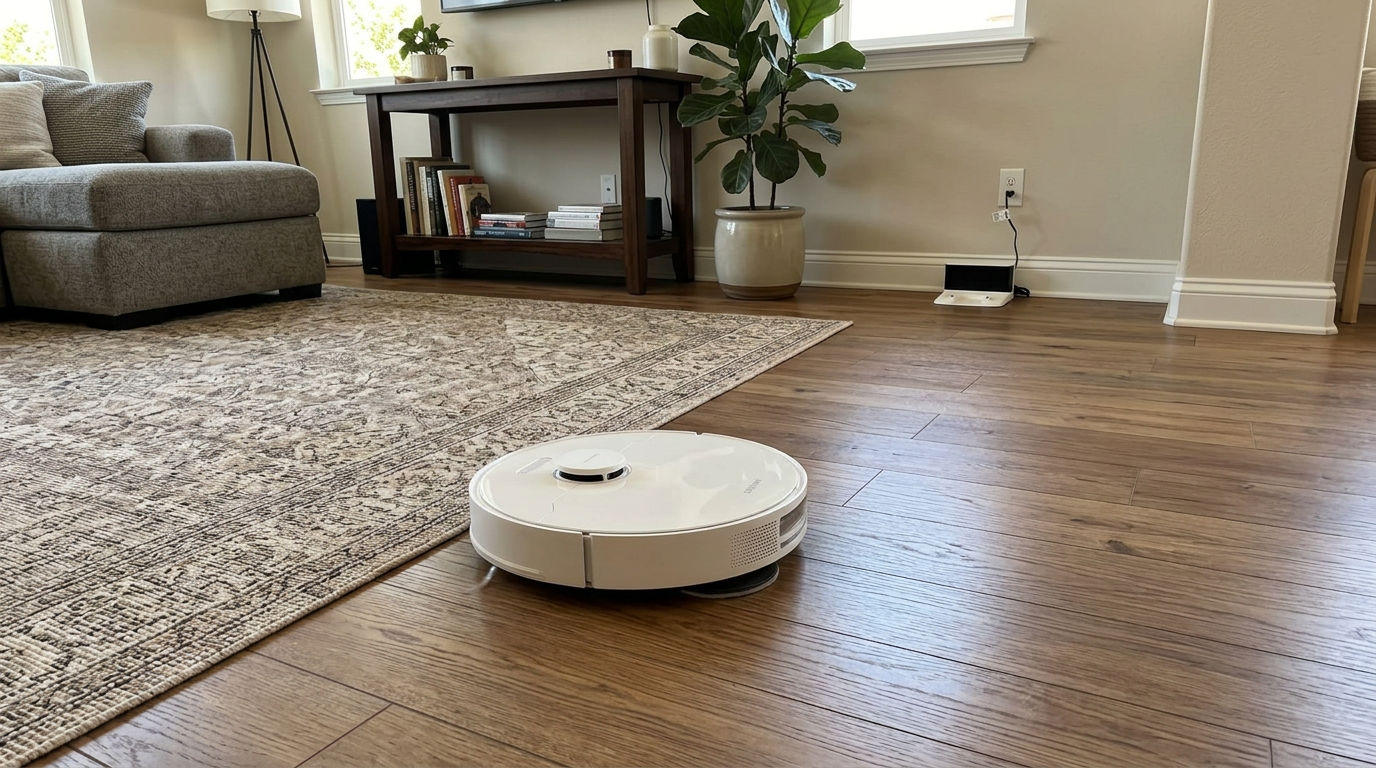
Dual spinning pads, like those on the L40 Ultra Gen 2, can lift away when the robot reaches a rug. Read my Dreame L40 Ultra Gen 2 review →
Does mop pressure actually matter?
Cleaning scientists have a simple model for this called Sinner's Circle, named after the German chemist Herbert Sinner. It says every cleaning job depends on four factors: time, temperature, chemistry and mechanical action.
As Kärcher explains, those four trade off against each other. If one is weak, the others have to work harder. Soak a pot longer and you need less scrubbing. Use hot water and you need less detergent.
Mop pressure and rotation speed are both "mechanical action." That is one slice of the circle, not the whole thing.
How I think about itA robot mop that scrubs harder but uses cold water, no detergent and a single fast pass can lose to a gentler mop that makes two slow passes with warm water.
This explains something I see a lot. Daily dust, footprints and light film come up easily with almost any robot mop, because they need very little mechanical force.
Dried-on spills are different. Coffee drips, juice, pet water bowl rings and muddy paw prints have bonded to the floor finish. Here, more pressure and more scrubbing movements per minute really do help, especially if the robot also gets more time on the spot.
That is why many apps offer a deep-scrub or repeat-pass option. The robot is trading time for mechanical action, exactly as Sinner's Circle predicts.
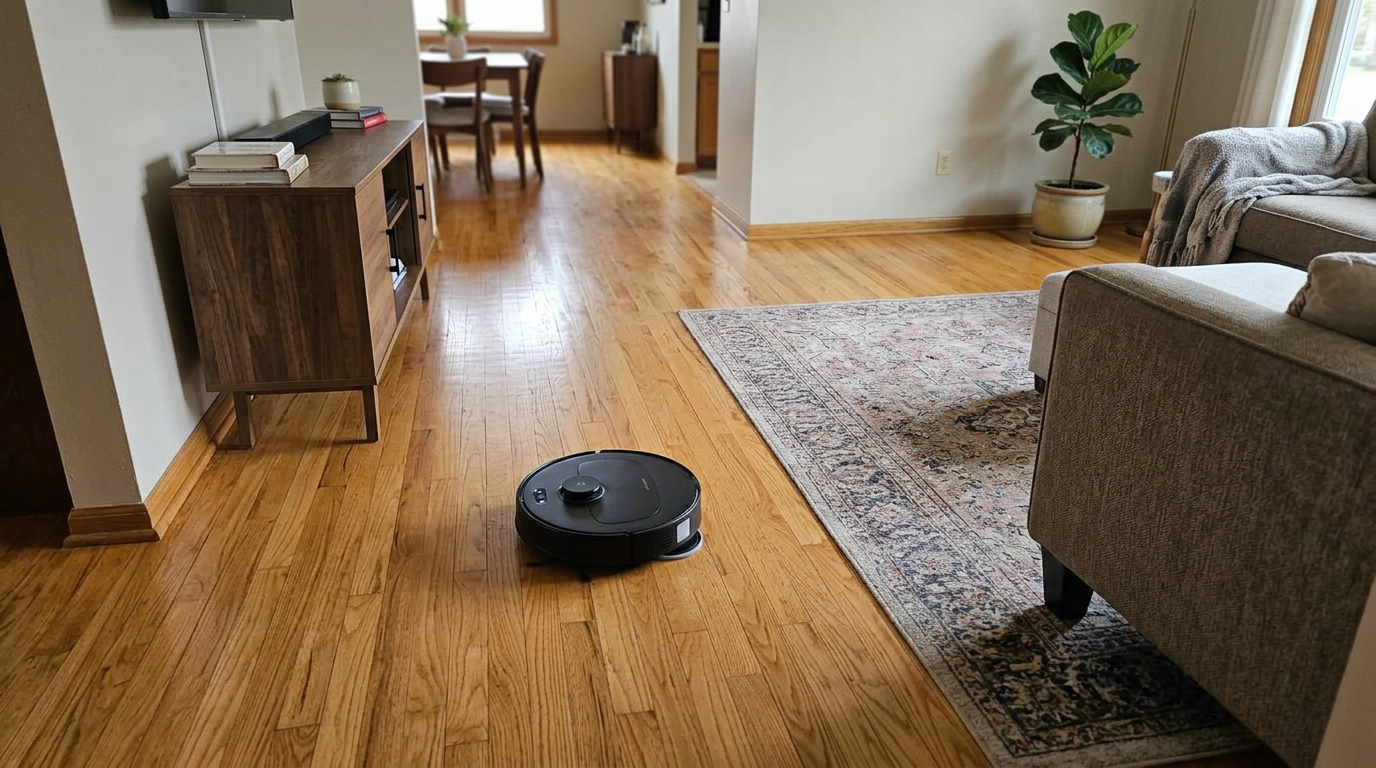
Flagships like the Qrevo 2 Pro pair spinning mops with a dock that washes them between rooms, so the scrubbing surface stays clean. Read my Roborock Qrevo 2 Pro review →
Rotation speed and scrub rate, explained
Rotation speed sounds impressive, but what matters is how fast the mop surface moves across the floor. That depends on both RPM and the size of the pad.
A round pad spinning at 200 RPM with a 3.5-inch radius has an outer edge that travels about 22 inches per rotation. Multiply by 200 and the rim moves roughly 367 feet per minute, or about 4 miles per hour. The center of the pad barely moves at all.
Vibrating pads work differently. Instead of a big circle, the pad makes thousands of tiny strokes. At 3,000 per minute, that is 50 strokes every second, each only a short distance.
In practice, I find spinning pads and rollers better at lifting sticky, dried messes because the surface sweeps through the stain repeatedly as the robot passes. Vibrating pads cover a wider straight path and leave fewer swirl marks on glossy floors.
Neither is automatically better. A roller has a long, even contact line and can rinse itself continuously. Spinning pads can reach toward edges. Vibrating pads are simpler and lighter.
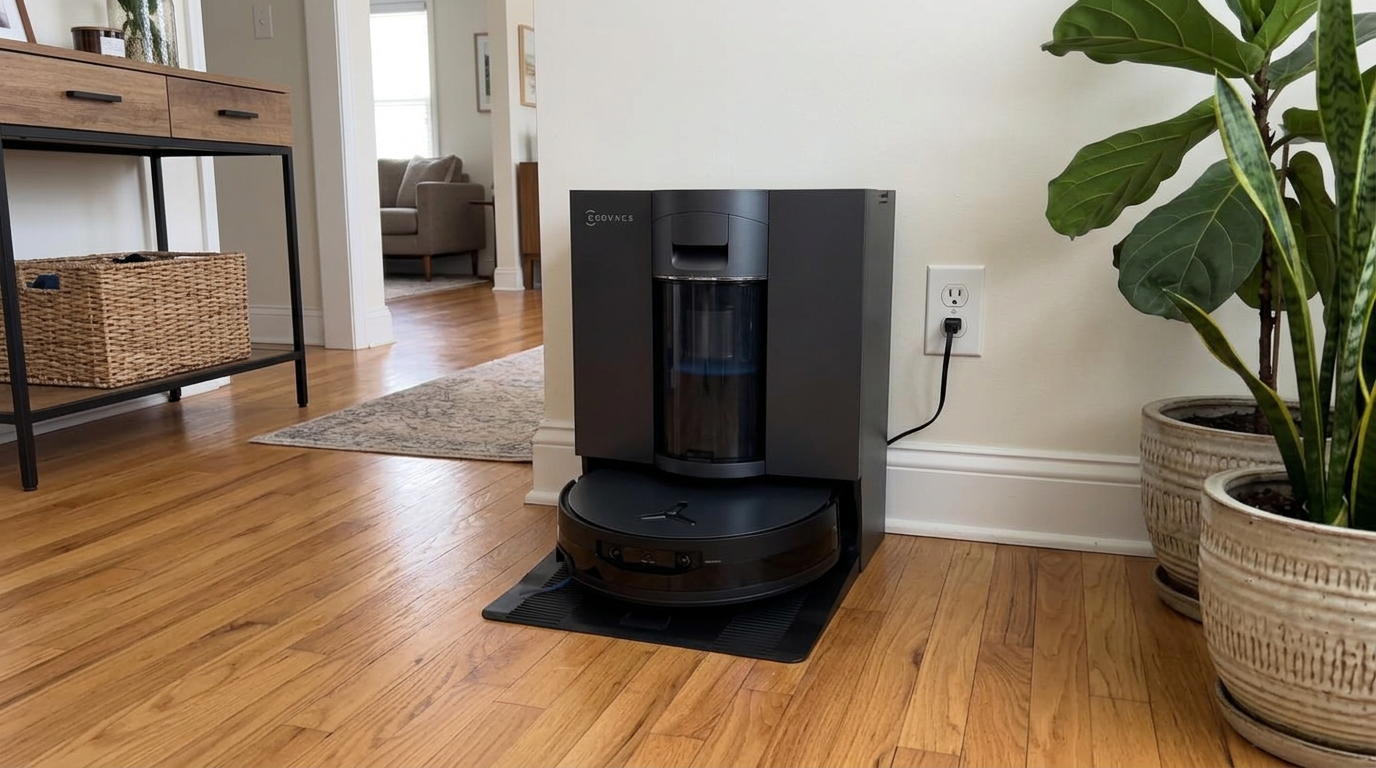
Newer high-end models like the DEEBOT X12S OMNICYCLONE show how quickly mopping hardware is evolving. See the ECOVACS DEEBOT X12S OMNICYCLONE on Amazon →
Can mop pressure damage your floors?
More scrubbing force is not dangerous for a sealed floor by itself. What damages floors is usually water and grit, not pressure.
Wood flooring makers are blunt about moisture. Mullican Flooring tells owners never to pour water on its floors or wet-mop them, and warns that string, sponge and spin mops hold too much water. A Portland Press Herald guide citing the National Wood Flooring Association says the group advises against wet and steam mops on wood because excess moisture can damage the finish and the wood.
So on hardwood, I care far more about the water setting than the pressure number. A robot that scrubs hard with a barely damp pad is safer than one that scrubs gently with a soaking wet pad.
| Floor type | Pressure concern | What I set |
|---|---|---|
| Sealed hardwood | Low; water is the risk | Lowest water flow, no steam or very hot water unless the floor maker approves |
| Laminate | Low; seams swell with water | Low water flow, avoid repeat passes on seams |
| Luxury vinyl plank | Low | Medium water flow is usually fine |
| Porcelain and ceramic tile | Very low | Higher water and deep scrub for grout lines |
| Natural stone | Low; chemistry is the risk | Plain water or a stone-safe cleaner only |
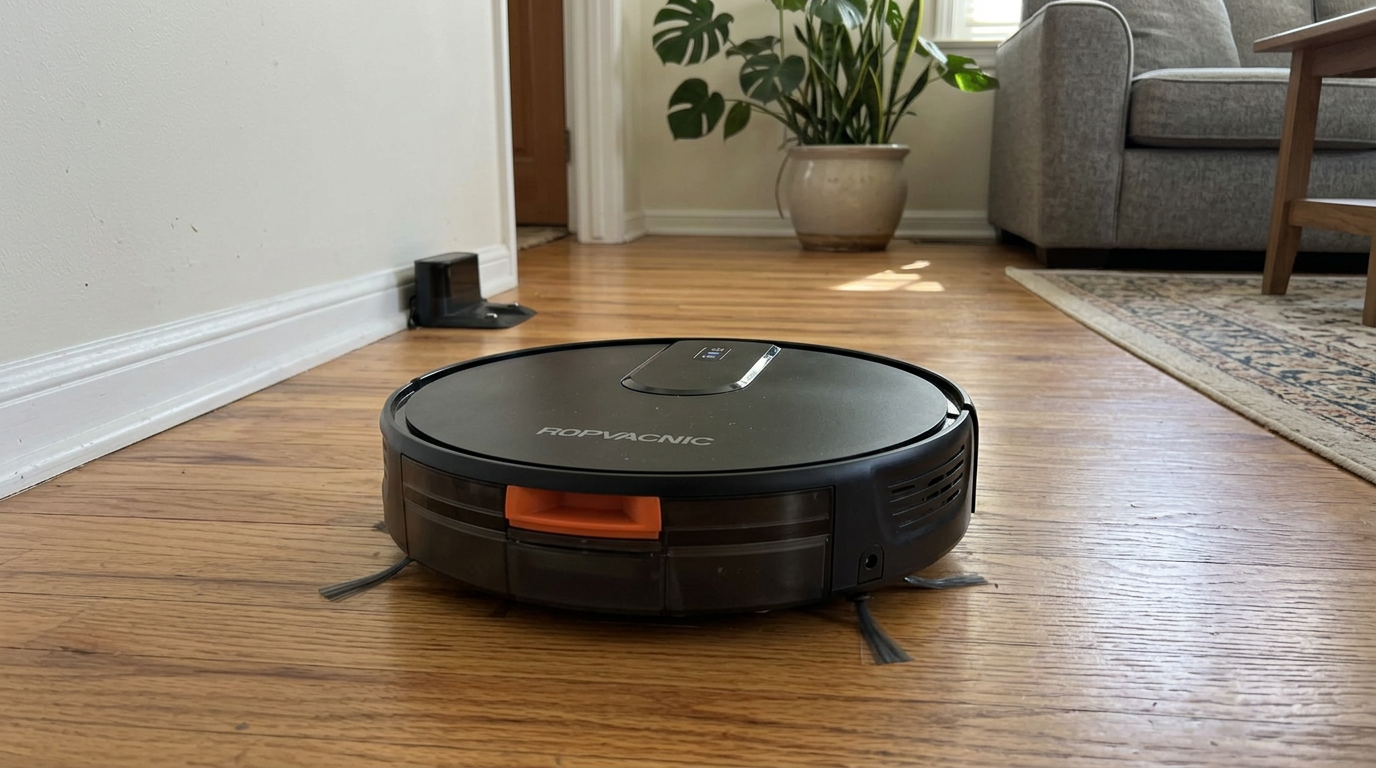
On budget combo robots like the ROPVACNIC, check the water-flow settings before mopping wood floors. Read my ROPVACNIC Robot Vacuum and Mop Combo review →
What matters more than pressure
If I rank what actually decides how clean a robot leaves my floors, pressure and RPM are in the middle of the list, not at the top.
First is mop cleanliness. A mop that is washed in the dock every room or two keeps lifting dirt instead of spreading it. Second is water control: enough to dissolve a spill, not so much that it streaks or soaks wood. Third is coverage and edge reach. Only then do pressure and speed come in.
Lifting matters too. A mop that rises when the robot reaches a rug keeps carpet dry and keeps the pad from picking up fibers. Roborock lists a lift of up to 10 mm on the Qrevo S Pro, for example, and 7 mm on the original Qrevo.
- Dock that washes the mop during the job
- Fine water-flow control in the app
- Reliable mop lifting on rugs
- Repeat-pass or deep-scrub option
- A slightly higher newton figure
- RPM differences of 10% to 20%
- Pressure claims without a test method
- Marketing multipliers like "16× pressure" without the baseline
For most homes, any modern spinning, vibrating or roller mop has enough mechanical force. The difference you will feel is in how often the mop is cleaned and how well the robot manages water.
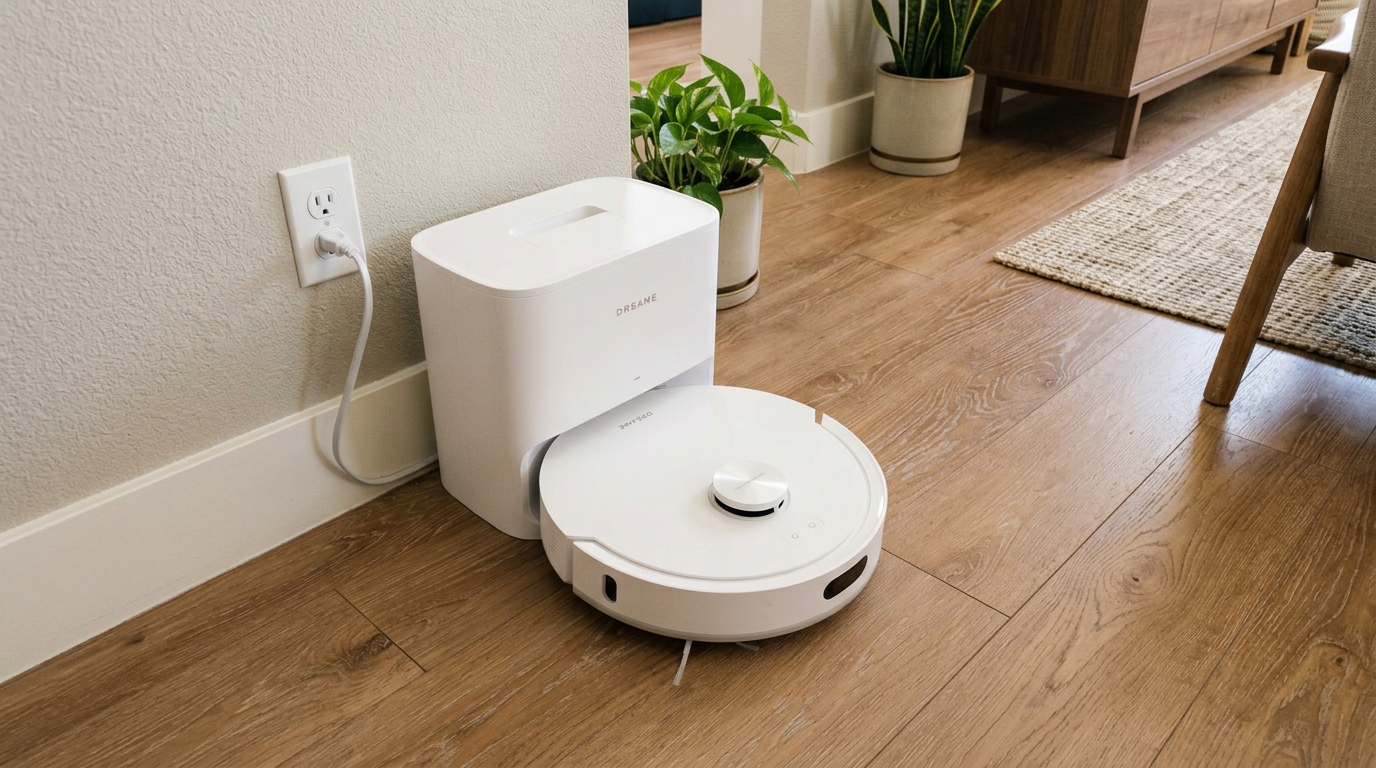
Mid-range robots like the D20 Air Plus are a good test of whether you need flagship mopping at all; many homes do not. Read my Dreame D20 Air Plus review →
How I get the most out of any robot mop
- Vacuum before you mopRun a vacuum pass first, or use vacuum-then-mop mode. Mopping over grit grinds it into the finish and fouls the pad fast.
- Match water flow to the floorUse the lowest setting on wood and laminate, a medium setting on vinyl, and higher settings on tile. Adjust room by room if the app allows it.
- Use deep scrub only where it countsTurn on deep scrub or repeat passes for the kitchen, entry and around pet bowls. Bedrooms and halls rarely need it.
- Wash the mop oftenSet the dock to wash the mop every room or two. A dirty mop with high pressure just smears dirt more firmly.
- Add the right cleaner, sparinglyUse the manufacturer's floor solution or a pH-neutral cleaner, and never more than the label says. Too much leaves a sticky film that attracts dirt.
- Replace pads on scheduleWorn pads lose texture and stop gripping stains. Check the manual for the interval and replace sooner if they look matted.
Frequently asked questions
What is a good mop pressure for a robot vacuum?
What is the difference between newtons and pascals for mop pressure?
Is a higher mop RPM better?
Are spinning mops better than vibrating mops?
Can robot mop pressure scratch hardwood floors?
Does a roller mop clean better than round pads?

Sarah has tested vacuums, mops, air purifiers and dehumidifiers since 2017. Before joining BrasQ, she spent five years as a test coordinator at a national consumer advocacy group. She studied industrial design at Ohio State and lives in Columbus with her family and a long-haired cat.
- First published.
- Roborock: S7 Pro Ultra product page (VibraRise, mop pressure footnote)
- Roborock US: S7 product page (scrub frequency)
- Roborock US: S8 MaxV Ultra product page (VibraRise 3.0)
- Roborock: Qrevo product page (200 RPM spinning mops)
- Roborock support: Qrevo Master mopping system
- Roborock Canada: Qrevo S Pro product page (mop lifting)
- ECOVACS Canada: DEEBOT T90 PRO OMNI product page
- Digital Reviews: ECOVACS DEEBOT T90 PRO OMNI and T80S OMNI launch details
- ChannelNews: ECOVACS roller mopping launch
- Kärcher: the Sinner's Circle explained
- Mullican Flooring: cleaning your hardwood floors
- Portland Press Herald: NWFA wood floor cleaning guidance