ROPVACNIC vs Tikom robot vacuum and mop combo: which $100 robot is worth it?
Both of these robots sell for roughly $100 and promise to vacuum and mop in one pass. I went through the lab data, the spec sheets and more than 7,500 owner ratings to find out which one actually deserves a spot under your couch.
We choose products independently. We may earn a commission through links on this page; your price stays the same. Affiliate policy
In this comparison
For most homes I would pick the ROPVACNIC S1. It costs a little less with Prime, has a bigger 4,400mAh battery, gives you four water levels and skips the hair-wrapping roller brush that became the Tikom’s biggest weakness in lab testing. The Tikom G8000 Max is the better choice if you want a robot that cleans in neat zig-zag rows, shows its path in the app and works with Home Assistant. Neither maps your home, and both mop with a damp pad rather than scrubbing, so treat them as daily maintenance cleaners.
The two robots
Prices checked November 6, 2026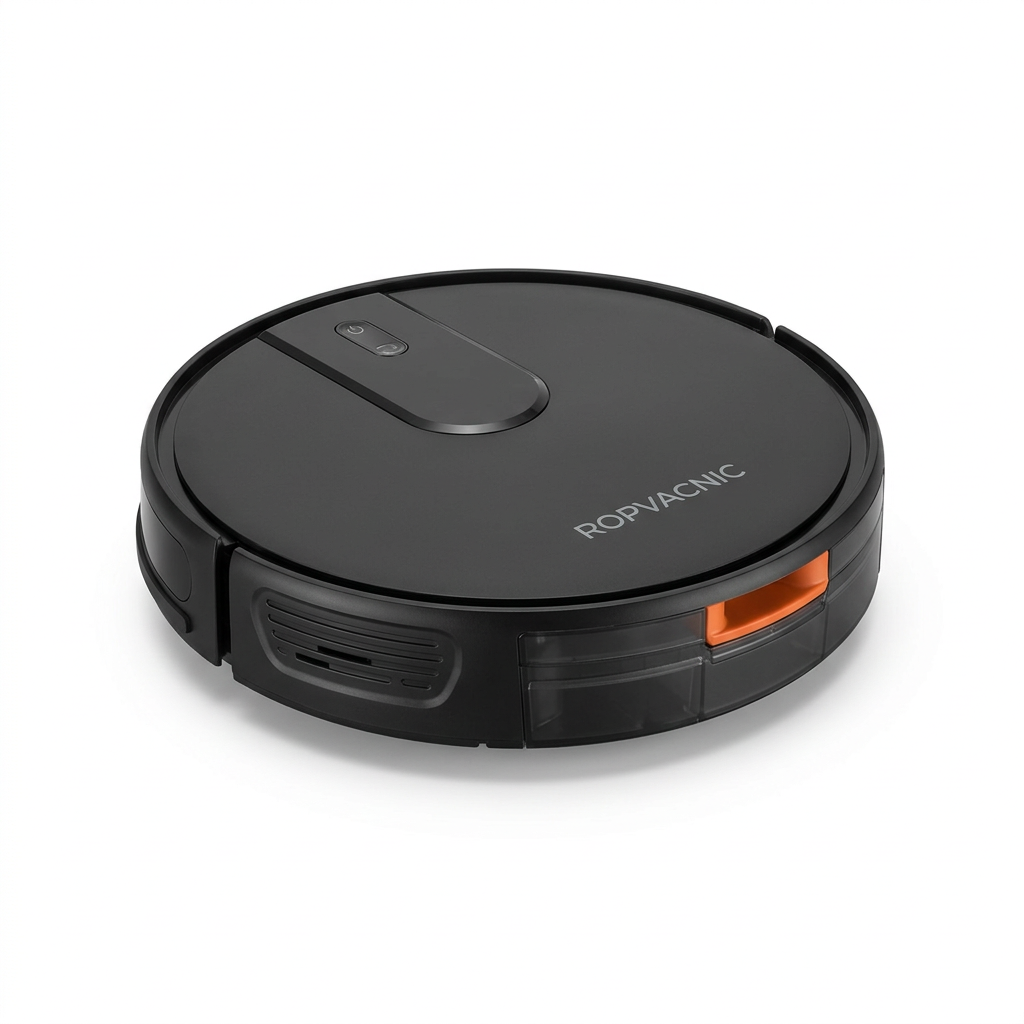
Bigger battery, a tangle-resistant intake and a four-step electric water tank for less money with Prime.
$99.99 at Amazon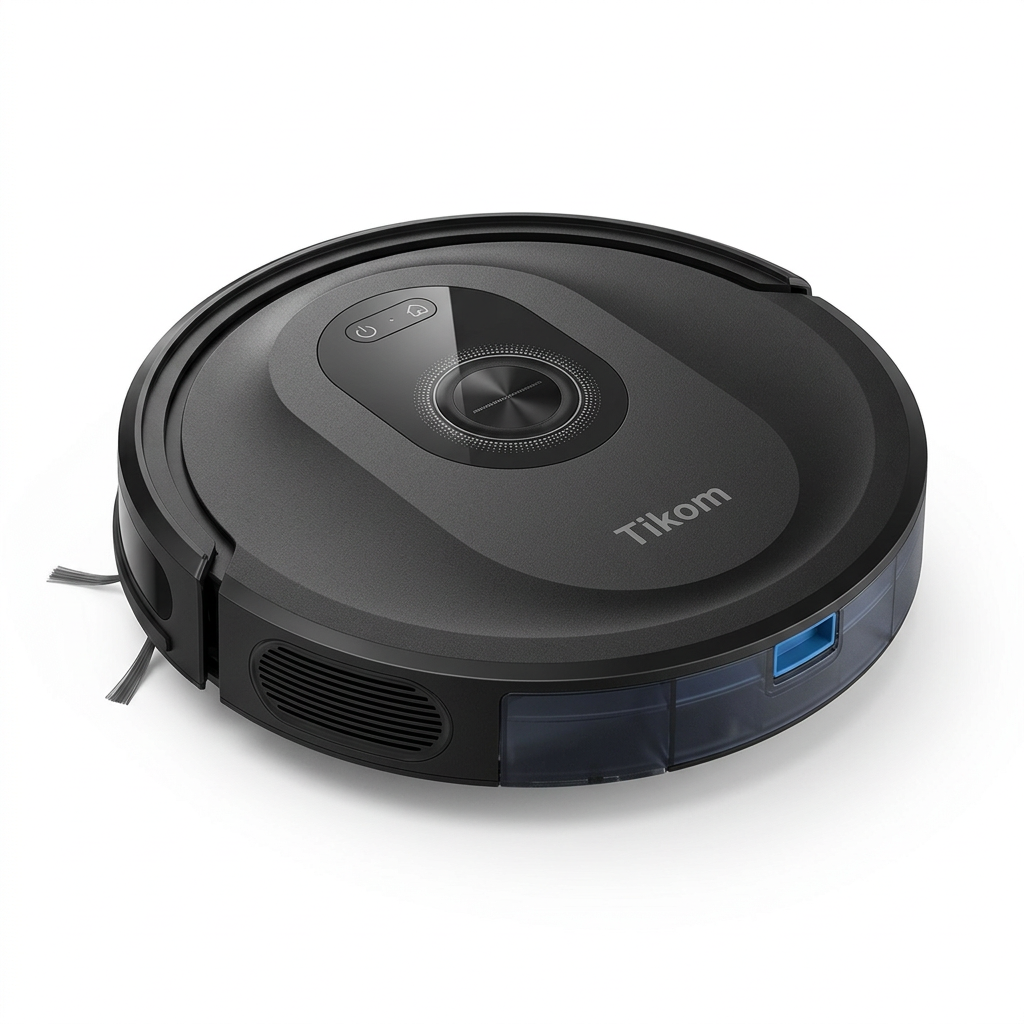
Cleans in neat zig-zag rows, has a big 15 oz bin and the longest rated runtime, but tangles with long hair.
$108.21 at AmazonROPVACNIC vs Tikom at a glance
- Buy the ROPVACNIC S1 if you have pets or long hair in the house. Its tangle-resistant intake and bigger battery are the more useful wins, and it is cheaper with Prime.
- Buy the Tikom G8000 Max if you want predictable row-by-row cleaning and a live path in the app. It also has the longest rated runtime.
- Neither robot maps your home, and both mop with a damp pad. They keep floors tidy between deeper cleans.
- The Tikom is the only one with independent lab data, and it was rough: heavy puddles while mopping and 60% of long hair wrapped on its brush.
Head to head
The better result in each row is marked. Figures come from the manufacturers and Amazon listings unless noted; rows without a mark are a tie or a matter of taste.
| Spec | ROPVACNIC S1 | Tikom G8000 Max |
|---|---|---|
| PriceNovember 6, 2026 | $99.99 (Prime) ✓ Best | $108.21 |
| Claimed suctionmax setting | 5,200Pa ✓ Best | 5,000Pa |
| Batterycapacity | 4,400mAh ✓ Best | 2,600mAh |
| Rated runtimelowest power | About 120 min | Up to 150 min ✓ Best |
| Main brushhair tangling | No-tangle intake ✓ Best | Bristle roller, 60% tangle in lab |
| Water controlmop settings | 4 levels, electric ✓ Best | 3 levels, electric |
| Dustbinonboard | Not specified | 15.2 oz ✓ Best |
| Navigation | Sensors, random and pattern modes | Gyroscope zig-zag rows ✓ Best |
| Smart home | Alexa, Google | Alexa, Google, Home Assistant ✓ Best |
| Heightfits under furniture | 2.99 in | 2.99 in |
| Mapping | No | Live path only, not saved |
| Amazon rating | 4.3 (2,514) | 4.3 (4,996) |
| Rows won | 5 | 4 |
ROPVACNIC vs Tikom pros and cons
ROPVACNIC S1
- Cheapest of the two with Prime at $99.99
- No-tangle intake keeps long hair off the brush
- Large 4,400mAh battery
- Four electric water levels for the mop
- Spare HEPA filter and four side brushes included
- App, remote and voice control
- Slim 2.99-inch body fits under most sofas
- No saved maps or no-go zones
- Gets stuck between rugs and furniture legs
- Loud on the highest suction setting
- Docking is hit and miss with obstacles nearby
- Glides over rugs without cleaning them deeply
- Without Prime it costs $136.99
- No independent lab test published yet
Tikom G8000 Max
- Zig-zag rows cover rooms predictably
- Up to 150 minutes rated runtime
- Big 15.2 oz dustbin
- Live cleaning path in the app
- Works with Alexa, Google and Home Assistant
- Quiet, rated at about 45 dB
- Removed dried stains well in lab testing
- Left puddles on the floor in lab mopping tests
- Bristle roller wrapped 60% of long hair
- Weak on embedded carpet dirt and crevices
- Wanders and struggles to find its dock
- Takes 6 to 6.5 hours to fully charge
- Only a short magnetic strip to block areas
- 2.4 GHz Wi-Fi only
Who should buy which robot?
- Homes with shedding pets
- Anyone with long hair in the household
- Prime members who want the lowest price
- Mostly hardwood, tile or vinyl floors
- Wood floors where you want fine control over mop water
- Bigger single-level homes that need a longer battery
- Open-plan rooms with few obstacles
- People who want to see where the robot has cleaned
- Home Assistant users
- Light, quiet daily runs while you are home
- Short-haired households
- Buyers without Prime who want the lower everyday price
Design and build
Put these two robots side by side and you would be forgiven for thinking they came off the same production line. Both are round, both are listed at 2.99 inches tall, and both use the classic budget layout: a charging dock, a removable dustbin, side brushes up front and a mop plate that clips on underneath.
The ROPVACNIC S1 is a touch smaller at 12 inches across, while the Tikom G8000 Max measures about 12.7 inches and weighs 5.3 pounds. That half inch can be the difference between slipping between two chair legs or bumping around them.
Height is where both robots earn their keep. At just under 3 inches, they slide under most sofas, beds and kitchen cabinet kick plates, and owners of both keep saying the first emptied bin is full of dust from places they had not reached in months.
Tip: Slide a tape measure under your lowest sofa, bed and TV console before you order. You want at least 3.1 inches of clearance for either robot, so it does not wedge itself underneath.
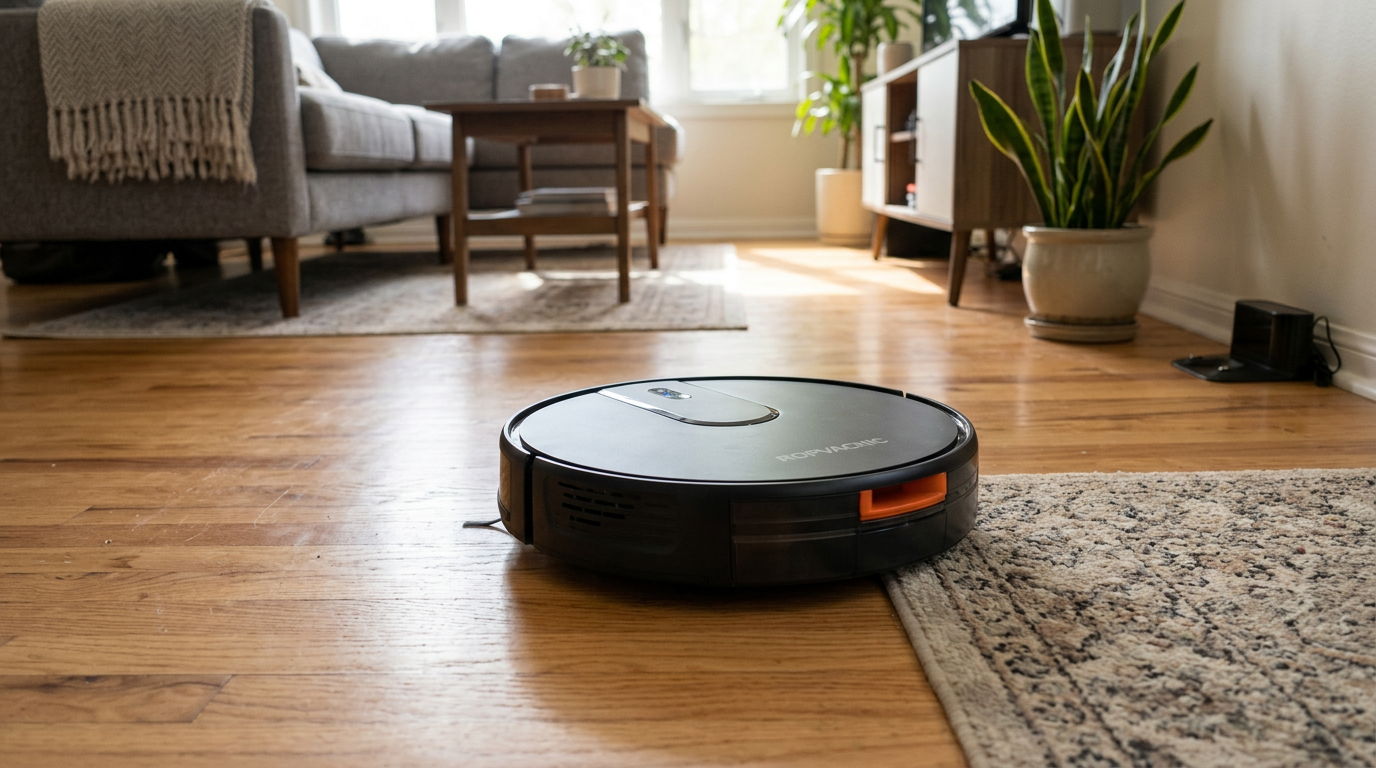
At 2.99 inches tall, the ROPVACNIC S1 reaches under most sofas and beds.
What comes in the box tells you a bit about each brand. ROPVACNIC packs in a spare HEPA filter, four side brushes, a cleaning tool and a mop pad holder, so you are set for your first round of replacements.
Tikom includes a remote and a strip of magnetic boundary tape, which is the only way to fence off areas. The tape is about 3 feet long, and several owners say that is not enough to block off more than one doorway.
Neither robot comes with a self-emptying base. At this price that is expected, but it means you will be emptying a bin by hand after almost every run if you have pets.
Suction and everyday vacuuming
On paper the ROPVACNIC wins this round with a claimed 5,200Pa of suction against the Tikom at 5,000Pa. I would not read much into a 200Pa gap, though, and honestly I would not read much into either number.
The reason is the Vacuum Wars bench test on the Tikom. They measured its suction at about 1,230Pa and its airflow at 15 CFM, a little below their 17 CFM average. That is roughly a quarter of the number on the box, a pattern you see again and again with budget robots.
I also noticed that some older retailer listings for the same ROPVACNIC S1 model quote 4,000Pa instead of 5,200Pa. That does not prove anything on its own, but it is a good reminder to treat suction ratings in this class as marketing, not measurements.
Good to know: Pa (pascals) is the unit robot makers use to rate suction, even on US listings. There is no standard test behind it, so treat it as a rough way to compare models, not a promise of how much dirt comes up off your floor.
What owners actually see
Here is the good news: on hard floors, both robots clearly do the job. ROPVACNIC owners describe strong pickup of dust, crumbs and pet hair, and one reviewer with two Saint Bernards said a 45-minute run every day or two keeps their floors under control.
Tikom owners say much the same. Dust, crumbs, cat litter and long human hair on hardwood come up over and over, and Amazon’s review summary highlights how much dust it pulls up on the first few runs.
Carpet is where both start to struggle. ROPVACNIC recommends its robot for hardwood and low-pile carpet, and owners say it climbs onto area rugs but does not clean them deeply. Tikom claims short and medium pile, but in the Vacuum Wars carpet deep-cleaning test it removed only 64% of embedded sand against an average of 78%.
The Tikom also scored just 0.5 in the lab crevice test, where the average is 2. If you have grout lines, gaps between floorboards or textured tile, expect it to leave some debris in the grooves.
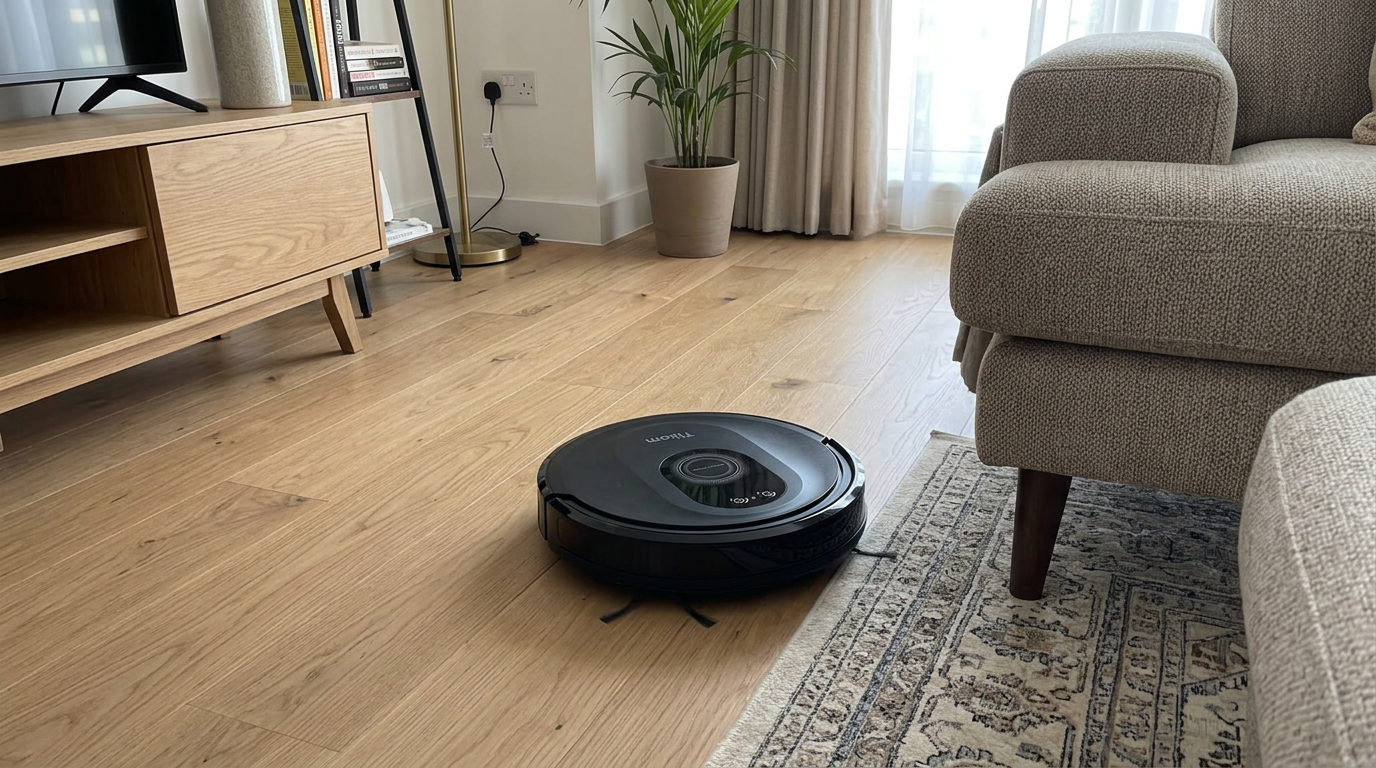
The Tikom G8000 Max is at its best on open stretches of hard floor.
My take: for picking up the visible layer of dust, hair and crumbs on hard floors, these two are close enough that suction should not decide your purchase. The brush design and navigation matter far more.
Carpet tip: Keep a regular vacuum for a weekly pass over rugs. Neither robot pulls embedded grit out of the pile, so a five-minute manual clean keeps rugs from wearing out early.
Pet hair and tangles
This is where the two robots separated most clearly for me, and it comes down to what sits under the robot. The Tikom G8000 Max uses a traditional bristled roller brush. The ROPVACNIC S1 uses what ROPVACNIC calls a no-entanglement design, which skips the classic roller so hair goes into the bin instead of wrapping around a brush.
The lab numbers on the Tikom show why that matters. In the Vacuum Wars seven-inch hair test, 60% of the hair ended up wrapped around its brush, more than double their 26% average.
To be fair, the Tikom did fine at picking up short, flattened pet hair, collecting 85% against an 82% average. The problem is not pickup, it is maintenance: long hair builds up on the roller, and you end up cutting it free every few runs.
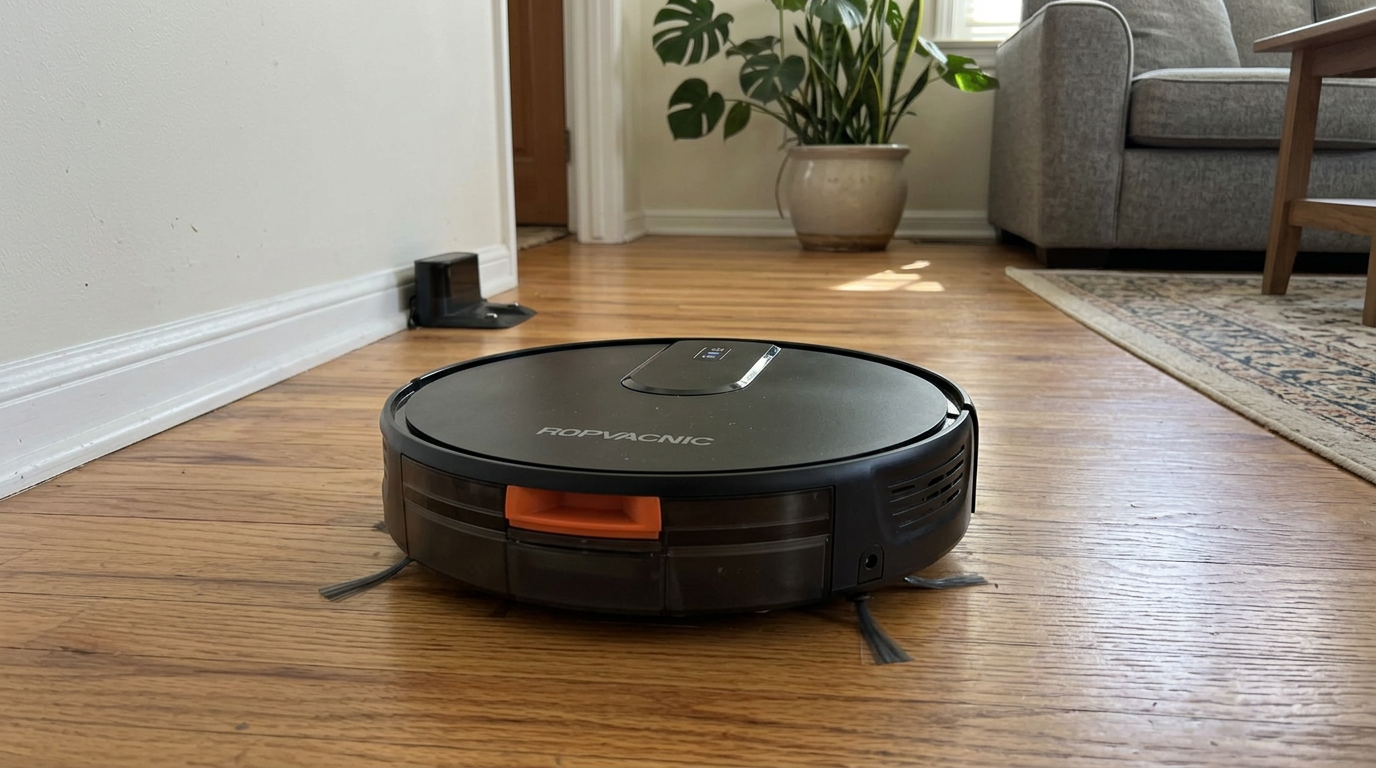
The roller-free intake on the ROPVACNIC S1 is built to stop hair wrapping.
ROPVACNIC owners with heavy shedders are noticeably happier on this point. One owner with six pets and five kids called it a lifesaver for the tumbleweeds of fur, and another praised how it avoids tangles from pet hair.
The trade-off of a roller-free intake is usually weaker agitation on carpet, which lines up with owners saying it glides over rugs without deep cleaning them. If your home is mostly hard floors with a pet or two, I think that is a very good trade.
Pet owner tip: During shedding season, schedule a short daily run instead of one long weekly one. Daily passes stop fur from drifting under furniture and keep the bin from overflowing mid-run.
Tikom brush tip: To refit the roller after cutting hair off, slot the fixed end into its bracket first, then rest the spinning end in the opposite groove and roll the brush until it clicks in. One owner shared this trick, and it saves a lot of fiddling.
Mopping
Both robots mop the same basic way. You fill a water tank attached to the robot, a microfiber pad stays damp, and the robot drags that pad behind it while it vacuums.
The ROPVACNIC S1 gives you four water levels through its electrically controlled tank, while the Tikom G8000 Max has three. More steps let you dial the flow down for wood floors, which gives the ROPVACNIC a small but real edge.
Owners of both robots are realistic about results. A ROPVACNIC reviewer described it as a maintenance mop, not a deep scrubber, great for paw prints but not a replacement for a real mop now and then.
In the Vacuum Wars mopping test, the Tikom removed dried stains well, scoring 136 against an average of 108. But it left about 0.6 ounces of water on the test surface, against an average of just 0.04 ounces, and the testers could see puddles. Its low water setting even left slightly more behind than the high setting. That is a real risk on hardwood, laminate and other moisture-sensitive floors.
Hardwood tip: If you buy the Tikom for a wood floor, start on the lowest water setting, watch the first few runs and dry any puddles. If your floors are waxed, oiled or unsealed, use either robot as a vacuum only.
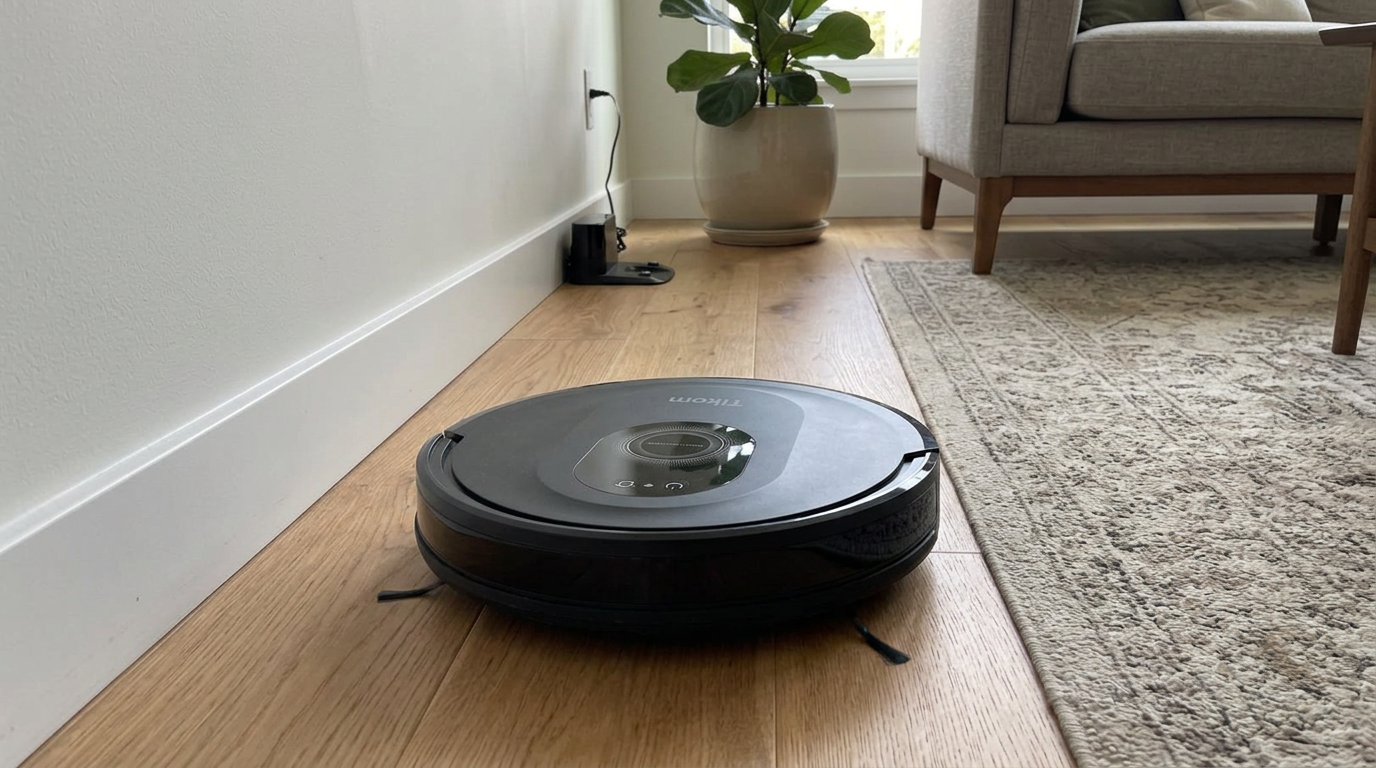
Both robots drag a damp pad, which suits light daily freshening on tile and vinyl.
Neither robot lifts its mop when it reaches carpet. Tikom asks you to remove the mop holder or block rugs with the magnetic strip, and a three-star Tikom owner with several rugs said the mop function was basically useless in their home for that reason.
Both brands also expect plain water only. One ROPVACNIC owner wished for clearer guidance on cleaning solution, and the Tikom manual explicitly asks for clean water.
Rug tip: On mopping days, take the mop plate off before the robot reaches carpeted rooms, or run a vacuum-only pass first and mop the hard floors afterwards.
Navigation and getting stuck
Neither of these robots has LiDAR, a camera or saved maps. That is the single biggest compromise you accept at $100, and it shapes how they behave every day.
The Tikom G8000 Max uses a gyroscope to clean in a zig-zag row pattern, and the app shows a live trace of where it has been. Vacuum Wars measured it covering about 9 square feet per minute, above their average of roughly 7.6, so it is efficient when it is on track.
The same testers saw it spin around unexpectedly and struggle to find its dock. One owner compared it to a housekeeper who cleans like a pro but drives past her own charging dock six times.
The ROPVACNIC S1 relies on its sensor array and a set of cleaning patterns rather than neat rows. Several owners run it on random mode and say it still follows baseboards and gets dirt out of corners.
Its weak spots are the same ones you find on almost every budget robot. Owners report it getting stuck between rugs and end tables, under couches with low clearance and on stray socks or charging cables. One reviewer warned it will eat your phone charger if you leave it on the floor.
Docking is hit and miss on both. A ROPVACNIC owner rated its return to base at about 50/50 when obstacles are in the way.
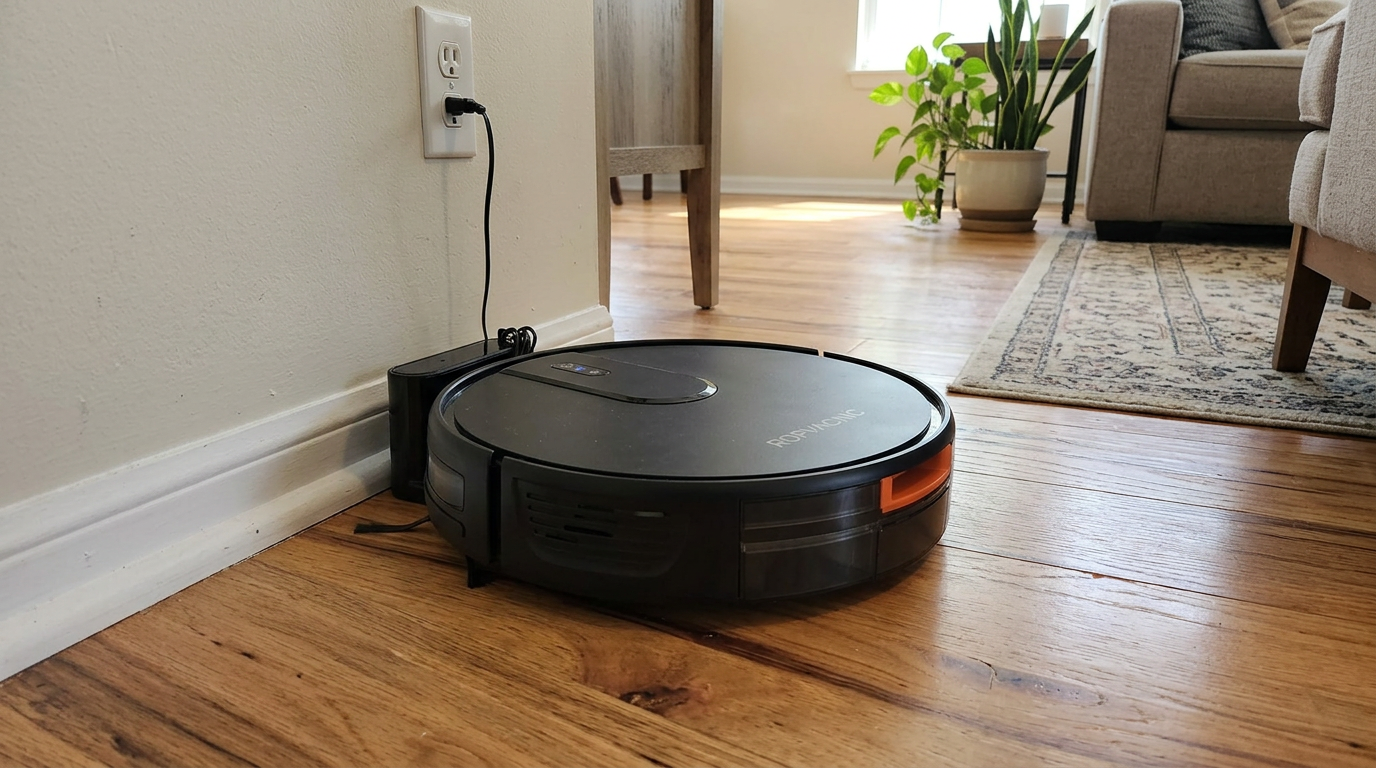
Dock tip: Put the dock against a wall on hard floor with about 3 feet of open space in front and to the sides. Owners of both robots say a cramped dock is the main reason the robot circles around looking for home.
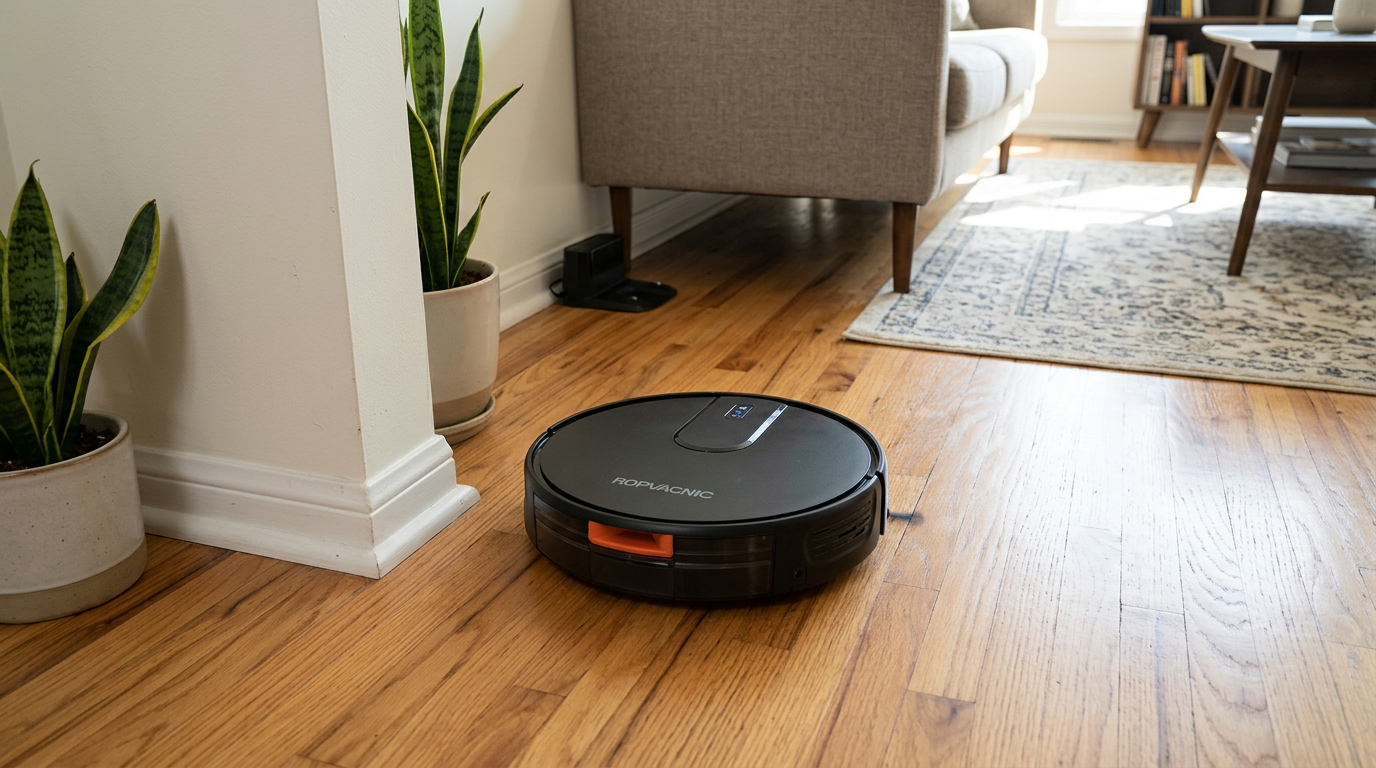
Give the dock clear space so the robot can find its way home.
So who wins? For an open-plan home, I give the edge to the Tikom because its rows cover a room more predictably and you can see what it missed. For a cluttered home it is close to a draw.
Clutter tip: Do a five-minute pickup of cables, socks and toys before each run. With no obstacle camera on either robot, that is the single biggest thing you can do to avoid rescues.
Battery, charging and runtime
The spec sheets point in two directions here. The ROPVACNIC S1 has the bigger battery at 4,400mAh, while the Tikom G8000 Max has a 2,600mAh pack but the longer rated runtime.
Tikom rates its robot at up to 150 minutes on the gentlest suction, about 120 minutes on normal and 90 on strong. ROPVACNIC does not put a minute figure on its own Amazon page, but several retailers list the S1 at around 120 minutes.
Real-world reports are mixed for both. A Tikom owner said it did not reach the advertised time on high suction, and Vacuum Wars estimated its coverage at about 1,064 square feet per charge against an average of 1,170.
Another Tikom owner said it took about two and a half hours to clean 1,500 square feet, which is a useful reality check for a larger single-level home.
Charging is the hidden headache with the Tikom. Its manual says a full charge takes 6 to 6.5 hours, so if it runs flat mid-morning it will not be ready again until the afternoon.
ROPVACNIC owners also say charging takes a while, though I could not find an official figure. The robot heads home on its own when the battery drops below 20%.
Durability is the other thing to watch. Amazon review summaries for both models mention a minority of owners reporting batteries that stop charging after a few months.
Charging tip: Schedule runs overnight or while you are at work. That gives either robot time to recharge fully between sessions, which matters most with the Tikom’s 6-hour charge.
Warranty tip: Keep your order confirmation and test the robot in your busiest rooms during the return window. Battery problems, when they happen, tend to show up in the first few months.
App, remote and smart home
Both robots give you more ways to control them than you might expect at this price. Each has an app, a remote, buttons on the robot and voice control through Alexa or Google Assistant.
The Tikom G8000 Max runs on the Tuya Smart app, a widely used platform for budget smart home gear. That brings scheduling, suction and water levels, manual driving and the live cleaning trace, and it lets the robot show up in Home Assistant through the official Tuya integration.
The downside is that the app is generic. Vacuum Wars found it frustrating during testing, and one owner said the app lets you add rooms without any way to assign settings to them. It also only connects to 2.4 GHz Wi-Fi.
Wi-Fi tip: If setup fails on the Tikom, make sure your phone is on a 2.4 GHz network and Bluetooth is switched on. Many mesh routers combine 2.4 and 5 GHz under one name, so temporarily split them if pairing keeps failing.
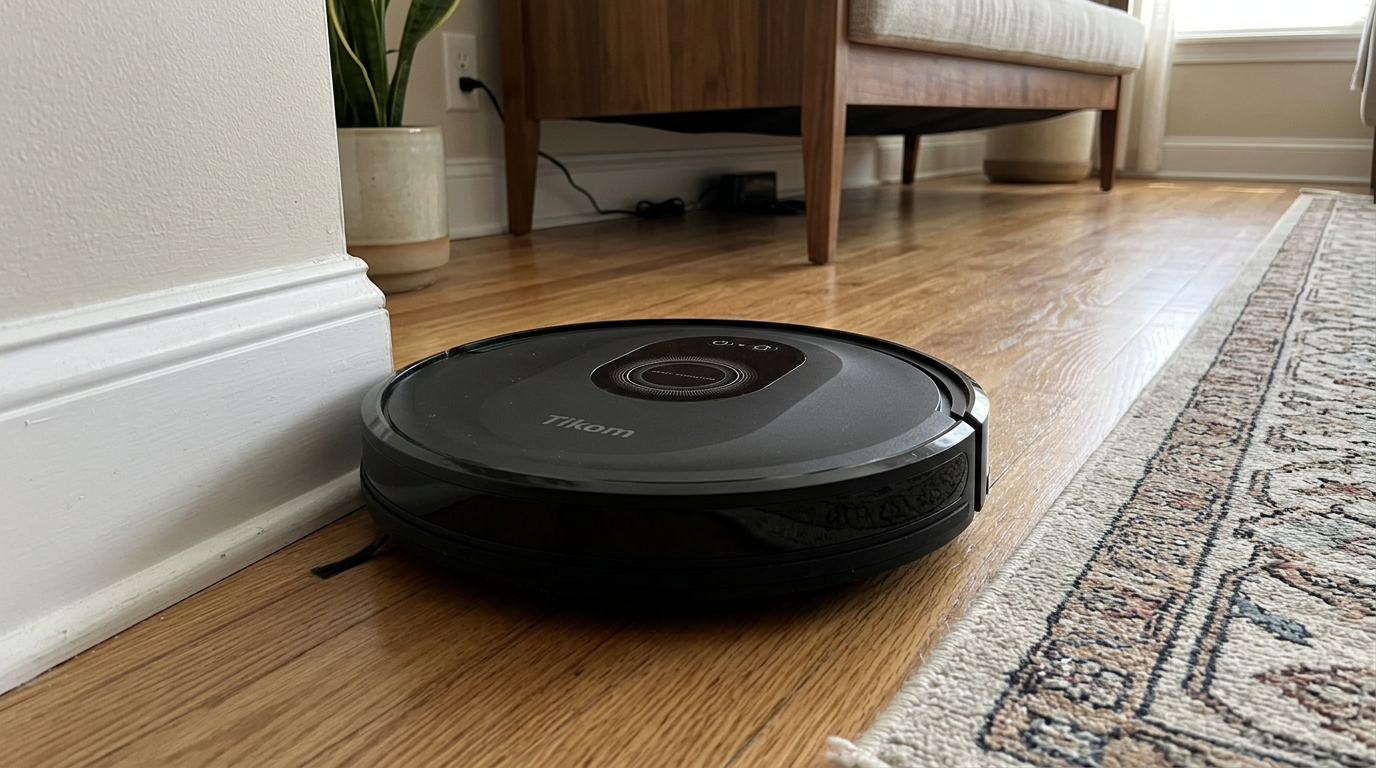
The Tikom runs on the Tuya Smart app, which also opens the door to Home Assistant.
ROPVACNIC uses its own app with multiple cleaning modes and adjustable suction and water. Owners rarely complain about it, and several say they barely use the extra features because the robot just turns on and goes.
I like that ROPVACNIC owners actually use the remote. One reviewer steers the robot straight to a mess instead of waiting for it to bump its way there, a nice workaround for the lack of mapping.
If you run Home Assistant, the Tikom is the easy pick. For everyone else, the two are close, and the ROPVACNIC app seems to cause fewer headaches.
Smart home tip: Link either robot to Alexa or Google Home and build a routine, such as starting a clean when you leave for work. That tends to be more dependable than remembering to press start.
Maintenance and running costs
Budget robots are cheap to buy, but you will spend a few minutes on them every week. Both need the bin emptied, the filter tapped clean, the side brushes checked and the mop pad washed by hand.
The Tikom G8000 Max wins on bin size with a 15.2-ounce dustbin, which is large for a robot that empties manually. ROPVACNIC only calls its bin spacious without giving a figure.
Where the ROPVACNIC claws that back is the brush. Not having to cut hair off a roller every week is the kind of small thing that decides whether you keep using a robot vacuum or leave it in the closet.
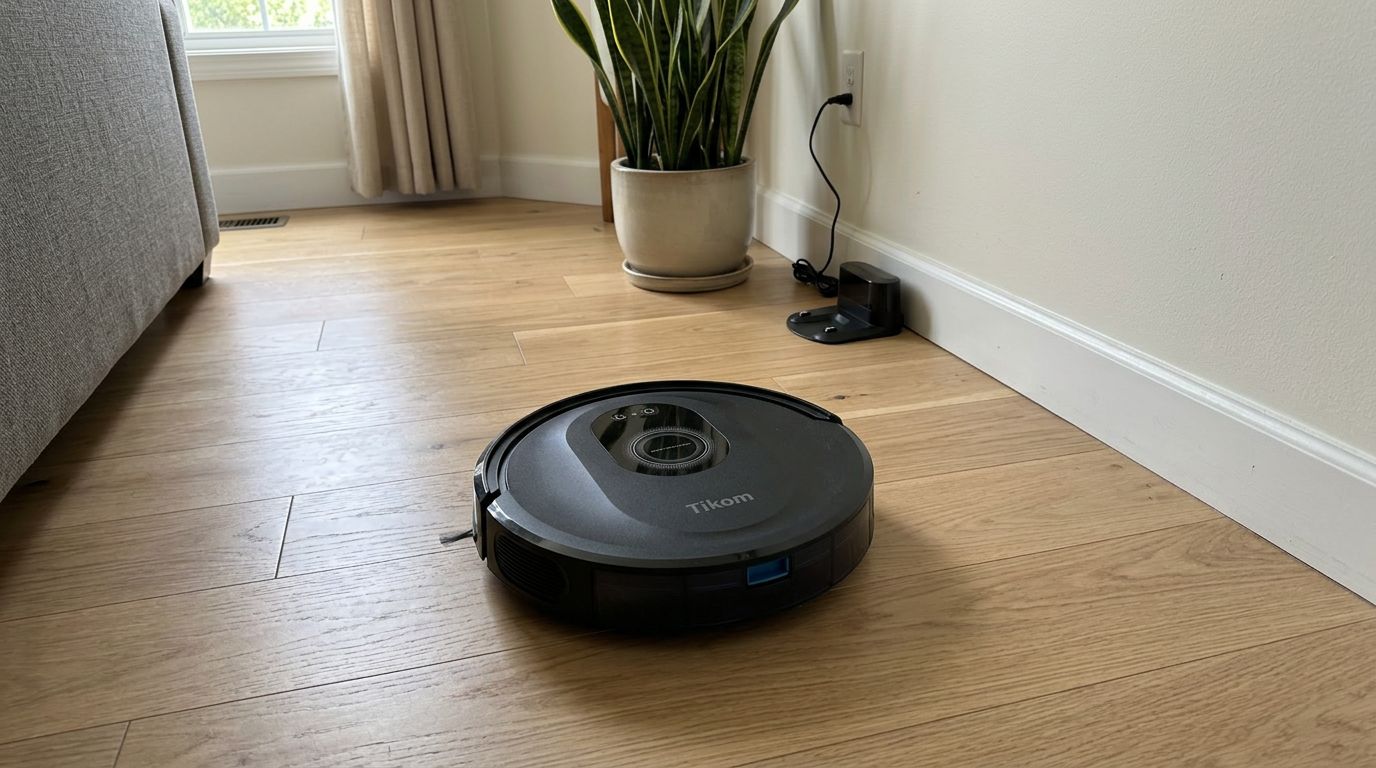
Plan on emptying either bin after most runs in a home with pets.
The ROPVACNIC also starts you off with spares, including an extra HEPA filter and four side brushes. With the Tikom you will likely be ordering replacement brushes and filters sooner.
One quirk: a ROPVACNIC owner noticed a squeak after removing the mop attachment, which went away once it was put back on. Small, but it is the kind of thing that sends people to customer support for no reason.
Independent lab results
Vacuum Wars bought and tested the Tikom G8000 Max in its studio at the end of October 2026. It became their lowest-scoring robot vacuum in seven years of testing, mostly because of the mopping water and hair results.
Here is how its key results compare with the Vacuum Wars average. I could not find a comparable independent lab test of the ROPVACNIC S1.
Lower is better for hair tangling, higher is better for pickup and carpet cleaning. The Tikom holds its own on flattened pet hair but falls behind on deep carpet cleaning and hair management.
What owners say
Both robots hold the same 4.3-star average on Amazon. The Tikom G8000 Max has nearly twice as many ratings at 4,996 and carries an Amazon’s Choice badge, while the ROPVACNIC S1 has 2,514 ratings and over 10,000 bought in the past month.
Owners repeatedly mention strong pickup of dust and pet hair, easy setup and how much it saves on daily sweeping.
It gets caught under low couches and between rugs and table legs, and sounds like a small hair dryer on max suction.
Some owners wish it mapped the floor, and say the mop freshens rather than scrubs.
Owners love that it fits under beds and cabinets, schedules easily in the app and is quiet enough to run during TV time.
Wandering navigation and trouble finding the dock come up often, along with rugs getting wet during mopping.
A minority of owners of both models report batteries that stop charging after a few months.
A handful of reviews cannot tell you how often a problem happens. They do show what to watch for during your return window.
Which one should you buy?
After weighing everything, I do not think there is a bad choice here as long as your expectations match a $100 robot. The right pick depends on what is on your floors and who sheds in your house.
- You have pets or long hair in the house
- You have Prime and want the lowest price
- Your floors are mostly hardwood, tile or vinyl
- You want finer control over mop water
- You want it to clean in neat, predictable rows
- You need deep carpet cleaning
- You are sensitive to noise on the max setting
- You want zig-zag cleaning with a live path in the app
- You use Home Assistant
- You want the largest stated bin and longest rated runtime
- You do not have Prime
- Someone in the house has long hair
- You want to mop moisture-sensitive wood floors
- You hate waiting 6 hours for a full charge
Pick the ROPVACNIC for pets, long hair and the best price with Prime. Pick the Tikom for tidy rows, Home Assistant and quiet daily runs on short-haired homes.
My pick is the ROPVACNIC S1. It costs a little less with Prime, has the bigger battery, gives you four water levels and avoids the hair-wrapping roller that turned into the Tikom’s biggest weakness in lab testing.
The Tikom G8000 Max is still worth a look if you like a robot that cleans in tidy rows and shows you where it has been. Just keep the water low on wood floors and plan on cleaning its brush regularly.
Whichever you choose, clear cables and socks off the floor, give the dock some breathing room and schedule daily runs.
ROPVACNIC S1 vs Tikom G8000 Max specifications
From the Amazon listings, manufacturer manuals and independent reviews. Prices checked November 6, 2026.
| ROPVACNIC S1 | Tikom G8000 Max | |
|---|---|---|
| Price | $99.99 with Prime, $136.99 regular | $108.21 (list $129.99) |
| Claimed suction | 5,200Pa, 3 levels | 5,000Pa, 3 levels (lab: about 1,230Pa) |
| Battery | 4,400mAh | 2,600mAh |
| Rated runtime | About 120 min (retailer listings) | 150 / 120 / 90 min by suction level |
| Charging time | Not published | 6 to 6.5 hours |
| Dustbin | Not specified | 15.2 oz |
| Water tank | Electric, 4 levels | 10.1 oz, electric, 3 levels |
| Main brush | No-tangle intake | Bristled roller |
| Side brushes | Dual rotating (4 in the box) | Two |
| Navigation | Sensors, multiple cleaning modes | Gyroscope zig-zag, edge, spot, manual |
| Mapping | None | Live path only, not saved |
| Blocking areas | Not specified | Magnetic strip, about 3 ft |
| Size | 2.99 in tall, 12 in wide | 2.99 in tall (listing), 12.7 in wide, 5.3 lb |
| Noise | Not published | About 45 dB (rated) |
| Controls | App, remote, voice | App, remote, voice, buttons |
| Smart home | Alexa, Google Assistant | Alexa, Google Assistant, Home Assistant (Tuya) |
| Auto recharge | Yes, below 20% battery | Yes |
| Amazon rating | 4.3 (2,514 ratings) | 4.3 (4,996 ratings) |
How I researched and compared them
This is a researched comparison, not a long-term test of our own.
I started from both Amazon listings, the manuals and retailer spec sheets, then read the most helpful owner reviews for each robot. Between them they have more than 7,500 ratings, enough to spot patterns a single test home would miss.
For the Tikom I also used the full Vacuum Wars studio test from October 2026. I could not find an equivalent lab test for the ROPVACNIC, so where I compare lab numbers I say so. I treat individual owner reports as warning signs, not proof of how often a problem happens.
- Cleaning: hard floor pickup, carpet, pet hair and tangling.
- Mopping: water control, stain removal and how much water is left behind.
- Navigation: coverage, getting stuck and docking.
- Ownership: battery, charging, app, maintenance and price.
ROPVACNIC vs Tikom FAQ
Is the ROPVACNIC better than the Tikom G8000 Max?
For most homes, yes, by a modest margin. The ROPVACNIC S1 has a bigger battery, more water settings and a tangle-resistant intake, and it is cheaper with Prime. The Tikom is better at cleaning in straight rows and works with Home Assistant.
Do either of these robots map my home?
No. Neither saves a floor plan, so you cannot send them to a specific room or draw no-go zones. The Tikom shows a live trace of its current run, and you block areas with its magnetic strip.
Are they good for pet hair?
Both pick up pet hair well on hard floors. The ROPVACNIC handles long hair better because it skips the traditional roller brush, while the Tikom wrapped 60% of long hair around its brush in independent testing.
Can they mop and vacuum at the same time?
Yes. Both carry a water tank and a damp microfiber pad. Neither lifts the mop on carpet, so remove the mop plate or block off rugs before a mopping run.
Is the Tikom safe on hardwood floors when mopping?
Be careful. In lab testing it left far more water on the floor than average, even on its low setting. Use the lowest setting, watch the first runs and consider vacuum-only mode on sensitive wood.
How long do the batteries last?
The Tikom is rated at up to 150 minutes on its gentlest setting and takes 6 to 6.5 hours to fully charge. The ROPVACNIC has a larger 4,400mAh battery and is listed at around 120 minutes by retailers.
Will they clean carpet?
Lightly. Both handle low-pile rugs for surface debris, but neither deep cleans carpet. The Tikom removed only 64% of embedded sand in a lab test, below the 78% average.
Can I use floor cleaner in the water tank?
Not unless the manual says so. The Tikom manual asks for clean water only, and ROPVACNIC gives no guidance on detergents, so plain water is the safe choice.
Do they work with Alexa and Google Home?
Yes, both do. The Tikom also works with Home Assistant through its Tuya account. Neither supports Apple Home or Matter.


- Vacuum Wars: Tikom G8000 Max review (October 2026)
- Smart Home Compared: Tikom G8000 Max specs and manual details
- The Gadgeteer: ROPVACNIC S1 overview
- Amazon product listing for the ROPVACNIC S1 (ASIN B0GDXV2KJ4), November 2026
- Amazon product listing for the Tikom G8000 Max (ASIN B0DV53XDDJ), November 2026
- Verified Amazon owner reviews of both models
- Comparison published. Prices checked.