Running costs of a self-emptying dock: bags, water, detergent and more
Dust bags, cleaning solution, water, electricity and wear parts add up to a real yearly number. I break down each cost with manufacturer intervals and official utility prices, and show how to cut it.
We choose products independently. We may earn a commission through links on this page; your price stays the same. Affiliate policy
On this page
The short answer
- My estimate: about $5 a month without a dock, $11 with a self-emptying dock and $19 with an all-in-one dock that mops daily.
- Dust bags follow manufacturer intervals of about 7 weeks to 75 days, so most homes need 5 to 8 a year.
- Cleaning solution is the most variable cost; dilution can change yearly usage by a factor of two.
- Water is tiny, about $2 a year. Electricity for heated washing and drying is closer to $35.
The costs that start after you buy
Robot vacuum prices get all the attention. What gets far less attention is what the robot costs to keep running once it is home, especially if it comes with a self-emptying or all-in-one dock.
A docked robot quietly consumes things: dust bags, floor cleaning solution, water, electricity, mop pads, filters and brushes. None of them is expensive on its own. Together, they add up to a real yearly number.
I built this guide around that number. I use manufacturer intervals wherever they exist, official water and electricity prices for the utility costs, and clearly labeled assumptions for the rest, so you can plug in your own prices.
If you are still deciding whether to get a dock at all, my guide to whether a self-emptying dock is worth it covers the upfront side.
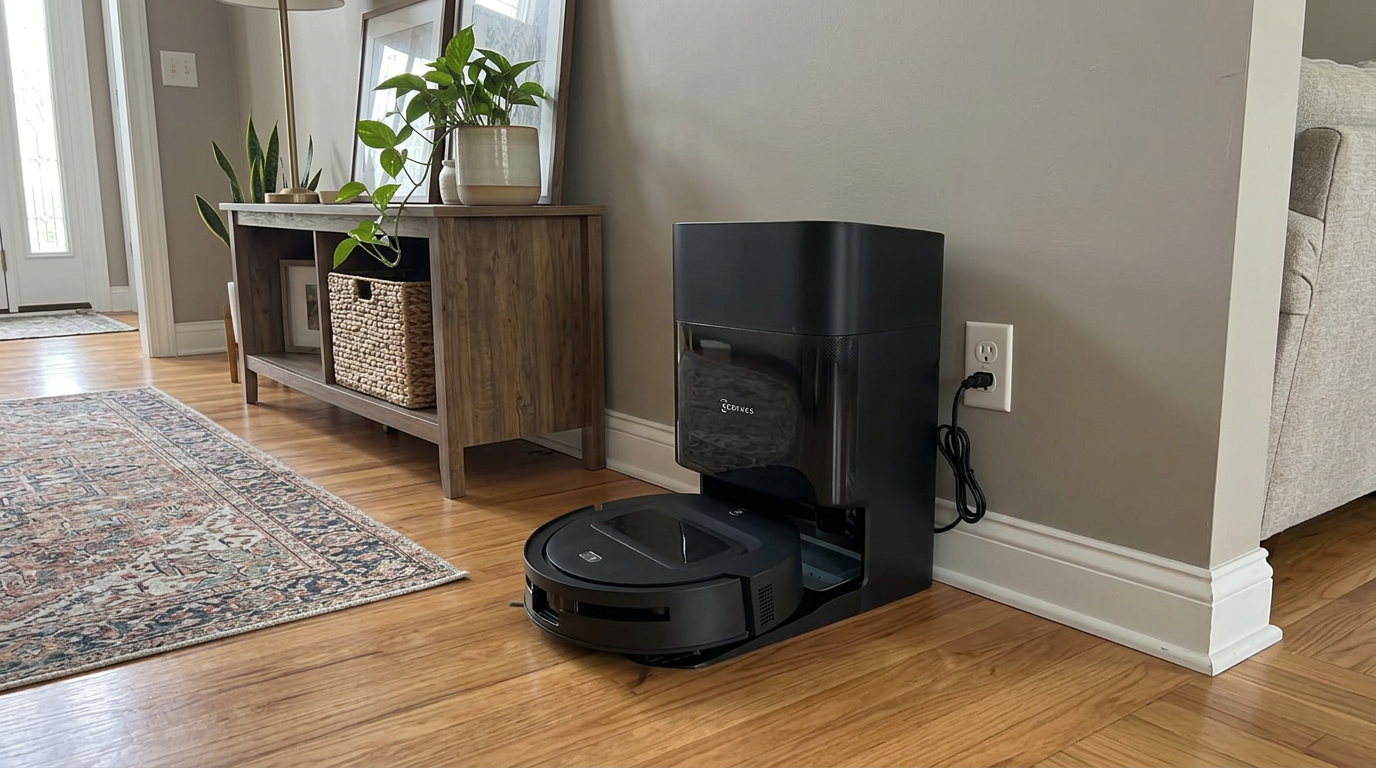
All-in-one docks like the DEEBOT T90 PRO OMNI's add running costs for water, detergent and electricity on top of dust bags. Read my ECOVACS DEEBOT T90 PRO OMNI review →
Dust bags: the predictable cost
Dust bags are the most predictable running cost. Manufacturers publish how long a bag should last, and I use those as the best case.
iRobot rates its dock bags for up to 75 days. Roborock suggests replacing its dock bag every 7 weeks, depending on use. Homes with shedding pets fill bags faster.
| Bag interval | Bags per year | Yearly cost at $7 per bag | Yearly cost at $12 per bag |
|---|---|---|---|
| 75 days | ~5 | ~$35 | ~$60 |
| 7 weeks | ~8 | ~$56 | ~$96 |
| Every 4 weeks (heavy pet home) | ~13 | ~$91 | ~$156 |
The per-bag prices are planning assumptions, not quotes. Genuine bags usually come in packs of three or more, and the per-bag price drops with bigger packs.
I don't recommend cheap generic bags that fit poorly. A bag that doesn't seal properly can stop the dock from emptying or leak dust, which costs more in hassle than it saves.
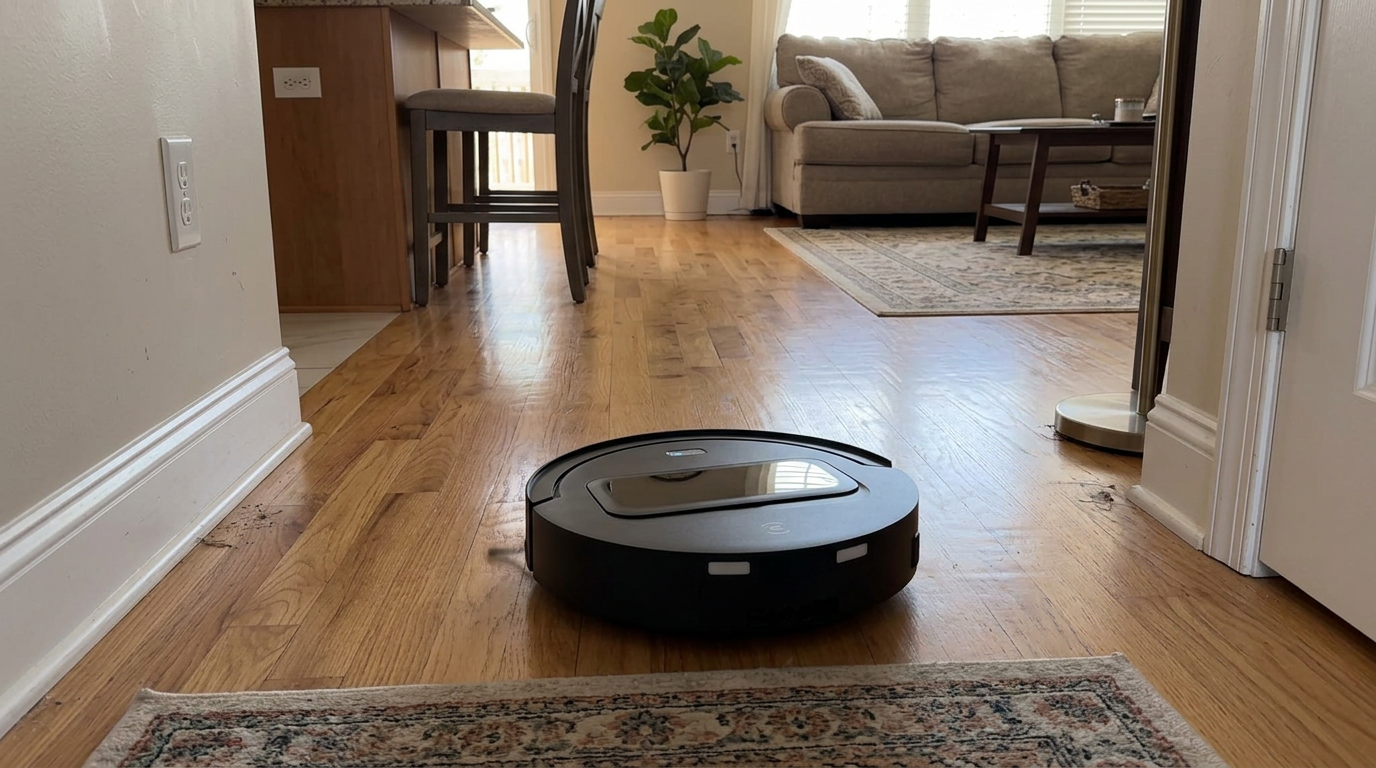
iRobot rates the AutoEmpty bags used with robots like the Roomba 105 Vac for up to 75 days of debris. Read my iRobot Roomba 105 Vac review →
Floor cleaning solution: the cost people underestimate
Floor cleaning solution is the cost people underestimate most, because it depends entirely on how much water you mop with.
Dilution ratios vary by product. One Roborock solution is listed at 1:200, or 20 mL per 4 liters of water. A more concentrated 1 L version is listed at 3 mL per liter, which the seller says makes about 330 liters of cleaning mix per bottle.
To estimate usage, you need to know roughly how much water your robot mops with per day. I assume about 1.5 liters a day for daily mopping of an average-size home, including mop washing in the dock. Your number may be higher or lower.
| Dilution | Solution per year | Bottles per year |
|---|---|---|
| 5 mL per liter (1:200) | ~2.7 L | ~6 × 480 mL |
| 3 mL per liter | ~1.6 L | ~2 × 1 L |
| Every other day mopping, 5 mL per liter | ~1.4 L | ~3 × 480 mL |
That is why dilution matters so much. Two products with the same bottle price can differ by a factor of two in yearly cost. Many owners also use detergent only for kitchen and entry runs, and plain water elsewhere, which cuts usage sharply.
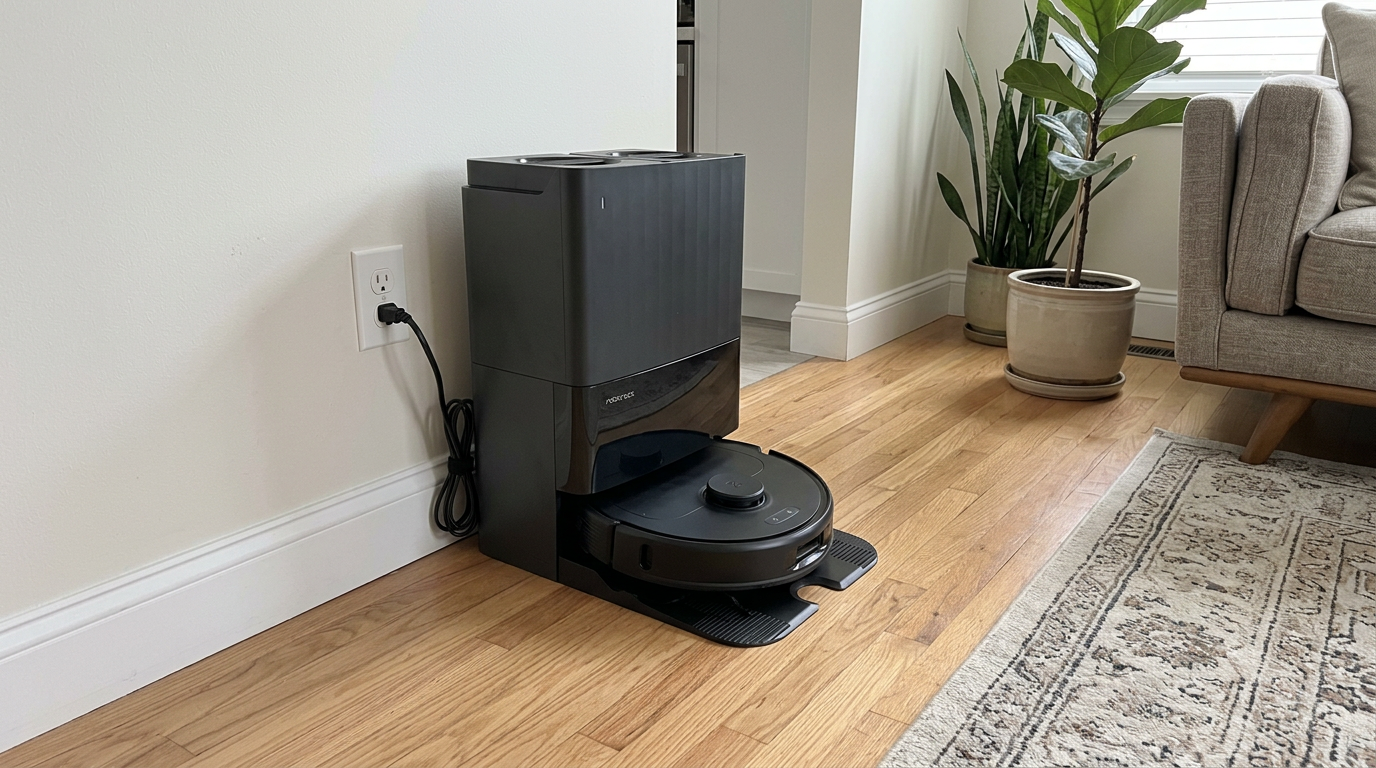
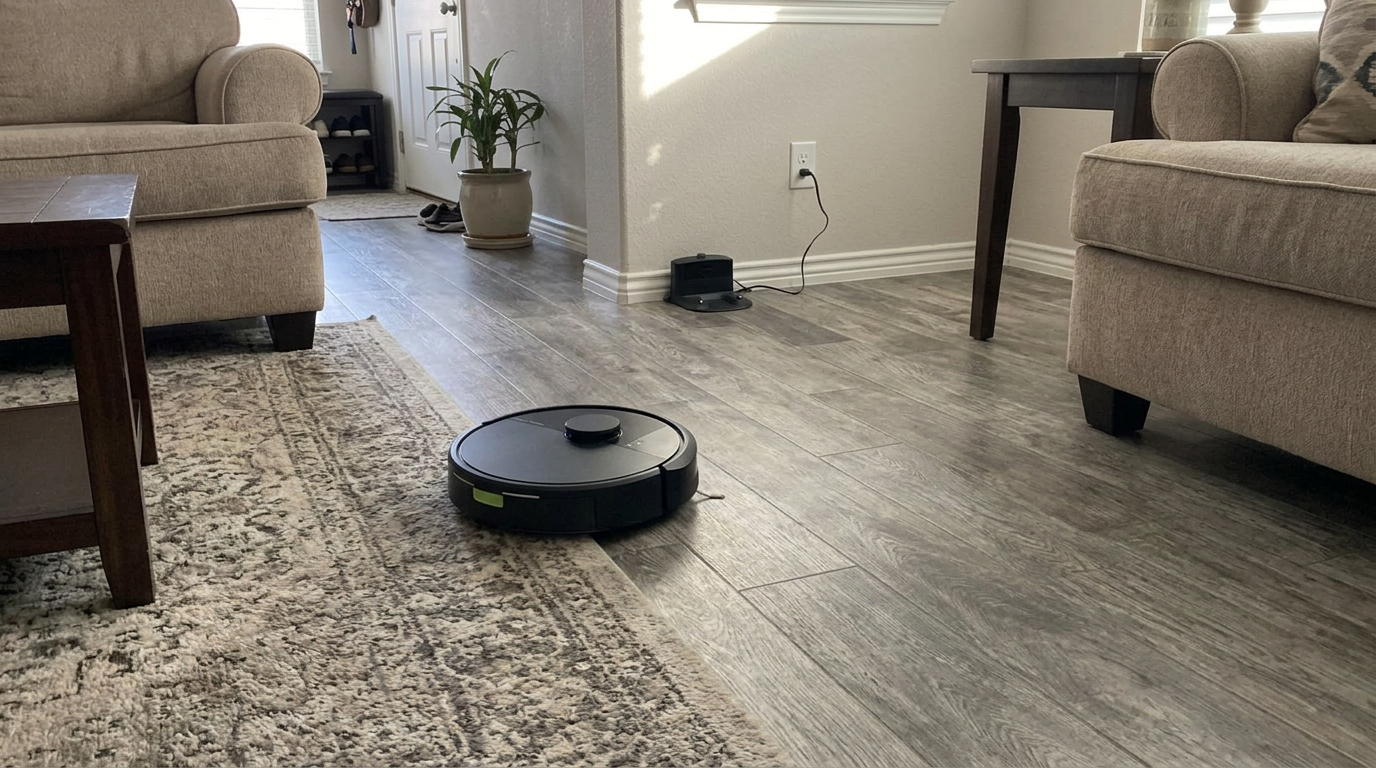
Mopping robots like the Qrevo S Pro use cleaning solution in proportion to how much water they mop with. Read my Roborock Qrevo S Pro review →
Water and electricity: small but steady
Water is the cheapest consumable by far. The EPA's WaterSense program estimates the average U.S. residential cost of water plus wastewater at about $15.21 per 1,000 gallons, or roughly 1.5 cents a gallon.
Using my 1.5 liters per day assumption, a daily mopping robot uses about 145 gallons a year. That works out to a little over $2 a year in water and sewer charges.
Electricity is bigger, mainly because of heated mop washing and hot-air drying. In my electricity guide, I estimated about 16 kWh a month for a robot with an all-in-one dock that mops daily, which is about $35 a year at the EIA's 2026 U.S. average of 18.2 cents per kWh.
| Utility | Assumption | Yearly use | Yearly cost |
|---|---|---|---|
| Water + sewer | 1.5 L per day, $15.21 per 1,000 gal | ~145 gallons | ~$2 |
| Electricity, robot only | Daily full charge | ~32 kWh | ~$6 |
| Electricity, robot + all-in-one dock | Daily vacuum and mop with drying | ~190 kWh | ~$35 |
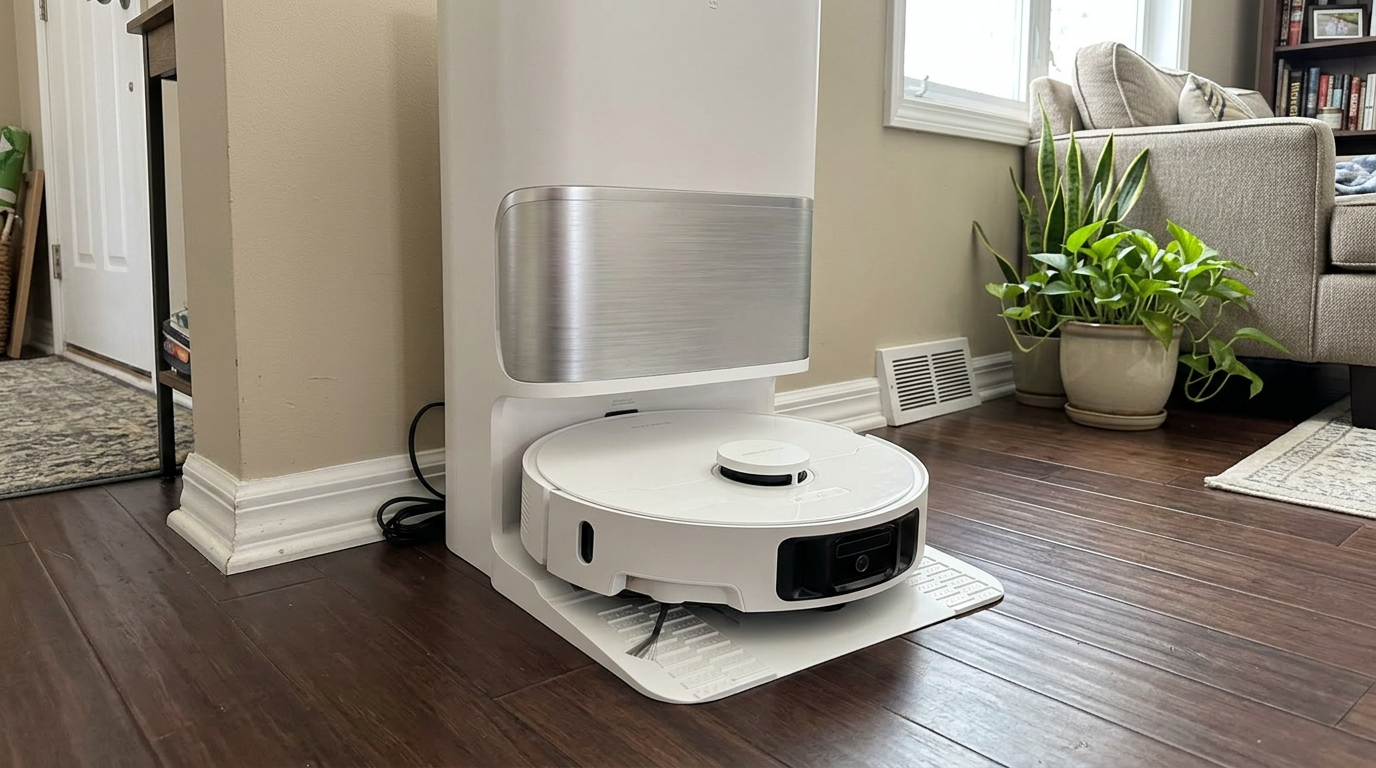
Heated washing and drying in docks like the L40 Ultra Gen 2's account for most of the electricity cost of daily mopping. Read my Dreame L40 Ultra Gen 2 review →
Brushes, filters and mop pads
Wear parts are the last piece. Roborock's Q7 manual gives a clear set of intervals that I use as a baseline for most robots: main brush every 6 to 12 months, side brush every 3 to 6 months, filter every 6 to 12 months and mop cloths every 3 to 6 months.
| Part | Replacement interval | Replacements per year |
|---|---|---|
| Main brush | 6 to 12 months | 1 to 2 |
| Side brush | 3 to 6 months | 2 to 4 |
| Filter | 6 to 12 months | 1 to 2 |
| Mop pads or cloths | 3 to 6 months | 2 to 4 sets |
Many brands sell replenishment kits that bundle a year's worth of these parts. For planning, I budget roughly $40 to $80 a year for wear parts on a mainstream robot, more for robots with unusual roller mops or proprietary parts. That range is my own estimate from typical kit pricing, so check current prices for your model.
Save on parts: Buy the bundled replenishment kit instead of individual parts. It is usually cheaper per piece, and it reminds you to replace everything on schedule.
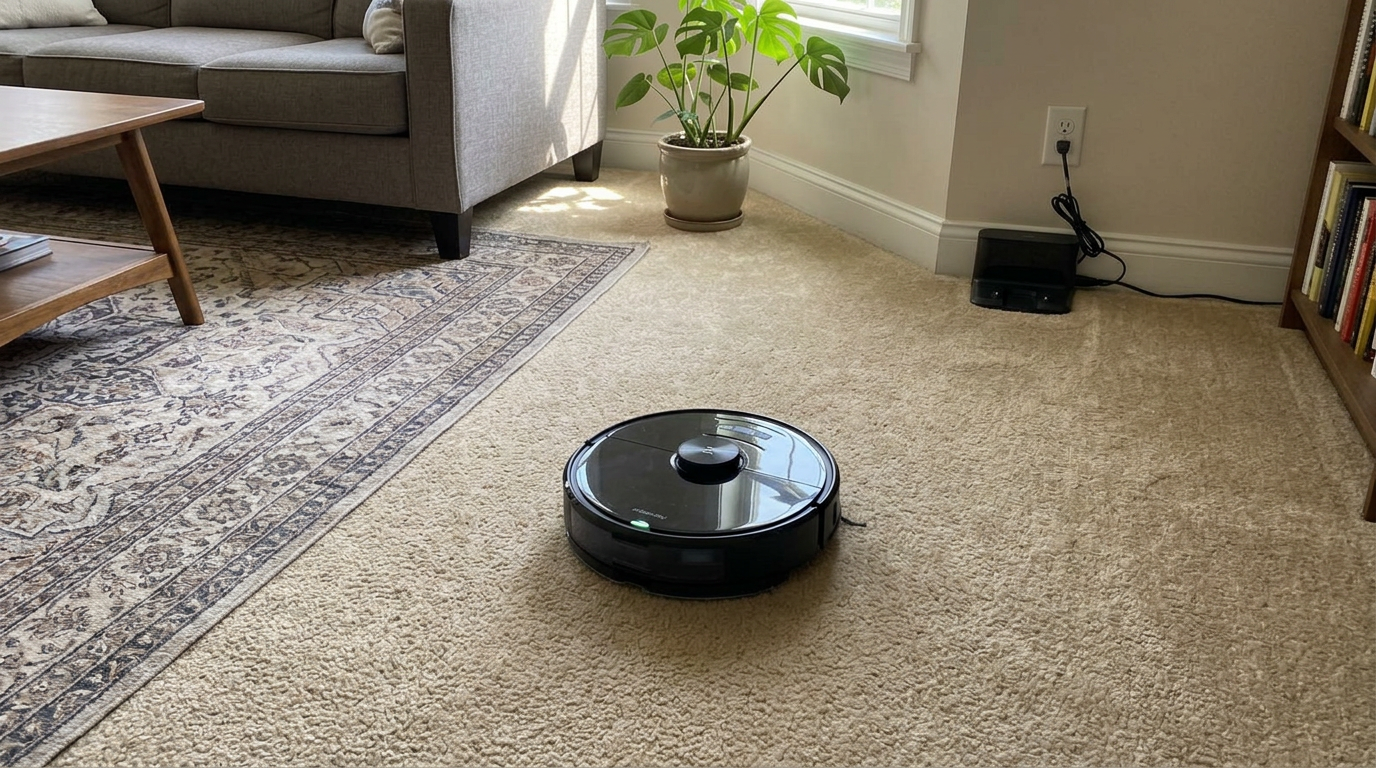
Mid-range robots like the Q7 M5+ need regular brushes, filters and mop cloths, which most brands sell as yearly kits. Read my Roborock Q7 M5+ review →
Putting it together: yearly running cost
Here is everything combined for three common setups. These are planning ranges built from the sections above, with my assumptions stated, so you can see the order of magnitude rather than an exact bill.
| Cost item | Robot, no dock | Robot + self-emptying dock | Robot + all-in-one dock, daily mop |
|---|---|---|---|
| Dust bags | $0 | ~$35 to $96 | ~$35 to $96 |
| Cleaning solution | $0 to small | $0 to small | ~$30 to $90 (depends on dilution and price) |
| Water + sewer | ~$0 | ~$0 | ~$2 |
| Electricity | ~$6 | ~$6 | ~$35 |
| Wear parts | ~$40 to $80 | ~$40 to $80 | ~$40 to $80 |
| Estimated yearly total | ~$46 to $86 | ~$81 to $182 | ~$142 to $303 |
Per month, that is roughly $5 for a robot without a dock, $11 for a self-emptying dock and $19 for an all-in-one dock that mops daily. The detergent line has the widest range, so it is the first one I would check against your actual product.
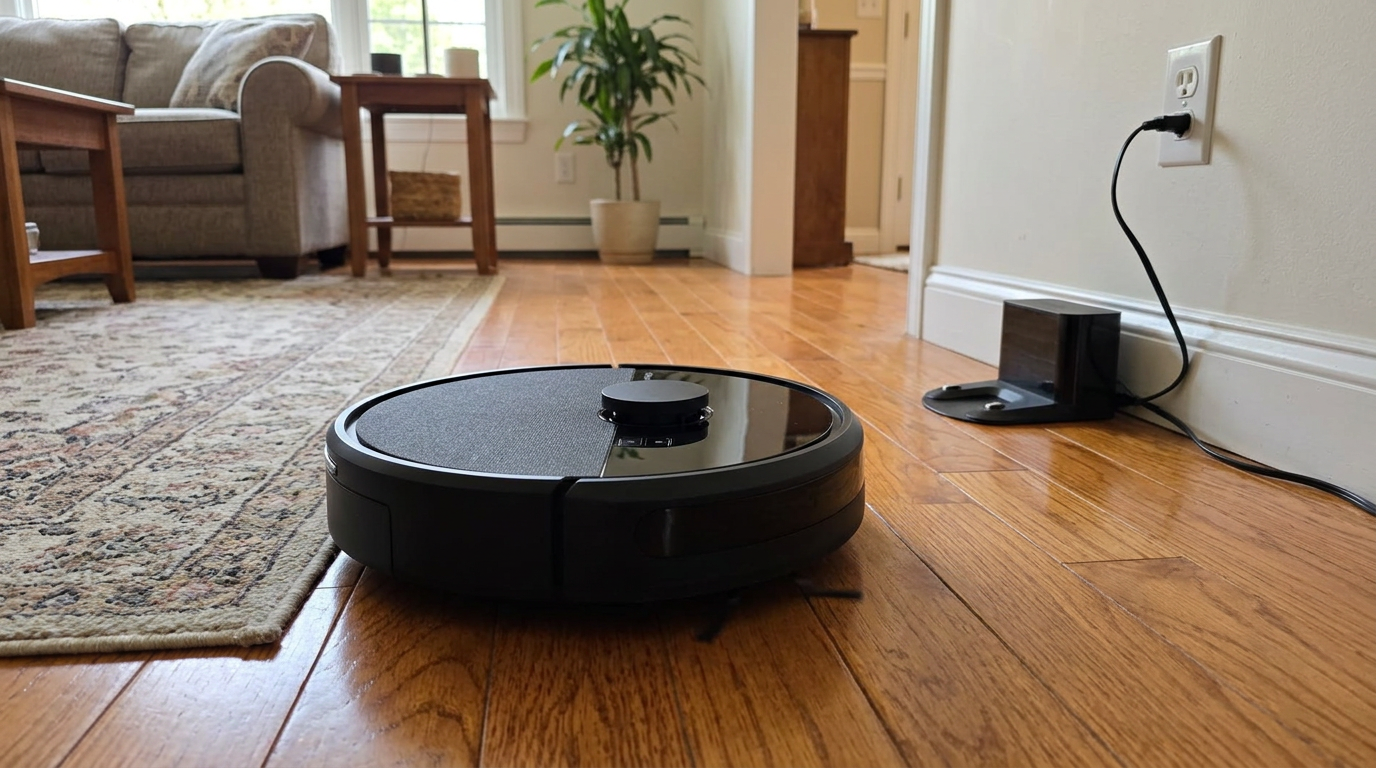
A basic self-emptying setup like the Roomba 105 Combo with AutoEmpty dock sits in the middle of the running-cost range. Read my iRobot Roomba 105 Combo review →
What each cleaning run really costs
Yearly totals are useful for budgeting, but cost per run is a better way to judge value. If the robot cleans every day, each run carries a small slice of the yearly running cost.
| Setup | Estimated yearly running cost (midpoint) | Cost per daily run |
|---|---|---|
| Robot, no dock | ~$66 | ~$0.18 |
| Robot + self-emptying dock | ~$132 | ~$0.36 |
| Robot + all-in-one dock, daily mop | ~$223 | ~$0.61 |
Put that way, even the most expensive setup costs about 60 cents a day to vacuum and mop the whole home automatically, before counting the robot's purchase price.
If you run the robot only a few times a week, the per-run cost rises a little, because wear parts and bags age with time as well as use. But the totals drop, which is what most budgets care about.
How to lower running costs
Most of the running cost is controllable. These are the changes that save the most without making the robot worse.
| Change | What it saves | Trade-off |
|---|---|---|
| Use detergent only in kitchen, entry and bathrooms | Up to half of solution cost | Plain water elsewhere |
| Mop every other day instead of daily | About half of water, detergent and heating electricity | Slightly less frequent mopping |
| Set the dock to empty only when needed | Fewer bag fills in some homes | Robot bin fills more before emptying |
| Buy bags and parts in bigger packs | Lower per-unit price | More upfront |
| Clean parts on schedule | Parts last toward the long end of their range | A few minutes a month |
| Shorten mop drying in dry months | Some electricity | Pads may stay damp longer in humid weather |
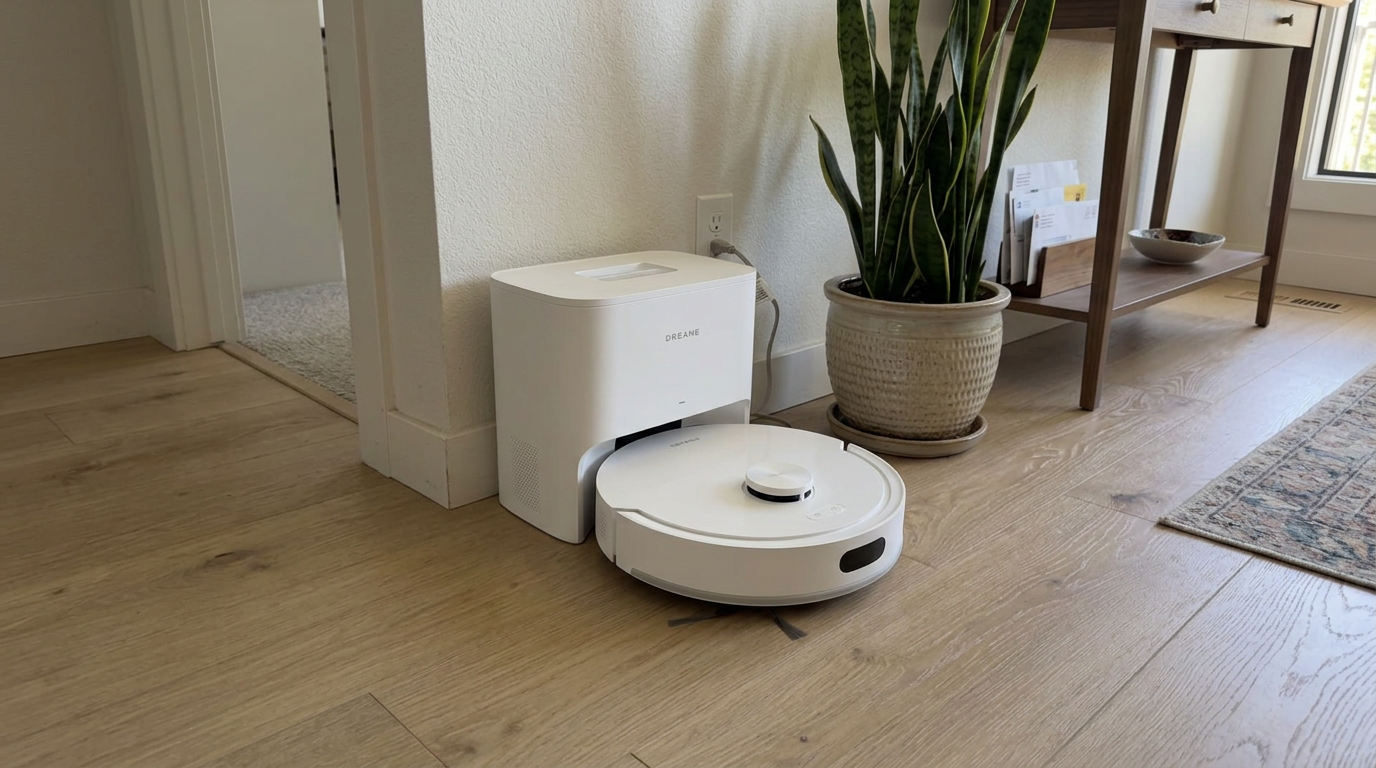
Mid-range robots like the D20 Air Plus keep running costs lower simply by having fewer heated dock functions. Read my Dreame D20 Air Plus review →
How to calculate your own robot's running costs
- Count bag changesCheck how often your dock says the bag is full, or note the date each time you change it. Multiply bags per year by your price per bag.
- Measure your water useNote how often you refill the clean water tank and its size. That gives liters per week; multiply out to a year.
- Apply your detergent dilutionMultiply yearly liters of water by your product's mL-per-liter dose, then divide by the bottle size to get bottles per year.
- Check your utility ratesUse your electric bill's price per kWh and your water bill's combined water and sewer rate.
- Add wear partsPrice a yearly replenishment kit for your model, or add up brushes, filters and pads at the manufacturer's intervals.
- Total it and divide by 12The yearly total divided by 12 is your monthly running cost. Revisit it once a year as prices change.
Frequently asked questions
How much does it cost to run a robot vacuum per year?
How much do robot vacuum dust bags cost per year?
How long does robot mop cleaning solution last?
Does a robot mop use a lot of water?
What is the most expensive running cost of an all-in-one dock?
Can I use any floor cleaner in my robot's dock?

Sarah has tested vacuums, mops, air purifiers and dehumidifiers since 2017. Before joining BrasQ, she spent five years as a test coordinator at a national consumer advocacy group. She studied industrial design at Ohio State and lives in Columbus with her family and a long-haired cat.
- First published.
- U.S. EPA WaterSense: cost of water and wastewater
- Roborock floor cleaning solution 480 mL (dilution, retailer listing)
- Roborock floor cleaning solution 1 L (dilution and yield, retailer listing)
- iRobot: replacement dirt disposal bags (75-day rating)
- Roborock support: how often to replace the disposable dust bag
- Roborock Q7 user manual: replacement intervals
- U.S. Energy Information Administration: 2026 residential electricity price