Self-emptying dock vs. no dock: is it worth the extra price?
A self-emptying dock adds roughly $100 to $200 plus bag costs. I break down what you pay, the time it saves, the allergy and noise trade-offs, and which homes can skip it.
We choose products independently. We may earn a commission through links on this page; your price stays the same. Affiliate policy
On this page
The short answer
- For most homes with pets, allergies or busy schedules, yes. A dock turns daily bin emptying into a bag change every few weeks.
- On one popular model, the dock adds about $150 at list price. Across brands, $100 to $200 is typical.
- Bags cost roughly $40 to $175 a year depending on how fast they fill, which is well under 50 cents a day.
- Small, tidy, pet-free homes can skip it and spend the money on better navigation instead.
The real question behind a self-emptying dock
The first robot vacuum I lived with had no dock beyond a charging pad. It cleaned well. It also needed its bin emptied after almost every run, and on the days I forgot, it simply stopped picking things up.
That is the problem a self-emptying dock solves. After each run, the dock sucks the robot's small onboard bin empty into a much bigger bag, so you only deal with dirt every month or two instead of every day.
The catch is price. A dock usually adds well over $100 to the cost of the same robot, plus the ongoing cost of bags.
So is it worth it? In this guide I break down how much a dock adds, what it saves you in time, the ongoing costs, the allergy and noise angle, and the homes where I think you can skip it.
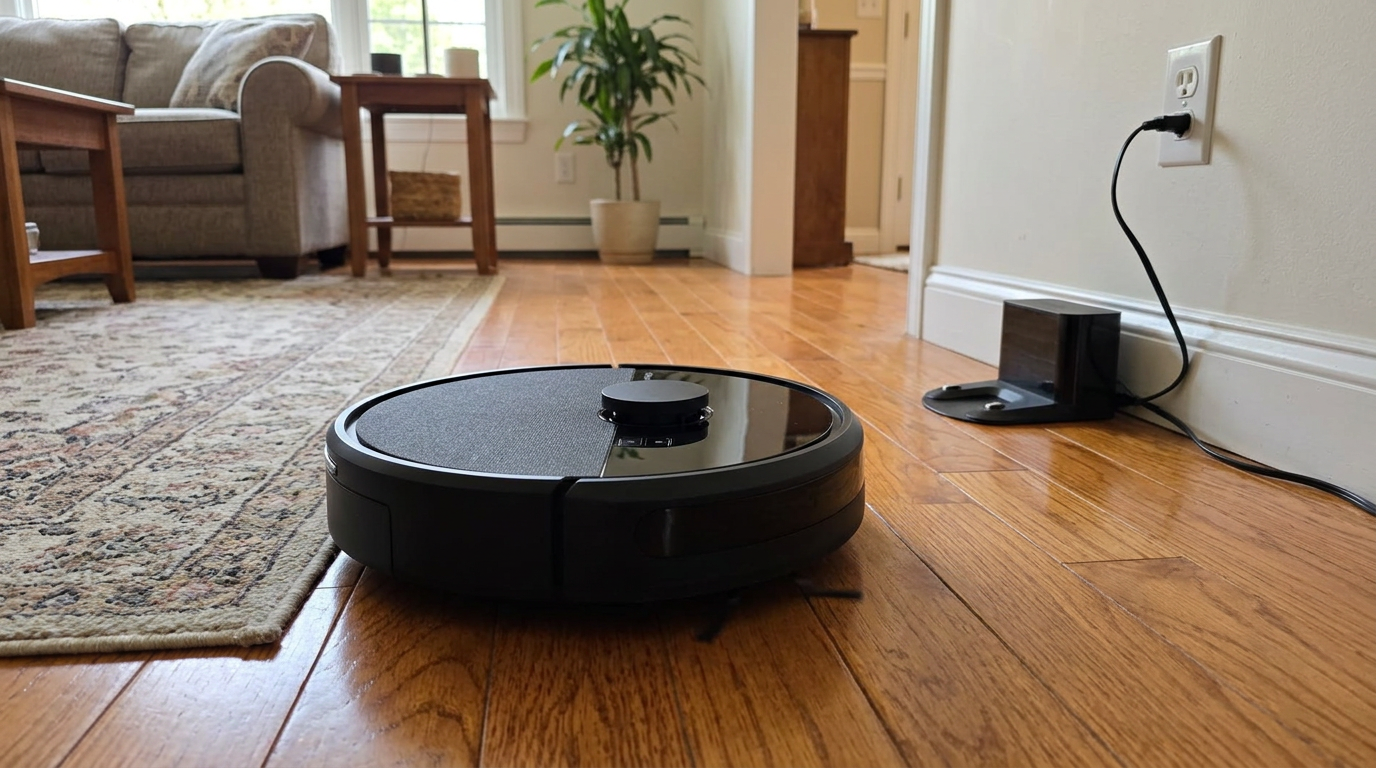
iRobot sells the Roomba 105 Combo both with and without its AutoEmpty dock, which makes it a clean example of what the dock costs. Read my iRobot Roomba 105 Combo review →
What a self-emptying dock adds to the price
The cleanest way to price a dock is to find the same robot sold with and without one. iRobot's Roomba 105 Combo is a good example.
Retailer listings put the robot alone at a list price of $319.99, and the bundle with the AutoEmpty dock at a list price of $469.99. At list price, the dock adds about $150.
Sales change those numbers constantly, and bundles often get deeper discounts than the robot alone. But a premium of roughly $100 to $200 is typical across brands for a basic self-emptying dock.
| Robot only | Robot + self-emptying dock | |
|---|---|---|
| Example list price | $319.99 | $469.99 |
| Onboard bin | About 360 mL (Target listing) | Same robot bin |
| How often you empty | Often after each run in pet homes | Up to 75 days per bag (maker claim) |
| Ongoing cost | None | Replacement bags |
| Noise when emptying | None | A loud burst for a few seconds |
| Footprint | Small charging pad | A tower roughly the size of a trash can |
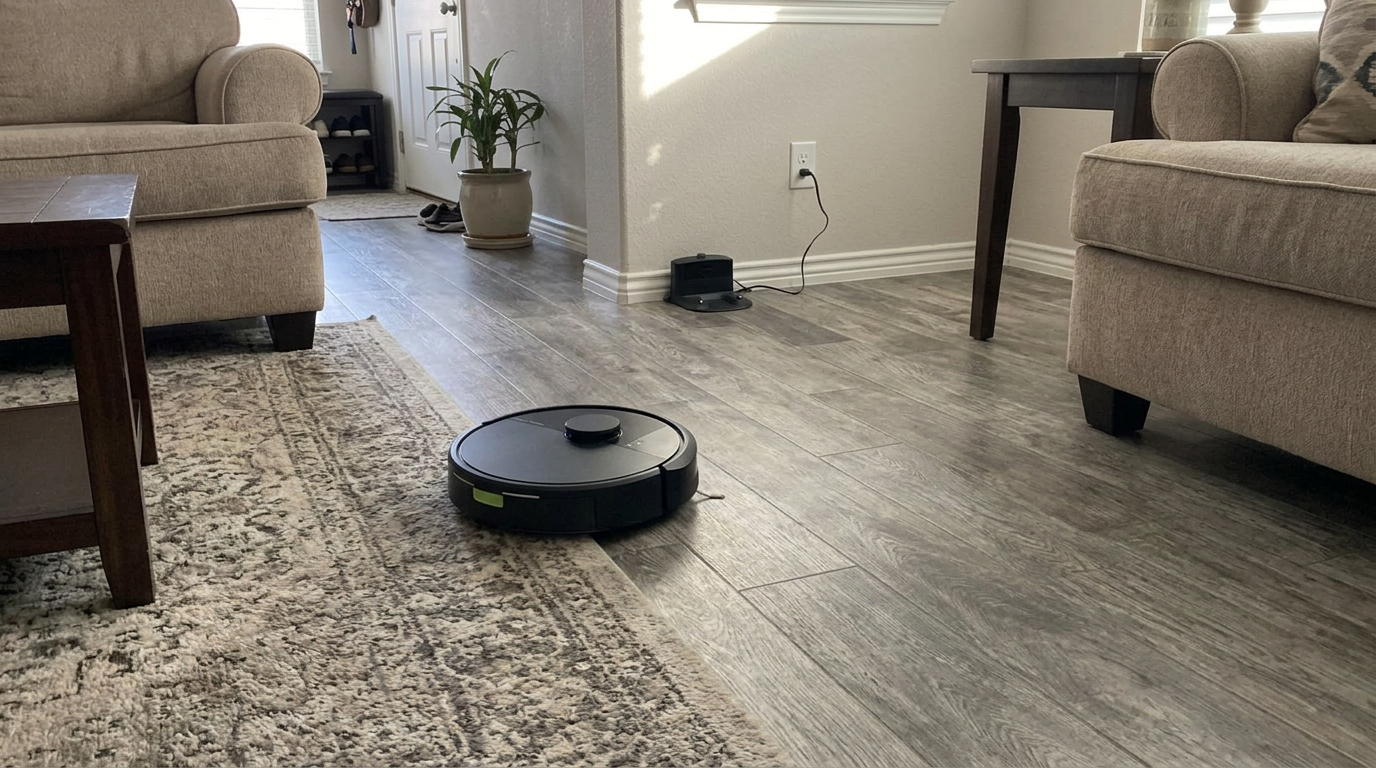
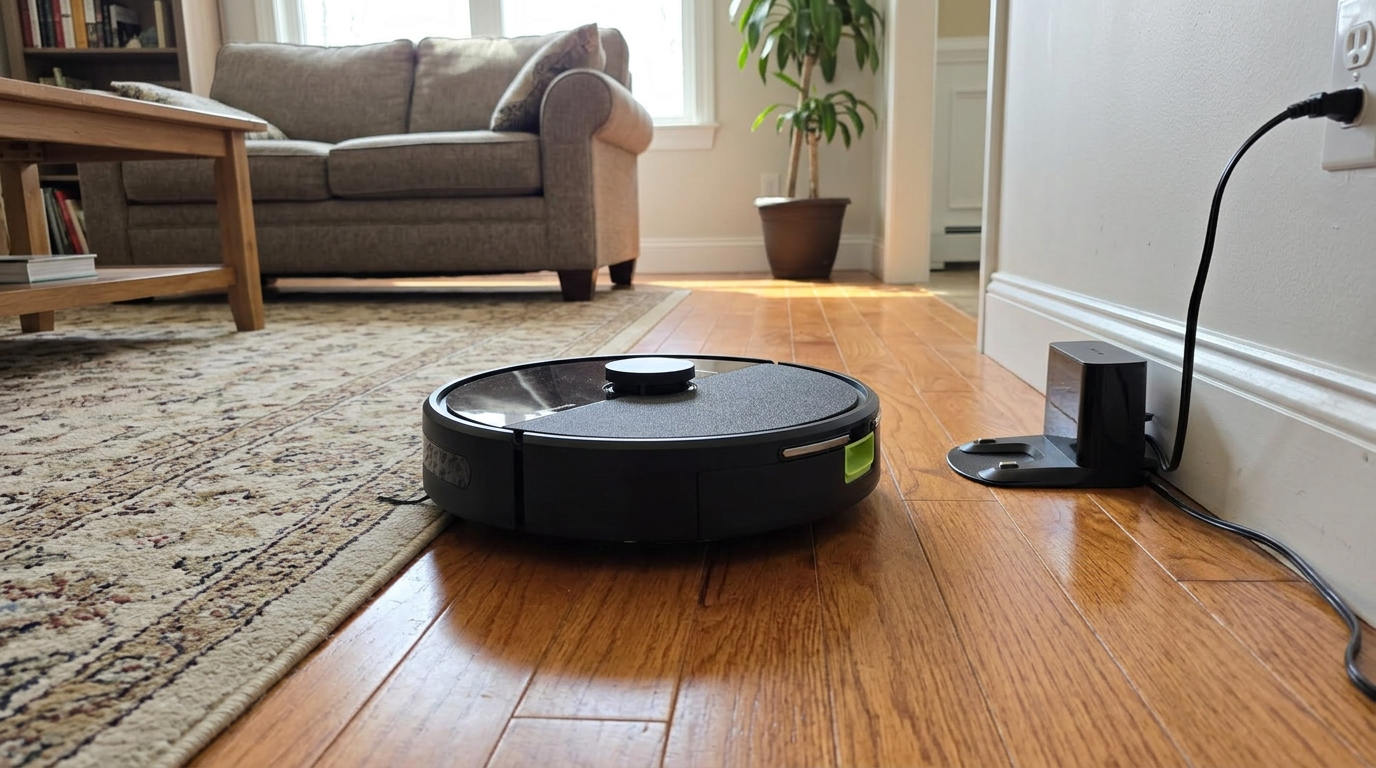
The Roomba 105 Vac is also sold with an AutoEmpty dock that iRobot rates for up to 75 days of debris. Read my iRobot Roomba 105 Vac review →
How much time a dock really saves
The dock's real product is time and attention. Here is how I estimate it.
Emptying a robot bin by hand takes me about a minute: pop it out, carry it to the trash, tap it clean, put it back. In a home with a shedding pet, I did that after almost every daily run.
Over a year, that is roughly 365 small chores, or about six hours. Swapping a dock bag takes a minute too, but iRobot rates its bags for up to 75 days and Roborock suggests replacing its bag every 7 weeks. That is about five to eight bag changes a year.
The time itself is not the main benefit. The bigger win is that the robot actually keeps working when you forget about it. A full robot bin quietly turns a cleaning robot into a robot that drives around the house.
That matters most if you run the robot while you are away, or if you travel. A docked robot can clean daily for weeks with no help at all.
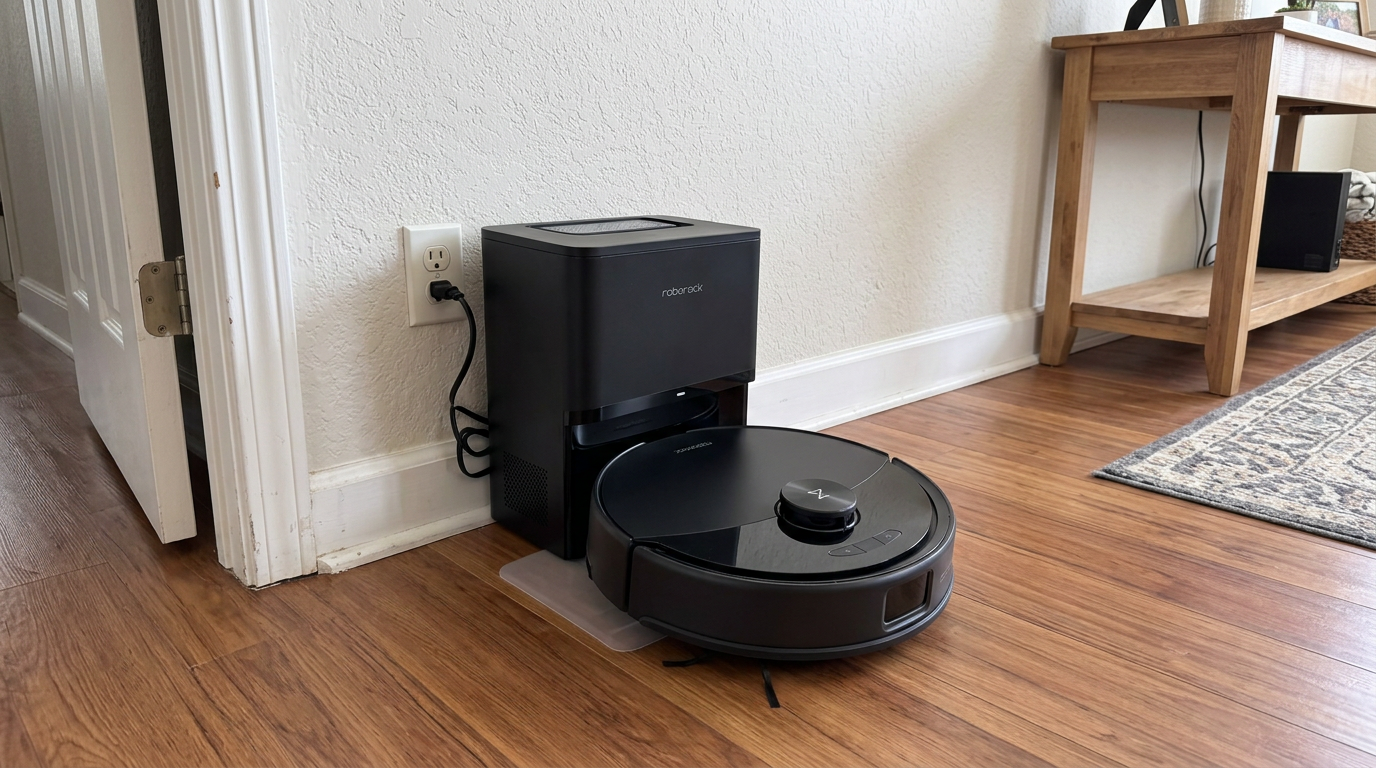
The Q10 S5+ is the docked version of a robot also sold without one, so you can choose whether to pay for hands-free emptying. Read my Roborock Q10 S5+ review →
The ongoing cost: replacement bags
Every self-emptying dock runs on disposable bags, and genuine bags are not free. The good news is that the math stays small.
Use the manufacturers' own intervals. At one bag every 75 days, you need about five bags a year. At one bag every 7 weeks, you need about eight. Bags usually come in packs of three, so that is two to three packs a year.
| Bag interval | Bags per year | 3-packs per year | Yearly cost at $20 / pack | Yearly cost at $35 / pack |
|---|---|---|---|---|
| 75 days | ~5 | ~2 | ~$40 | ~$70 |
| 7 weeks | ~8 | ~3 | ~$60 | ~$105 |
| Pet home, every 4 weeks | ~13 | ~5 | ~$100 | ~$175 |
The pack prices in that table are round numbers I use for planning, not a quote. Check the current price for your exact dock, because genuine bags vary a lot by brand and region.
Real-world intervals are almost always shorter than the box claims in homes with pets or long hair, so I plan with the pet-home row if I have a shedding dog or cat.
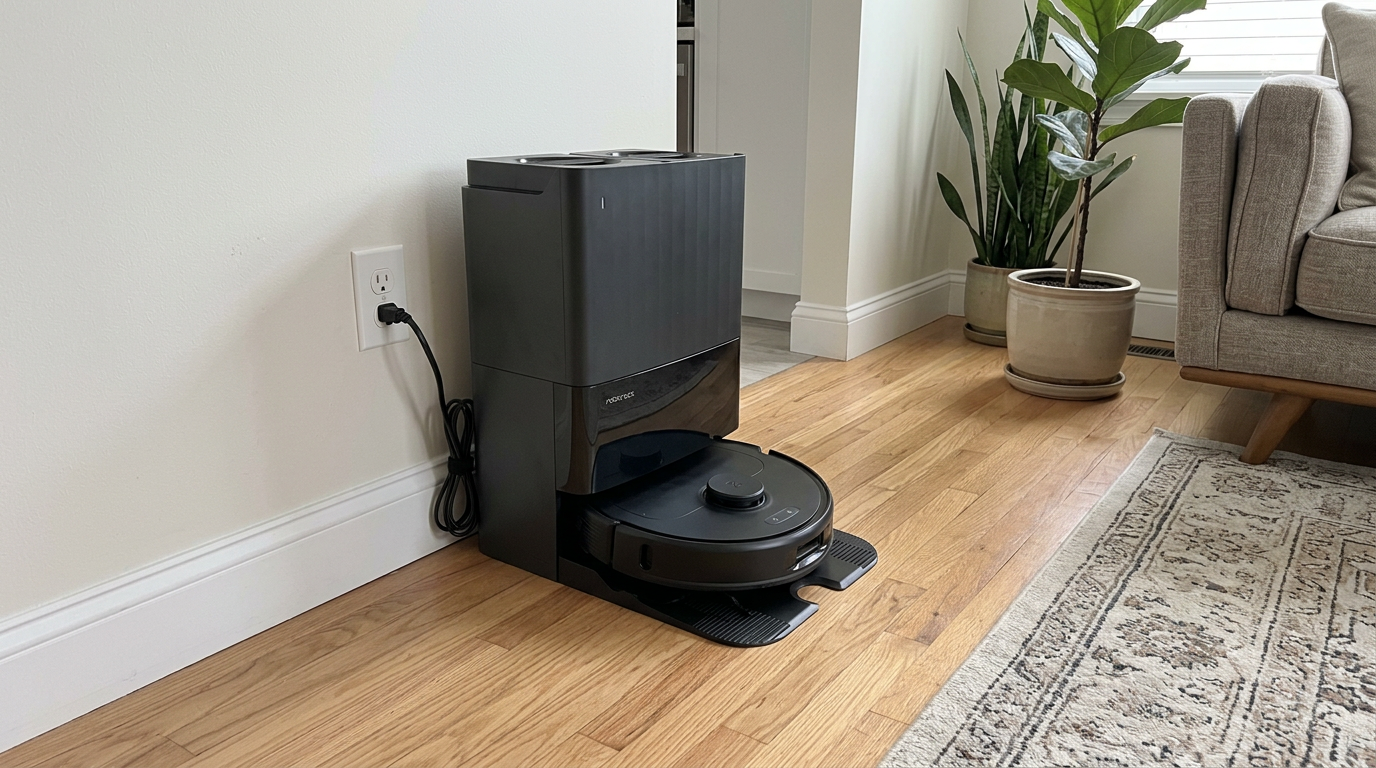
All-in-one docks like the Qrevo S Pro's handle mop washing as well as emptying, which adds water and detergent to the running costs. Read my Roborock Qrevo S Pro review →
Allergies, dust and the noise trade-off
If anyone in your home has dust or pet allergies, the dock is about more than convenience.
Emptying a small robot bin over a trash can releases a puff of fine dust every time. A sealed dock bag keeps that dust locked away until you lift the whole bag out.
iRobot says its AutoEmpty bags trap 99% of allergens as small as 0.7 microns, and Roborock describes its dock bags as self-sealing when you pull them out. I would not rely on a robot for allergy control, but cutting out daily bin dumping does reduce exposure.
Noise is the trade-off. Docks run a strong fan for a few seconds to pull debris out of the robot. Roborock rates its Saros 10 dock at 72 dB(A) while self-emptying, which is about as loud as an upright vacuum for that short burst.
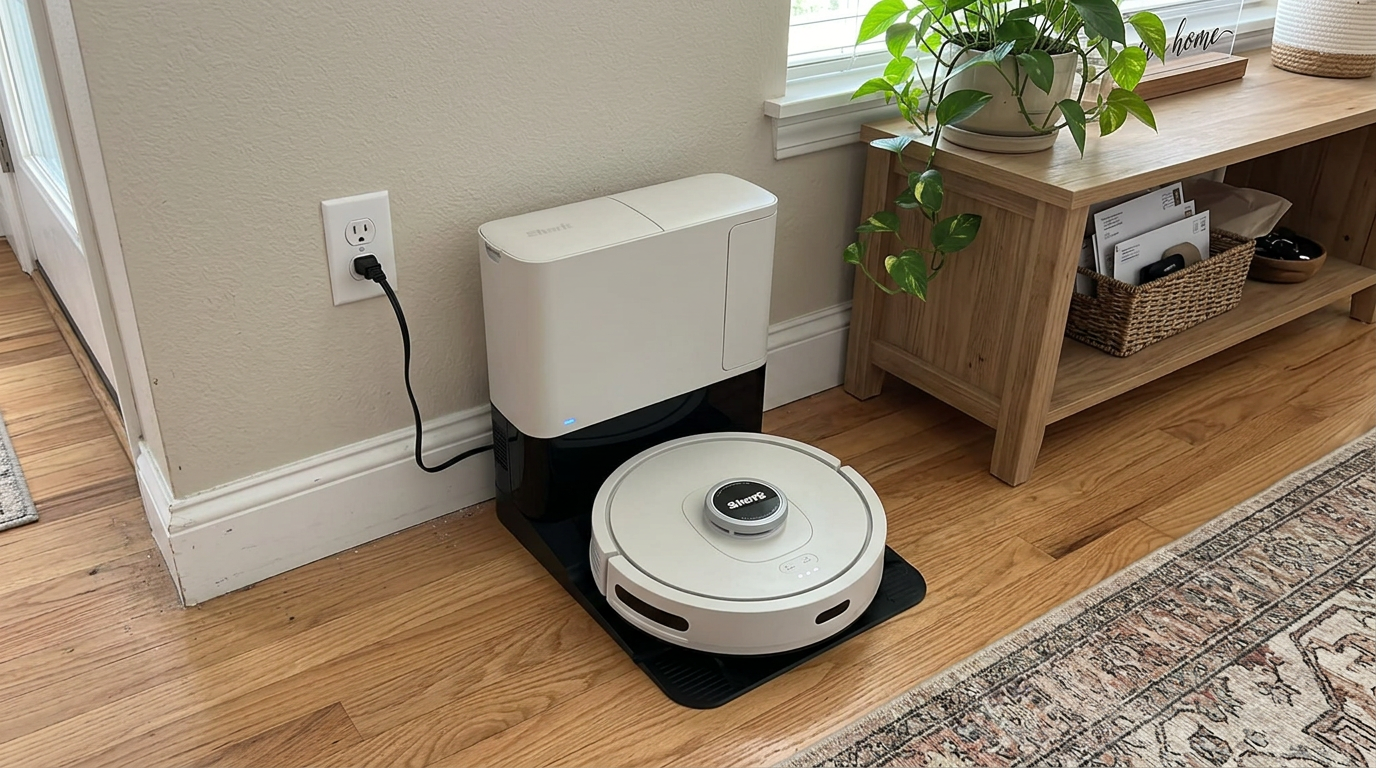
Bagless docks like the one with the Shark AV2501S AI Ultra skip ongoing bag costs, but you empty a bin instead of lifting out a sealed bag. Read my Shark AV2501S AI Ultra review →
Bagged, bagless and all-in-one docks
Not all "self-emptying" docks are the same. There are three main kinds, and the differences show up in your trash can and your budget.
| Dock type | How it works | Pros | Cons |
|---|---|---|---|
| Bagged auto-empty | Empties into a sealed disposable bag | Cleanest disposal, best for allergies | Ongoing bag cost |
| Bagless auto-empty | Empties into a dust cup you dump | No bag cost | Dust puff when emptying; filter to clean |
| All-in-one (omni) dock | Empties dust and washes, dries and refills the mop | Most hands-free option | Biggest footprint, highest price, more upkeep |
| Charging pad only | No emptying | Cheapest, smallest | You empty the robot bin by hand |
If you mainly want to stop emptying a tiny bin, a basic bagged dock gets you most of the benefit. Omni docks are a separate decision that only pays off if you mop often.
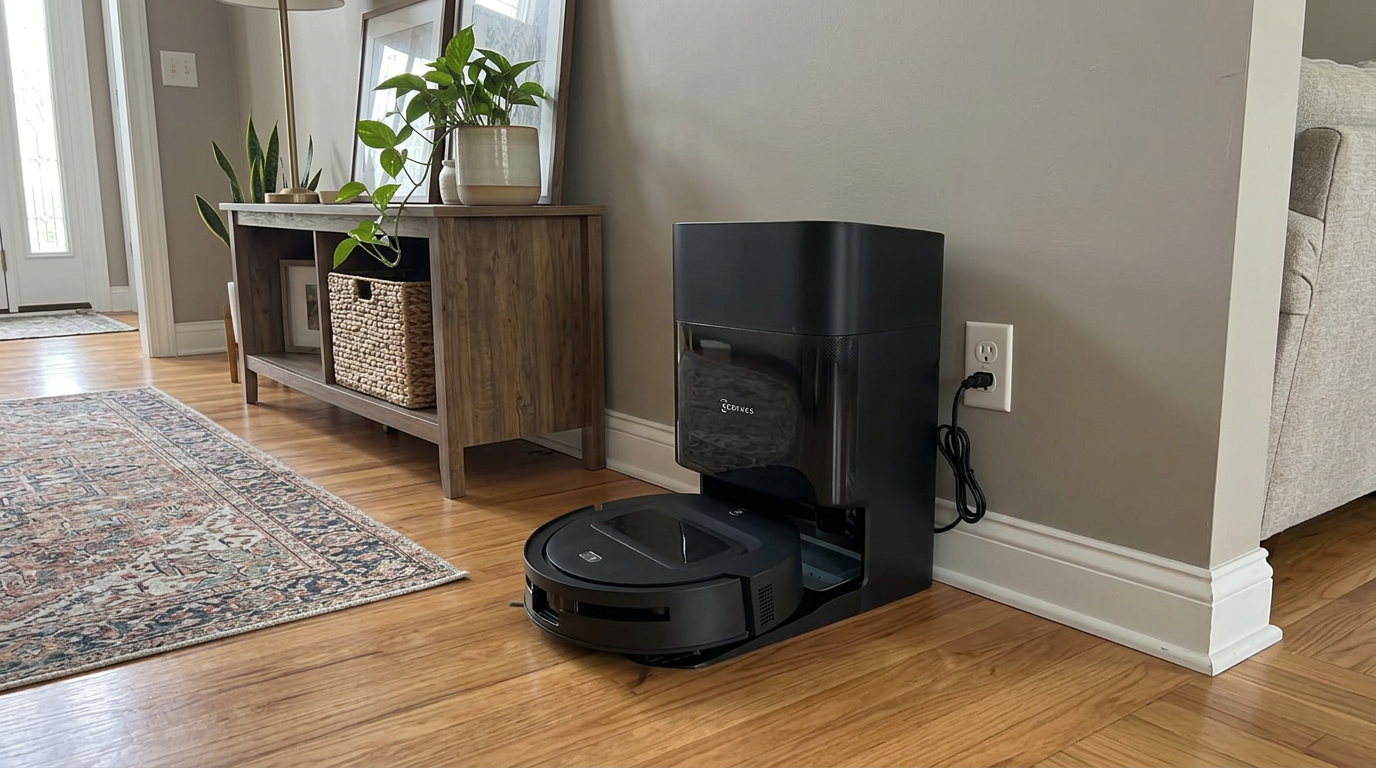
Omni docks like the one with the DEEBOT T90 PRO OMNI handle dust, mop washing and drying, which is a bigger step up than emptying alone. Read my ECOVACS DEEBOT T90 PRO OMNI review →
If you skip the dock: how to live with a small bin
Skipping the dock is a perfectly reasonable choice, and plenty of people are happy with it. It just changes your routine.
The biggest habit is emptying the bin before every scheduled run, not after. That way the robot always starts with a full bin's worth of capacity, and you never come home to a robot that gave up halfway through the living room.
I also keep the filter on a schedule. Without a dock pulling air through the bin, dust packs into the filter faster, and a clogged filter quietly cuts suction long before you notice.
Finally, shorter, more frequent runs help. A robot that cleans two rooms a day fills its bin less than one that tries to do the whole home every other day.
My shortcut: I keep a small trash can with a lid right next to the robot's charging pad. Emptying the bin takes ten seconds instead of a trip to the kitchen.
Is a self-emptying robot vacuum worth it? My verdict by household
Here is my honest verdict by household. I would pay for the dock in most homes, but not all of them.
| Household | Worth the dock? | Why |
|---|---|---|
| Dog or cat that sheds | Yes, clearly | The robot bin can fill in a single run |
| Allergies in the home | Yes | Sealed bags avoid daily dust exposure |
| You travel or work long days | Yes | Robot keeps cleaning for weeks unattended |
| Small apartment, no pets, tidy | Optional | Bin may last several runs; save the money |
| Very tight on space | Maybe not | Docks need a spot about the size of a small trash can |
| Strict budget under $200 | Skip it | Put the money toward better navigation instead |
- Daily runs without daily chores
- Robot never quits because the bin is full
- Less dust exposure when emptying
- Better for long trips
- $100 to $200 extra upfront
- Ongoing bag costs
- Loud burst after every run
- Takes up floor space
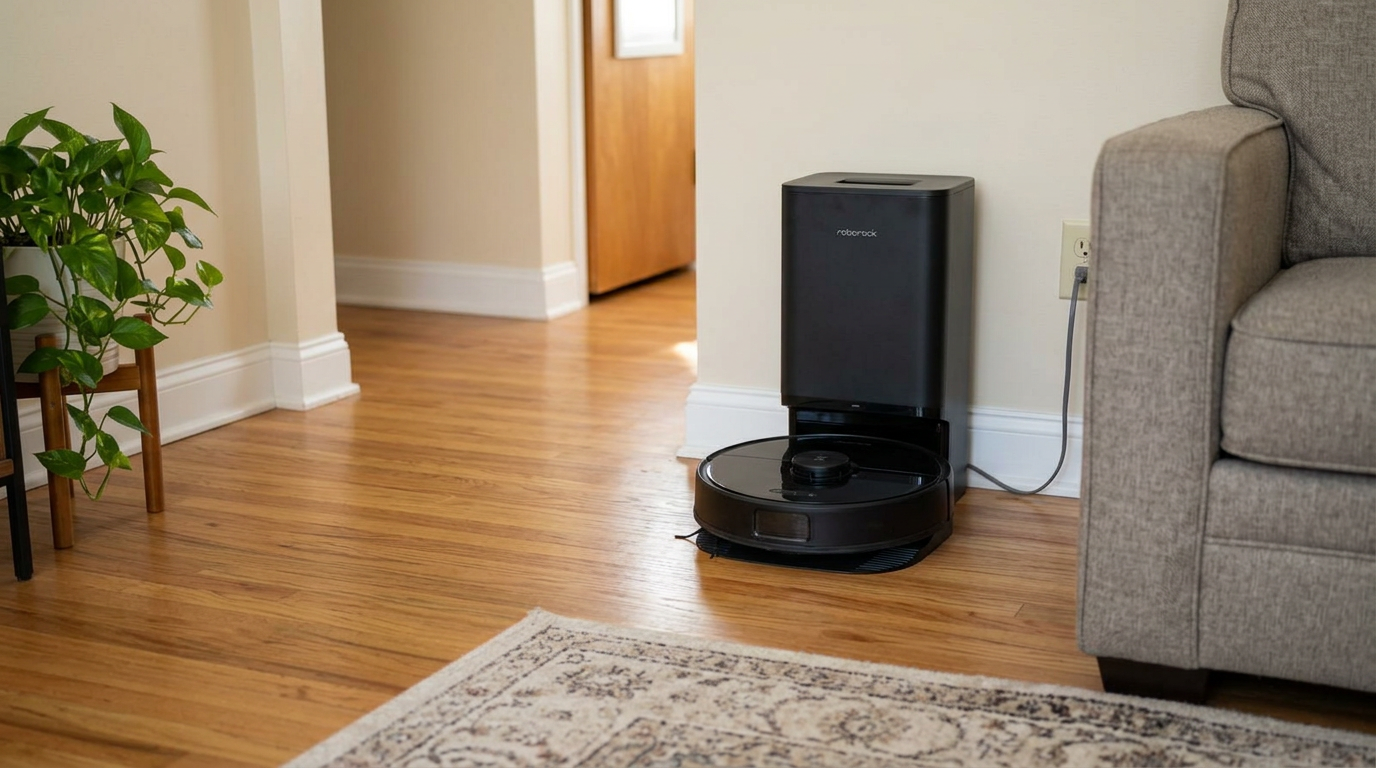
The Q7 M5+ is an example of a mid-priced robot where the dock adds real day-to-day value. Read my Roborock Q7 M5+ review →
How I get the most out of a self-emptying dock
- Place it on a hard, level floorDocks need a flat spot with clearance on both sides and in front. A wobbly dock on thick carpet can cause docking and emptying errors.
- Use genuine or well-reviewed bagsPoorly fitting bags can leak or stop the dock from creating a seal. Several owners report emptying problems with cheap generic bags.
- Check the evacuation port monthlyHair and debris can clog the opening where the robot connects to the dock. A quick look and wipe prevents most "dock not emptying" errors.
- Set empty frequency for your homeSome apps let you empty after every run or only when needed. Pet homes benefit from emptying after every run.
- Schedule around sleepSet a Do Not Disturb window so the loud empty cycle does not run at night.
- Keep a pack of bags on handThe dock stops emptying when the bag is full. Having spares avoids a week of manual emptying while you wait for an order.
Frequently asked questions
Is a self-emptying robot vacuum worth it?
How long does a self-emptying dock bag last?
How much do self-emptying dock bags cost per year?
Are self-emptying docks loud?
Can I add a self-emptying dock later?
Bagged or bagless dock: which is better?

Sarah has tested vacuums, mops, air purifiers and dehumidifiers since 2017. Before joining BrasQ, she spent five years as a test coordinator at a national consumer advocacy group. She studied industrial design at Ohio State and lives in Columbus with her family and a long-haired cat.
- First published.
- Best Buy: Roomba 105 Combo + AutoEmpty Dock listing (list price, 75-day capacity)
- Best Buy Canada: Roomba 105 Combo + AutoEmpty Dock (allergen claim)
- Zola: Roomba 105 Combo robot-only list price
- Target: Roomba 105 + AutoEmpty listing (bin capacity)
- iRobot: replacement dirt disposal bags, 3-pack
- Roborock support: how often to replace the disposable dust bag
- PB Tech: Roborock Auto-Empty Dock Pure (2.5 L bag, up to 7 weeks)
- Roborock UK: Saros 10 product page (dock noise)