Roborock Qrevo S Pro vs Shark AV2501S AI Ultra: which self-emptying robot should you buy?
One is a full vacuum-and-mop robot with a dock that washes and dries its own pads. The other is a proven, vacuum-only robot with a bagless HEPA base. I went through two independent lab tests, the spec sheets and tens of thousands of owner ratings to find out which one actually earns its spot in your home.
We choose products independently. We may earn a commission through links on this page; your price stays the same. Affiliate policy
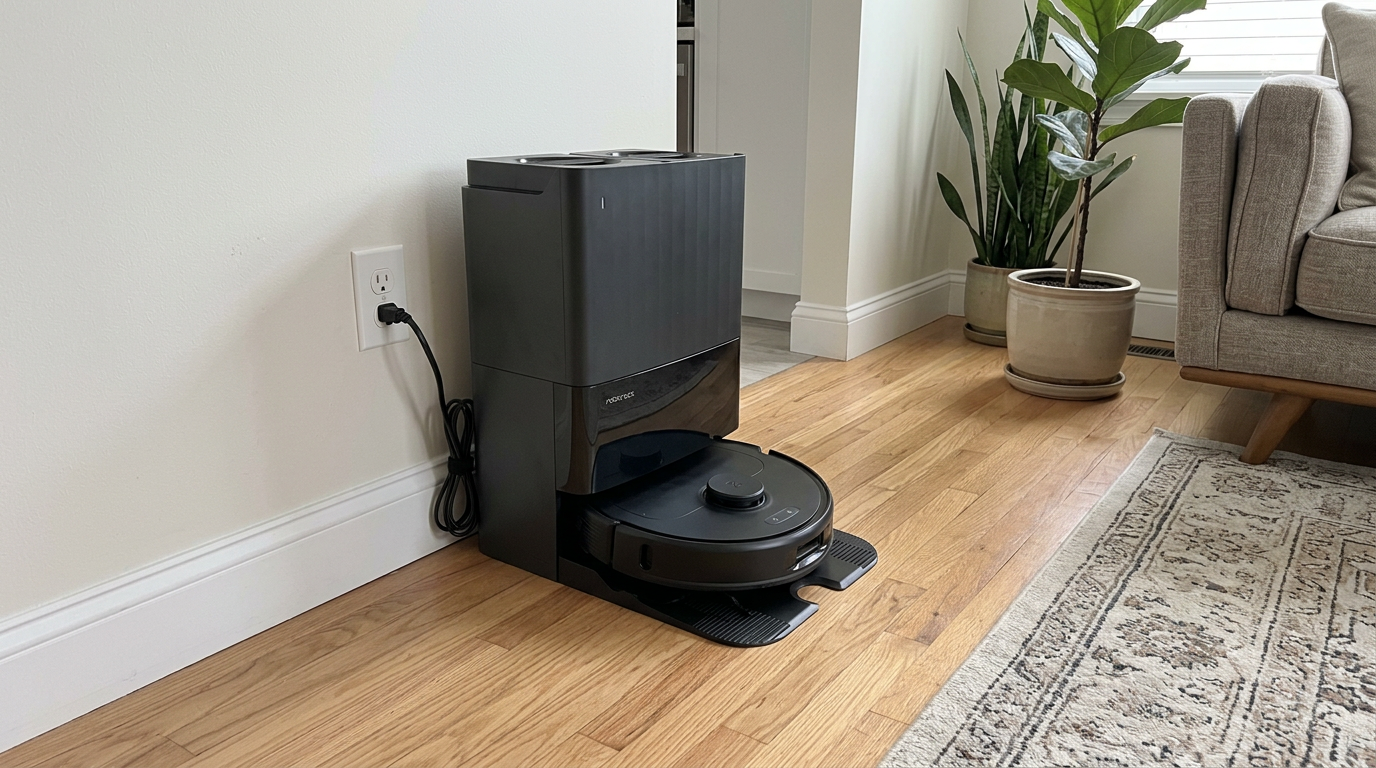
In this comparison
For most homes I would pick the Roborock Qrevo S Pro. It vacuums and mops, lifts its pads over rugs, washes them in hot water and dries them with warm air, and it is clearly quieter and smarter in the app. The Shark AV2501S AI Ultra still makes sense if you only want a vacuum, prefer a bagless base with true HEPA filtration and never want to buy dust bags. Be aware that neither robot is great with long hair, and both need you to pick up cables and socks before a run.
The two robots
Ratings checked November 6, 2026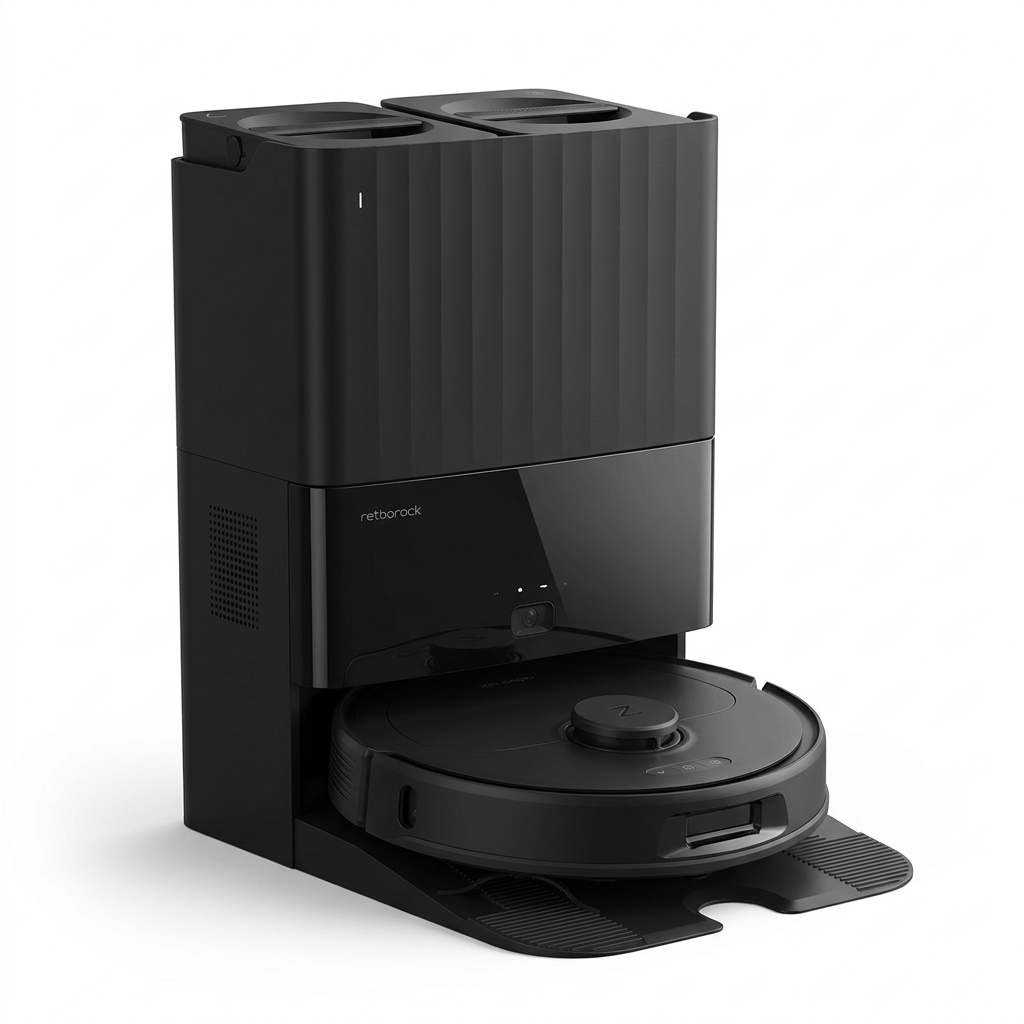
Vacuums and mops, with a dock that empties the bin, washes pads in 167°F water, dries them and refills the robot.
See Today’s Price →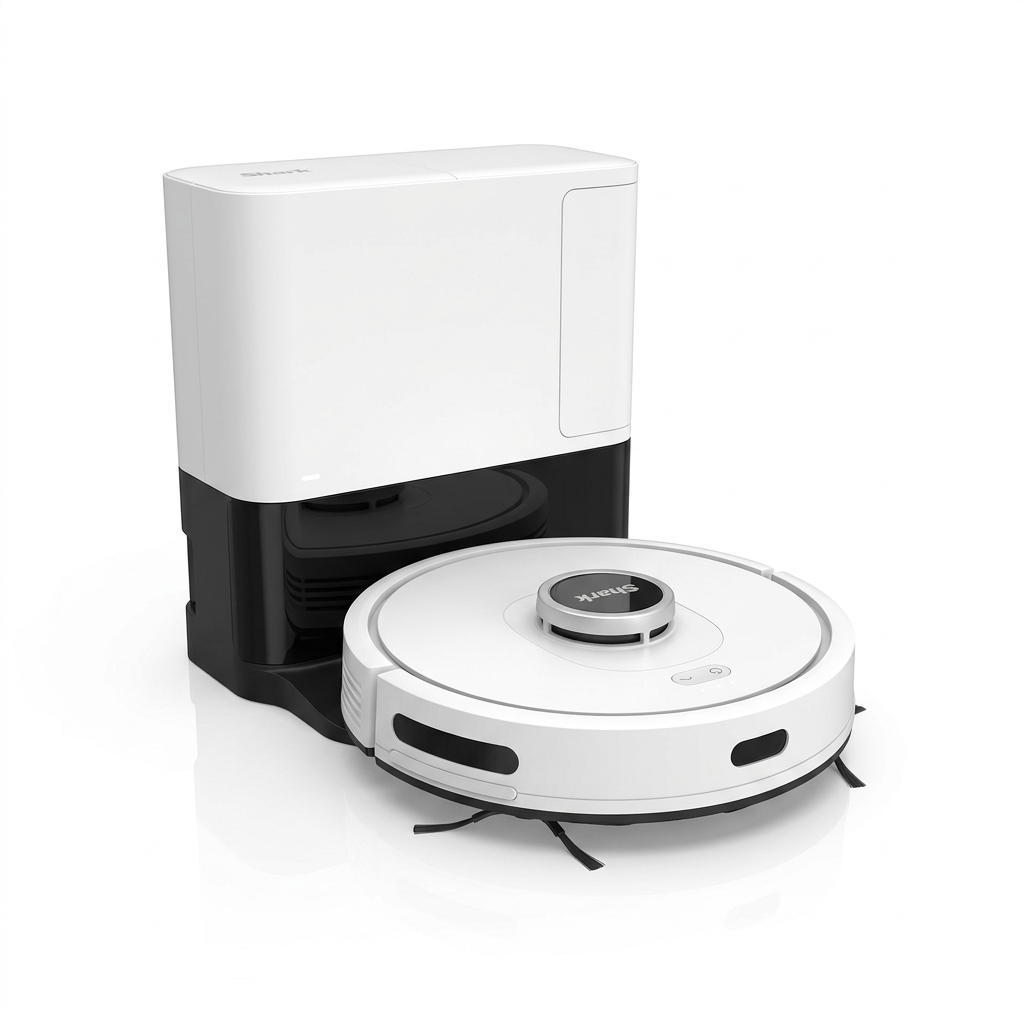
A proven LiDAR vacuum with a bagless, true HEPA self-empty base that holds up to 30 days of debris. No mop.
Reveal Today’s DealQrevo S Pro vs Shark AI Ultra at a glance
- Buy the Roborock Qrevo S Pro if you have hard floors to mop. Its lifting spinning pads, hot-water washing and auto refill make it the far more complete cleaner.
- Buy the Shark AI Ultra if you only need a vacuum and like the idea of a bagless base with true HEPA filtration and no bags to buy.
- Both use LiDAR to map your home, but the Roborock app does more: room-by-room settings, no-mop zones and smart home support through Matter.
- Neither handles long hair well. Lab testing found most long strands wrapped around the brush on both robots, so plan on brush checks.
Head to head
The better result in each row is marked. Figures come from the manufacturers and Amazon listings unless noted; rows without a mark are a tie or a matter of taste.
| Spec | Roborock Qrevo S Pro | Shark AI Ultra |
|---|---|---|
| Claimed suctionmax setting | 18,500Pa ✓ Best | Not published |
| Mopping | Dual spinning pads, 200 RPM ✓ Best | None, vacuum only |
| Mop liftover rugs | About 0.4 in (10 mm) ✓ Best | Not applicable |
| Dock | Empties, washes, dries, refills ✓ Best | Empties only |
| Dock capacity | About 7 to 9 weeks ✓ Best | Up to 30 days |
| Dust bagsrunning cost | Disposable bags | Bagless ✓ Best |
| Base filtration | Rated 99.9% pollen capture | True HEPA ✓ Best |
| Navigation | LiDAR | LiDAR, Matrix Clean grid |
| Obstacle avoidance | LiDAR plus structured light ✓ Best | LiDAR only |
| Rated runtime | Up to about 180 min ✓ Best | Up to 120 min |
| Heightfits under furniture | 3.8 in ✓ Best | 4.1 in |
| Noisenormal cleaning | Under 60 dB quiet mode ✓ Best | About 64 to 67 dB (measured) |
| Long hair tangling | 62% wrapped in lab | Most wrapped in lab |
| Smart home | Alexa, Google, Matter, Home Assistant ✓ Best | Alexa, Google, Home Assistant |
| Wi-Fi | 2.4 GHz only | 2.4 GHz only |
| Amazon rating | 4.1 (6,900+) | 4.0 (41,000+) |
| Rows won | 10 | 2 |
Qrevo S Pro vs Shark AI Ultra pros and cons
Roborock Qrevo S Pro
- Vacuums and mops in the same run
- Mop pads lift about 0.4 inch over carpet
- Dock washes pads in 167°F water and dries them with warm air
- Auto refill and auto empty for weeks of hands-off cleaning
- Excellent stain removal in independent lab testing
- Fast, efficient LiDAR navigation
- Quiet, with a dedicated quiet mode
- Matter support and a deep, flexible app
- Long hair wrapped heavily on the rubber brush in testing
- Weak at pulling flattened pet hair out of carpet
- Obstacle avoidance missed most small objects in testing
- Uses disposable dust bags
- Big dock needs about 20 inches of height
- 2.4 GHz Wi-Fi only
- App has a learning curve for zones and schedules
Shark AV2501S AI Ultra
- Bagless base, so no dust bags to buy
- True HEPA filtration in the self-empty base
- Up to 30 days between base dumps
- Picked up nearly all debris on hard floors in lab testing
- Matrix Clean grid pattern covers rooms thoroughly
- Recharge and resume on bigger floors
- Huge owner base and long track record
- No mopping at all
- Loud, especially when the base empties
- Long hair wrapped around the brush roll in testing
- Failed to avoid most objects in testing
- Keeps a single map, awkward for two-story homes
- Some owners report errors or a dead unit after one to two years
- Older design that dates back to 2021
Who should buy which robot?
- Homes with lots of hardwood, tile or vinyl to mop
- Kitchens with sticky spills and dried-on stains
- Mixed homes with rugs on hard floors
- People who want the least hands-on upkeep
- Quiet apartments and work-from-home days
- Matter and Apple Home users
- Two-story homes that need more than one map
- Mostly carpeted homes that do not need a mop
- Allergy households that want a true HEPA base
- Anyone who refuses to buy dust bags
- Single-level homes
- Short-haired pets and everyday dust
- People who will run it while they are out
Design, dock and build
These two robots come from very different eras, and you can see it the moment you unbox them. The Shark AI Ultra first launched in 2021 and follows the classic recipe: a round vacuum with a LiDAR turret on top and a compact base that only empties the bin.
The Roborock Qrevo S Pro is a 2026 refresh, and its dock is a small appliance in its own right. It empties the robot, washes the mop pads, dries them and refills the onboard water tank.
The robots themselves are close in footprint. The Qrevo S Pro measures 13.8 by 13.9 inches and stands 3.8 inches tall, while the Shark is 13.7 inches across and 4.1 inches tall.
That third of an inch matters more than it sounds. Shark owners mention the tall sensor turret keeping it out from under some sofas and TV consoles, and those are exactly the spots where dust collects.
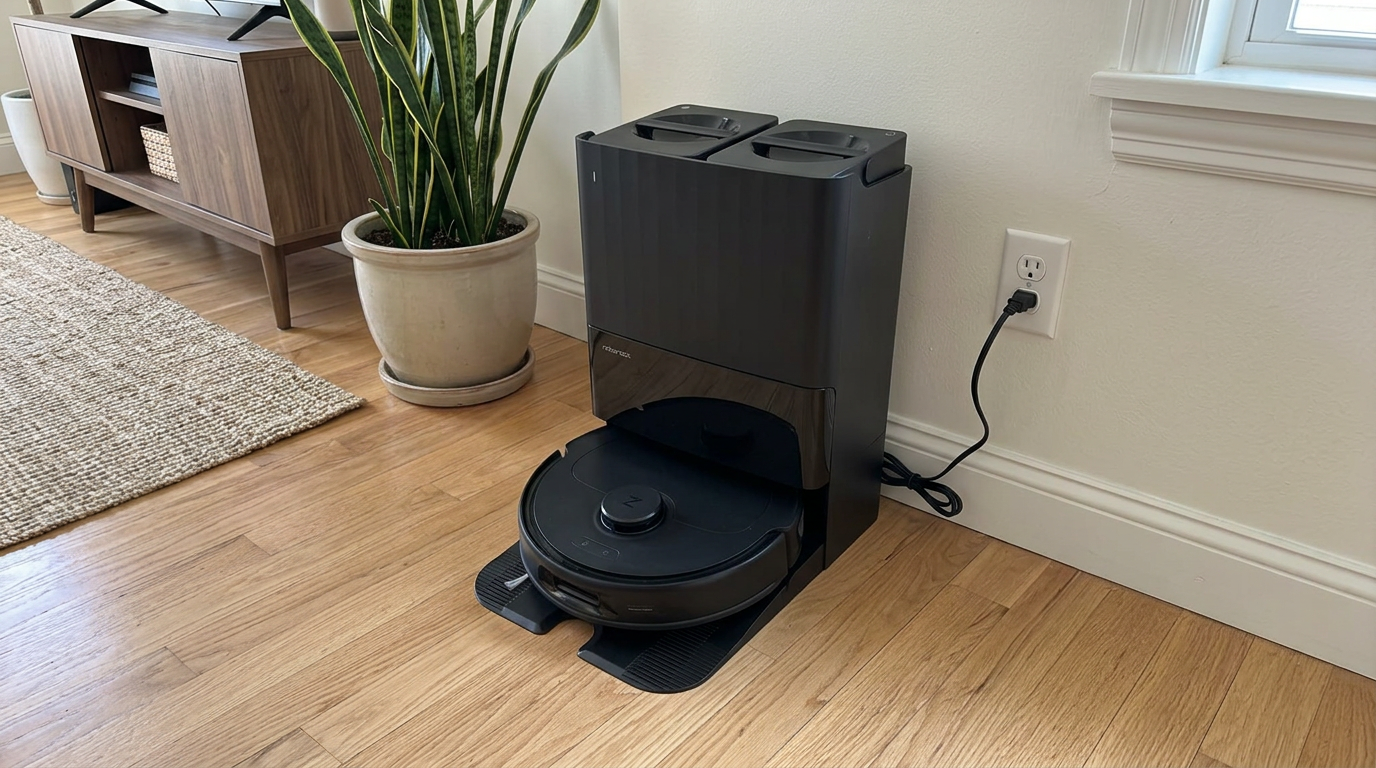
The Qrevo S Pro pairs a 3.8-inch robot with a dock that handles almost all routine upkeep.
The trade-off is the dock size. The Roborock dock measures roughly 13.4 by 19.2 inches and stands about 20.4 inches tall, and together with the robot it weighs around 25.6 pounds.
The Shark package, robot plus base, comes in at roughly 14.4 pounds. If you are short on floor space near an outlet, the Shark is far easier to tuck away.
Tip: Before you order the Roborock, measure the spot where the dock will live. You want about 20.5 inches of height, a wall behind it and roughly 1.5 feet of clear floor in front so the robot can line up.
Suction and everyday vacuuming
On paper this round is lopsided. Roborock rates the Qrevo S Pro at 18,500Pa of suction, and Shark simply does not publish a suction figure for the AI Ultra.
I would not put too much weight on the Roborock number either. Suction ratings in this market are measured by the brands themselves, and lab results on the floor are a far better guide.
The good news is that both robots have solid lab data behind them. In one independent studio test, the Shark picked up 99.8% of mixed debris on hardwood and about 97% across hardwood, low-pile and high-pile carpet.
A second lab measured the Shark’s airflow at about 17.7 CFM, which is healthy for a robot. The same tests did show it leaving a little sugar and kitty litter behind on carpet.
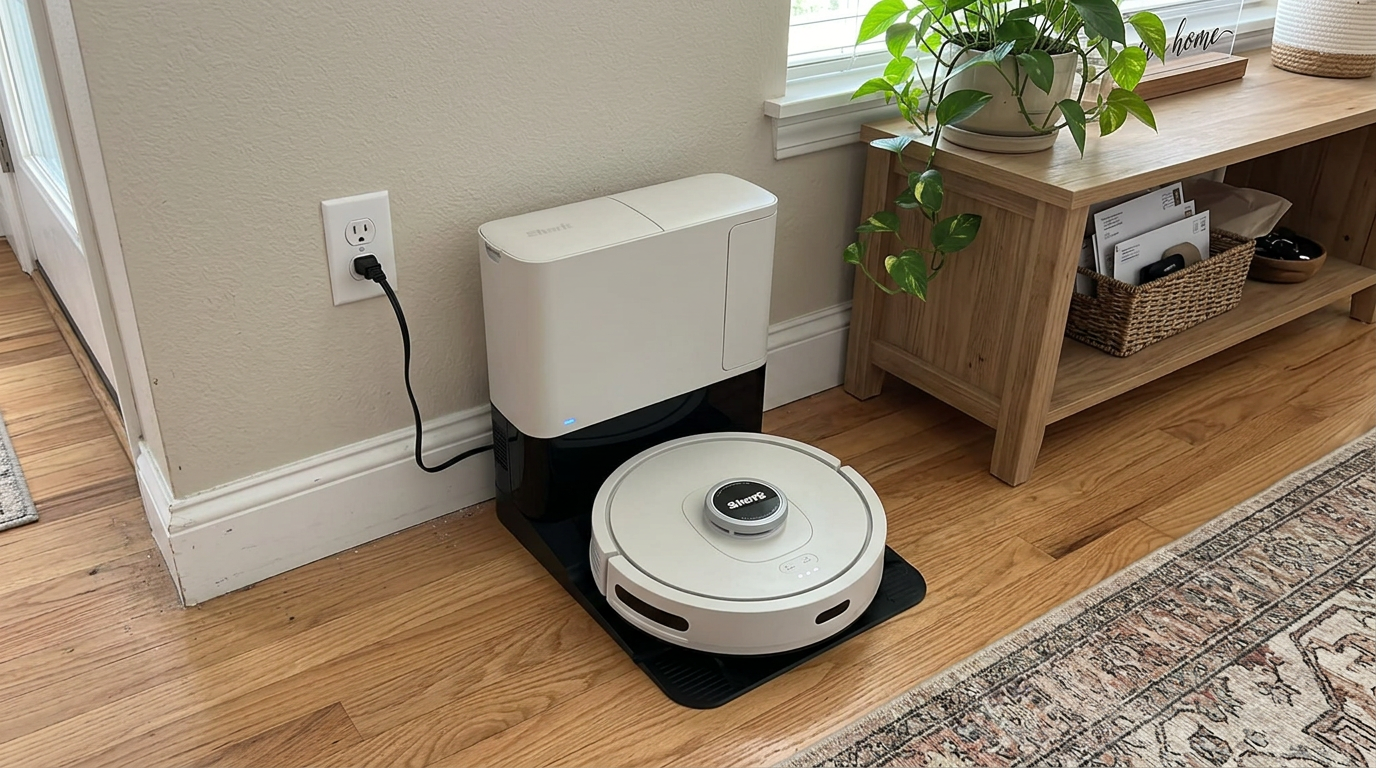
The Shark AI Ultra is a dependable everyday vacuum on hard floors.
The Qrevo S Pro went through a different lab’s full test suite. It removed 81% of embedded sand from medium-pile carpet, a little above the 78% average, and it swept debris of all sizes with almost no scattering.
Its crevice score was 1.5 against an average of 2, so grout lines and floorboard gaps are still not its strongest area. Testers also noted fairly limited agitation from the single rubber main brush on carpet.
Owners of both robots describe them doing the daily job well. Shark owners talk about tracked-in leaves, crumbs and dog fur shrinking on a daily schedule, while Roborock buyers keep mentioning how much dust it pulls from under furniture.
My take: on everyday debris these two are close enough that suction alone should not decide it. What you do with your hard floors after vacuuming matters far more.
Carpet tip: Turn on carpet boost on the Roborock, or the highest power setting on the Shark, for rugs and runners. Then keep a regular vacuum for a monthly deep pass on thick carpet.
Pet hair and tangles
This is the section where I expected a clear winner and did not find one. Both brands market their robots for pet homes, and both had a rough time with hair in independent testing.
The Qrevo S Pro uses a single rubber main brush with an anti-tangle side brush. In a seven-inch hair test, 62% of the hair ended up wrapped around its main brush, well above the 26% average.
It also collected only 43% of short pet hair that had been flattened into carpet, about half the 82% average. On hard floors, owners are much happier, and several with cats and dogs praise its pickup of loose fur and dander.
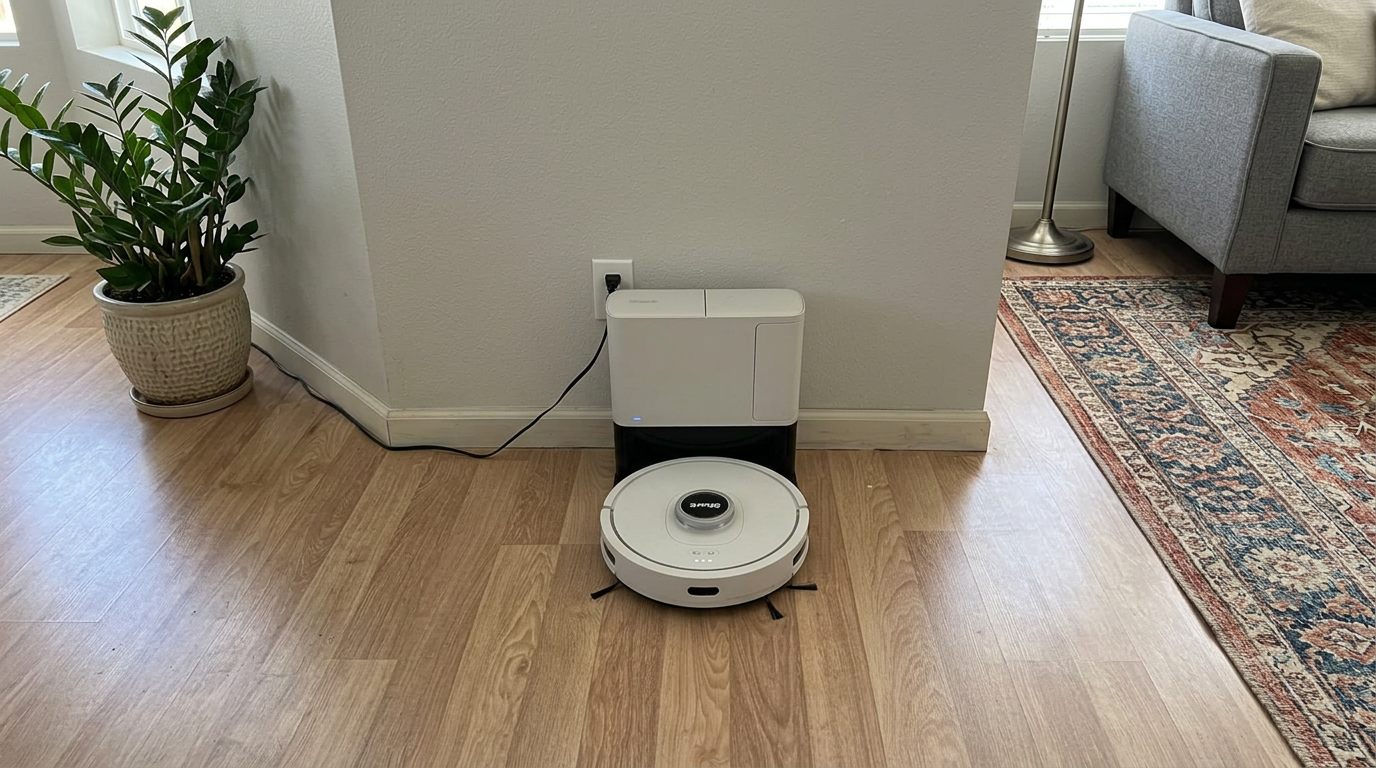
Shark markets the AI Ultra’s self-cleaning brush roll for homes with pets.
The Shark leans on its self-cleaning brush roll, which uses a comb to strip hair off as it spins. In one lab’s long hair test, it lifted every strand off the floor, but most of that hair still wrapped around the ends of the brush roll.
The same lab rubbed pet hair into high-pile carpet, and the Shark left about 70% of it behind after two passes. Owners with golden retrievers and doodles still say daily runs keep the tumbleweeds under control, so the gap shows up mostly on deep carpet.
So where does that leave a pet owner? On hard floors, both will keep up with shedding if you run them daily. On carpet, neither replaces a good upright, and with long hair you will be cutting strands off either brush.
Pet owner tip: During shedding season, schedule a short daily run instead of one long weekly clean. Daily passes stop fur from packing into carpet, which is exactly where both robots struggle.
Brush tip: Check the brush ends every week on either robot. Hair builds up at the end caps first, and a quick snip with small scissors keeps the motor from straining.
Mopping
This round is not close, because the Shark AV2501S does not mop at all. There is no water tank, no mop pad and no washing at the base.
The Qrevo S Pro uses two spinning mop pads that rotate at up to 200 RPM and press down on the floor. When the robot senses carpet, it lifts the pads about 0.4 inch so it can vacuum a rug and mop the hard floor around it in one run.
There is also a carpet-first setting that vacuums all the rugs before the pads ever get wet. I like that option for homes with lots of area rugs, because it removes the risk of a damp fringe.
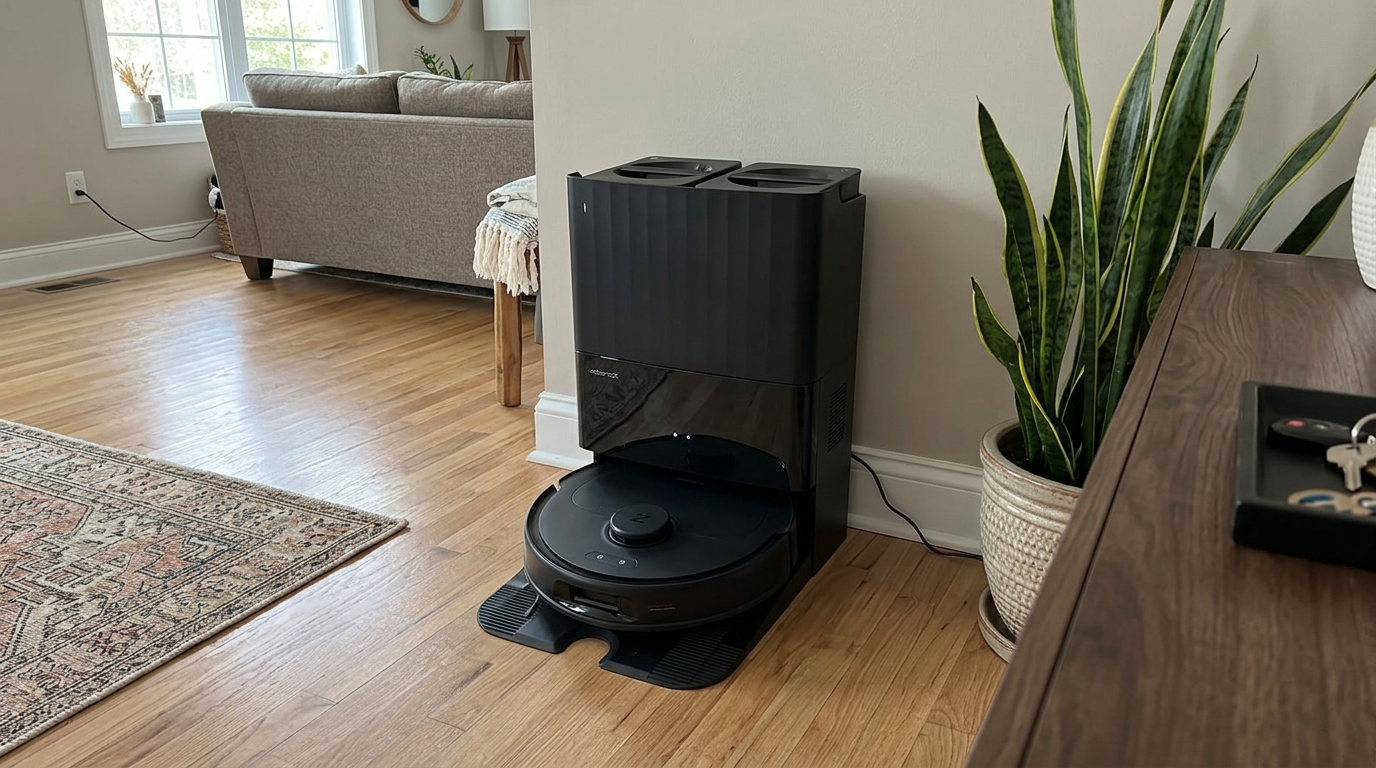
The dual spinning pads are the Qrevo S Pro’s biggest advantage over the Shark.
The lab results here are genuinely strong. The Qrevo S Pro scored 149 on dried-on stains against a 108 average, and 166 on coffee stains against an average of 94.
It did leave slightly more water behind than average, about 1.15 grams against 1.07, which is a small difference you will not notice on sealed floors. Combined, its mopping score was well above average for robots in this tier.
The dock is what makes the mop livable day to day. It washes the pads with 167°F water and then dries them with 113°F warm air, which helps stop the sour smell that damp pads develop.
Owners agree that it is a maintenance mop rather than a scrubber. It keeps kitchens and entryways fresh, but truly baked-on stains still need a manual clean now and then, and several owners say results improve with a cleaning solution approved by Roborock.
Hardwood tip: Set the Roborock to a low water level for wood floors and turn on the option to clean along the direction of the floorboards. It reduces streaks and keeps moisture away from the seams.
Shark owner tip: If you choose the Shark and still want clean hard floors, pair it with a separate wet mop or a spray mop once a week. Run the robot first so you are not pushing crumbs around.
Navigation and getting stuck
Both robots use LiDAR, so both build a real floor plan of your home. That puts them a big step above the bump-and-go budget robots, and it is why both let you set rooms and no-go zones in the app.
The Shark cleans with what Shark calls Matrix Clean, an overlapping grid pattern that goes over each area twice in different directions. In one lab test, it finished a cluttered 1,000 square foot office in 70 to 80 minutes, a bit slower than average, but it rarely got stuck.
The Qrevo S Pro was quick and tidy in its own lab test. It covered about 9.3 square feet per minute against a 7.6 average, and it vacuumed and mopped the test studio in 41 minutes, roughly 15 minutes faster than average.
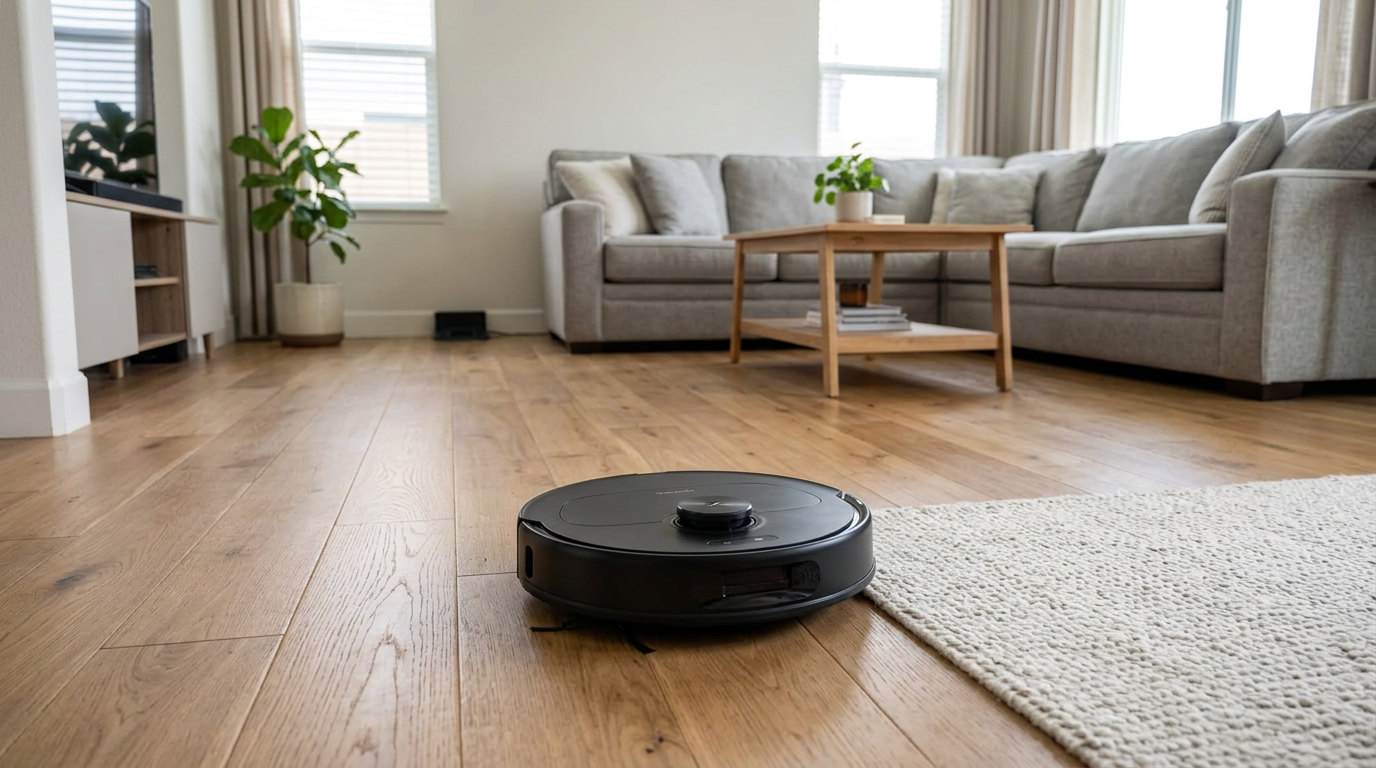
LiDAR mapping lets the Qrevo S Pro clean room by room instead of wandering.
Obstacle avoidance is the weak spot for both. The Roborock adds Reactive Tech, a structured-light sensor at the front, yet it avoided only 5 of 24 small obstacles in testing, against an average of 16.
The Shark has no dedicated front sensor for small objects and relies on its LiDAR. In another lab, it failed to cleanly avoid three of four test objects, including fake pet waste.
Owners of the Roborock still describe it dodging furniture legs and pet toys well, while Shark owners mention it missing some edges and corners and getting caught on certain area rugs. In real homes, a few minutes of prep makes the biggest difference for both.
The Qrevo S Pro also climbs thresholds of up to about 0.8 inch, which helps in older homes with raised doorways. If your house has a step between rooms, check its height before you buy either robot.
Clutter tip: Do a quick pickup of cables, socks, toys and pet bowls before each run. With weak obstacle avoidance on both robots, this one habit prevents most rescues.
Dock tip: Place either base on hard floor against a wall with clear space on both sides. A cramped dock is the most common reason a robot circles around looking for home.
Battery, charging and runtime
The Qrevo S Pro has the longer rated runtime, at up to roughly three hours on its gentlest setting according to its spec listings. The Shark AI Ultra is rated for up to 120 minutes.
Lab results back up the Roborock. It managed about 1.62 minutes of cleaning per 1% of battery, slightly above average, for an estimated 1,495 square feet per charge.
Roborock also claims 30% faster charging than the previous model and supports off-peak charging. That is handy if your utility charges less at night.
The Shark uses recharge and resume. When the battery runs low on a big floor plan, it heads home, tops up and continues where it stopped.
Shark owners point out the catch: the top-up can take around three hours before it heads out again. On a large single-level home, a full clean can stretch across a good part of the day.
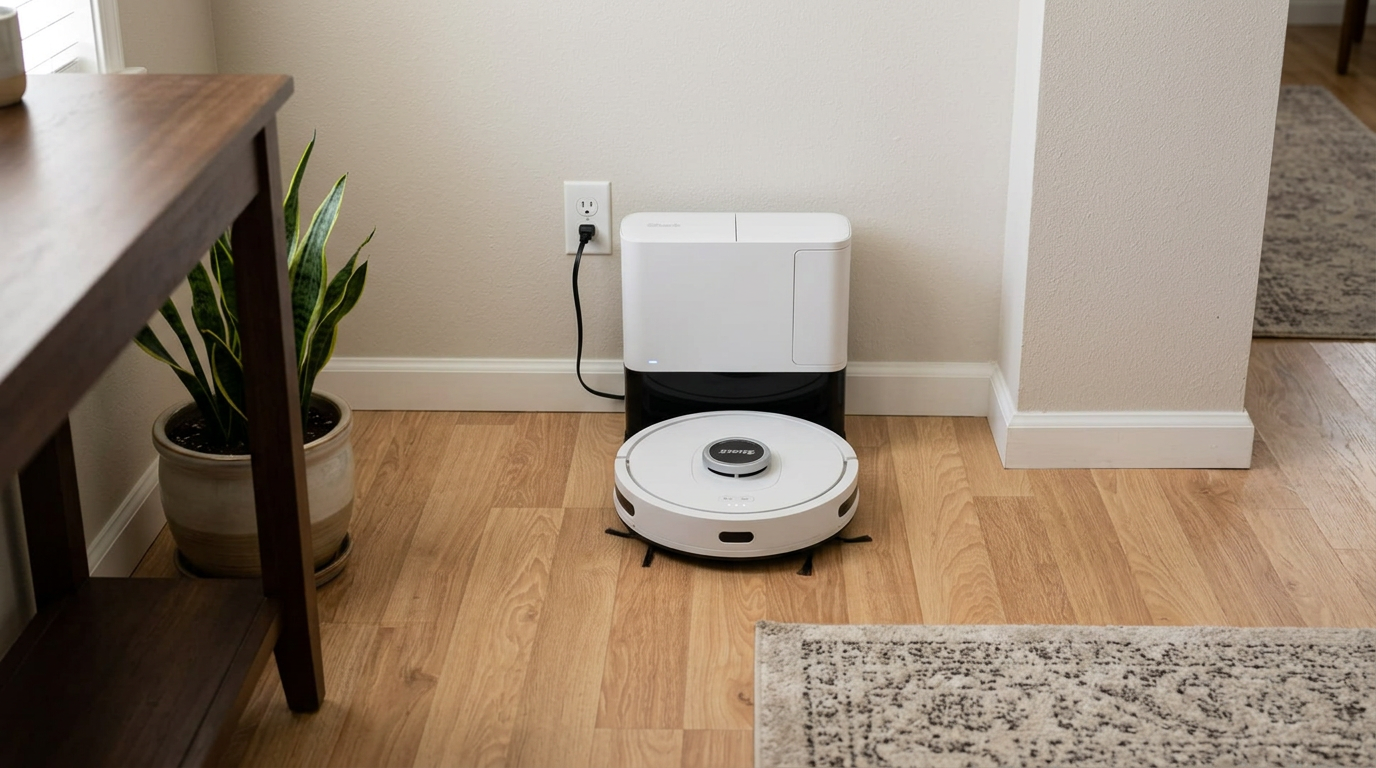
The Shark heads back to its base to recharge, then resumes the job.
Charging tip: Schedule big whole-home runs for the morning after you leave. That gives either robot time to finish, recharge and resume before you are back.
Warranty tip: Keep your order confirmation and use the robot every day during the return window. Battery and sensor faults, when they happen, tend to show up early.
App, mapping and smart home
The Roborock app is one of the best reasons to choose the Qrevo S Pro. You get room editing, schedules, room-specific suction and water levels, no-go and no-mop zones, and a live view of the robot as it cleans.
It also works with Alexa and Google Assistant, and Roborock lists Matter support, which opens the door to Apple Home and SmartThings. Home Assistant users can connect it too.
The flip side is depth. Several owners say splitting rooms and fine-tuning schedules took a while to figure out, and they wished the manual explained it better.
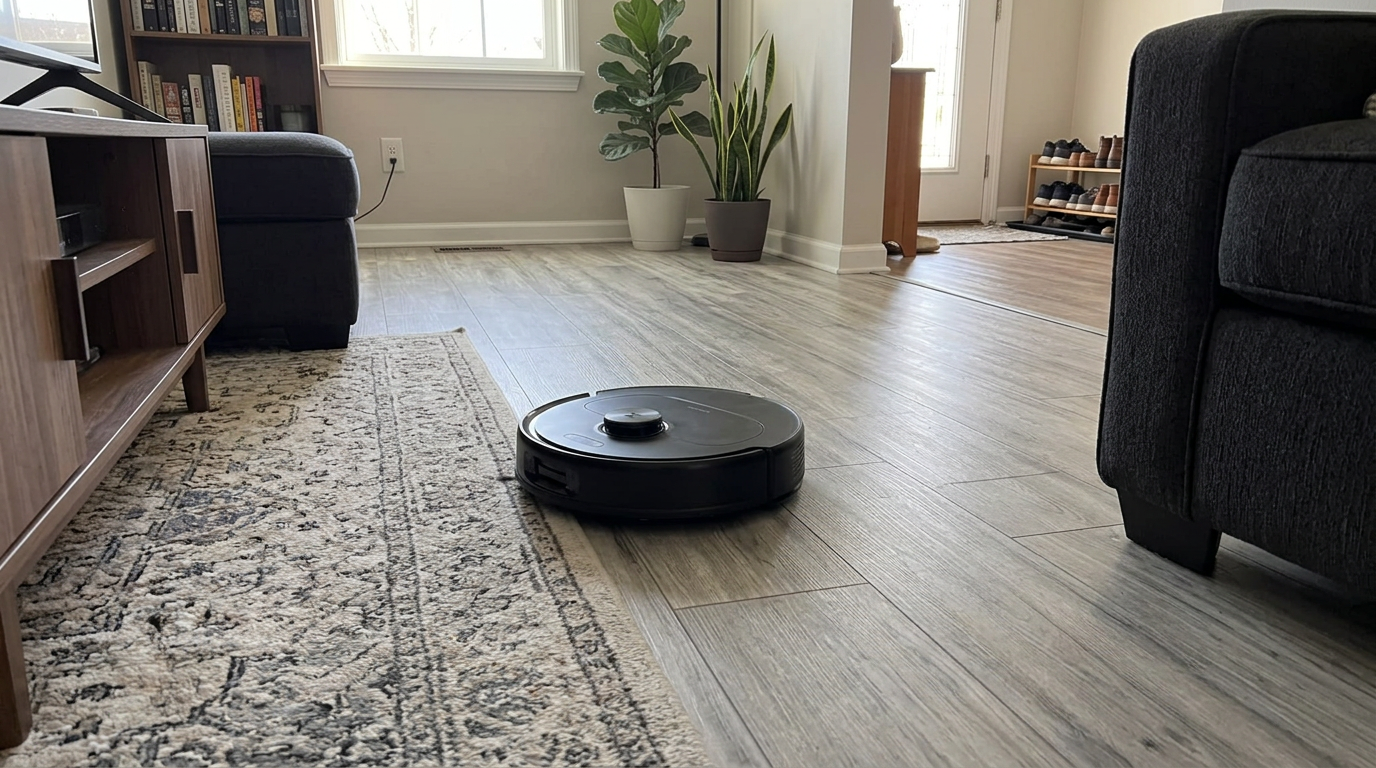
Room-by-room settings and no-mop zones are where the Roborock app shines.
The SharkClean app is simpler. You can set rooms, no-go zones and high-traffic areas, check cleaning history and use Do Not Disturb, and most owners find mapping easy.
It is more limited, though. One lab found it allowed only one scheduled clean a day, owners say schedules apply to the whole home, and the robot keeps a single map, so a two-story house means re-mapping or carrying it upstairs.
Both robots connect only on 2.4 GHz Wi-Fi. Pairing is a bigger theme in Shark reviews, with owners describing failed setups and dropouts on routers that merge both bands under one name.
Wi-Fi tip: If setup fails, temporarily split your router’s 2.4 GHz and 5 GHz networks, or create a guest network on 2.4 GHz only. Pair the robot, then switch everything back.
Smart home tip: Build a routine in Alexa or Google Home that starts a clean when the last person leaves. It is more reliable than remembering to press start.
Noise
If you work from home or have a napping toddler, this could be the deciding factor. Roborock rates the Qrevo S Pro at under 55 dB in mop-only mode and under 60 dB in its quiet vacuum mode, and owners say they cannot hear it from another room.
The Shark is louder. In one lab it measured 64 to 67 dB depending on power level, and almost 80 dB when the base emptied the bin.
Noise is the single most repeated complaint in Shark reviews, with several owners saying they cannot take a phone call in the same room. The Roborock dock is loud for a few seconds when it empties too, but its warm-air drying is rated at a quiet 45 dB.
Quiet tip: Use Do Not Disturb hours on either robot so the self-empty cycle never fires late at night.
Maintenance and running costs
Both docks take most of the dirty work off your hands, but they do it differently. The Shark base is bagless and holds up to 30 days of debris, then you open it and tip it into the trash.
The Roborock dock uses a 2.7-liter disposable bag that Roborock says lasts about seven to nine weeks. That is cleaner to change and better for anyone who hates dust clouds, but it does mean buying bags.
The Shark’s true HEPA filter in the base is a real plus for allergy households. Roborock rates its system at 99.9% pollen filtration, which is very good, but it is not marketed as true HEPA.
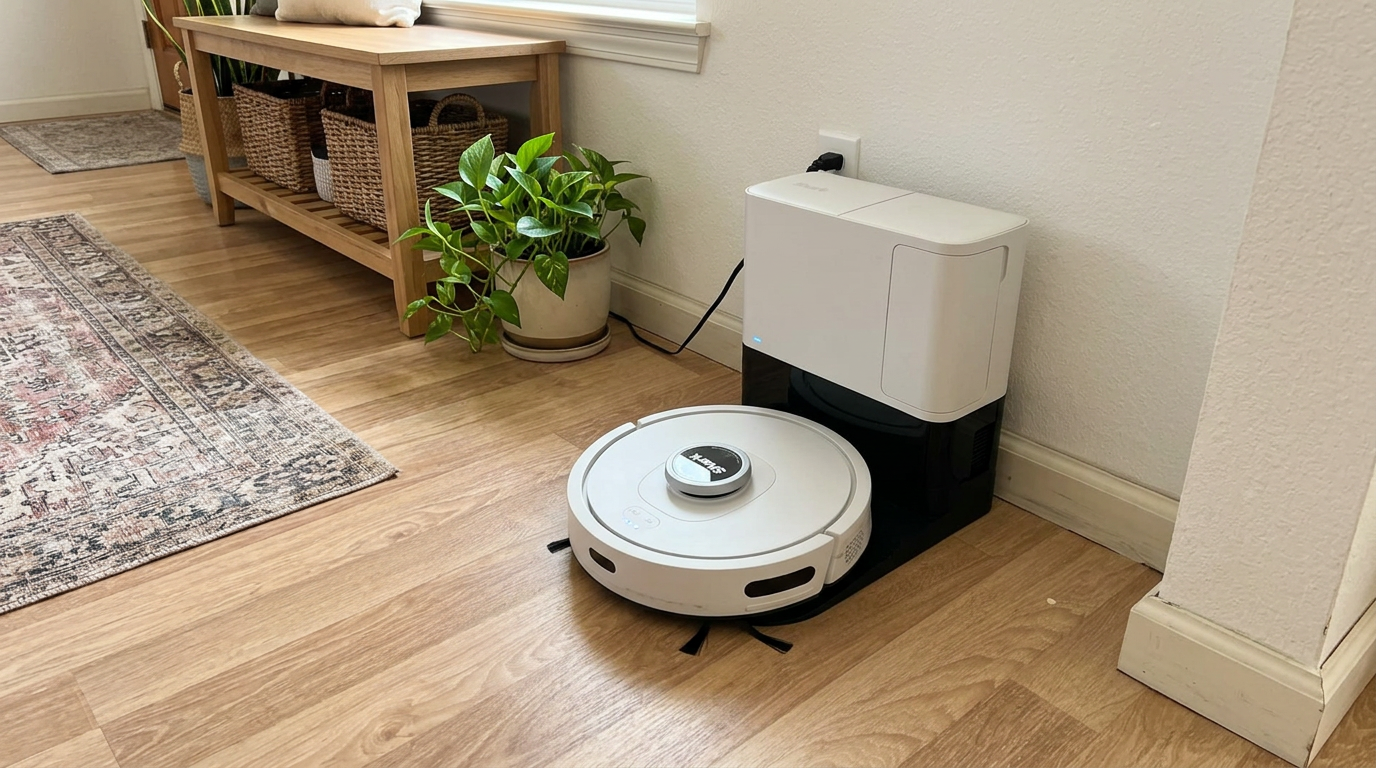
The bagless Shark base means no ongoing bag purchases.
The Roborock asks for a little more attention in other ways. You refill the clean water tank, empty the dirty water tank and rinse the wash tray every so often.
The Shark has no water parts at all. In exchange, you lose the mopping, which for many homes is the whole point of a robot in this class.
Independent lab results
Both robots have been through independent studio tests, but by two different labs with different methods. That means the numbers below are best read against each lab’s own average, not against each other.
For the Qrevo S Pro, the lab bought the robot and tested it over several weeks in 2026. For the Shark AI Ultra, a separate lab ran eight tests covering debris, hair, obstacles, navigation, speed and noise.
Roborock Qrevo S Pro vs lab average
Shark AI Ultra results
Higher is better for debris pickup and carpet cleaning, and lower is better for hair left behind and hair tangled. The pattern is clear: the Roborock is the stronger all-rounder thanks to its mop, while both robots stumble on long hair.
What owners say
The Shark AI Ultra holds a 4.0-star average across more than 41,000 ratings, a huge sample built up since 2021. The Qrevo S Pro is newer and sits at 4.1 stars from more than 6,900 ratings.
Owners love not touching a dirty mop pad or emptying a bin for weeks, and call the hot-water wash the big step up from older robots.
Fast, accurate mapping and quiet runs come up again and again, including from buyers who switched from other robot brands.
Zones and schedules take time to master, and mopping is described as daily maintenance rather than deep scrubbing.
Owners with big shedding dogs run it daily and say the hair problem shrinks, with weeks between base dumps.
It is loud while cleaning and louder when the base empties, and pairing on 2.4 GHz trips up many buyers.
A vocal minority report brush-roll or sensor error codes, or a dead unit, after one to two years of use.
Reviews cannot tell you exactly how often a problem happens. They do show you what to test during your return window.
Which one should you buy?
After weighing everything, I think the answer comes down to one question: do you want your robot to mop? If yes, the choice makes itself.
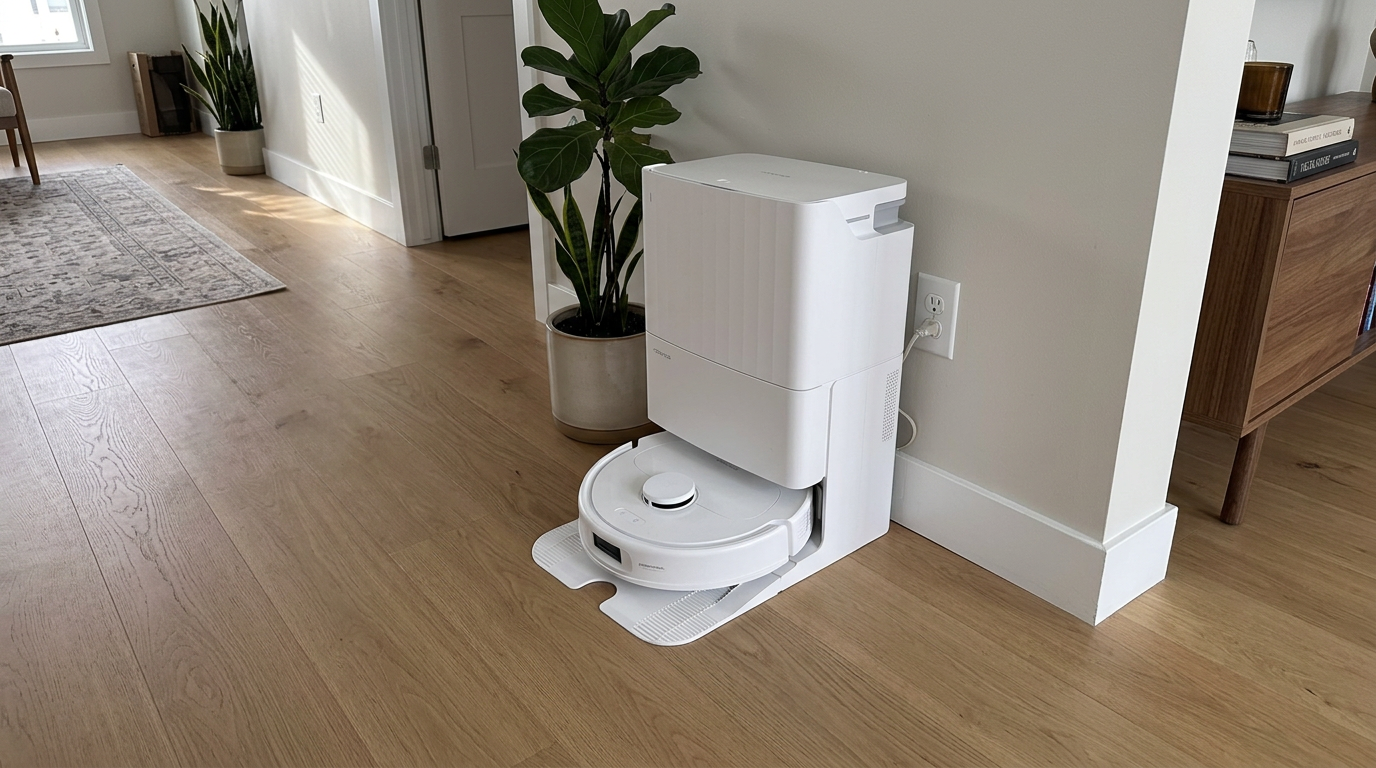
For most homes, the Qrevo S Pro is the more complete cleaner.
- You have hard floors you want mopped automatically
- You want the dock to wash, dry and refill for you
- You need a quiet robot
- You use Matter, Apple Home or multiple floors
- Someone in the house has long hair and you hate brush cleaning
- Your home is mostly thick carpet
- You have no room for a tall dock
- You only need a vacuum
- You want a bagless base with true HEPA filtration
- You live on one level
- You will run it while you are out of the house
- You want mopping
- Noise bothers you
- You have a tricky mixed-band Wi-Fi router
Pick the Roborock for mopping, a dock that does almost everything and quiet runs. Pick the Shark for bagless, HEPA-filtered vacuuming in a carpeted single-level home.
My pick is the Roborock Qrevo S Pro. It vacuums as well as the Shark on everyday debris, adds a genuinely good mop with carpet lift, and its dock washes, dries and refills so you rarely touch it. It is also quieter and far more flexible in the app.
The Shark AV2501S AI Ultra is still a solid vacuum-only choice for carpeted, single-level homes, especially if a bagless HEPA base matters to you. Just expect more noise and a simpler app.
Whichever you choose, clear the floor before each run, check the brush for hair every week and give the dock some breathing room.
Roborock Qrevo S Pro vs Shark AV2501S specifications
From the Amazon listings, manufacturer specifications and independent lab tests. Checked November 6, 2026.
| Roborock Qrevo S Pro | Shark AV2501S AI Ultra | |
|---|---|---|
| Claimed suction | 18,500Pa HyperForce | Not published (lab airflow about 17.7 CFM) |
| Mopping | Dual spinning pads, up to 200 RPM | None |
| Mop lift | About 0.4 in (10 mm), carpet-first mode | Not applicable |
| Dock functions | Auto empty, 167°F pad wash, 113°F warm-air dry, auto refill | Bagless auto empty |
| Dock capacity | 2.7 L bag, about 7 to 9 weeks | Up to 30 days |
| Filtration | Rated 99.9% pollen filtration | True HEPA base |
| Main brush | Single rubber brush, anti-tangle side brush | Self-cleaning brush roll, 2 side brushes |
| Navigation | LiDAR | LiDAR, Matrix Clean grid |
| Obstacle avoidance | Reactive Tech structured light | LiDAR only |
| Maps | Multi-room, no-go and no-mop zones | Single map, rooms and no-go zones |
| Rated runtime | Up to about 180 min | Up to 120 min, recharge and resume |
| Threshold climbing | About 0.8 in | Not published |
| Robot size | 13.8 x 13.9 x 3.8 in | 13.7 x 13.7 x 4.1 in |
| Dock size | 13.4 x 19.2 x 20.4 in | Compact base |
| Total weight | About 25.6 lb (robot and dock) | About 14.4 lb (robot and base) |
| Noise | Under 55 dB mop only, under 60 dB quiet vacuum | About 64 to 67 dB, nearly 80 dB emptying (measured) |
| Wi-Fi | 2.4 GHz only | 2.4 GHz only |
| Smart home | Alexa, Google Assistant, Matter, Home Assistant | Alexa, Google Assistant, Home Assistant |
| Launched | 2026 | 2021 |
| Amazon rating | 4.1 (6,900+ ratings) | 4.0 (41,000+ ratings) |
How I researched and compared them
This is a researched comparison built on published data, not a long-term test in my own home.
I started from both Amazon listings and the manufacturer specifications, then read through the most helpful owner reviews for each robot. Between them they have more than 48,000 ratings, enough to spot patterns that a single test home would miss.
I also used two independent studio lab tests, one for each robot. Because they come from different labs, I compare each robot to its own lab average rather than pitting the raw numbers against each other, and I treat single owner reports as warning signs rather than proof.
- Cleaning: hard floor pickup, carpet, pet hair and tangling.
- Mopping: stain removal, water use and carpet protection.
- Navigation: mapping, coverage speed, obstacles and docking.
- Ownership: battery, noise, app, maintenance and long-term reliability.
Qrevo S Pro vs Shark AI Ultra FAQ
Is the Roborock Qrevo S Pro better than the Shark AI Ultra?
For most homes, yes. It vacuums about as well on everyday debris, adds a strong mop with carpet lift and has a dock that washes, dries and refills. The Shark is better if you want bagless, true HEPA vacuuming with no mop.
Does the Shark AV2501S mop?
No. It is a vacuum-only robot with no water tank or mop pad. If you want mopping from Shark, you need one of its 2-in-1 models.
Do both robots map my home?
Yes. Both use LiDAR to build a map with rooms and no-go zones. The Roborock app adds no-mop zones and room-specific settings, while the Shark keeps a single map.
Which is better for pet hair?
Both handle loose pet hair on hard floors well with daily runs. Both struggled to pull flattened hair out of carpet and both wrapped most long hair around the brush in lab testing, so plan on weekly brush checks.
How often do I need to empty the docks?
Shark says its bagless base holds up to 30 days of debris. Roborock says its 2.7-liter dust bag lasts about seven to nine weeks before you swap it.
Will the Roborock get my rugs wet?
It should not. The pads lift about 0.4 inch when it detects carpet, and a carpet-first setting vacuums rugs before the pads get wet. You can also draw no-mop zones in the app.
Which one is quieter?
The Roborock. It is rated under 60 dB in quiet vacuum mode, while the Shark measured 64 to 67 dB in testing and nearly 80 dB when the base empties.
Do they work with 5 GHz Wi-Fi?
No. Both connect only on 2.4 GHz. If your router combines both bands under one name, split them temporarily during setup.
Do they work with Alexa and Google Home?
Yes, both do, and both can connect to Home Assistant. Roborock also lists Matter support, which brings in Apple Home and SmartThings.


- Amazon product listing for the Roborock Qrevo S Pro (ASIN B0GGRSMXKN), November 2026
- Amazon product listing for the Shark AV2501S AI Ultra (ASIN B09H8CWFNK), November 2026
- Roborock and Shark manufacturer specifications
- Independent studio lab test of the Roborock Qrevo S Pro (October 2026)
- Independent studio lab tests of the Shark AI Ultra
- Verified Amazon owner reviews of both models
- Comparison published.