Rubber roller vs. bristle brush: which robot vacuum brush picks up what
Rubber rollers and bristle brushes are good at different messes. I break down how each design works, which debris each one handles best, and how to pick the right brush for your floors.
We choose products independently. We may earn a commission through links on this page; your price stays the same. Affiliate policy
On this page
The short answer
- Rubber rollers win on hair, pet fur and chunky debris. Their smooth, finned surface gives hair little to wrap around and scoops cereal and litter instead of flicking it.
- Bristle brushes win on grit buried in carpet. Stiff tufts dig into the pile and knock fine dirt loose so suction can carry it away.
- On hard floors the gap is small, because the seal and airflow do most of the work.
- For most homes with pets or long hair, I pick a rubber roller or a hybrid with a real anti-tangle design.
Why I care more about the brush than the suction number
When people ask me which robot vacuum picks up the most, they usually expect me to point at a suction rating. I almost never do.
The brush is the only part of the robot that actually touches your floor. Suction carries debris into the bin, but the brush decides what gets loosened, lifted and steered toward the intake in the first place.
Right now there are two main schools of thought. One uses a classic bristle brush roll, sometimes mixed with rubber blades. The other uses rubber rollers with raised fins or chevrons and no bristles at all.
Each one wins on certain debris and loses on others. In this guide, I break down how each design works, which messes each handles best, and how to choose for your floors and your household.
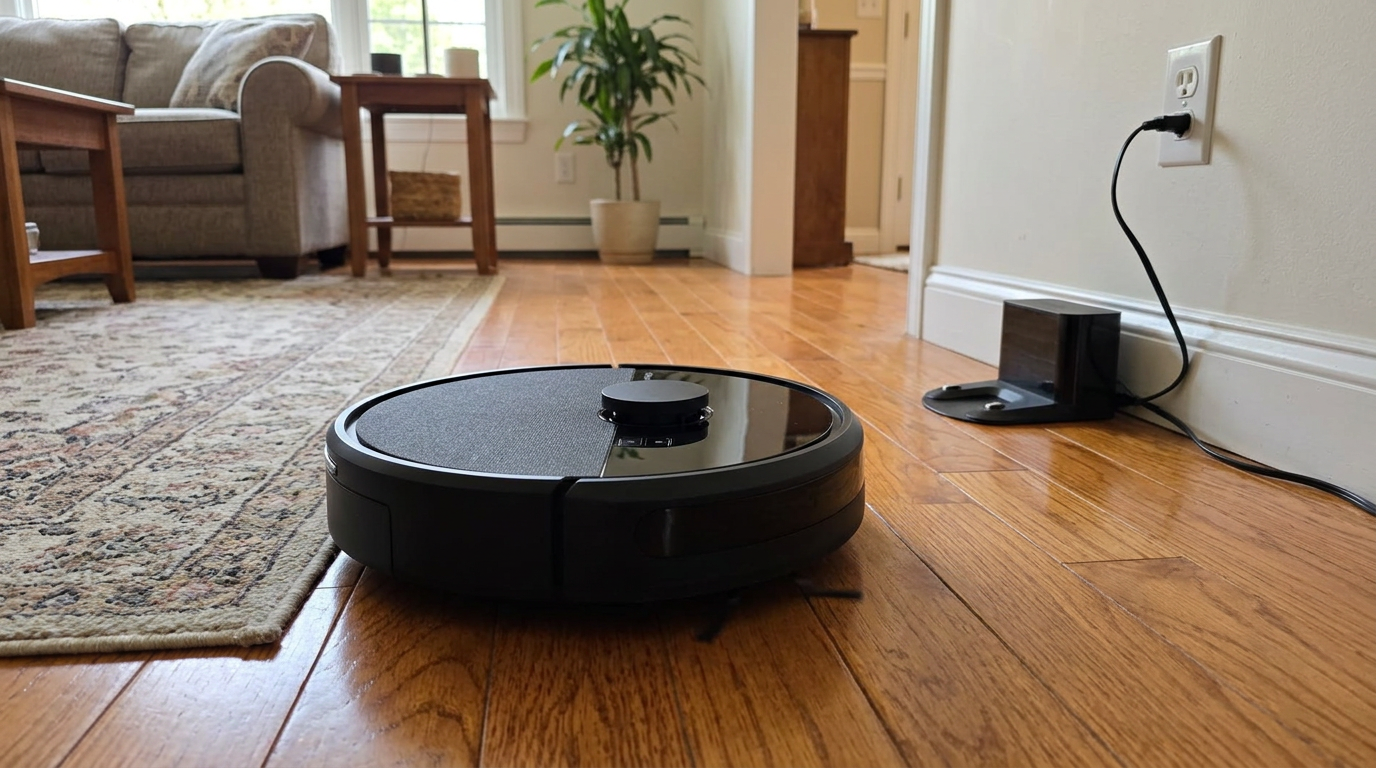
Most of the cleaning happens underneath, where the main brush meets the floor. Robots like the Roomba 105 Combo pair it with a side brush that sweeps edges inward. Read my iRobot Roomba 105 Combo review →
How a bristle brush roll cleans
A bristle brush roll is the same basic idea as the beater bar on an upright vacuum. Rows of stiff nylon tufts spin against the floor and flick debris backward into the suction channel.
On carpet, that flicking does something suction alone cannot. The bristles reach down between fibers and knock grit loose so the airflow can carry it away.
Vacuum repair specialists have explained this for years. A technical write-up from Ristenbatt, a long-running vacuum dealer, notes that moving air on its own struggles to reach deeply embedded dirt with enough velocity to dislodge it, and that a spinning brush loosens that dirt and lifts it toward the surface.
Engineers keep refining the pattern. One brushroll patent describes arranging tufts in tilted, rotationally opposed rows specifically to increase carpet fiber agitation.
The downside is hair. Long strands wrap around the core between the tufts like thread on a spool, and once they do, the bristles can no longer reach the floor properly.
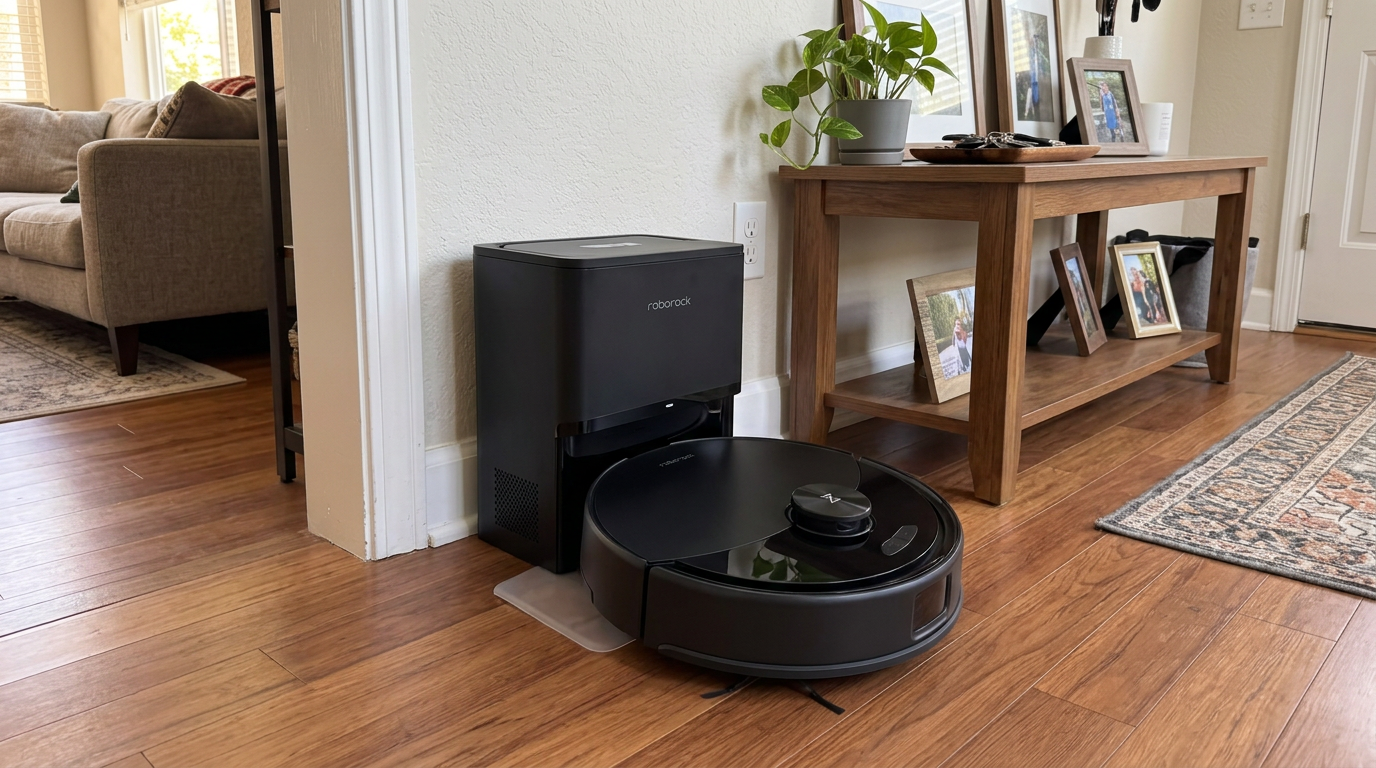
Budget and mid-range robots often use a bristle or hybrid main brush because it is cheap to make and strong on carpet. Read my Roborock Q10 S5+ review →
How a rubber roller cleans
A rubber roller replaces tufts with a solid, flexible surface. Most have raised fins or chevrons molded in, so the roller still has edges to grab debris.
iRobot built its reputation on this design. On its accessory page, the company says its dual rubber brushes flex to stay in constant contact with carpets and hard floors, and that they don't get tangled with pet hair.
The two rollers also spin in opposite directions. iRobot's UK product page describes it this way: one brush loosens and agitates dirt, and the other pulls it in.
Roborock went a similar route on many models with a single all-rubber, floating main brush. Retailer listings for its replacement rubber brush describe the finned, all-rubber construction as a way to minimize hair tangling.
Because there are no tufts to hide in, hair tends to slide along the roller toward the ends or get pulled straight into the intake. You still have to clean the end caps, but you rarely need scissors.
My take: A rubber roller is not "weaker" on carpet so much as different. It relies more on the seal and airflow and less on mechanical digging.
iRobot's robots are known for their rubber-roller cleaning heads, which flex to follow the floor surface. Read my iRobot Roomba 415X Combo review →
Which design picks up which debris
This is the part most buying guides skip. "Better" depends entirely on what is actually on your floor.
I sorted common household messes by how each brush type handles them, based on how the mechanisms work and what I see in daily use. Think of this as a cheat sheet, not a lab score.
| Debris | Bristle brush | Rubber roller | Why |
|---|---|---|---|
| Long human hair | Poor | Good | Hair wraps between tufts; smooth rubber gives it fewer anchor points |
| Pet fur (short coat) | Fair | Good | Short fur still knots into bristles over time |
| Fine dust on hard floors | Good | Good | Both rely mostly on airflow and the seal at the floor |
| Sand and grit in carpet | Good | Fair | Stiff bristles dig into pile and knock grit loose |
| Cereal, kibble, dry rice | Fair | Good | Bristles can flick larger pieces forward; flexible fins scoop them |
| Litter granules | Fair | Good | Rubber compresses around granules instead of batting them |
| Embedded dirt in plush rugs | Good | Fair | Agitation matters more as pile gets deeper |
| Crumbs along baseboards | Fair | Fair | Edge pickup depends mostly on the side brush and robot shape |
Two patterns jump out. Rubber wins on anything long and stringy and on chunky, lightweight debris. Bristles win on fine grit trapped deep in carpet fibers.
Everything else is closer than marketing suggests, because on hard floors the brush matters less and the seal and airflow matter more.
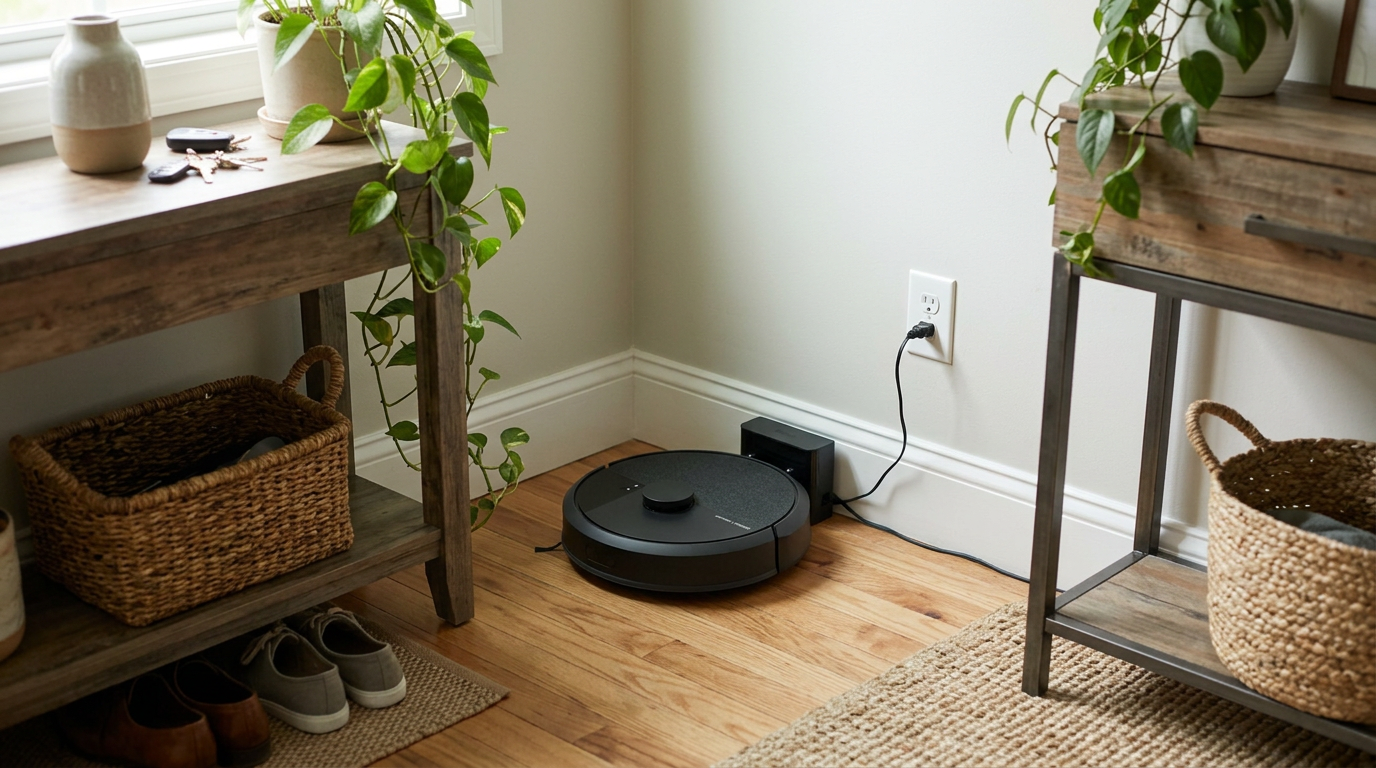
Vacuum-only robots like the Roomba 105 Vac lean entirely on the main brush and side brush, so the brush style shapes pickup more than any other spec. Read my iRobot Roomba 105 Vac review →
Hybrid brushes: trying to get both
The line between the two camps keeps blurring. Many newer robots use a brush that mixes rubber blades with bristle strips, plus some kind of hair-management trick.
Roborock's current flagships are a good example. On its Qrevo 2 Pro page, Roborock says its DuoDivide main brush combines rubber and bristles to lift hair from carpet more effectively, and splits the roller so hair travels from both ends toward the center intake.
Roborock's Australian store lists the same model's anti-tangle system as certified for zero hair tangling on both the main brush and the side brush. I treat claims like that as a best-case lab result, but the design logic is sound.
The idea is simple. The bristles add carpet agitation, the rubber adds a smooth surface that hair can slide off, and the split geometry shortens the distance hair has to travel before suction grabs it.
What I look forA hybrid brush only beats a pure rubber roller if hair has a clear path off the brush. If the bristles run the full length with no channel or comb, it will still wrap.
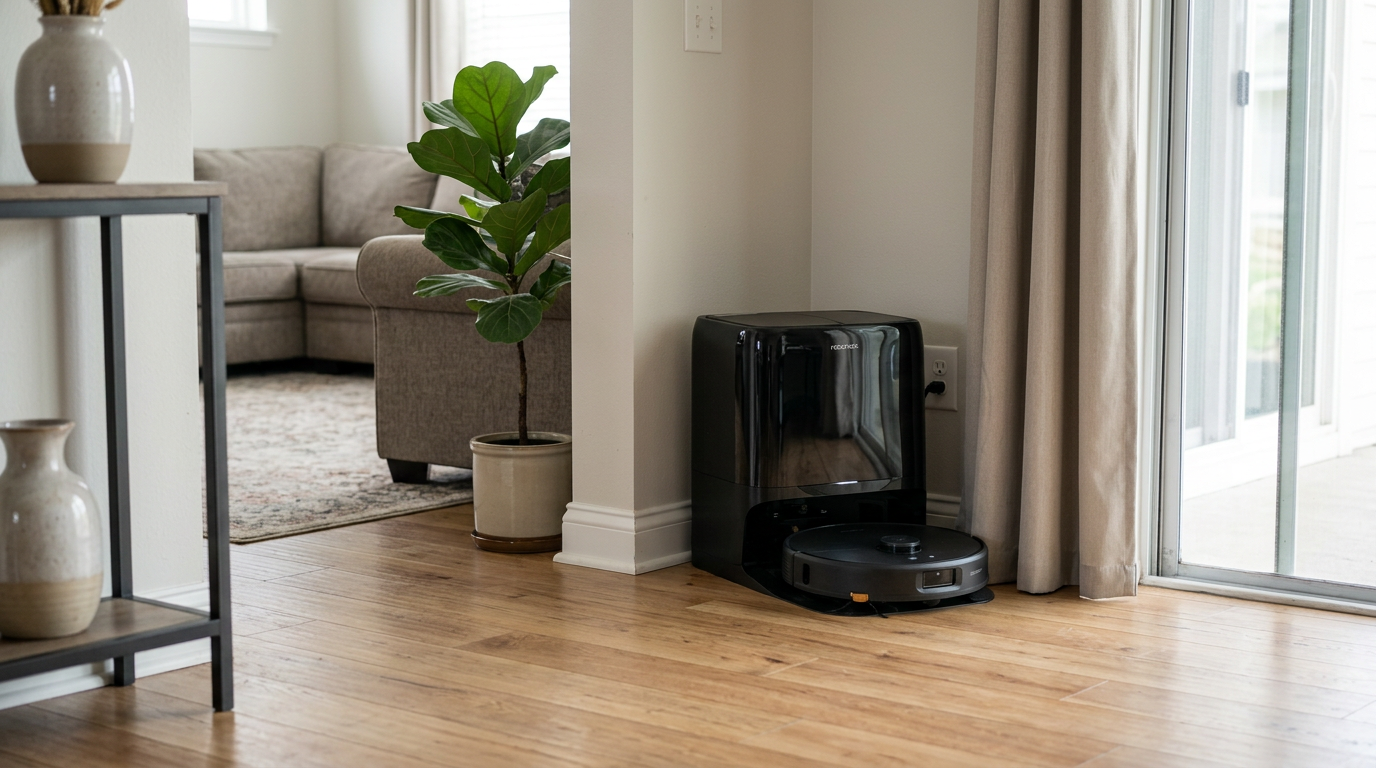
The Qrevo 2 Pro pairs a split rubber-and-bristle main brush with an anti-tangle side brush. Read my Roborock Qrevo 2 Pro review →
How pickup is actually measured
If you want to compare brushes fairly, you need a controlled test. Two programs are worth knowing about.
The international robot vacuum standard, IEC/ASTM 62885-7, includes separate test methods for dust on hard floors, dust in carpet, medium and large debris, and fiber removal. That fiber test is essentially a hair test, and it is where rubber rollers tend to shine.
The Carpet and Rug Institute's Seal of Approval program focuses on carpet. It measures soil removal with X-ray fluorescence, checks how much dust escapes back into the air, and checks whether the vacuum changes the carpet's surface appearance.
An older trade report on the program from CleanLink describes how the soil is applied: about one tenth of a gram of test soil per square inch of carpet, and a dust-emission limit of 100 micrograms per cubic meter of air.
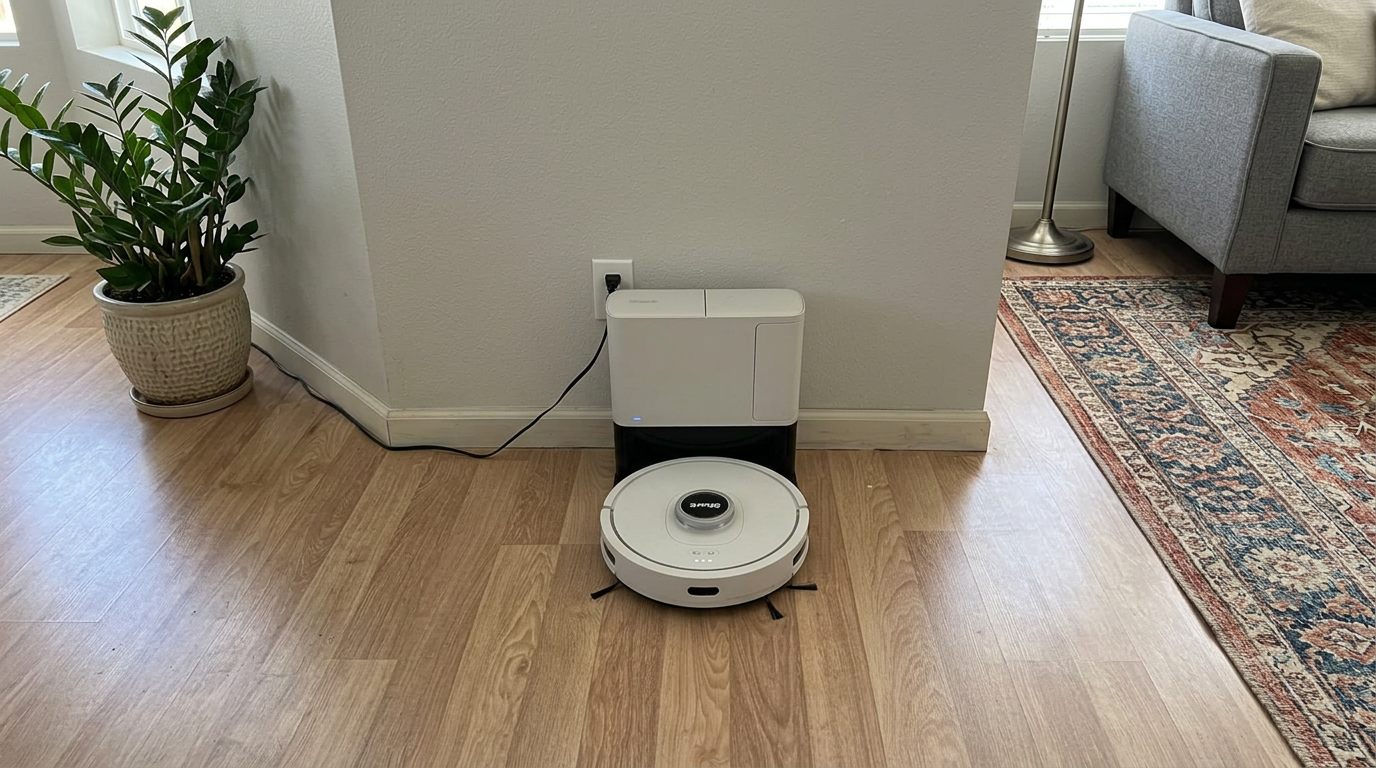
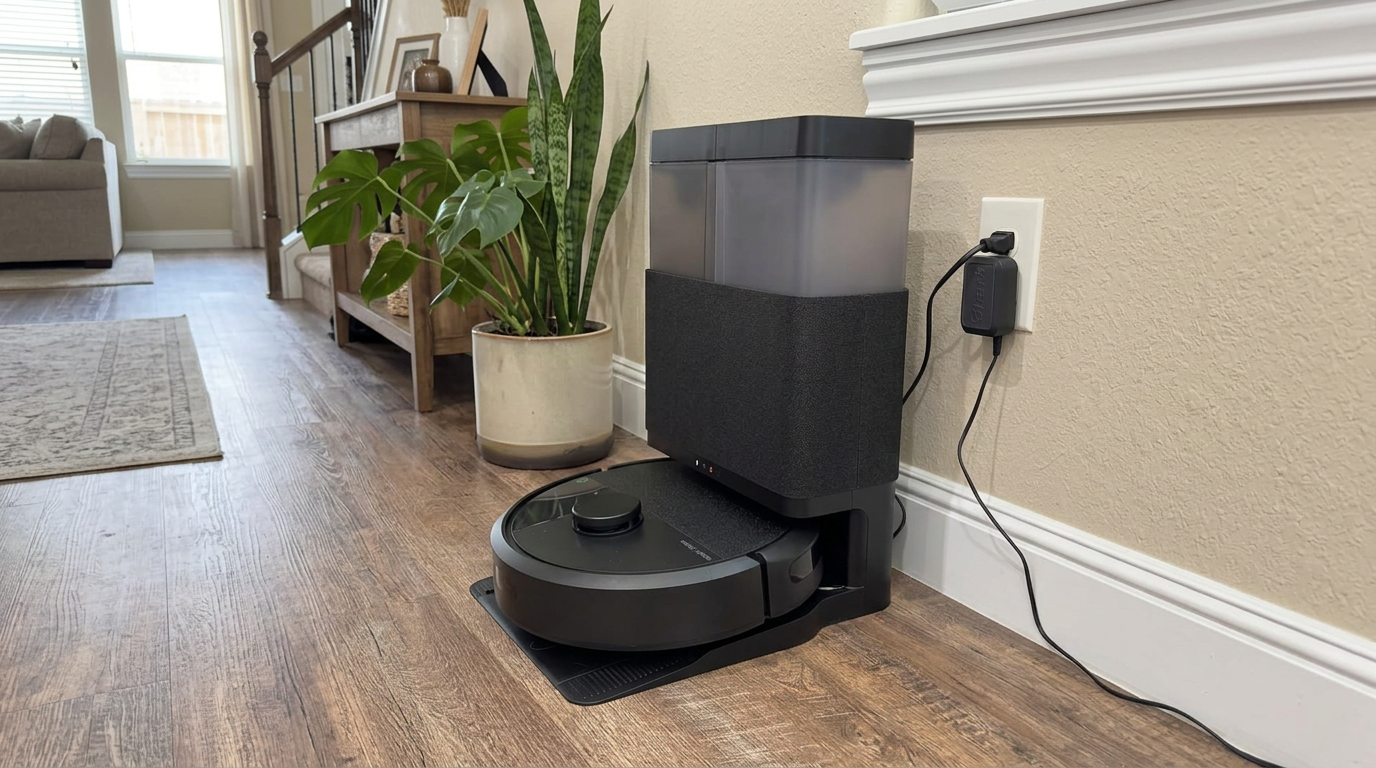
Self-emptying robots like the Shark AV2501S AI Ultra still depend on the main brush to get debris into the bin before the dock can do its job. Read my Shark AV2501S AI Ultra review →
Maintenance and lifespan: where the two really differ
Day to day, maintenance is where I feel the difference most. A bristle brush in a house with long hair needs attention almost every week. A rubber roller usually needs a quick wipe of the end caps.
Replacement intervals, on the other hand, are surprisingly similar. Both of the big brands I checked give the same window.
| Brand guidance | Clean main brush | Replace main brush | Side brush |
|---|---|---|---|
| Roborock user manuals | Every 2 weeks | Every 6 to 12 months | Clean monthly, replace every 3 to 6 months |
| iRobot support | As needed, clear end caps | Every 6 to 12 months | Check regularly for hair at the base |
You can confirm the Roborock schedule in its Q7 Max user manual and the iRobot schedule in its main brush care article. iRobot repeats the same 6 to 12 month guidance for its Roomba Plus 500 series.
The practical difference is how a worn brush fails. Bristles splay and shorten, so carpet pickup fades slowly. Rubber fins crack or flatten, so you see streaks of missed debris on hard floors.
Hair at the ends is the one maintenance job both designs share. Hair migrates toward the bearings, and if you ignore it, it can slow the brush motor and trigger an error.
My routine: Every other week I pop out the main brush, pull the end caps, and clear any hair around the bearings. It takes about two minutes and prevents most brush errors.
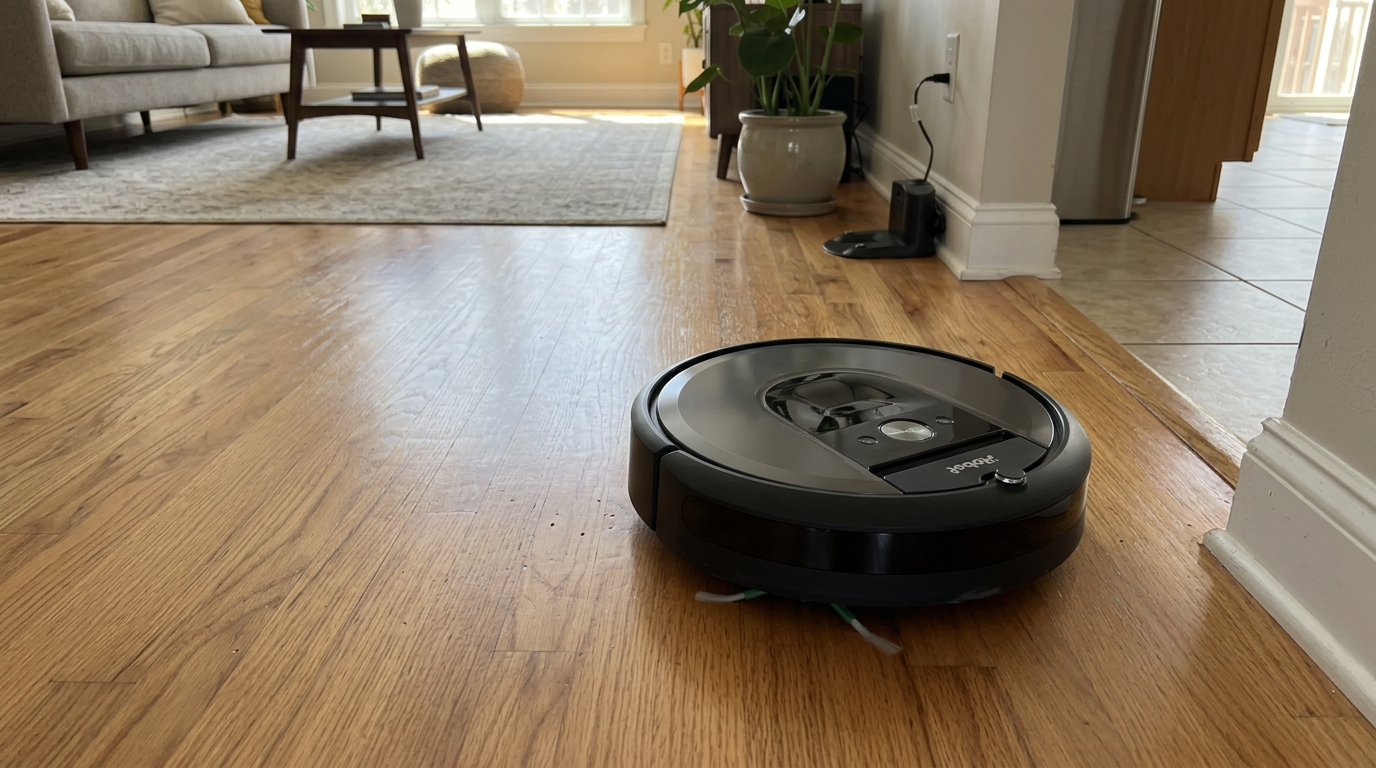
iRobot recommends replacing the main brush on robots like the Roomba Plus 575 Combo every 6 to 12 months. Read my iRobot Roomba Plus 575 Combo review →
Which brush should you choose?
Here is how I match a brush to a home. Start with your floors and who sheds, then let everything else break the tie.
| Your home | My pick | Reason |
|---|---|---|
| Mostly hard floors, long hair | Rubber roller | Hair management matters most, and floors need little agitation |
| Pets plus area rugs | Rubber or hybrid with anti-tangle | Fur on rugs needs some agitation, but tangles are the main risk |
| Wall-to-wall low or medium pile, no long hair | Bristle or hybrid | Agitation pulls grit out of the pile |
| Plush or shag rugs | Hybrid, plus a regular upright pass | No robot fully replaces an upright on deep pile |
| Berber or loop carpet | Rubber roller | Gentler on loops that can fray |
| Kids, cereal and crumbs | Rubber roller | Flexible fins scoop chunky debris instead of flicking it |
- Resists hair tangles
- Scoops larger debris on hard floors
- Gentle on loop carpet
- Easy to rinse
- Digs grit out of carpet pile
- Cheap to replace
- Fluffs carpet fibers
- Common on budget robots
If you are torn, I lean toward rubber or a well-designed hybrid. Tangled hair is the single most common reason people stop using their robot, and a brush you have to cut free every week is a brush that ends up in a drawer.
Carpet agitation is easier to compensate for. A higher suction mode on rugs, carpet boost, or an occasional pass with a full-size vacuum covers most of the gap.
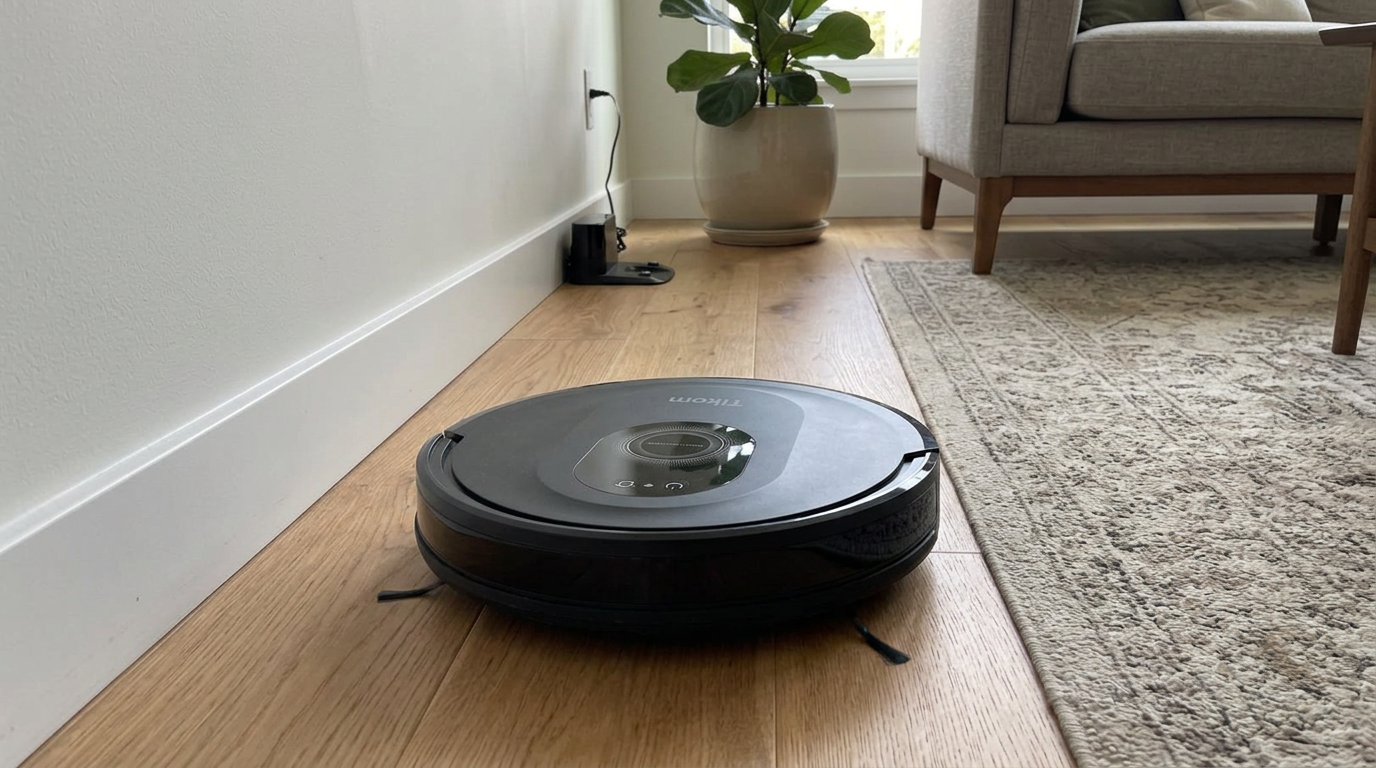
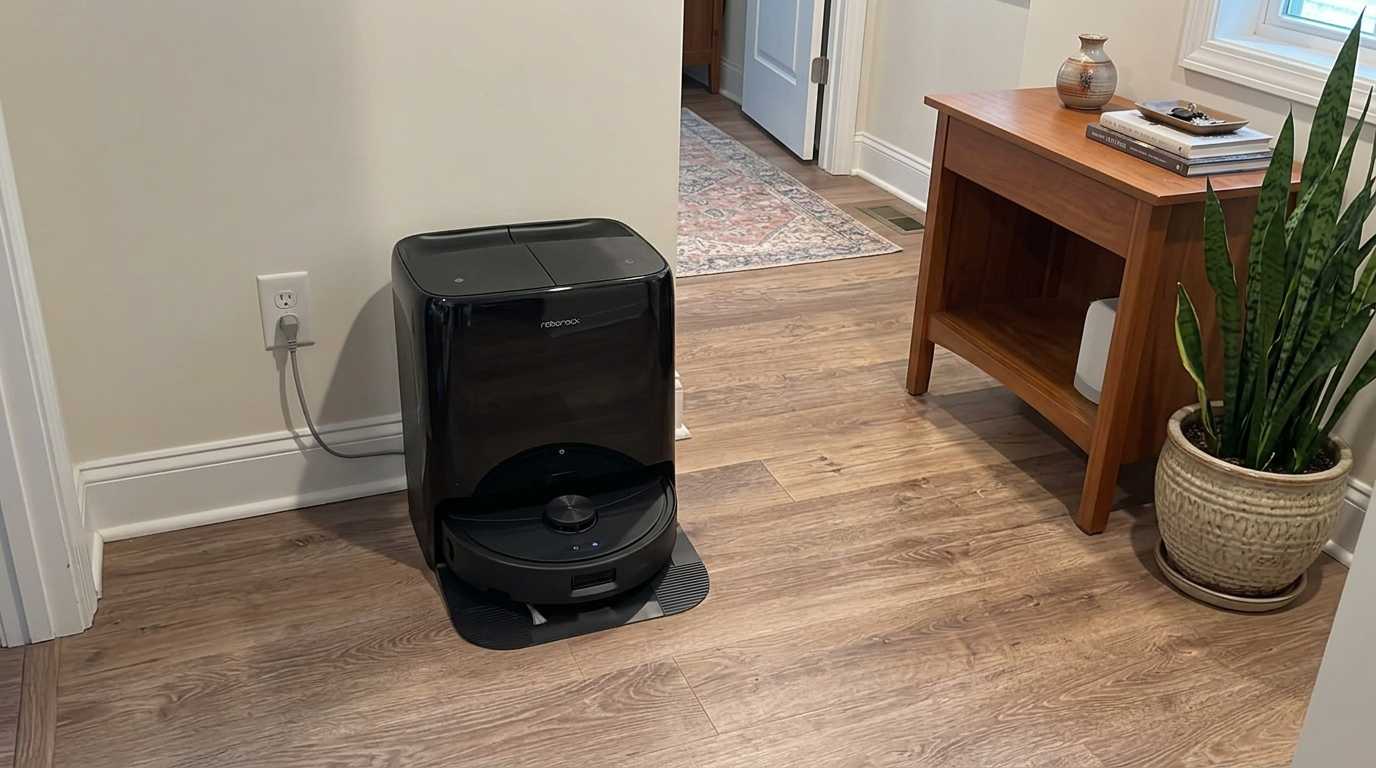
Even at around $100, robots like the Tikom combo come with a main brush and side brush you will want to inspect for hair every couple of weeks. Read my Tikom Robot Vacuum and Mop Combo review →
How I check whether a robot's brush suits my home
- Look at the brush photo, not the brand claimZoom into product photos of the underside. Count whether you see tufts, solid fins, or both, and whether there is a channel or comb that gives hair an exit.
- Check the side brush tooA tangle-free main brush paired with a plain three-arm side brush will still collect hair at the edges. Look for an anti-tangle side brush if you have long hair or pets.
- Do a sprinkle test on your worst floorScatter a small handful of rice or cereal and some hair on the floor the robot struggles with most. Watch whether it pulls debris in or pushes it ahead.
- Inspect the brush after one weekPull the brush and look at the ends. A light ring of hair at the caps is normal. Hair wound around the middle means the design is not right for your household.
- Set a replacement reminderBoth major brands suggest replacing the main brush every 6 to 12 months. I set a calendar reminder at six months and replace earlier if fins crack or bristles splay.
Frequently asked questions
Are rubber brushes better than bristle brushes on robot vacuums?
Do rubber roller robot vacuums work on carpet?
Why does hair still wrap around a "tangle-free" brush?
How often should I replace a robot vacuum main brush?
Which brush is best for pet hair?
Can I put a rubber brush in a robot that came with a bristle brush?

Sarah has tested vacuums, mops, air purifiers and dehumidifiers since 2017. Before joining BrasQ, she spent five years as a test coordinator at a national consumer advocacy group. She studied industrial design at Ohio State and lives in Columbus with her family and a long-haired cat.
- First published.
- iRobot: Dual Multi-Surface Rubber Brushes product pages (US and UK)
- iRobot support: main brush care, all Roomba models; Roomba Plus 500 series brush care
- Roborock: Qrevo 2 Pro product page (DuoDivide main brush)
- Roborock Australia store: Qrevo 2 Pro anti-tangle system
- Roborock Q7 Max user manual, routine maintenance
- Ristenbatt: effects of vacuum cleaner brushing action
- US Patent 6,574,823: Brushroll
- Carpet and Rug Institute: Seal of Approval vacuum testing
- CleanLink: CRI vacuum testing methods
- IEC/ASTM 62885-7: dry-cleaning robots for household use, methods for measuring performance