Why your robot vacuum smells, and how to fix it
Musty, sour, dusty or burning: each robot vacuum smell points to a different part. I match smells to sources, explain the 24-to-48-hour moisture window, and share the reset and habits that keep my robot fresh.
We choose products independently. We may earn a commission through links on this page; your price stays the same. Affiliate policy
On this page
The short answer
- Most robot smells come from water: damp mop pads, the dirty water tank and the dock wash tray.
- Dry, dusty or "pet" smells usually mean a full bin, a clogged filter or an old dock bag.
- The EPA says mold usually won't grow if damp items dry within 24 to 48 hours, so fast drying is the best prevention.
- A burning smell is a warning: stop the robot, unplug the dock, check for a jammed brush and contact support if it returns.
Follow your nose: smells tell you what's wrong
A robot vacuum that smells is one of the most common complaints I hear, and one of the most fixable. The trick is not to treat "it smells" as one problem.
A musty, wet-towel smell, a sour drain smell, a dusty pet smell and a hot, burning smell come from completely different parts of the robot. Each one has its own fix, and one of them is a safety warning.
Xiaomi's support team lists the usual suspects in an odor FAQ: the dirty water tank, the washboard in the dock, the mop pad, the dust compartment, the filter and other parts that touch debris. That matches what I see in real homes.
In this guide, I match each smell to its source, explain why it happens, and walk through how I fix it and stop it from coming back.
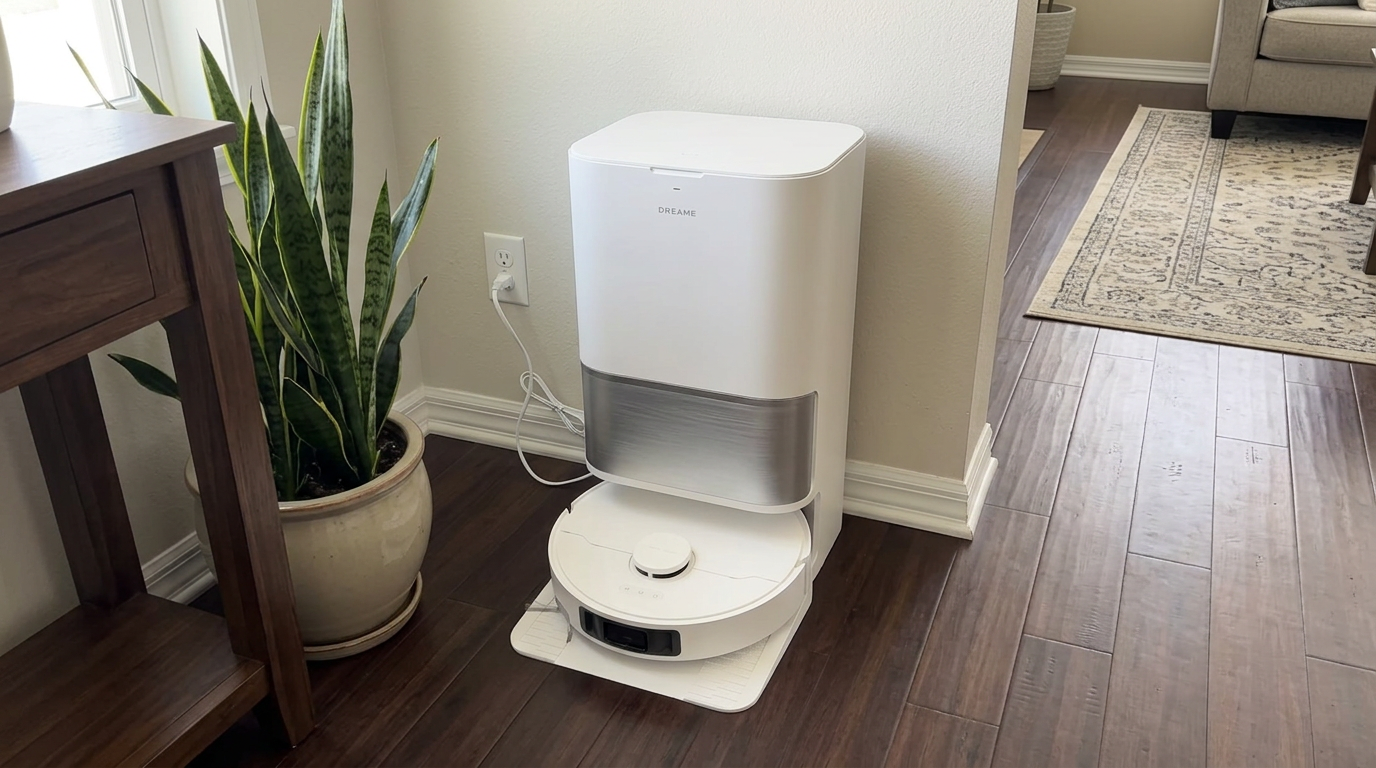
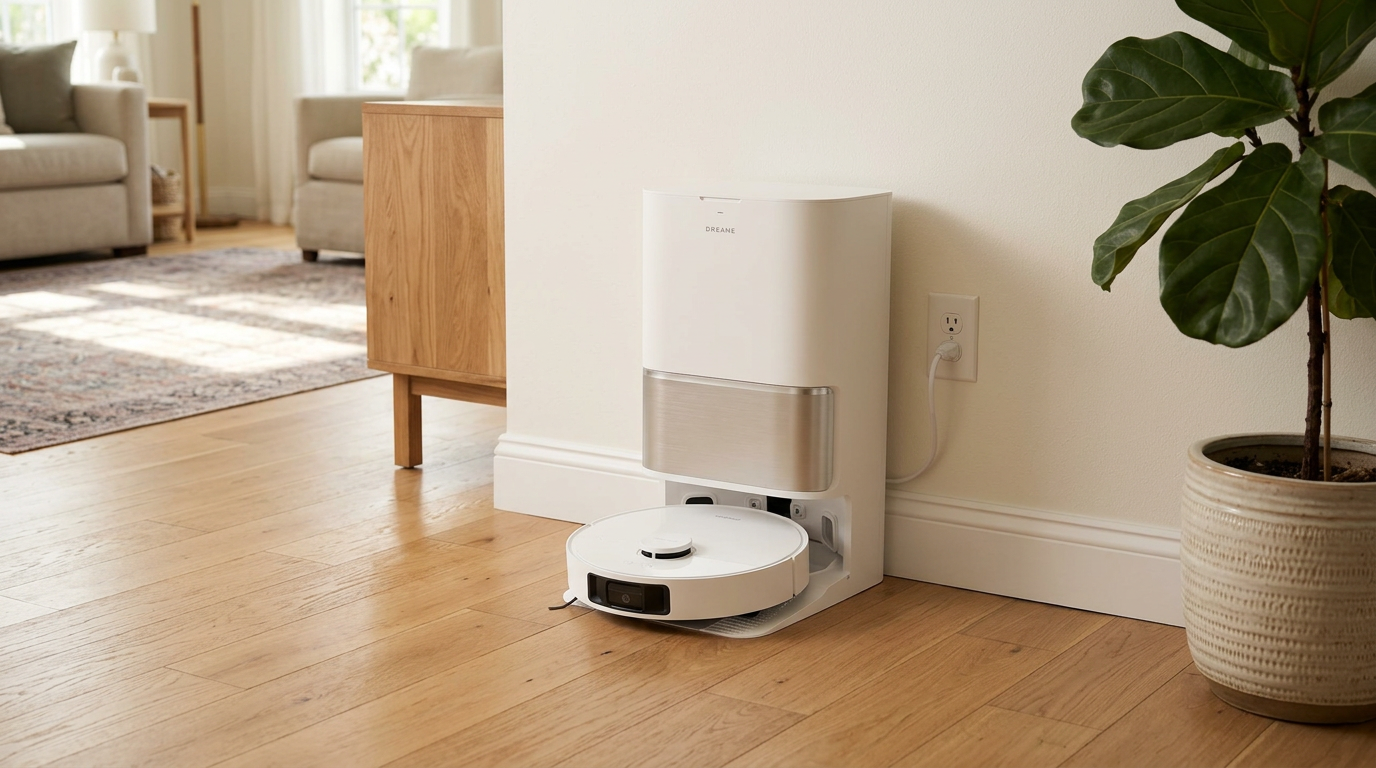
All-in-one docks like the L40 Ultra Gen 2's add water tanks and a wash tray, which are the most common sources of robot odors. Read my Dreame L40 Ultra Gen 2 review →
Match the smell to the source
This is the cheat sheet I use. Smell the robot, the dock and the mop pads separately; the strongest smell usually points straight at the source.
| What it smells like | Where it usually comes from | Why |
|---|---|---|
| Musty, damp towel | Mop pads | Pads stay wet long enough for bacteria and mildew to grow |
| Sour, drain-like, near the dock all day | Dirty water tank or dock wash tray | Dirty mop water sits at room temperature |
| Stale, dusty or "pet" smell while running | Dust bin, filter or dock bag | Hair, dander and food debris warm up in the airflow |
| Rotten or sharp after cleaning the kitchen | Bin with food scraps or wet debris | Organic debris decomposes in a closed bin |
| Urine or feces | Robot ran through a pet accident | Contaminated brushes, wheels and pads |
| Hot, burning or electrical | Brush motor, jammed brush, or electrical fault | Friction or overheating; stop immediately |
On robots with a mop-washing dock, like the Qrevo S Pro, the dirty water tank is the first place to check for sour smells. Read my Roborock Qrevo S Pro review →
Mop pads and water tanks: the most common culprits
If you have a mopping robot, water is almost always behind the smell. Bacteria and mold need moisture and time, and robot docks provide both.
Xiaomi's station odor FAQ says water left in the tank for too many days becomes stagnant and promotes bacterial growth. The U.S. EPA's mold guidance says that in most cases mold will not grow if wet or damp items are dried within 24 to 48 hours.
That window is the key. A mop pad that dries within a day rarely smells. A pad that stays damp in a dock tray for three days almost always does.
Hot-air drying in the dock helps a lot, because it shortens how long the pads stay wet. Dreame even sells a clip-in dirty water tank odor neutralizer for some of its docks, which tells you how common this problem is.
My habit: I empty and rinse the dirty water tank after any day the robot mopped the kitchen, and at least twice a week otherwise. It takes 60 seconds and prevents most dock smells in my home.
Docks that wash and dry mops, like the DEEBOT T90 PRO OMNI's, still need their dirty water emptied often to stay fresh. Read my ECOVACS DEEBOT T90 PRO OMNI review →
Bin, filter and bag: dry, dusty and pet smells
Dry smells come from the vacuum side: the bin, the filter, the brushes and the dock bag. They usually smell stale or "doggy" and get stronger while the robot runs, because warm air blows through trapped debris.
The filter is the most overlooked part. It catches fine dust and dander, and once it is clogged, the robot pushes air through a layer of old debris every run. Roborock's Q7 manual says to clean the dustbin weekly and replace the filter every 6 to 12 months; in pet homes, I lean toward the short end.
Dock bags matter too. Roborock suggests replacing its dock bag every 7 weeks depending on use. A bag that sits nearly full for months in a warm closet can smell, especially if it holds food crumbs or pet hair.
| Part | How I clean it | How often |
|---|---|---|
| Robot bin | Empty, tap out, wipe or rinse if the manual allows, dry fully | Weekly |
| Filter | Tap clean; replace on schedule; never reinstall damp | Clean weekly, replace 6 to 12 months |
| Main and side brushes | Remove hair, wipe residue, clean end caps | Every 2 weeks |
| Dock bag | Replace when the app says or when it smells | About every 1 to 2 months |
| Dock intake port | Wipe away dust and hair | Monthly |
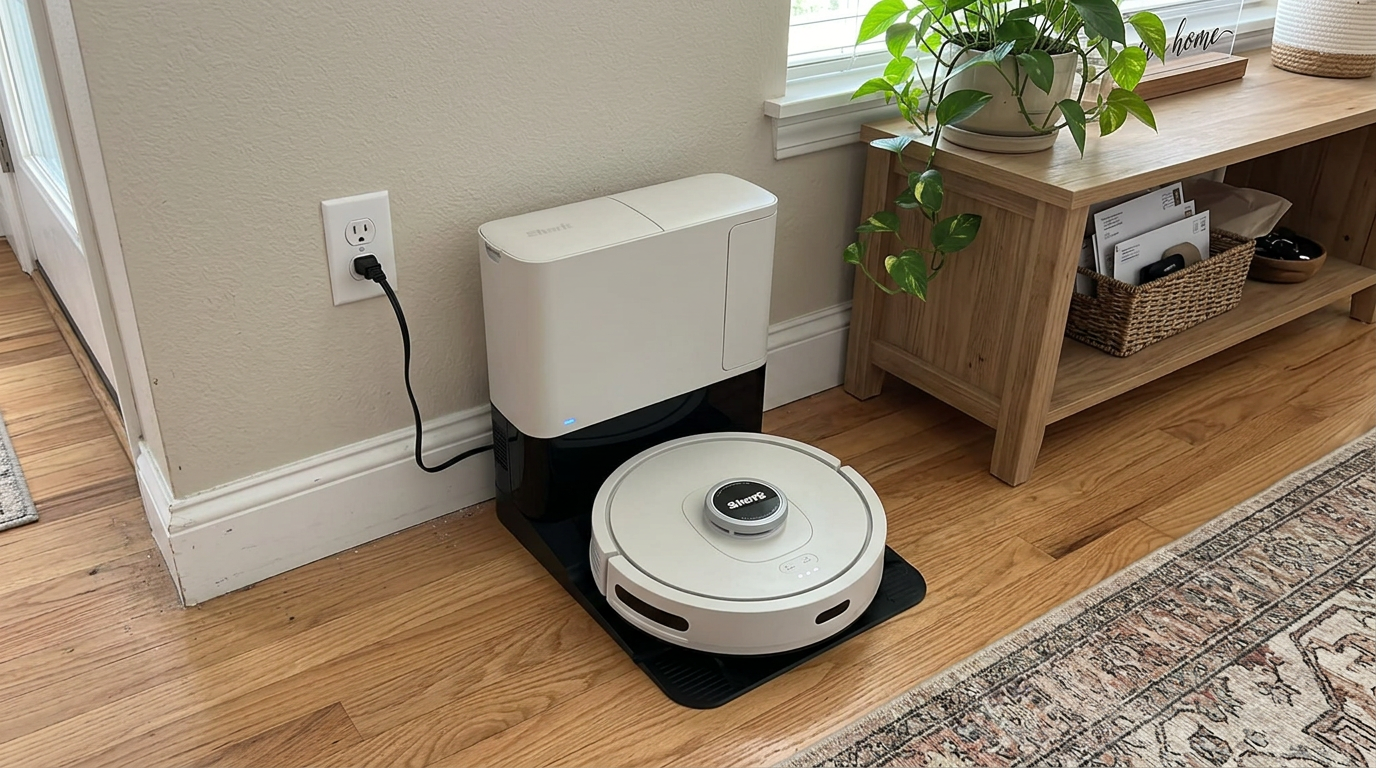
Self-emptying robots like the Shark AV2501S AI Ultra move odors into the dock, so the dock bin or bag needs attention too. Read my Shark AV2501S AI Ultra review →
When the robot runs through a pet accident
Every pet owner with a robot dreads this one. If your robot ran through a pet accident, the smell will not go away on its own, and the robot can spread it.
My approach is to treat it as a full teardown clean. I wear disposable gloves, remove the brushes, side brush, bin, filter and mop pads, and clean every part that touched the floor.
Wheels and the underside need attention too. I wipe them with a damp cloth and a mild cleaner, then dry everything completely before reassembling. Anything that cannot be cleaned well, like a mop pad or filter, gets replaced.
- Camera-based pet-waste avoidance on supported robots
- Running the robot after you have checked the floor
- No-go zones around litter boxes and puppy pads
- Scheduling runs when pets have been out
- Scented sprays on the robot
- Running the robot again to "clean it off"
- Leaving the robot in the sun to dry for hours
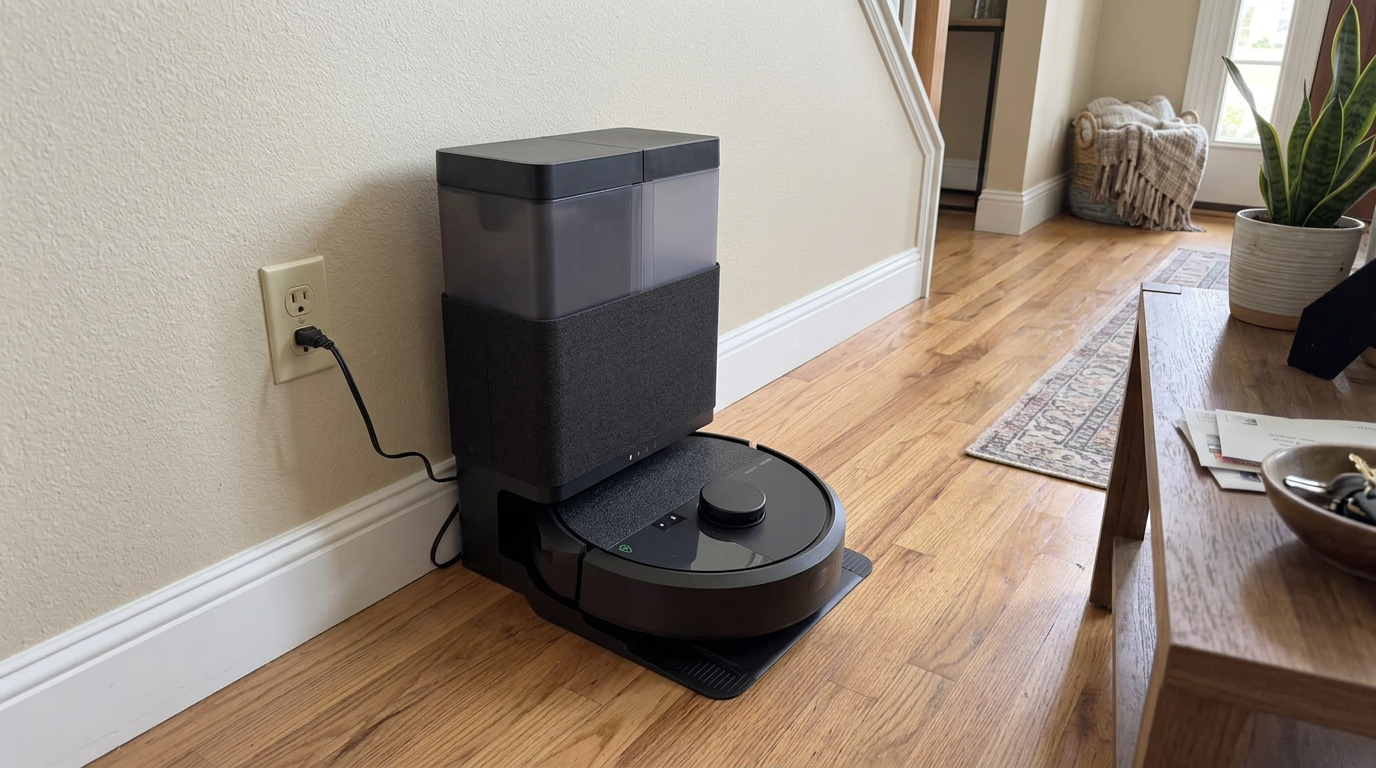
In pet homes, robots like the Roomba 415X Combo do best with a no-go zone around litter boxes and puppy pads. Read my iRobot Roomba 415X Combo review →
How to stop the smell from coming back
Cleaning fixes today's smell. These habits stop it from coming back.
The most important change is drying. If your dock has a hot-air drying setting, use it after every mop run. If it doesn't, I pull the pads and let them air-dry somewhere with airflow, or swap in a clean dry set.
Pads are also wear items. Roborock's manual says to clean the mop cloth after each use and replace it every 3 to 6 months. Old pads hold more water and smell faster even when you clean them.
| Habit | Why it works |
|---|---|
| Use hot-air mop drying after every mop run | Gets pads dry inside the 24-to-48-hour mold window |
| Empty the dirty water tank often | Stops stagnant water from souring |
| Refill the clean tank with fresh water | Old clean water can grow bacteria too |
| Use only the cleaner your brand approves | Wrong products can leave residue or foam that traps grime |
| Replace pads every 3 to 6 months | Worn fibers hold water and bacteria |
| Keep the dock in a ventilated spot | Closets and cabinets trap humidity |
Deep clean monthly: Once a month I rinse both tanks, scrub the dock wash tray with a soft brush and let everything air-dry with the tank lids open for a few hours. It resets the whole system.
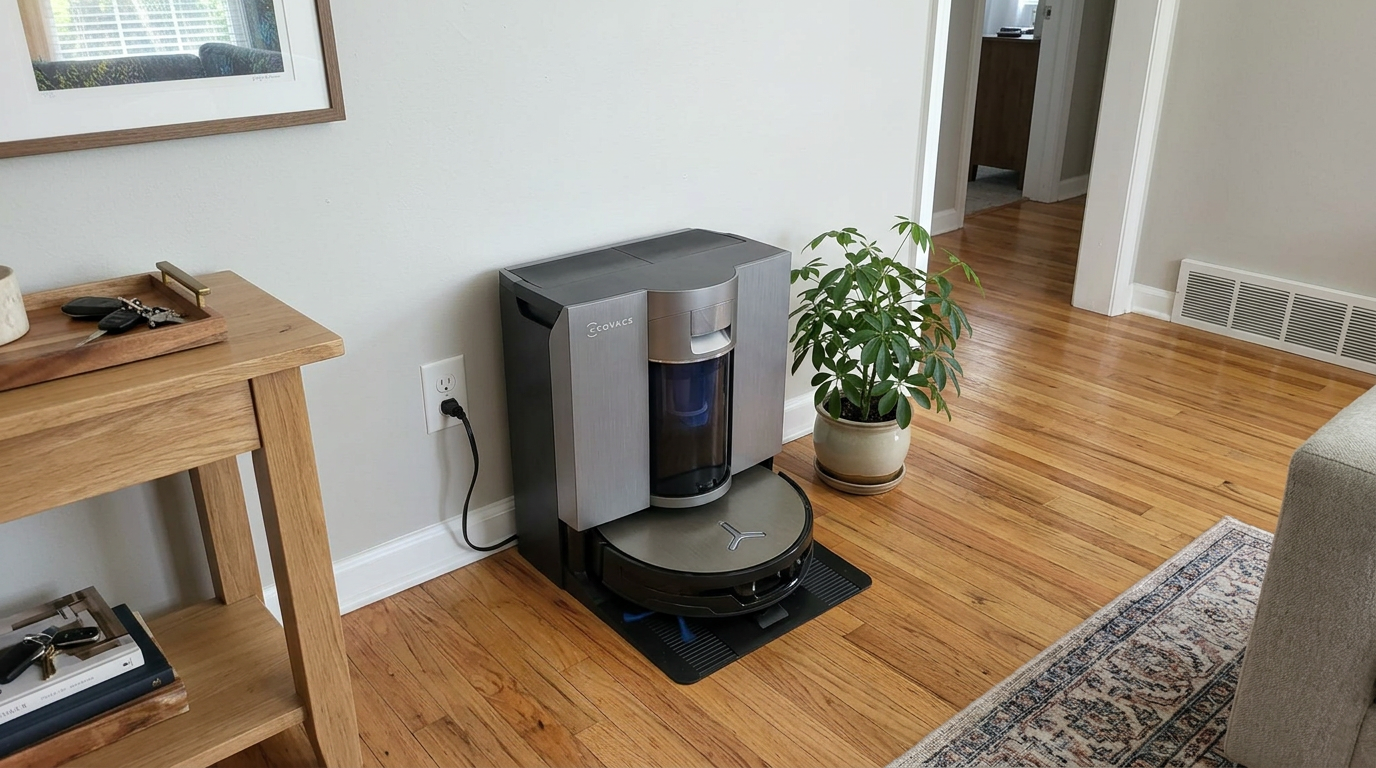
High-end docks like the one with the DEEBOT X12S OMNICYCLONE still need a monthly tray scrub to stay odor-free. See the ECOVACS DEEBOT X12S OMNICYCLONE on Amazon →
What not to use, and when to call support
A few home remedies come up again and again. Some are fine; some can damage your robot or void the warranty.
Bleach is the big one I avoid. It can degrade rubber seals, pumps and plastic parts in the dock, and many manufacturers specify which cleaning solutions are allowed. Strong essential oils are another; they can leave residue in tanks and on sensors.
Plain warm water and dish soap for removable parts, followed by complete drying, solves most problems. For anything inside the dock's plumbing, I stick to the cleaner or descaling method the manufacturer approves.
If a smell survives a full clean, a new filter and new pads, and it is coming from inside the robot body rather than a removable part, it is time to contact support. Debris can sometimes get trapped in the airflow path where you cannot reach it.
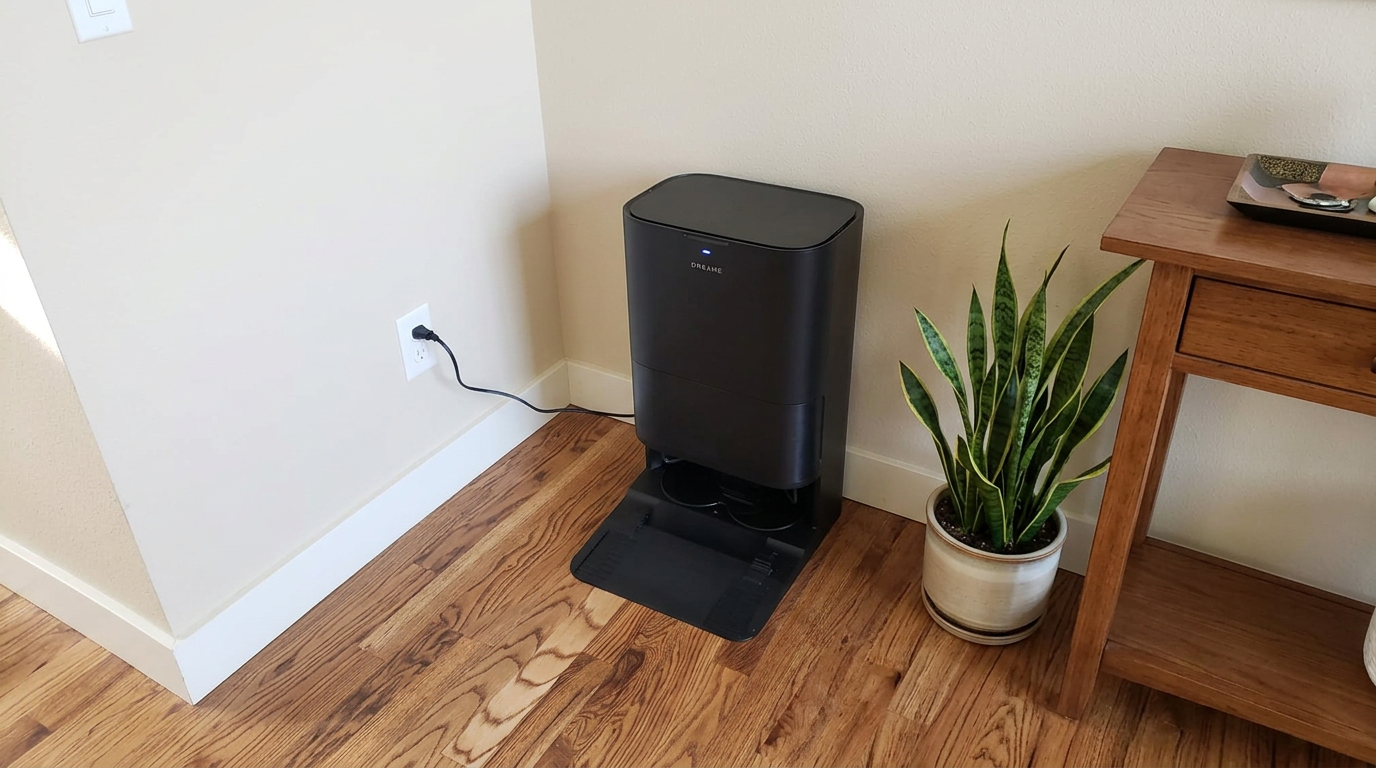
Even premium all-in-one robots like the Dreame D30 Ultra rely on owners using the right cleaning solution in the dock. See the Dreame D30 Ultra on Amazon →
My full odor reset, step by step
- Power off and unplugTurn the robot off and unplug the dock before you remove anything.
- Empty and rinse both water tanksPour out dirty and clean water, rinse with warm water, and leave the lids open to dry.
- Scrub the dock wash trayRemove the tray if your model allows it and scrub away sludge with a soft brush. Rinse and dry.
- Wash or replace mop padsMachine- or hand-wash pads if your brand allows it and dry them completely. Replace pads that still smell.
- Clean the bin, filter and brushesEmpty the bin, tap the filter clean or replace it, and clear hair from both brushes and end caps.
- Replace the dock bagIf the dock uses bags, swap in a fresh one.
- Dry everything before reassemblyLet all parts air-dry fully, ideally for several hours, before putting the robot back together.
Frequently asked questions
Why does my robot vacuum smell?
How do I get rid of robot vacuum odor?
Why does my robot vacuum smell like burning?
Why does my robot mop smell like mildew?
Can I use bleach to clean my robot vacuum?
How often should I replace robot mop pads?

Sarah has tested vacuums, mops, air purifiers and dehumidifiers since 2017. Before joining BrasQ, she spent five years as a test coordinator at a national consumer advocacy group. She studied industrial design at Ohio State and lives in Columbus with her family and a long-haired cat.
- First published.
- Xiaomi support: abnormal odors in the X20 Pro robot vacuum
- Xiaomi support: odor in the X20+ station water tank
- Eufy: why your robot vacuum smells and how to fix it
- U.S. EPA: mold remediation, dry quickly within 24 to 48 hours
- Dreame: dirty water tank odor neutralizer (retailer listing)
- Roborock Q7 user manual: routine maintenance intervals
- Roborock support: how often to replace the disposable dust bag