What robot vacuum noise levels (dB) actually feel like in a real home
Robot vacuum noise levels translated into everyday sounds. I explain how decibels work, what 55, 65 and 70 dB feel like, why ratings differ, and when you can run a robot without hearing it.
We choose products independently. We may earn a commission through links on this page; your price stays the same. Affiliate policy
On this page
The short answer
- Most robot vacuums run at roughly 55 to 70 dB. Quiet mode sounds like a calm conversation in the next room; Max sounds closer to a regular vacuum.
- Decibels are logarithmic. A 10 dB jump sounds about twice as loud, so a 15 dB gap between Quiet and Max is a big difference.
- The self-emptying dock is often the loudest part, with brief bursts around 72 dB.
- Below about 60 dB, I can work and take calls with the robot in another room. For sleep, keep it far from bedrooms.
Why a dB number on the box tells you so little
Robot vacuum listings love to print a single decibel figure, often something like 55 dB or 67 dB. I used to glance at it and move on.
Then I started paying attention to how a robot actually sounds in a real room, at different times of day, from different spots in the house. The number on the box rarely matched what I heard.
Part of that is because decibels are logarithmic, so a few dB can mean a big change. Part of it is that brands measure under different conditions and in different modes, and the dock can be louder than the robot.
In this guide, I translate robot vacuum noise levels into everyday sounds, explain how the math works without the jargon, and show what that means for running a robot while you work, watch TV or sleep.
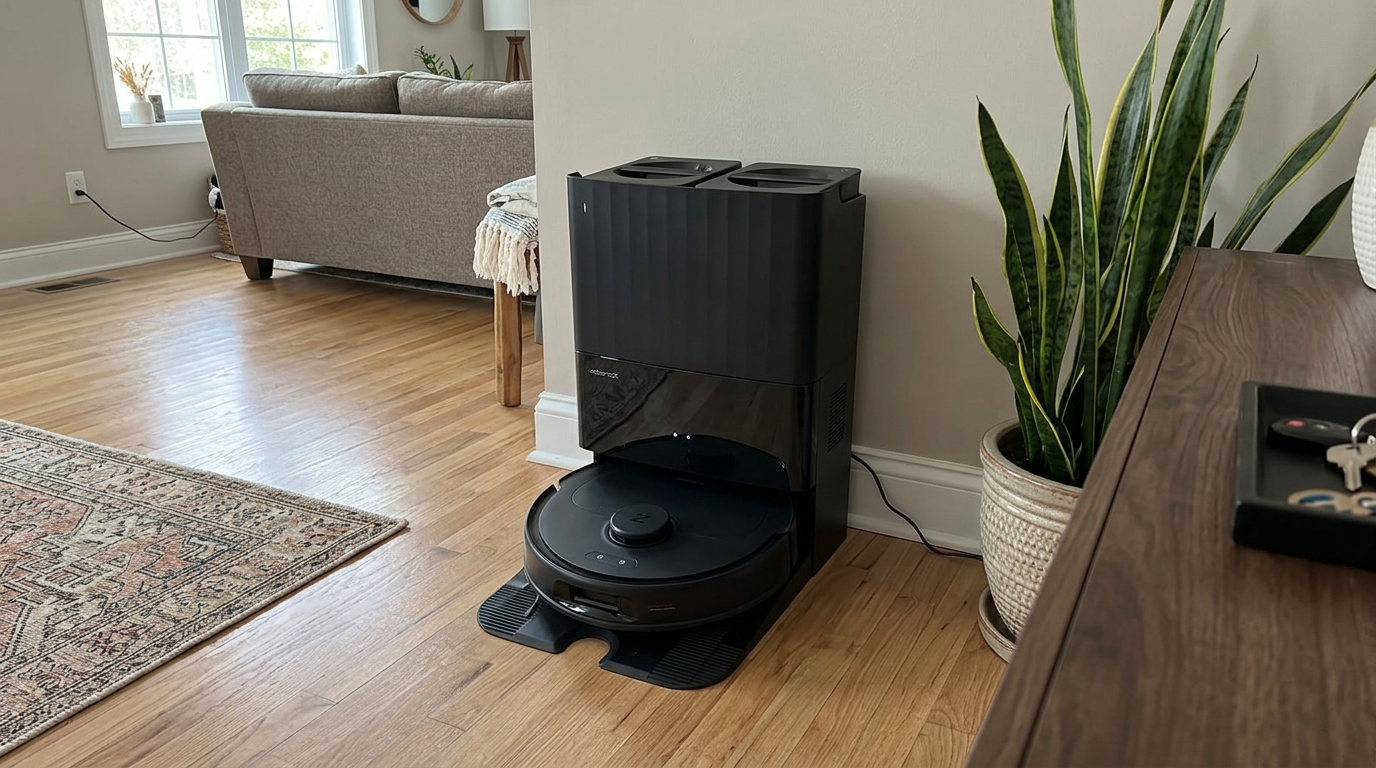
Roborock rates the Qrevo S Pro at under 60 dB in its quiet vacuum mode and under 55 dB when only mopping. Read my Roborock Qrevo S Pro review →
How decibels work, in plain English
A decibel is a ratio, not a straight scale. Every 10 dB step means ten times more sound energy.
Your ears don't hear it that way, though. As this University of Texas audio reference explains, an increase of roughly 10 dB is perceived as about twice as loud.
The math also works the other way with distance. This Mendel University physics worksheet shows that doubling your distance from a sound source cuts the level by about 6 dB in open space. Indoors, walls and ceilings reflect sound, so the drop is usually smaller.
| Change | What it means in practice |
|---|---|
| +3 dB | Twice the sound energy; noticeable side by side |
| +6 dB | Clearly louder; about what you lose by stepping twice as far away outdoors |
| +10 dB | Sounds roughly twice as loud |
| +20 dB | Sounds roughly four times as loud |
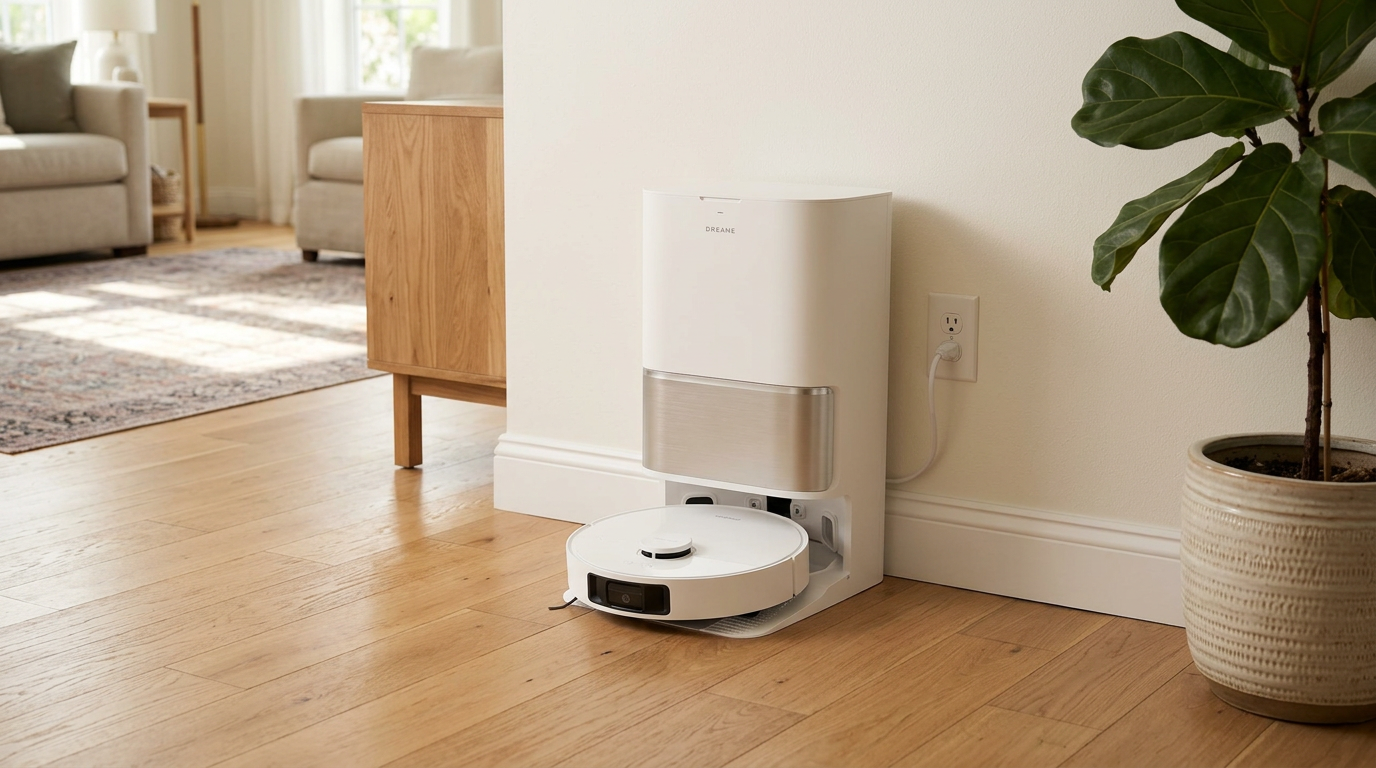
Dreame lists the L40 Ultra Gen 2 at about 55 dB in Quiet, 65 dB in Standard and 70 dB in Max. Read my Dreame L40 Ultra Gen 2 review →
What robot vacuum dB levels feel like at home
To make robot specs feel real, I lined them up against everyday sounds from two well-known references: the National Institute on Deafness and Other Communication Disorders and Yale Environmental Health and Safety.
NIDCD puts a humming refrigerator at about 40 dB, normal conversation at 50 to 65 dB and a vacuum cleaner or hair dryer at about 70 dB. Yale's chart lists a vacuum cleaner at 75 dB.
| Robot noise | Feels like | Living with it |
|---|---|---|
| Under 50 dB | A quiet office or soft rain | Fine during calls and TV; easy to ignore |
| 50 to 60 dB | A calm conversation nearby | Noticeable, but you can talk or work over it |
| 60 to 65 dB | A lively conversation or background music | You will turn up the TV a notch |
| 65 to 70 dB | A busy restaurant | Hard to take a phone call in the same room |
| 70 dB and up | A regular vacuum cleaner | Leave the room or schedule it while you are out |
In my experience, the line that matters most is around 60 dB. Below it, a robot fades into the background in another room. Above it, you notice it even through a closed door.
The good news is that most current robots fall in the 55 to 70 dB range, which is still quieter than a full-size upright.
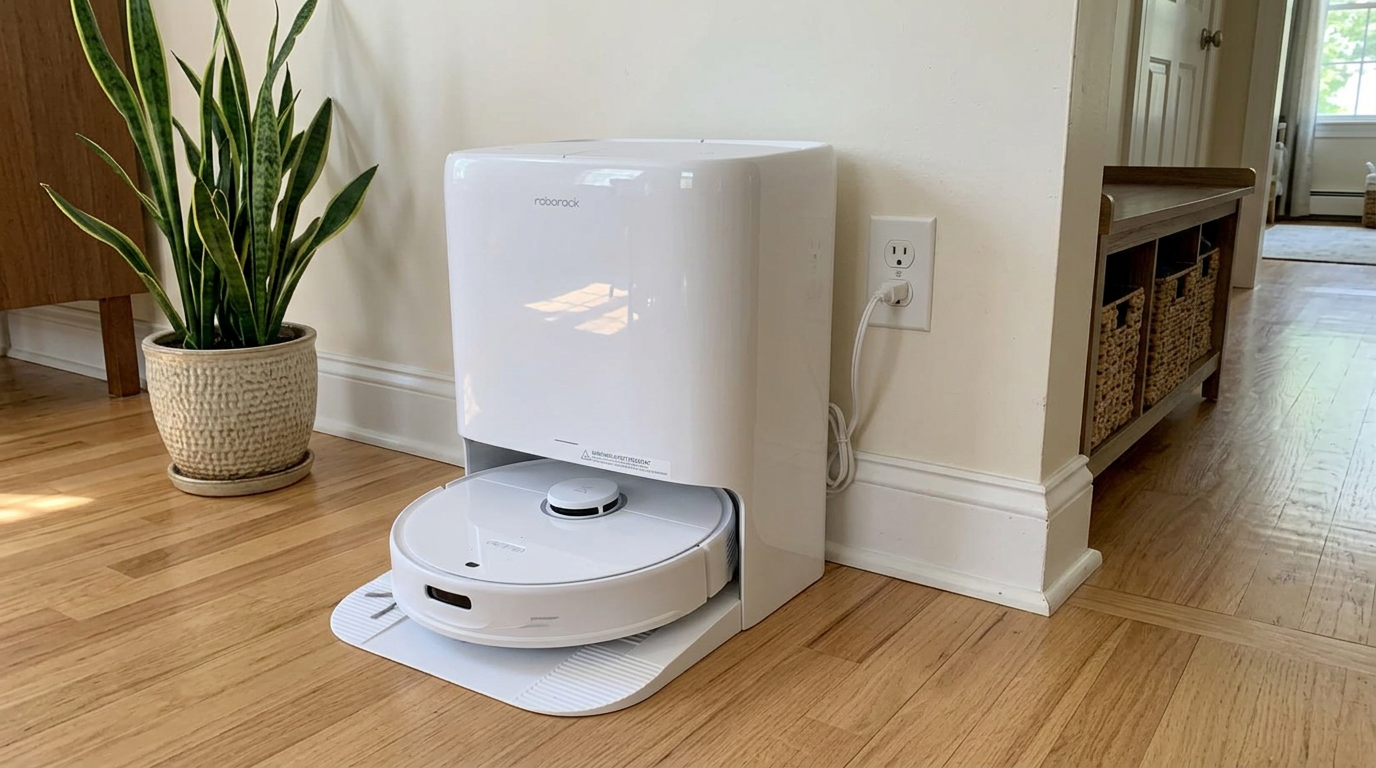
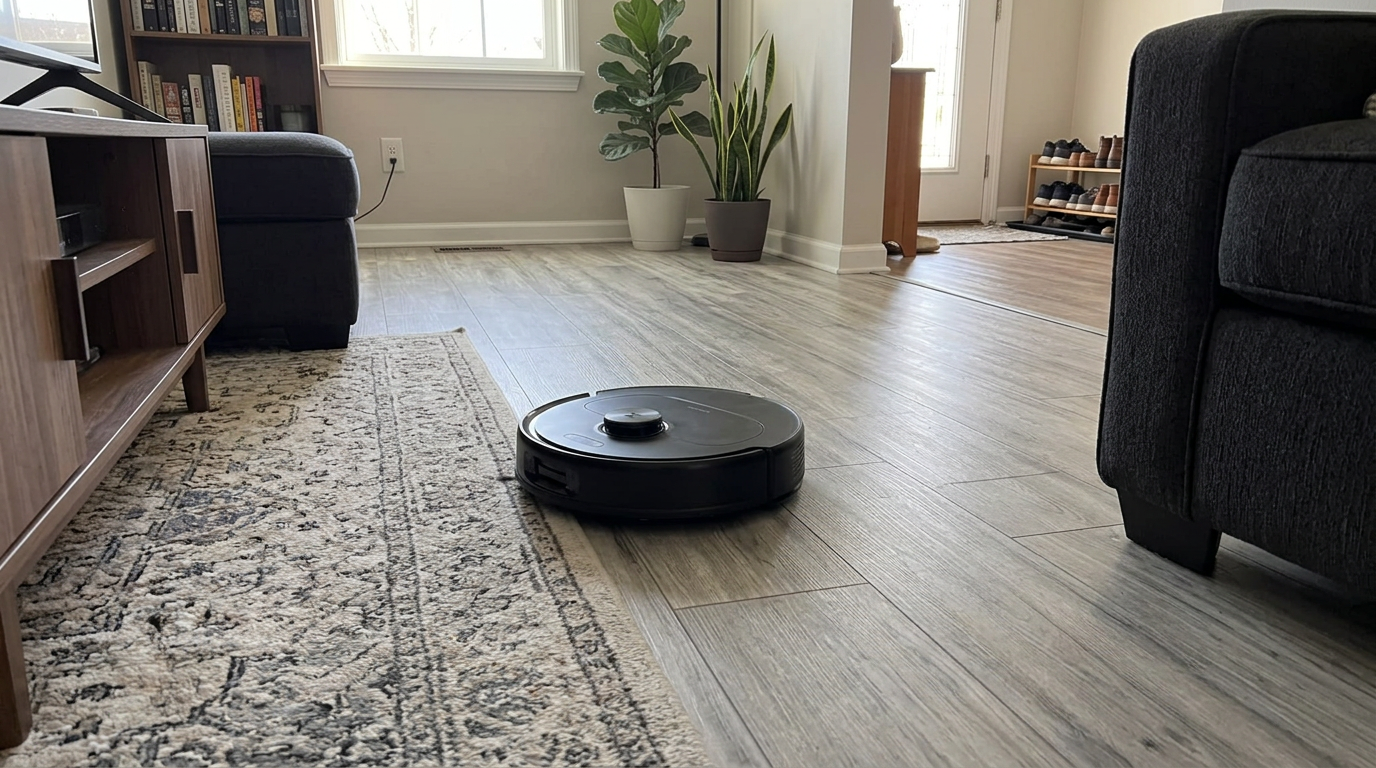
Flagship robots like the Qrevo Edge 3 Pro have plenty of suction headroom, so their quieter modes are still strong enough for daily runs. Read my Roborock Qrevo Edge 3 Pro review →
Robot vacuum noise by mode: published ratings
Here is what a few manufacturers publish for specific modes. These come straight from brand pages, so treat them as best-case lab figures.
| Robot and mode | Rated noise | Source |
|---|---|---|
| Roborock Qrevo S Pro, mop only | under 55 dB | Roborock US |
| Roborock Qrevo S Pro, vacuum Quiet mode | under 60 dB | Roborock US |
| Roborock Qrevo S Pro, dock drying mops | as low as 45 dB | Roborock Canada |
| Roborock Saros 10, quiet mopping | 52 dB(A) | Roborock UK |
| Roborock Saros 10, dock self-emptying | 72 dB(A) | Roborock UK |
| Dreame L40 Ultra Gen 2, Quiet / Standard / Max | ~55 / ~65 / ~70 dB | Dreame blog |
| Roborock Qrevo Master, operating | 67 dB | Roborock AU blog |
Two things stand out. First, mopping-only modes are quietest because the suction fan barely runs. Second, the dock is often the loudest part of the whole system.
That 72 dB self-empty burst on the Saros 10 dock is about as loud as an upright vacuum, but it only lasts a few seconds. It is the reason I never schedule a robot to finish and empty right outside a bedroom door at night.
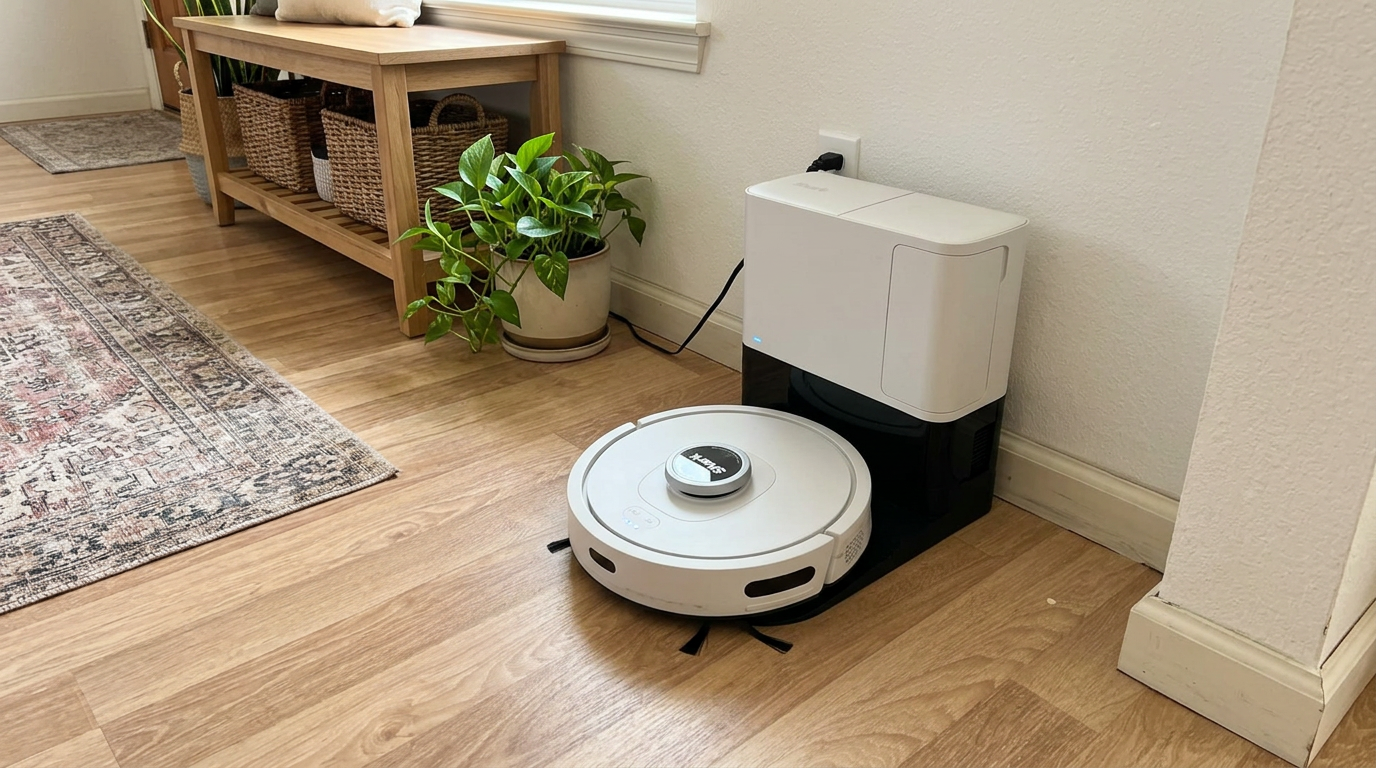
Self-emptying docks like the one on the Shark AV2501S AI Ultra are loud for a few seconds, so place the dock away from bedrooms if you clean at night. Read my Shark AV2501S AI Ultra review →
Why two "60 dB" robots can sound different
Comparing dB ratings between brands is tricky, because the measurement method changes the number a lot.
There is a proper standard for this. IEC 60704-2-17 sets out how to measure the airborne noise of robot vacuums under normal operation on both carpet and hard floors, using sound power rather than a single microphone reading.
Most spec sheets don't say whether they followed it. Some quote sound pressure at a set distance, some quote sound power, some measure in a semi-anechoic chamber with no echoes, and many don't say which mode the number came from.
Sound power figures usually come out higher than a sound pressure reading taken a few feet away. So a robot rated "65 dB" by one brand can easily sound quieter than a robot rated "60 dB" by another.
Floor type matters too. On carpet, the brush roll works harder and most robots boost suction automatically, so the same robot can sound noticeably louder in a carpeted bedroom than on a tile kitchen floor.
Rooms change the picture as well. Hard, empty rooms echo and make a robot sound louder. Rugs, curtains and upholstered furniture soak up sound.
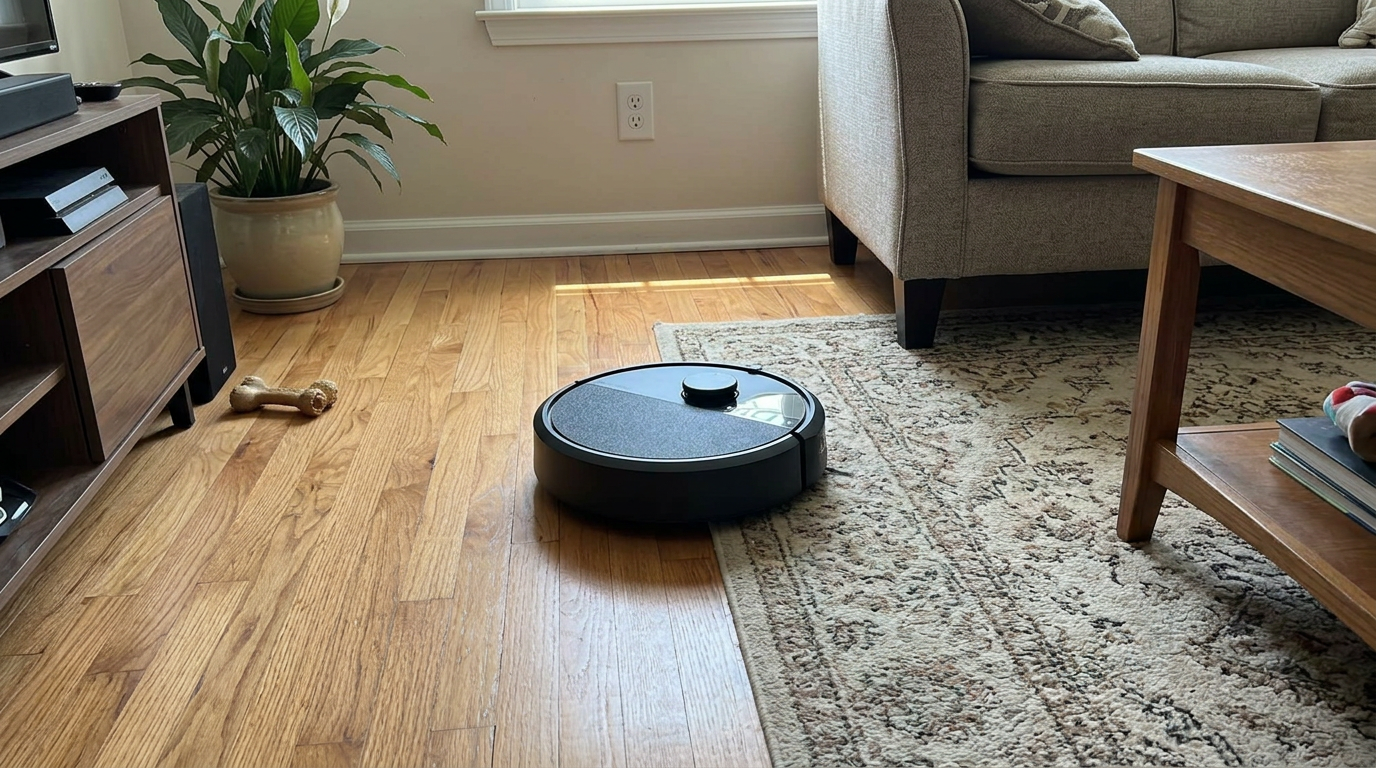
Robots like the Roomba 415X Combo get noticeably louder on carpet, where suction and brush speed both ramp up. Read my iRobot Roomba 415X Combo review →
Running a robot during sleep, calls and nap time
The most common question I get is whether you can run a robot at night. The honest answer is: not in the room where someone is sleeping.
The World Health Organization recommends keeping bedrooms below 30 dB(A) at night for good-quality sleep. Even the quietest robot mode is around 20 dB above that, which by the rule of thumb sounds roughly four times as loud.
Two closed doors and a hallway change things a lot, though. I find most robots in Quiet mode are only a faint hum from a bedroom when they are cleaning the far end of a home.
For working from home, the 60 dB line is the one I watch. A robot in Quiet mode in the next room is fine during video calls. The same robot in Max mode in my office is not.
- While you are out of the house
- During the day in rooms you are not using
- Mop-only runs in the evening, which are quietest
- Night runs near bedrooms
- Max mode during calls or naps
- Dock self-emptying near a sleeping baby
Do Not Disturb: Most robot apps have a Do Not Disturb window that blocks or quiets scheduled runs and self-emptying overnight. Set it once and forget it.
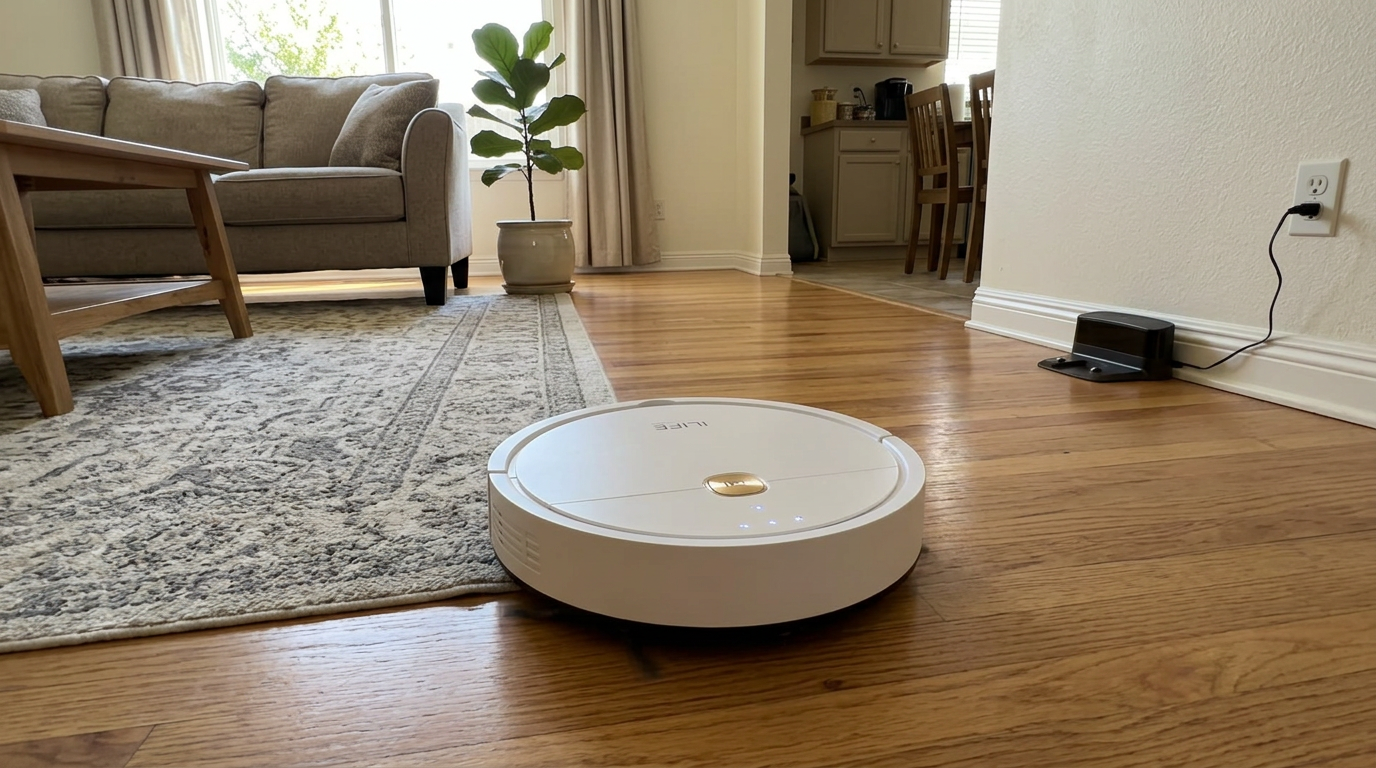
Even budget robots like the ILIFE V2 are far quieter than a corded upright, which makes daytime scheduling easy. Read my ILIFE V2 review →
How pets and kids react to robot noise
Pets react to robots differently than people do. Dogs and cats hear a wider range of frequencies than we do, and the higher-pitched whine of a small fan can bother some of them more than the dB number suggests.
In my experience, the sudden noises bother pets more than the steady hum: the dock roaring to life, the robot bumping a door, or a brush starting up on carpet.
If you have a nervous dog or cat, start with the robot in Quiet mode while you are home, let them watch it, and avoid scheduling the dock to empty while they are napping beside it.
Kids are similar. Most toddlers I know go from scared to fascinated in about a week, but it helps to start in Quiet mode and keep the first runs short.
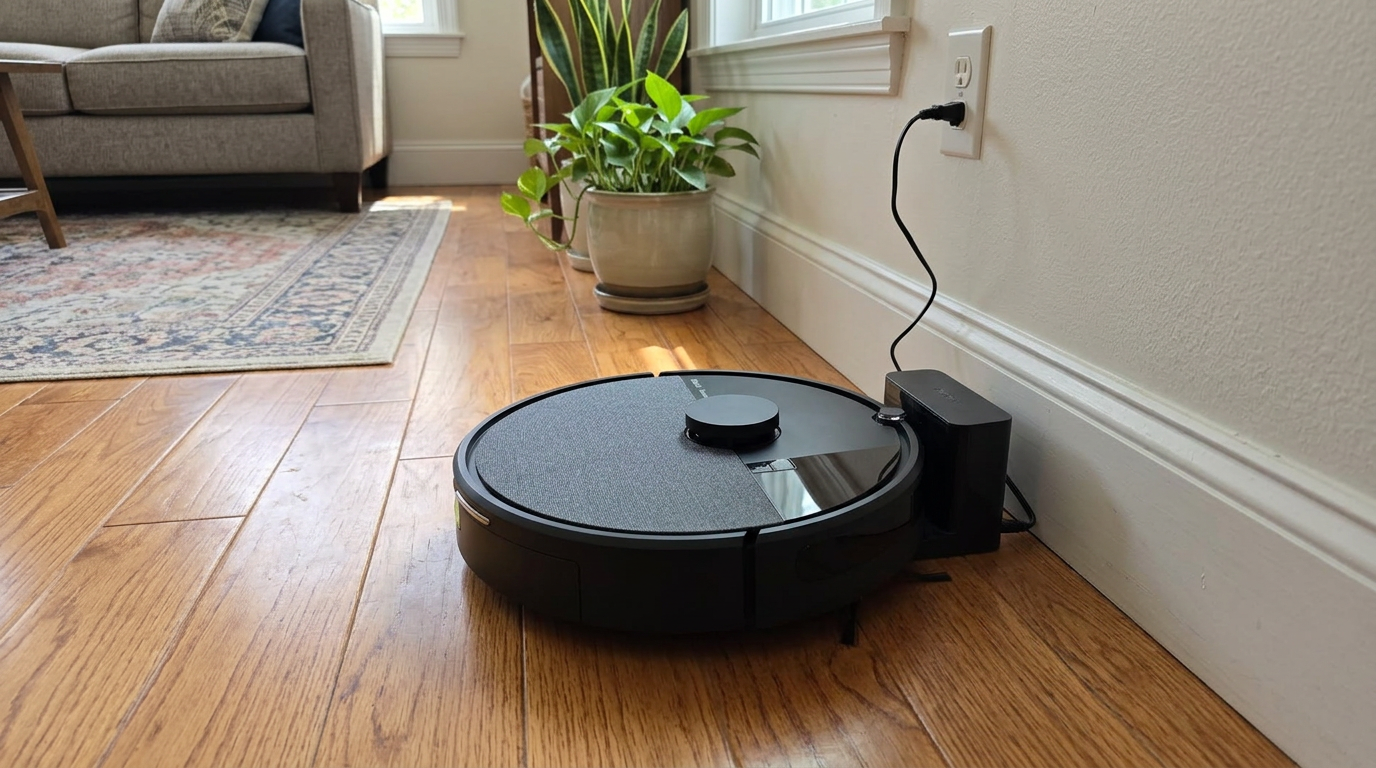
Starting with short, quiet runs helps pets and small kids get used to a new robot like the Roomba 105 Combo. Read my iRobot Roomba 105 Combo review →
How I make any robot vacuum quieter
- Use Quiet or Standard as your defaultDropping from Max to Standard often cuts 5 dB or more, which is clearly audible. Save higher suction for carpets and messy rooms.
- Turn on carpet boost instead of MaxCarpet boost only raises suction on rugs, so hard floors stay quiet. You avoid a house-wide Max run just to clean a few rugs.
- Move the dock away from bedroomsThe dock is often the loudest part of the system. A hallway, laundry room or corner of the kitchen keeps those self-empty bursts away from sleepers.
- Set a Do Not Disturb windowBlock runs and self-emptying overnight in the app. Many robots also lower suction automatically during that window.
- Keep the brush and filter cleanA clogged filter makes the fan work harder and whine, and hair-wrapped brushes rattle. Regular cleaning keeps the robot at its rated noise level.
- Schedule around your dayRun the robot while you are out, or in rooms you are not using. A robot that cleans while you are at work is effectively silent.
Frequently asked questions
How loud is a robot vacuum in dB?
Is 65 dB loud for a robot vacuum?
Can I run a robot vacuum at night?
Why is my robot vacuum louder than its rating?
Is the self-emptying dock louder than the robot?
What is the quietest robot vacuum mode?

Sarah has tested vacuums, mops, air purifiers and dehumidifiers since 2017. Before joining BrasQ, she spent five years as a test coordinator at a national consumer advocacy group. She studied industrial design at Ohio State and lives in Columbus with her family and a long-haired cat.
- First published.
- NIDCD: common sounds and their decibel levels
- Yale Environmental Health and Safety: decibel level chart
- World Health Organization Europe: noise fact sheet and night guidelines
- University of Texas: amplitude and perceived loudness
- Mendel University: logarithms and sound intensity
- IEC 60704-2-17: airborne noise of dry-cleaning robots
- Roborock: Qrevo S Pro product pages (US and Canada)
- Roborock UK: Saros 10 product page
- Dreame: L40 Ultra Gen 2 vs. L10s Pro Ultra comparison
- Roborock Australia: quietest robot vacuum cleaners