Dreame D20 Air Plus vs Roborock Q10 S5+: which budget self-emptying robot should you buy?
Both robots vacuum, mop and empty themselves into a compact bagged dock, and both map your home with LiDAR. On paper the Dreame doubles the suction, while the Roborock answers with a vibrating mop that lifts over rugs. I went through the spec sheets, independent lab data, hands-on reviews and more than 2,000 owner ratings to find out which one actually deserves a spot in your home.
We choose products independently. We may earn a commission through links on this page; your price stays the same. Affiliate policy
In this comparison
For most homes I would pick the Roborock Q10 S5+. Its carpet cleaning and hair resistance are some of the best results I have seen from a robot in this class, its vibrating mop lifts over rugs, and it runs noticeably quieter. The Dreame D20 Air Plus makes more sense if you mainly want a vacuum, like the idea of a dust bag that lasts up to four months, and put more weight on steadier owner ratings. Be aware that neither robot is good at dodging cables and socks, so a quick pickup before each run is part of the deal.
The two robots
Ratings checked November 6, 2026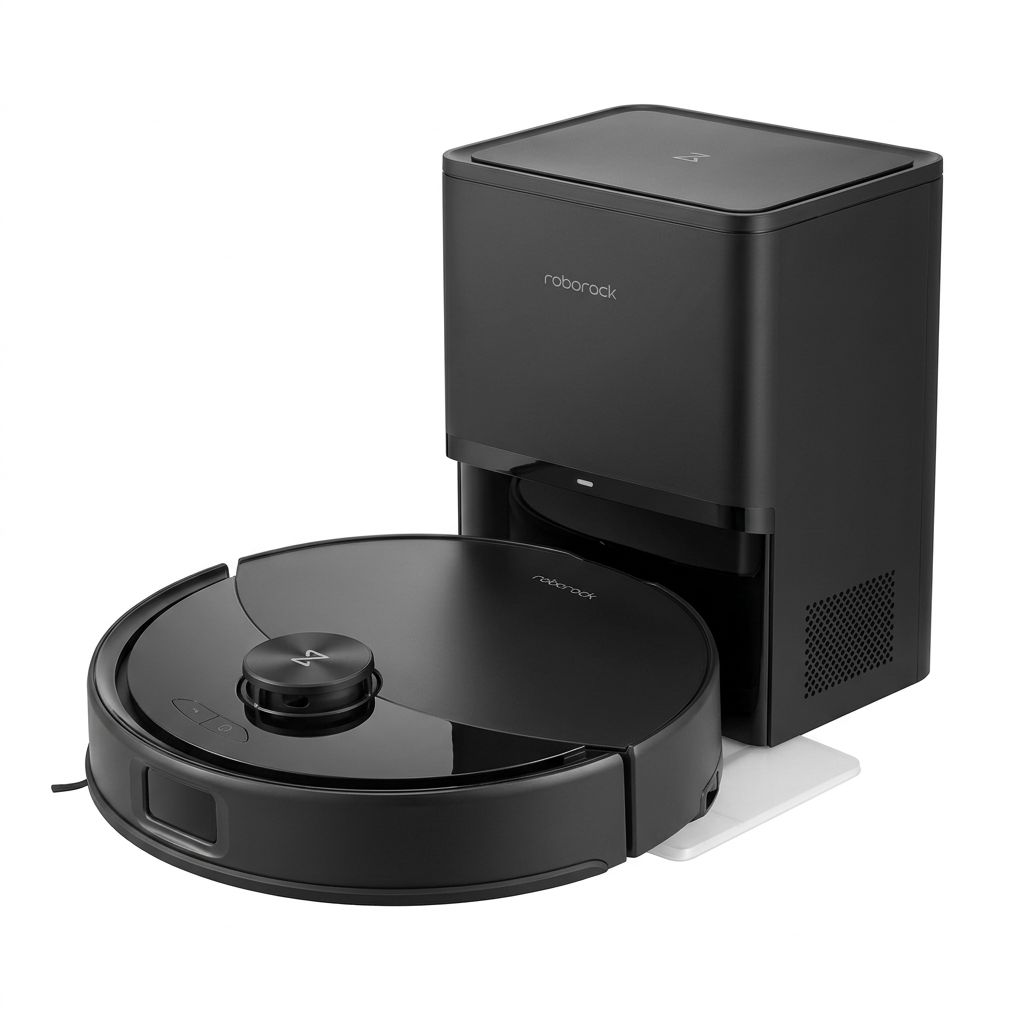
Lab-proven carpet cleaning, zero hair tangling in testing and a vibrating mop pad that lifts about 0.3 inch over rugs.
See Today’s Price →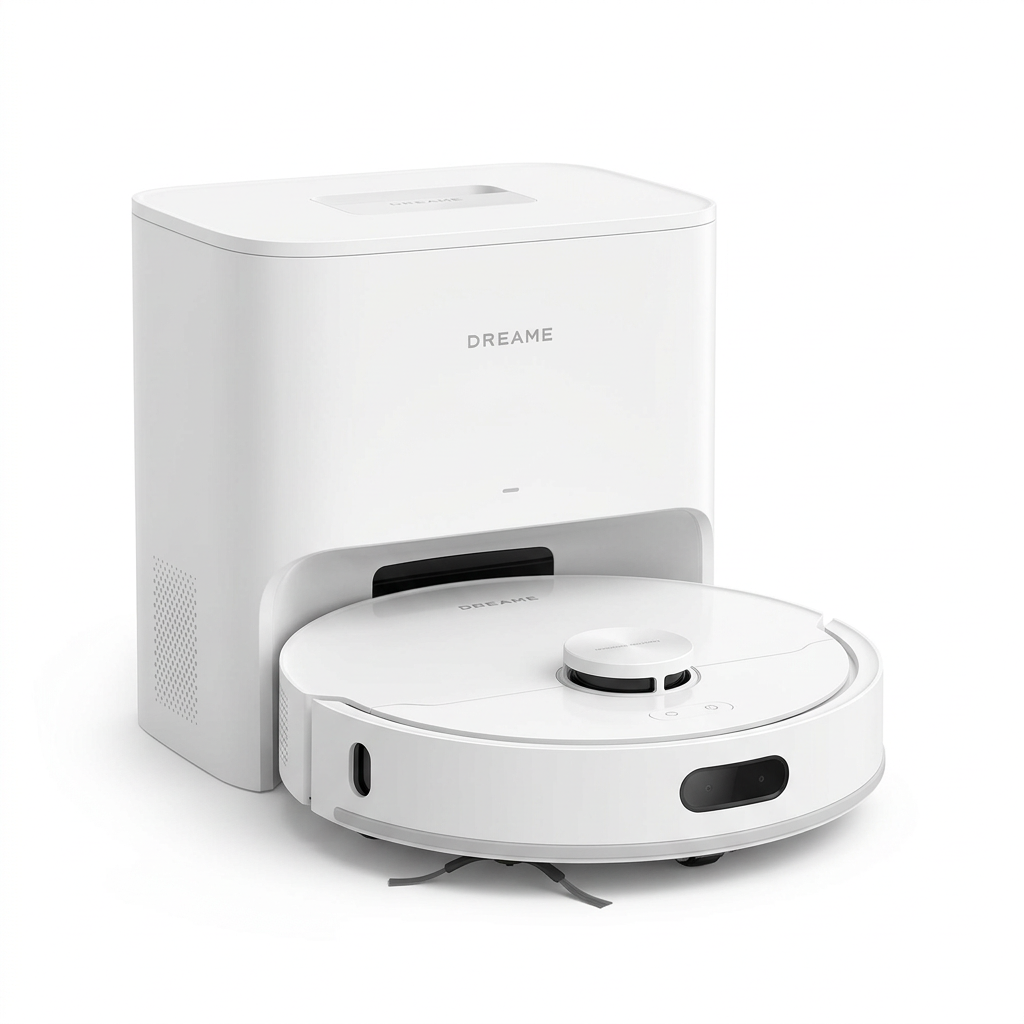
20,000Pa rated suction, a slim 3.7-inch body and a 4-liter dust bag that holds up to 120 days of debris. Basic flat-pad mop.
Reveal Today’s DealD20 Air Plus vs Q10 S5+ at a glance
- Buy the Roborock Q10 S5+ if you have carpet and hard floors. Its lab carpet and hair results are excellent, and its mop lifts over rugs so it can do both jobs in one run.
- Buy the Dreame D20 Air Plus if you mostly want a vacuum, have a smaller home and want the longest stretch between dust bag changes.
- Both use LiDAR and map well, but neither has a camera, so both run into cords and light rugs. Plan on a quick floor pickup.
- The Dreame has the happier owners right now. The Roborock’s lower rating is driven by mapping glitches and early failures, so test it hard during your return window.
Head to head
The better result in each row is marked. Figures come from the manufacturers and Amazon listings unless noted; rows without a mark are a tie or a matter of taste.
| Spec | Roborock Q10 S5+ | Dreame D20 Air Plus |
|---|---|---|
| Claimed suctionmax setting | 10,000Pa | 20,000Pa ✓ Best |
| Mopping | Vibrating pad, up to 3,000 scrubs/min ✓ Best | Flat static pad |
| Mop liftover rugs | About 0.3 in (8 mm) ✓ Best | None |
| Dust bag | 2.7 L, up to about 70 days | 4 L, up to 120 days ✓ Best |
| Onboard bin | 350 ml (11.8 fl oz) ✓ Best | 220 ml (7.4 fl oz) |
| Dock size | 8.3 x 7 x 10.2 in ✓ Best | 11.5 x 7.9 x 10.5 in |
| Navigation | LiDAR | LiDAR |
| Obstacle avoidance | LiDAR plus structured light ✓ Best | LiDAR and bumper only |
| Long hair tangling | 0% wrapped in lab ✓ Best | Not lab tested |
| Batteryruntime | 5,200mAh, about 250 min (lab estimate) ✓ Best | 3,200mAh, up to 150 min |
| Heightfits under furniture | 3.9 in | 3.7 in ✓ Best |
| Noisenormal cleaning | About 58 dB (measured) ✓ Best | Louder, up to 76 dB listed |
| Maps | Multi-floor | Up to 4 maps |
| Smart home | Alexa, Google, Siri | Alexa, Google, Siri |
| Wi-Fi | 2.4 GHz only | 2.4 GHz only |
| Amazon rating | 3.4 (1,700+) | 4.2 (300+) ✓ Best |
| Rows won | 8 | 4 |
D20 Air Plus vs Q10 S5+ pros and cons
Roborock Q10 S5+
- Pulled 96% of embedded sand from carpet in lab testing
- Zero long hair wrapped on the brush in testing
- Vibrating mop pad lifts about 0.3 inch over carpet
- Leaves very little water behind on hard floors
- Big 5,200mAh battery with recharge and resume
- Quiet at around 58 dB in normal cleaning
- Multi-floor maps and a clean, easy app
- Very compact auto-empty dock
- Avoided only 6 of 24 small objects in testing
- Drove through a simulated pet mess in one test
- Pet hair pickup varied a lot between tests
- Owner reports of maps drifting and needing resets
- Some early units reported dead within weeks
- You fill the water tank and rinse the pad by hand
- Uses disposable dust bags
Dreame D20 Air Plus
- 20,000Pa rated suction, the highest in this pair
- 4-liter bag holds up to 120 days of debris
- Slim 3.7-inch body slides under low furniture
- Neat, methodical LiDAR cleaning paths
- Gets close to edges and into corners
- Simple app with up to four maps
- Strong 4.2-star owner rating
- Basic flat mop pad that does not lift or scrub
- Has to avoid rugs while mopping
- Louder than most robots in its class
- No front obstacle sensor
- Pushes light mats and small rugs around
- Smaller battery suits apartments and smaller homes
- Not yet through a full independent lab suite
Who should buy which robot?
- Homes with a mix of carpet, rugs and hard floors
- Wall-to-wall carpet that needs a deep pull
- Long-haired family members
- Two-story homes that need more than one map
- Larger homes up to about 1,200 square feet per charge
- Quiet apartments and work-from-home days
- People who want light mopping without moving rugs
- Apartments, condos and single floors
- Homes where vacuuming matters far more than mopping
- Low sofas, beds and TV stands
- Anyone who hates changing dust bags
- Buyers who put weight on steady owner ratings
- Running it while you are out of the house
Design, dock and build
These two robots look like close cousins, and in many ways they are. Both are round, both carry a LiDAR turret on top, and both ship with a compact auto-empty dock instead of the tall tower you get with pricier mop-washing robots.
The Dreame D20 Air Plus is the newer and smaller of the two. It measures 12.8 inches across and 3.7 inches tall, and the robot weighs about 5.7 pounds.
The Roborock Q10 S5+ is a little bigger at roughly 13.9 inches across and 3.9 inches tall. That fifth of an inch sounds trivial, but it can decide whether a robot reaches under a low TV console or sofa frame.
One hands-on tester watched the Dreame slip under a low entertainment center they fully expected it to skip. A few owners still say the turret keeps it out from under certain furniture, so measure your lowest gap before you order either one.
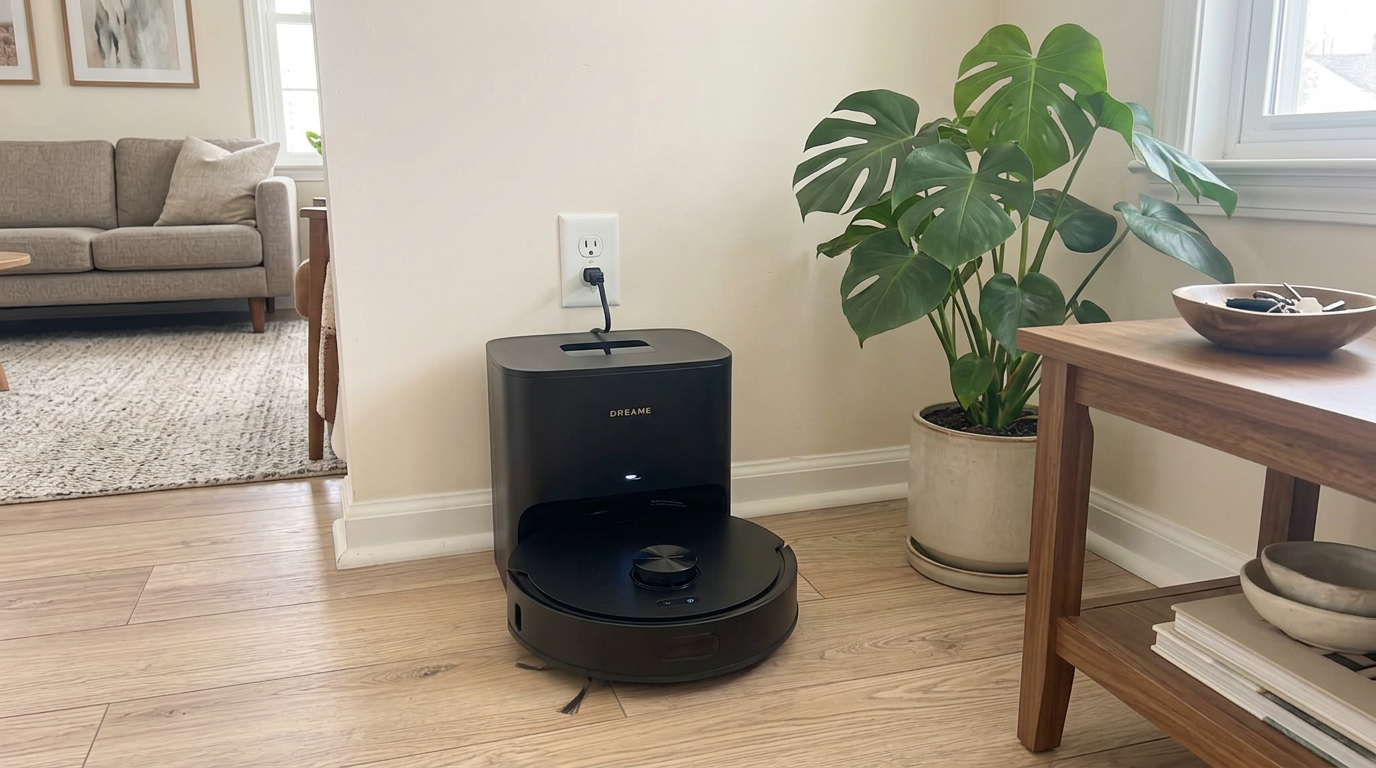
The D20 Air Plus is the slimmer robot, at 3.7 inches tall.
The docks are both pleasantly small. The Roborock dock measures about 8.3 by 7 by 10.2 inches, while the Dreame base comes in at roughly 11.5 by 7.9 by 10.5 inches.
Neither dock holds water, washes pads or refills a tank. They charge the robot and pull the dust into a sealed bag, and that is the whole job.
That simplicity is a big part of why both fit so easily beside a couch or under a side table. It also means a few chores stay with you, which I cover in the mopping and maintenance sections.
One small setup quirk on the Dreame: the base has a physical power switch on the back. If nothing happens when you plug it in, flip that switch before you assume it is faulty.
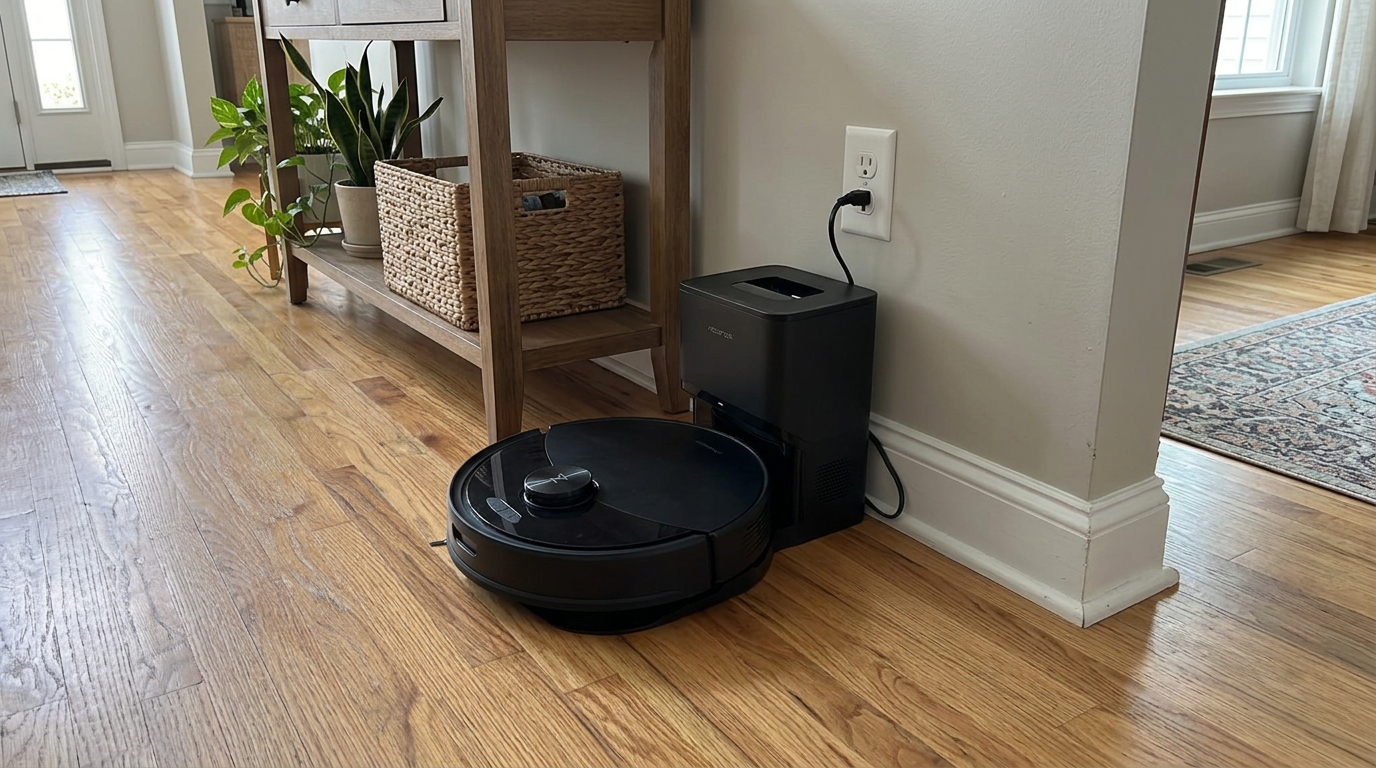
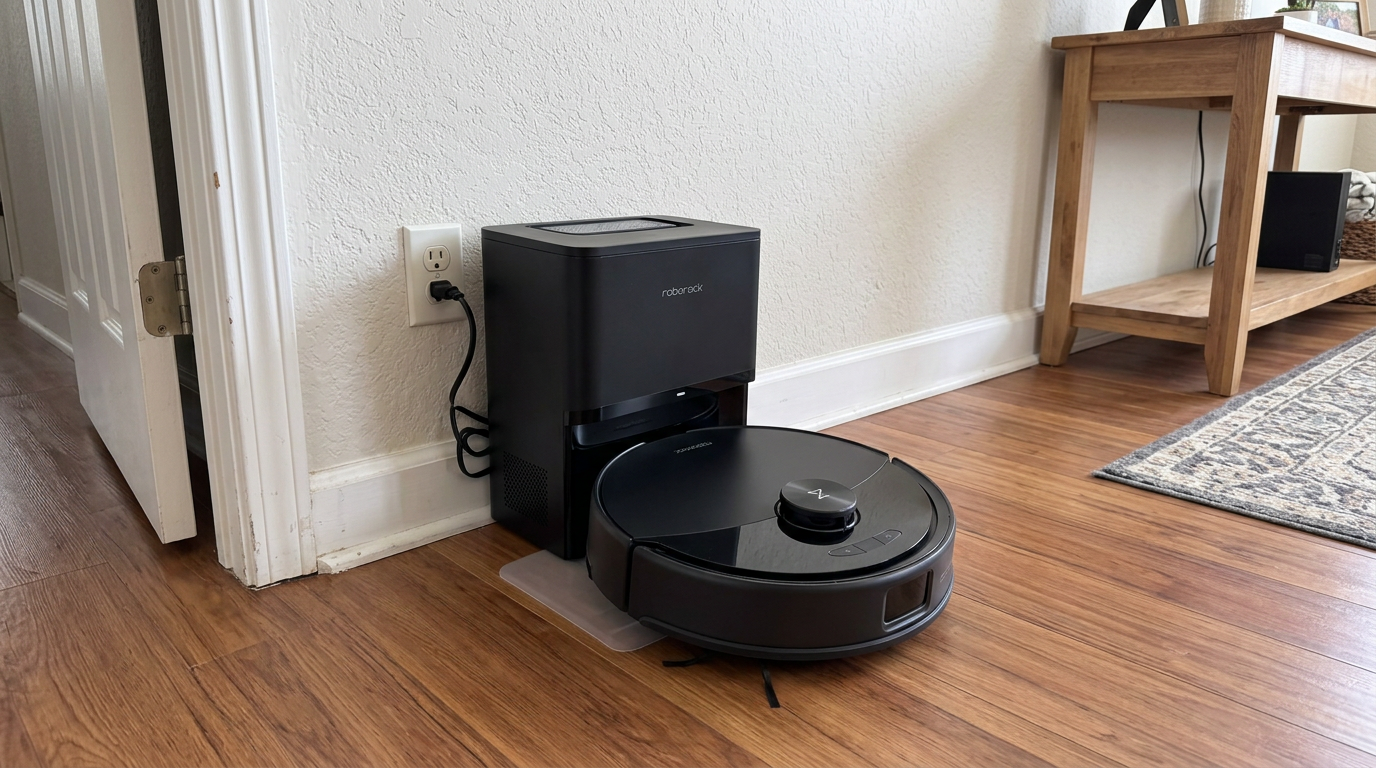
The Q10 S5+ dock is one of the smallest self-empty bases in this class.
Tip: Leave about 1.5 feet of clear floor in front of either dock and a little room on each side. Both robots line up with their base by laser, and a cramped spot is the most common reason a robot circles instead of docking.
Suction and everyday vacuuming
On paper this round goes to Dreame by a mile. It is rated at 20,000Pa, exactly double the 10,000Pa Roborock lists for the Q10 S5+.
I would not read too much into either figure. Brands measure suction their own way, and what matters is what the robot actually pulls out of your floor.
That is where the Roborock surprised me. In one independent lab, the Q10 S5+ removed 96% of embedded sand from carpet, tied for the best result that lab has recorded, against a 75.4% average.
The same lab measured about 3.8 kPa of real suction and 17 CFM of airflow, which put it among the strongest robots it has tested. A second lab was more reserved, praising its edge cleaning but noting that larger debris like cereal was sometimes pushed around rather than picked up.
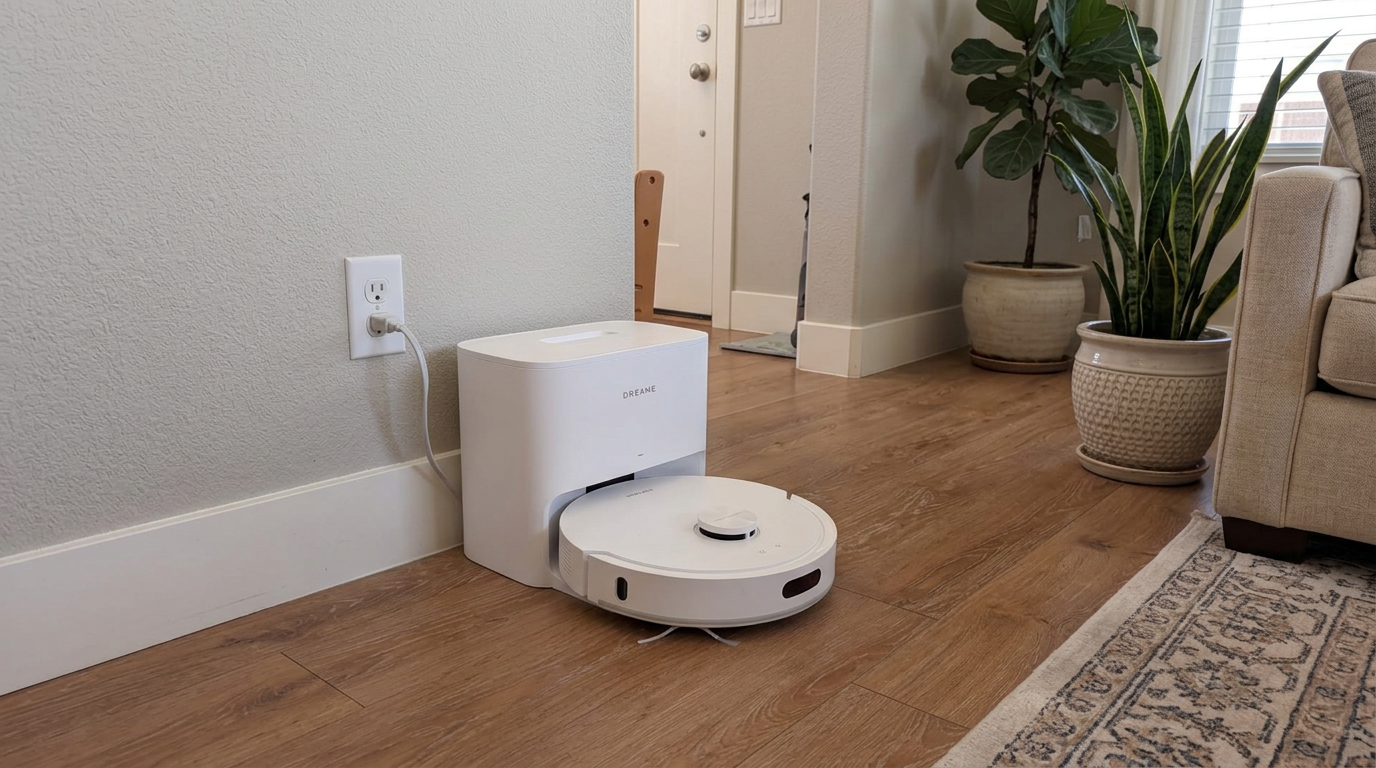
Suction is the feature Dreame owners praise most often.
The Dreame has not been through a full lab suite yet, so I leaned on hands-on reviews and owner reports. Reviewers describe it collecting pebbles, pine needles, greyhound hair and tracked-in leaves without trouble, and pulling visible dirt out of rugs.
Owners say much the same, and suction is the single most praised feature in its reviews. Several mention being surprised by how much dirt came up in the first few runs.
Both robots boost suction automatically when they detect carpet. On the Dreame you can clearly hear the motor step up, which is reassuring, but it also adds to the noise.
My take: on carpet, the Roborock has the proven numbers. The Dreame very likely holds its own on everyday crumbs and dust, but until it is lab tested, the Q10 S5+ is the safer bet if rugs and carpet make up most of your floor.
Carpet tip: Set the highest suction level only for carpeted rooms in the app. Max power everywhere drains the battery faster and adds noise on hard floors where you do not need it.
Pet hair and tangles
Both brands promise a dual anti-tangle system, with a comb-style main brush and a side brush shaped to shed hair. This is the area where the test data separated them most clearly.
In a seven-inch hair test, the Q10 S5+ finished with no hair wrapped around its brush at all. The average robot in that lab ends up with 38% of the hair tangled.
Pet hair pickup is less clear-cut. One lab measured 96% pet hair pickup from carpet, while a second lab saw it leave visible clumps and collect only about 36% in its test area before declaring the job done after six minutes.
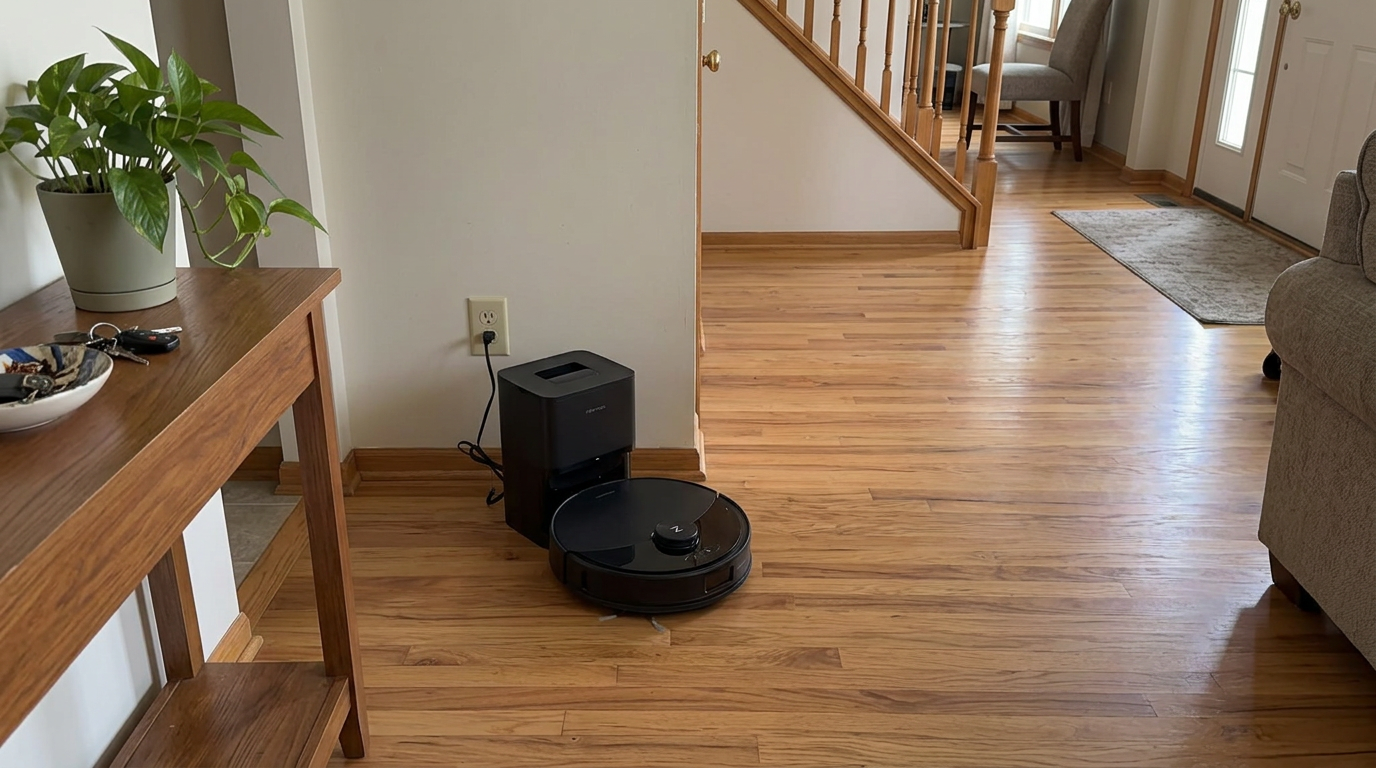
The Q10 S5+ uses a comb-equipped main brush to stop hair wrapping.
My read is that the Roborock collects hair very well where it actually drives, but its quick routes can leave patches on a first pass. A second pass or a daily schedule closes most of that gap.
For the Dreame, the evidence comes from owners and hands-on reviews. People with dogs, cats and long-haired kids repeatedly praise it for not wrapping, and several say they have never had to cut hair off the roller.
One hands-on reviewer did see hair building up on the Dreame’s main brush, along with trouble moving heavier debris like kitty litter into the dock. So I would call the Dreame good with hair, but not yet proven.
Pet owner tip: During shedding season, schedule a short daily run instead of one long weekly clean. Daily passes stop fur from packing into carpet, where every robot struggles most.
Brush tip: Pop the main brush out once a week on either robot and check the end caps. Hair always collects there first, even on anti-tangle designs.
Mopping
This is the biggest practical difference between the two robots, and it favors the Roborock.
The Dreame D20 Air Plus uses a flat, static mop pad fed from a small water tank on the robot. It drags the damp pad behind it with 32 water levels to choose from, but the pad does not vibrate, spin or lift.
Because the pad cannot lift, the Dreame has to steer around carpet while it mops. Reviewers describe the result as a damp cloth for dust and light footprints, and one said they would simply leave the mop off.
The Roborock Q10 S5+ uses VibraRise 2.0, a vibrating pad that scrubs up to 3,000 times a minute. When its ultrasonic sensor detects carpet, it lifts the pad about 0.3 inch, so it can vacuum a rug and mop the floor around it in the same run.
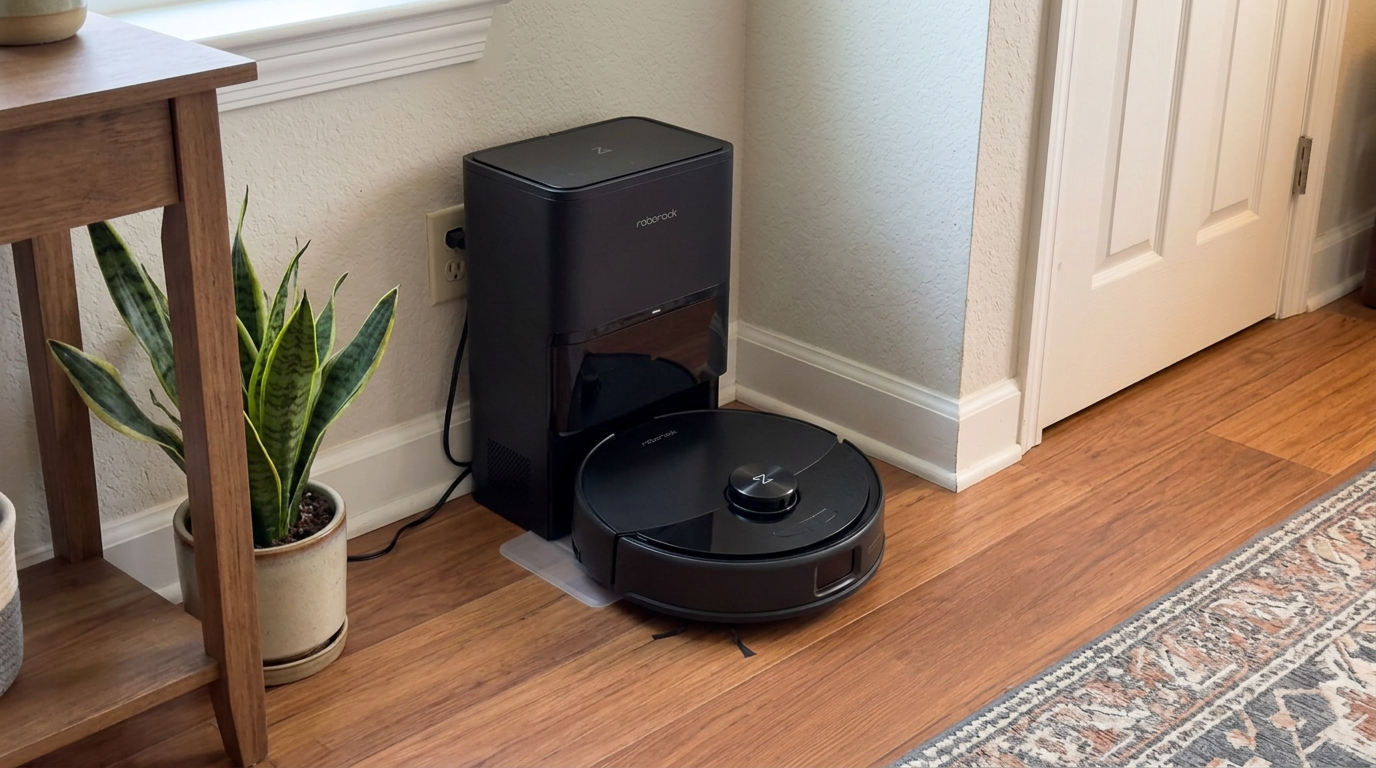
The vibrating, lifting mop is the Q10 S5+’s biggest advantage over the Dreame.
The lab numbers are solid for the price. The Q10 S5+ scored 103 on dried-on stains against a 93 average, and it left only about 0.5 grams of water behind, roughly half the average.
The second lab was cooler on it, finding it handled light stains but left darker patches and a faintly sticky residue. That matches what owners say: it keeps floors fresh between proper mops, but it is not a deep scrubber.
Neither dock washes the pad or refills water. On both robots you fill the tank and rinse the pad yourself, and one Roborock owner called that part of the routine a little clunky.
The Roborock app also lets you decide how each rug is handled, from crossing it with the pad raised to avoiding it completely. With a fixed pad, the Dreame simply cannot offer that kind of control.
Hardwood tip: Use the lowest water level on wood floors with either robot. Both are built for light daily mopping, and less water means fewer streaks and no moisture creeping into the seams.
Pad tip: Rinse the mop pad and let it air-dry after every mopping run. Neither dock dries pads, and a damp pad left on the robot is what causes that sour smell.
Navigation and getting stuck
Both robots navigate with a spinning LiDAR sensor, so both build an accurate floor plan and clean in tidy, straight lines. That puts them well ahead of cheap bump-and-turn robots.
The Roborock was quick in testing. It covered about 8.8 square feet per minute against a 7.5 average, and owners report a complete first map in as little as 18 minutes.
The Dreame also earns strong marks for mapping. Reviewers watched it clean in neat parallel rows, slow down near table legs instead of hitting them, and get surprisingly tight into corners.
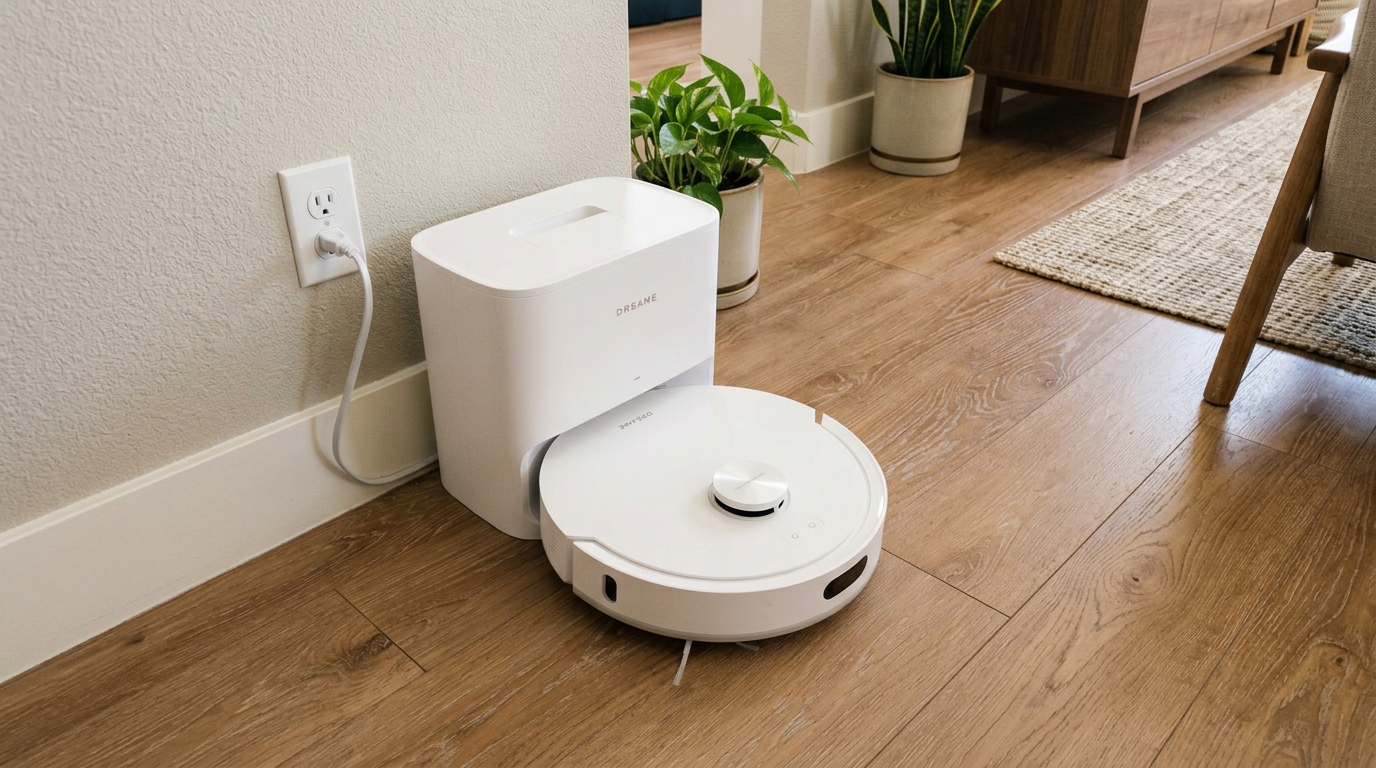
LiDAR mapping lets the D20 Air Plus clean in straight, overlapping rows.
Obstacle avoidance is the weak spot for both. The Roborock adds a front structured-light sensor, yet it avoided only 6 of 24 test objects in one lab, against a 16.6 average, and detected about 40% of obstacles in another.
The Dreame has no front obstacle sensor at all. It relies on LiDAR and its bumper, so cables, socks and pet bowls are things it finds by touching them.
Light rugs trip up both robots too. Reviewers watched the Dreame push a door mat across the floor and fold a small rug over itself, while the Roborock got caught on cords and furniture legs during testing.
The result that worries me most for pet owners: in one test, the Roborock drove straight through a simulated pet mess. If you have a puppy, run either robot when you are home to check the floor first.
Clutter tip: Do a two-minute pickup of cables, socks, toys and pet bowls before each run. With weak obstacle avoidance on both robots, this one habit prevents most rescues.
Rug tip: Put a non-slip rug pad or corner grippers under light mats. Neither robot will shove a mat around once it is anchored, and both cross it more cleanly.
Battery, charging and runtime
Battery life is a clear Roborock win. It packs a 5,200mAh battery, and lab testing found about 2.82 minutes of cleaning per 1% of charge, against a 2.27 average.
That works out to an estimated 1,243 square feet per charge, or roughly four hours of runtime. The Q10 S5+ also supports recharge and resume plus off-peak charging, which helps if your power is cheaper at night.
The Dreame uses a smaller 3,200mAh battery rated for up to 150 minutes on its quietest setting. A full charge takes around four and a half hours.
Real-world runs look fine for smaller homes. One reviewer saw it clean about 463 square feet in 57 minutes using 73% of the battery, and another finished a downstairs floor in 33 minutes with 77% left.
An owner with an 800-square-foot hall and kitchen says it covers the whole space without stopping to recharge. It also recharges and resumes, so a bigger home just takes longer.
Charging tip: For homes over about 1,000 square feet, the Roborock is the safer pick. If you choose the Dreame, schedule cleaning room by room so it never runs dry halfway through a job.
App, mapping and smart home
The Roborock app is one of the best reasons to choose the Q10 S5+. You get a live map, virtual barriers, multi-floor maps, room-by-room suction and water levels, schedules, child lock and Do Not Disturb hours.
There are thoughtful extras too. You can send the robot back to a spot it missed mid-clean, and on tile or wood it can clean along the direction of the floor lines to pull more dust from the gaps.
Testers called it clean, responsive and beginner friendly. The catch is maps: a vocal group of owners reports maps shifting or breaking over time, with no way to save and restore a good one, and one owner says they factory reset the robot more than a dozen times.
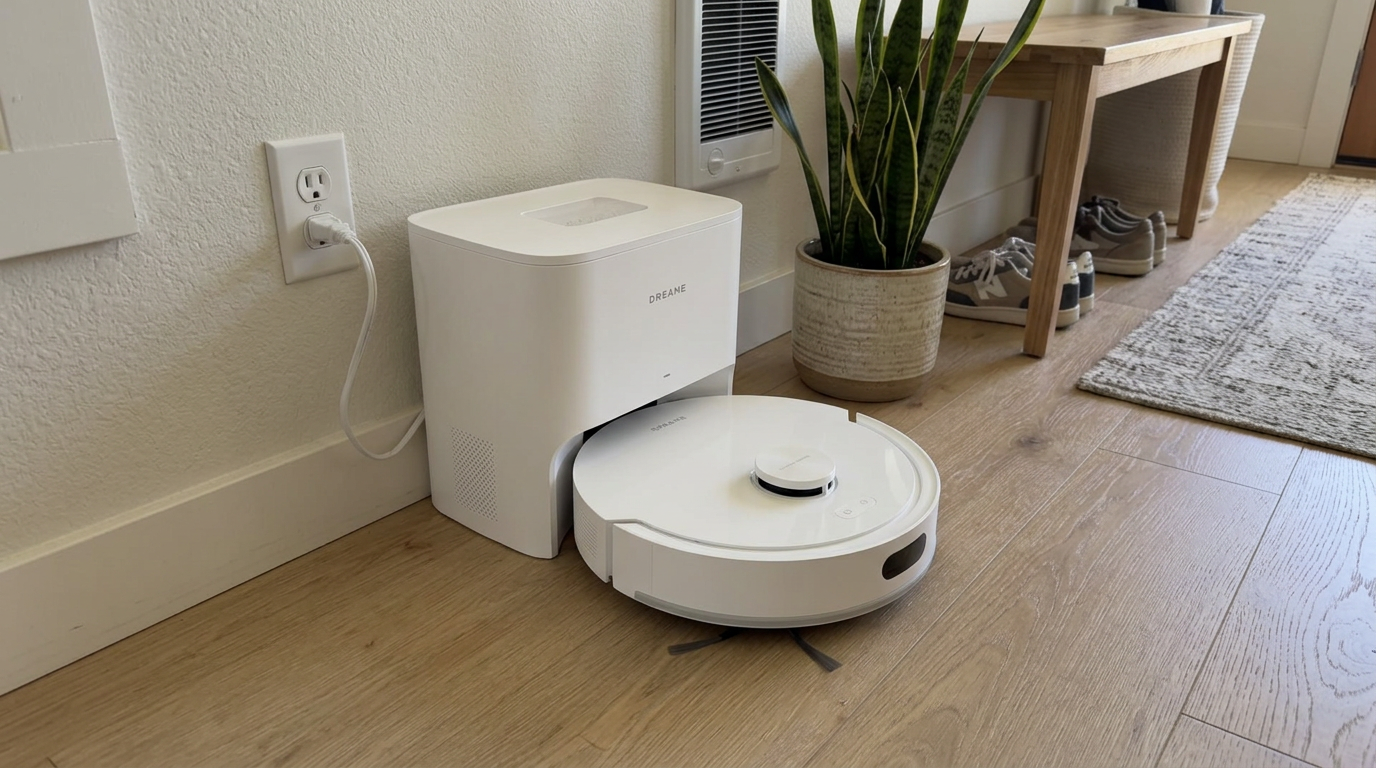
The Dreamehome app keeps things simple, with up to four saved maps.
The Dreamehome app is simpler, and reviewers liked it for that. You choose vacuum, mop, both or a custom mode, and pick from four suction levels: Quiet, Standard, Intense and Max.
It still covers the essentials, with up to four editable maps, no-go zones, room scheduling and a live view that shades the areas already cleaned. The Dreame builds its map on the first clean, so there is no separate mapping run.
Both robots work with Alexa, Google Assistant and Siri shortcuts, and neither supports Matter or Apple Home directly. Both also connect only on 2.4 GHz Wi-Fi, which trips up some owners during setup.
Wi-Fi tip: If pairing fails, temporarily split your router’s 2.4 GHz and 5 GHz bands, or create a 2.4 GHz guest network. Pair the robot, then switch everything back.
Map tip: On the Roborock, wait until the first map looks right, then turn off continuous map updates if your app version offers it. Owners who lock in a good map report far fewer problems later.
Noise
If you work from home, this one matters. The Roborock measured about 58 dB in normal cleaning, roughly a busy refrigerator, and about 70.6 dB for the few seconds the dock empties the bin.
Owners say they can watch TV while it cleans. Testers did notice a sputtering hum at startup and a high-pitched whine on quick turns, so it is not silent.
The Dreame is the louder robot. Hands-on reviewers consistently describe it as noisier than the average robot vacuum, and one said they would not run it at night or near them while trying to focus.
Quiet tip: Use the Dreame’s Quiet suction level for hard floors and set Do Not Disturb hours on either robot, so the self-empty cycle never fires late at night.
Maintenance and running costs
Both docks are bagged, and that is where the Dreame earns its keep. Its 4-liter bag is rated for up to 120 days, while the Roborock’s 2.7-liter bag is rated for up to about 70 days, and one lab estimated closer to seven weeks.
The Roborock has the bigger onboard bin, at 350 ml against 220 ml. In practice that matters less, since both robots empty after every run.
Bagged docks keep dust clouds out of your face, which is a real plus for allergy households. The trade-off is buying replacement bags, and the Dreame simply needs fewer of them.
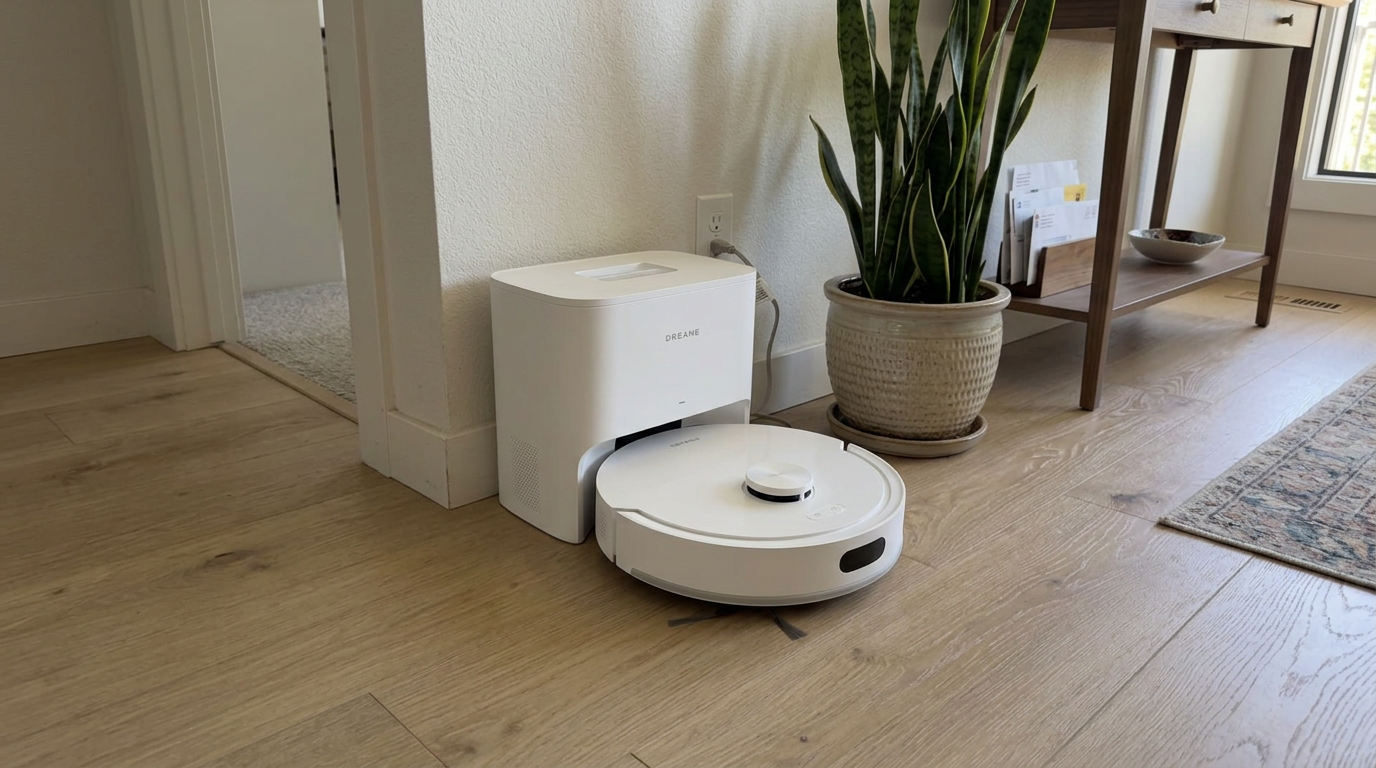
The D20 Air Plus bag is rated for up to four months between changes.
Neither robot has water parts in the dock, so there are no dirty water tanks to scrub. Instead, you refill the robot’s tank and rinse the mop pad yourself whenever you mop.
Independent test results
The Roborock Q10 S5+ has been through two independent studio labs that bought their own units. The Dreame D20 Air Plus is newer and, as of this update, I have only hands-on home reviews to go on.
That means the numbers below are best read as each robot’s own story, not as a direct race. For the Roborock, I show its scores against the lab average.
Roborock Q10 S5+ vs lab average
Dreame D20 Air Plus in real homes
Higher is better for carpet cleaning and objects avoided, and lower is better for hair tangled and water left. The pattern is clear: the Roborock is a superb carpet and hair performer that needs a tidy floor, while the Dreame proves itself in everyday home use rather than on a test bench.
What owners say
The Dreame D20 Air Plus holds a 4.2-star average from more than 300 ratings, with 69% five-star reviews. The Roborock Q10 S5+ sits at 3.4 stars from more than 1,700 ratings, with a split of 45% five-star and 26% one-star.
Owners keep mentioning how much dust, pet hair and crumbs it pulls up, and how many features they get for the money.
Quick app pairing, accurate maps and a bag that lasts for ages come up again and again, especially from parents and pet owners.
A small group reports the robot freezing after sitting idle, losing its map or missing the dock, and the mop is widely treated as an afterthought.
Happy owners describe a first map in minutes, an accurate floor plan and runs quiet enough to watch TV through.
The most common complaint is maps shifting or corrupting over time, forcing repeated remapping or factory resets.
Testers also flagged a higher-than-usual number of owner reports of units that stopped working within days or weeks.
Reviews cannot tell you exactly how often a problem happens. They do show you what to test during your return window, and with the Roborock in particular I would run it daily from the first week.
Which one should you buy?
After weighing everything, it comes down to two questions: how much of your home is carpet, and do you want the robot to mop around your rugs? If the answer to either is a lot, the Roborock pulls ahead.
If you mostly want a vacuum for a smaller home and value the happier owner ratings, the Dreame is the calmer choice.
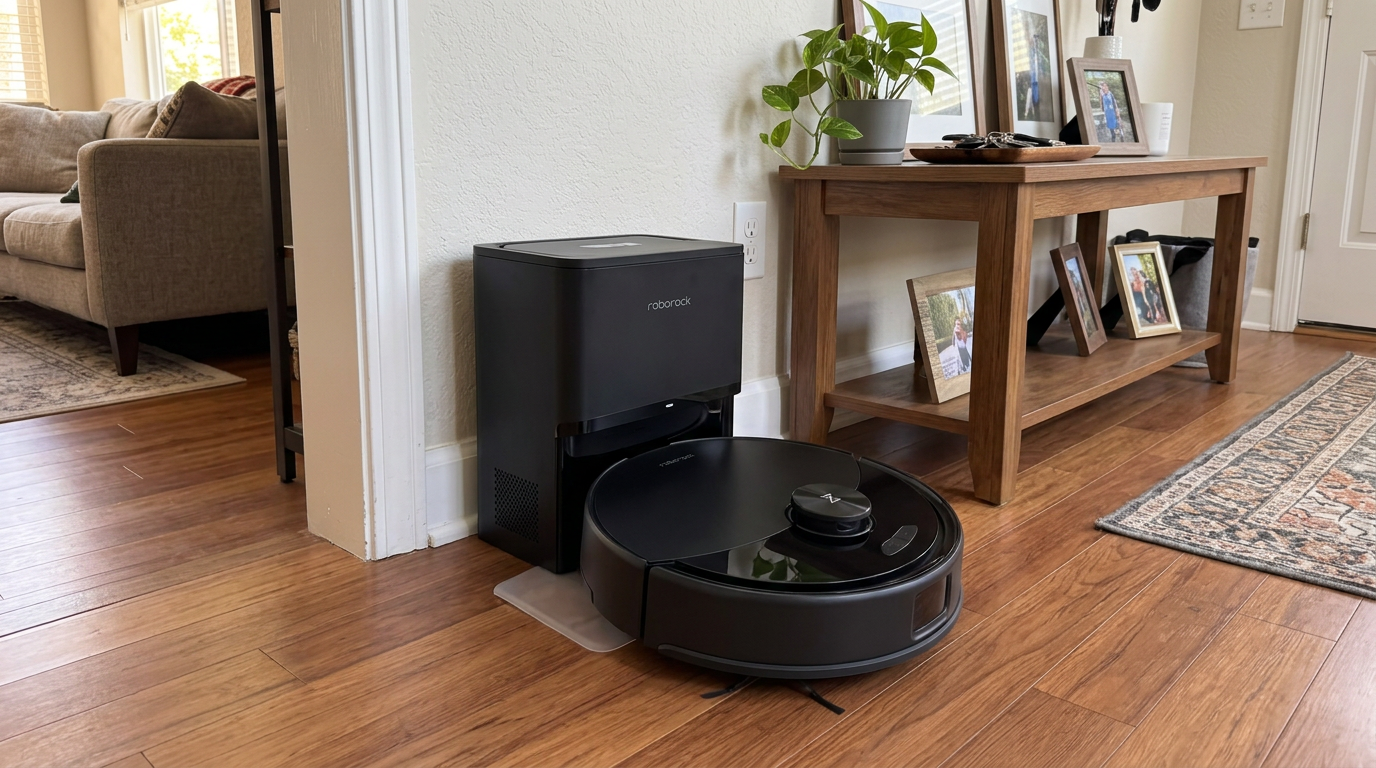
For mixed floors, the Q10 S5+ is the more complete cleaner.
- You have carpet or lots of rugs
- You want light mopping without moving rugs
- Someone in the house has long hair
- You want quieter runs and multi-floor maps
- You have a puppy and a messy floor
- You will not tidy cables before each run
- Reliability reports make you nervous
- Vacuuming matters far more than mopping
- You live in an apartment or on one floor
- You have low furniture to clean under
- You want the fewest dust bag changes
- You want real mopping around rugs
- Noise bothers you
- Your home is large and open
Pick the Roborock for proven carpet cleaning, tangle-free brushes and a mop that lifts over rugs. Pick the Dreame for a slim, vacuum-first robot with a bag that lasts up to four months.
My pick is the Roborock Q10 S5+. Its carpet deep cleaning and hair tangle results are outstanding for this class, its vibrating mop lifts over rugs, and it is both quieter and longer-lasting on a charge. Just buy it with your return window in mind, because owner reports of map problems and early failures are hard to ignore.
The Dreame D20 Air Plus is a strong choice for smaller homes that care mostly about vacuuming. It is slimmer, holds dust for longer between bag changes and has the happier owners, but its mop is basic and it is louder.
Whichever you choose, clear the floor before each run, check the brush every week and give the dock some breathing room.
Roborock Q10 S5+ vs Dreame D20 Air Plus specifications
From the Amazon listings, manufacturer specifications and independent tests. Checked November 6, 2026.
| Roborock Q10 S5+ | Dreame D20 Air Plus | |
|---|---|---|
| Claimed suction | 10,000Pa HyperForce | 20,000Pa Vormax |
| Measured suction | About 3.8 kPa, 17 CFM airflow (lab) | Not lab tested |
| Suction levels | Multiple, carpet boost | Quiet, Standard, Intense, Max, carpet boost |
| Main brush | JawScrapers comb anti-tangle brush | Bristle and rubber anti-tangle brush |
| Mopping | VibraRise 2.0 vibrating pad, up to 3,000 scrubs/min | Flat static pad, 32 water levels |
| Mop lift | About 0.3 in (8 mm), ultrasonic carpet detection | None |
| Water tank | On the robot, filled by hand | 280 ml (9.5 fl oz), on the robot |
| Dock functions | Auto empty and charge | Auto empty and charge |
| Dust bag | 2.7 L, up to about 70 days | 4 L, up to 120 days |
| Onboard bin | 350 ml (11.8 fl oz) | 220 ml (7.4 fl oz) |
| Navigation | PreciSense LiDAR | LiDAR (LDS) |
| Obstacle avoidance | ReactiveTech structured light | Bumper only |
| Maps | Multi-floor, no-go zones | Up to 4 maps, no-go zones |
| Battery | 5,200mAh | 3,200mAh |
| Runtime | About 250 min (lab estimate), recharge and resume | Up to 150 min, recharge and resume |
| Charging time | Off-peak charging supported | About 4.5 hours |
| Robot size | 13.9 x 13.9 x 3.9 in | 12.8 x 12.8 x 3.7 in |
| Dock size | 8.3 x 7 x 10.2 in | 11.5 x 7.9 x 10.5 in |
| Weight | About 14.7 lb (robot and dock) | About 11.5 lb (5.7 lb robot, 5.8 lb base) |
| Noise | About 58 dB cleaning, 70.6 dB emptying (measured) | Up to 76 dB listed |
| Wi-Fi | 2.4 GHz only | 2.4 GHz only |
| Smart home | Alexa, Google Assistant, Siri | Alexa, Google Assistant, Siri |
| Amazon rating | 3.4 (1,700+ ratings) | 4.2 (300+ ratings) |
How I researched and compared them
This is a researched comparison built on published data and hands-on reports, not a long-term test in my own home.
I started from both Amazon listings and the manufacturer specifications, then read through the most helpful owner reviews for each robot. Between them they have more than 2,000 ratings, enough to spot patterns that a single test home would miss.
For the Roborock, I used two independent studio lab tests and compared each score to that lab’s own average. For the Dreame, I used hands-on home reviews with measured runtimes, and I treat single owner reports as warning signs rather than proof.
- Cleaning: hard floor pickup, carpet, pet hair and tangling.
- Mopping: pad design, stain removal, water use and rug handling.
- Navigation: mapping, coverage speed, obstacles and docking.
- Ownership: battery, noise, app, maintenance and reliability.
D20 Air Plus vs Q10 S5+ FAQ
Is the Roborock Q10 S5+ better than the Dreame D20 Air Plus?
For most homes with carpet and rugs, yes. It has outstanding lab results on carpet and hair tangling, a vibrating mop that lifts over rugs and a longer battery. The Dreame is the better fit for smaller homes that mainly need vacuuming, and it has higher owner ratings.
Which one has stronger suction?
The Dreame is rated at 20,000Pa, double the Roborock’s 10,000Pa. In practice, the Roborock has the stronger proof, with a 96% carpet deep clean score in lab testing, while the Dreame has not been through the same lab suite yet.
Does the Dreame D20 Air Plus lift its mop over carpet?
No. It uses a flat, fixed pad, so it steers around carpet while mopping. The Roborock lifts its pad about 0.3 inch when it detects carpet.
Do they wash their own mop pads?
No. Both docks only empty the dust bin and charge the robot. You refill the water tank and rinse the pad yourself on both.
Which is better for pet hair?
The Roborock had zero hair tangling in lab testing and strong pet hair pickup in one lab, though a second lab saw it leave clumps on a quick first pass. Dreame owners praise its anti-tangle brushes too. With either robot, daily runs work best during shedding season.
How often do I need to change the dust bag?
Dreame rates its 4-liter bag for up to 120 days. Roborock rates its 2.7-liter bag for up to about 70 days, and testing suggests closer to seven weeks in a busy home.
Which one is quieter?
The Roborock. It measured about 58 dB in normal cleaning, while hands-on reviewers consistently describe the Dreame as louder than average.
Do they work with 5 GHz Wi-Fi?
No. Both connect only on 2.4 GHz. If your router combines both bands under one name, split them temporarily during setup.
Do they work with Alexa and Google Home?
Yes, both do, and both support Siri shortcuts. Neither supports Matter or Apple Home directly.


- Amazon product listing for the Roborock Q10 S5+ (ASIN B0DWXBCQVP), November 2026
- Amazon product listing for the Dreame D20 Air Plus (ASIN B0G5XVMVJN), November 2026
- Roborock and Dreame manufacturer specifications
- Two independent studio lab tests of the Roborock Q10 S5+
- Hands-on home reviews of the Dreame D20 Air Plus (2026)
- Verified Amazon owner reviews of both models
- Comparison published.