iRobot Roomba 105 Combo vs Roomba 105 Vac: is the mop worth having?
These two Roombas share the same body, the same 7,000 Pa suction and the same LiDAR navigation. The only real question is whether you want the Combo's built-in mop or the simpler, vacuum-only 105 Vac. I went through the spec sheets, independent lab data and more than 2,250 owner ratings to find out which one deserves a spot in your home.
We choose products independently. We may earn a commission through links on this page; your price stays the same. Affiliate policy
In this comparison
For most homes with hard floors I would pick the Roomba 105 Combo. It vacuums exactly like the 105 Vac, adds a light daily mop that stays off your rugs, and it has the happier owners of the two. The Roomba 105 Vac makes more sense in a mostly carpeted home, where a mop adds nothing and a dust-only bin and simpler routine are worth more. Be aware that neither robot is good with long hair, and neither one dodges cables or socks, so a quick floor pickup before each run is part of the deal.
The two robots
Ratings checked November 6, 2026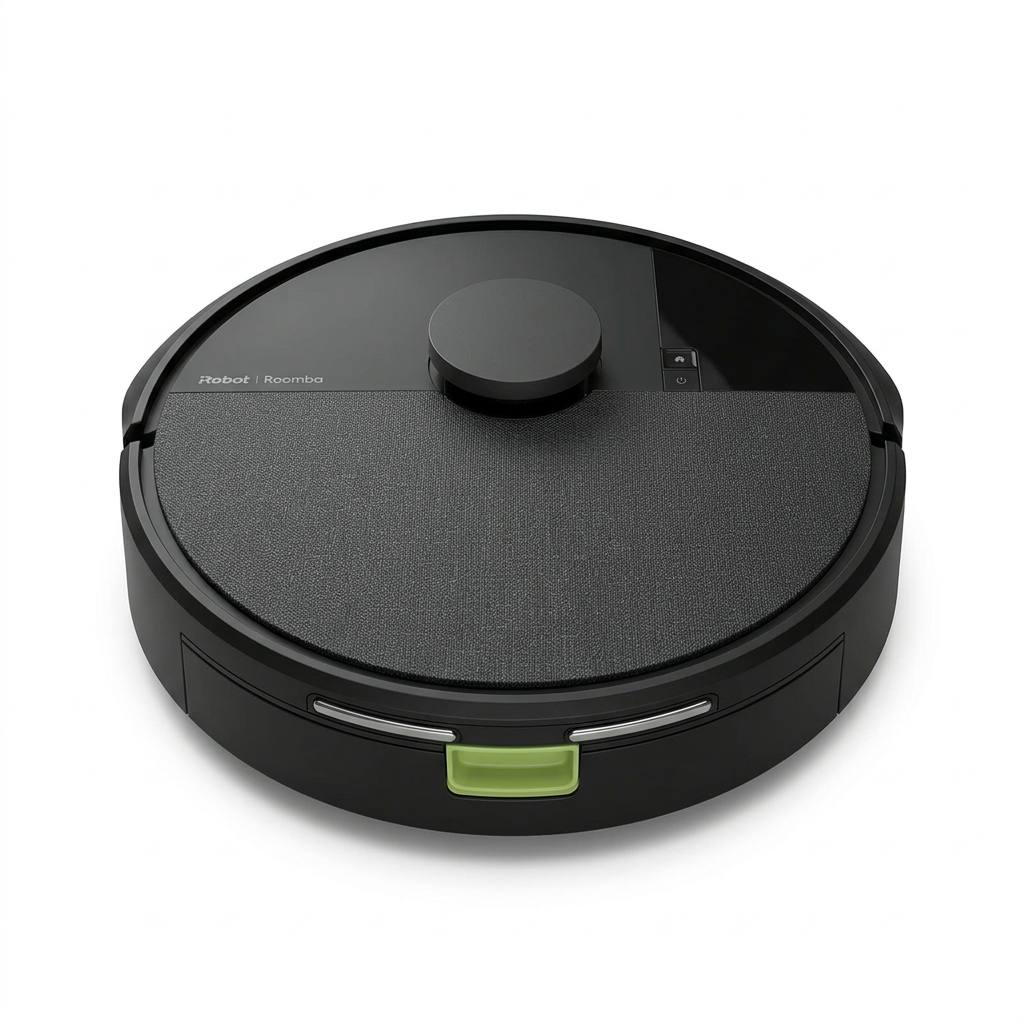
Vacuums and mops in one run, with a pump-fed microfiber pad and automatic carpet detection that keeps your rugs dry.
See Today’s Price →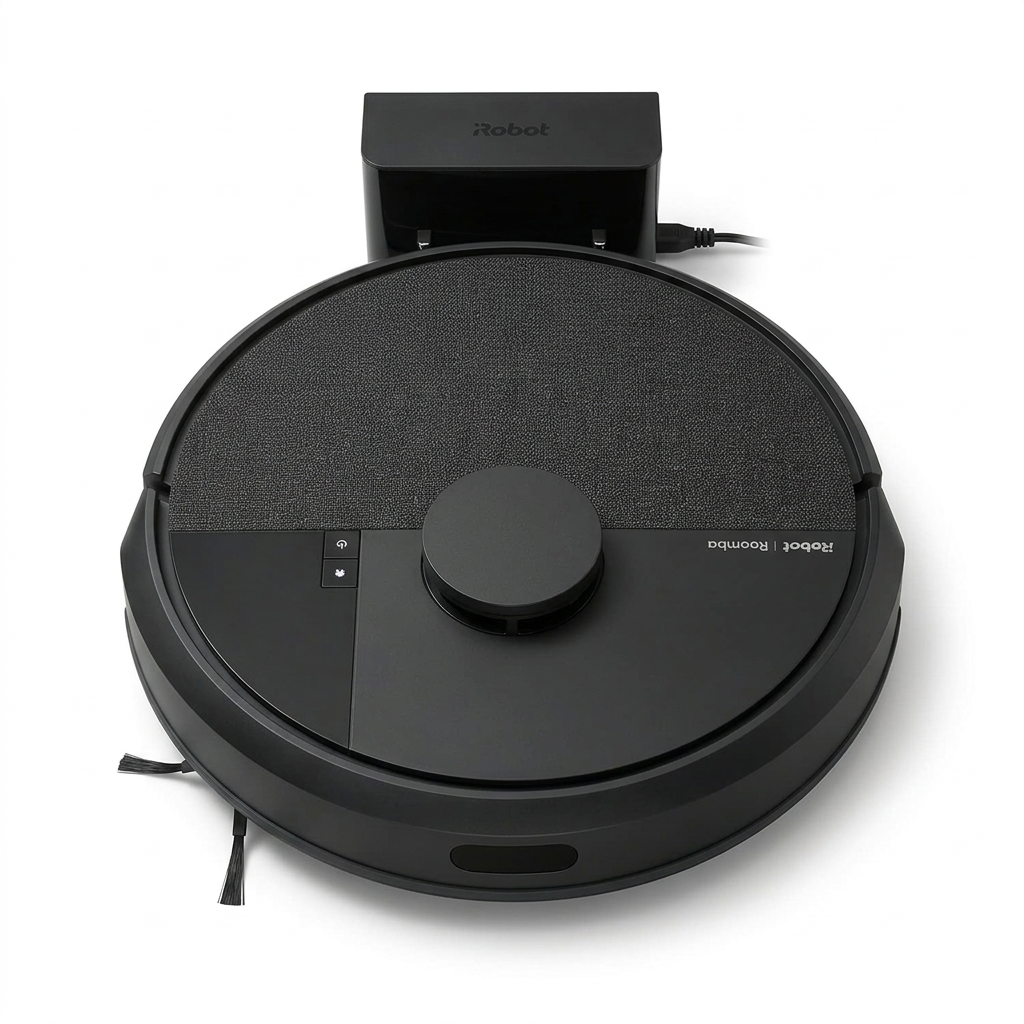
The same LiDAR robot without the mop, with a dust-only bin, spot cleaning and recharge and resume for bigger floors.
Reveal Today’s DealRoomba 105 Combo vs 105 Vac at a glance
- Buy the Roomba 105 Combo if you have hardwood, tile or vinyl that you want wiped every day. It vacuums exactly as well as the Vac and adds a light maintenance mop.
- Buy the Roomba 105 Vac if your home is mostly carpet. You skip the mop hardware you would never use and keep a dust-only bin.
- Both come with a charge-only dock in these versions, so you empty the bin by hand after every run or two.
- Neither handles long hair or small clutter well. Lab testing found most long strands wrapped around the brush, and neither robot has a camera to spot cables or socks.
Head to head
The better result in each row is marked. Figures come from iRobot and the Amazon listings unless noted; rows without a mark are a tie, and with these two robots there are a lot of ties.
| Spec | Roomba 105 Combo | Roomba 105 Vac |
|---|---|---|
| Cleaning modes | Vacuum, mop, vacuum and mop ✓ Best | Vacuum only |
| Mopping | Microfiber pad, micro-pump, 3 water levels ✓ Best | None |
| Rugs while mopping | Detects and avoids carpet | Not applicable |
| Claimed suctionmax setting | 7,000 Pa | 7,000 Pa |
| Brushes | Multi-surface bristle, edge-sweeping | Multi-surface bristle, edge-sweeping |
| Navigation | ClearView LiDAR | ClearView LiDAR |
| Obstacle avoidance | LiDAR and bumper only | LiDAR and bumper only |
| Saved maps | Up to 3 floors | Up to 3 floors |
| Rated runtime | Shorter when mopping | Up to 200 min ✓ Best |
| Dust bin | Shared with a water tank of about 7 oz | Dust only ✓ Best |
| Dockin these versions | Charge only | Charge only |
| Heightfits under furniture | 4.1 in | 4.1 in |
| Weight | About 6.3 lb | About 6.2 lb |
| Voice control | Alexa, Siri, Google | Alexa, Siri, Google |
| Wi-Fi | 2.4 GHz only | 2.4 GHz only |
| Amazon rating | 3.9 (820+) ✓ Best | 3.3 (1,400+) |
| Rows won | 3 | 2 |
Roomba 105 Combo vs 105 Vac pros and cons
Roomba 105 Combo
- Vacuums and mops in the same run
- Detects carpet and stays off rugs while mopping
- Micro-pump keeps the pad evenly damp, with 3 water levels
- SmartScrub mode for a deeper back-and-forth scrub
- Same 7,000 Pa suction and LiDAR as the Vac
- Higher Amazon rating of the two
- Extra mop pad and hair-cutting tool in the box
- Basic drag-pad mop, not a scrubber
- Rugs get skipped in combo mode
- Small water tank needs refilling before most mop runs
- You rinse the mop pad by hand
- Long hair wraps on the bristle brush
- No camera-based obstacle avoidance
- 2.4 GHz Wi-Fi only
Roomba 105 Vac
- Simple, vacuum-only routine with nothing to fill or rinse
- Dust-only bin
- Above-average carpet deep cleaning in lab testing
- Strong sealed suction for its class
- Fast, tidy LiDAR rows
- Spot cleaning and recharge and resume
- Extra filter in the box
- No mopping at all
- Weak at pulling flattened pet hair out of carpet
- 79% of long hair wrapped around the brush in testing
- Covers less floor per charge than average
- No camera-based obstacle avoidance
- Lower Amazon rating, with durability complaints
- 4.1 inches tall, so it misses some low furniture
Who should buy which robot?
- Homes with lots of hardwood, tile or vinyl
- Kitchens and entryways that need a daily wipe
- Hard floors with a few area rugs
- Pet homes with paw prints on hard floors
- People who want one robot to do two jobs
- Apartments with mostly sealed floors
- Mostly carpeted homes
- Anyone who will never fill a water tank
- Bedrooms, dens and upstairs floors
- Short-haired pets and everyday dust
- People who want the simplest daily routine
- A second robot for a carpeted floor
Design and build
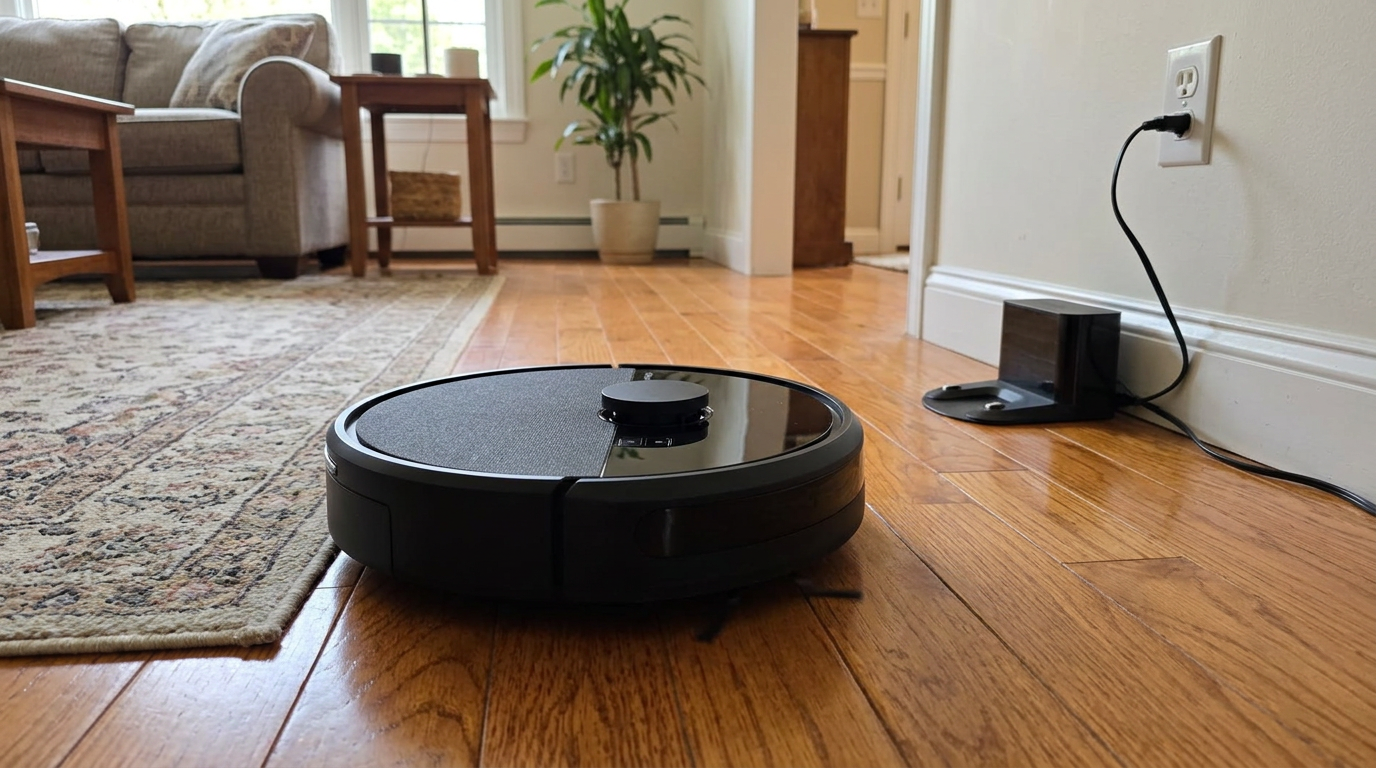
Put these two side by side and you will struggle to tell them apart. Both are round, matte black Roombas with a LiDAR turret on top, and iRobot lists them at about 13.2 inches across and 4.1 inches tall.
The difference sits at the back. On the Combo, the removable bin doubles as a water tank, and a plastic plate with a microfiber mop pad clips onto it underneath.
The 105 Vac uses a plain dust bin with no water parts at all. Everything else, from the bristle main brush to the single edge-sweeping brush and the buttons on top, is the same.
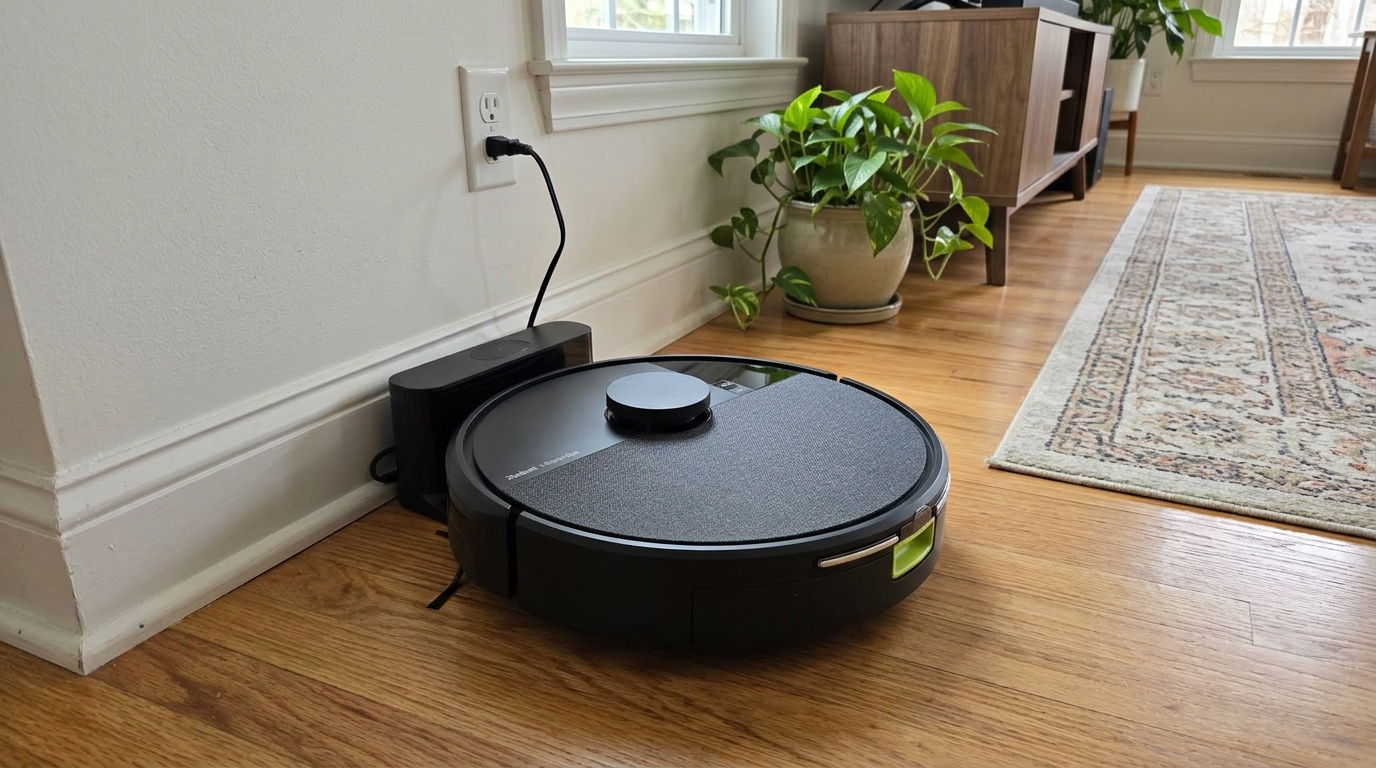
The 105 Combo looks just like the Vac from the top. The mop lives on a plate under the bin.
Both robots weigh roughly 6.2 to 6.3 pounds, and both ship with a small charge-only dock in these versions. That dock is a big advantage if you are short on space, because it tucks into a corner that would never fit a tall self-empty base.
The flip side of a charge-only dock is that you empty the bin by hand. iRobot does sell both robots in AutoEmpty bundles, but the two models I am comparing here are the plain, charge-only versions.
Height is the one design point I would check before buying either. At 4.1 inches, both robots are a little taller than many slim robots, and owners mention them getting caught under some low sofas and beds.
Tip: Measure the gap under your sofa, bed and TV console before you order. If it is under about 4.25 inches, plan to vacuum those spots yourself every few weeks.
Suction and everyday vacuuming
This round is a tie, and that is not me sitting on the fence. iRobot rates both robots at 7,000 Pa of suction with four power levels, and both use the same bristle brush and edge-sweeping brush.
The lab data backs that up. In one independent lab, the 105 Vac pulled 82% of embedded sand out of medium-pile carpet, comfortably above the 75% average for robots that lab has tested.
Its sealed suction measured 2.16 kPa against an average of 0.83 kPa, which is strong for a robot in this class. Airflow was lower, at about 12 CFM against a 16.4 CFM average, so it pulls hard but moves less air than most.
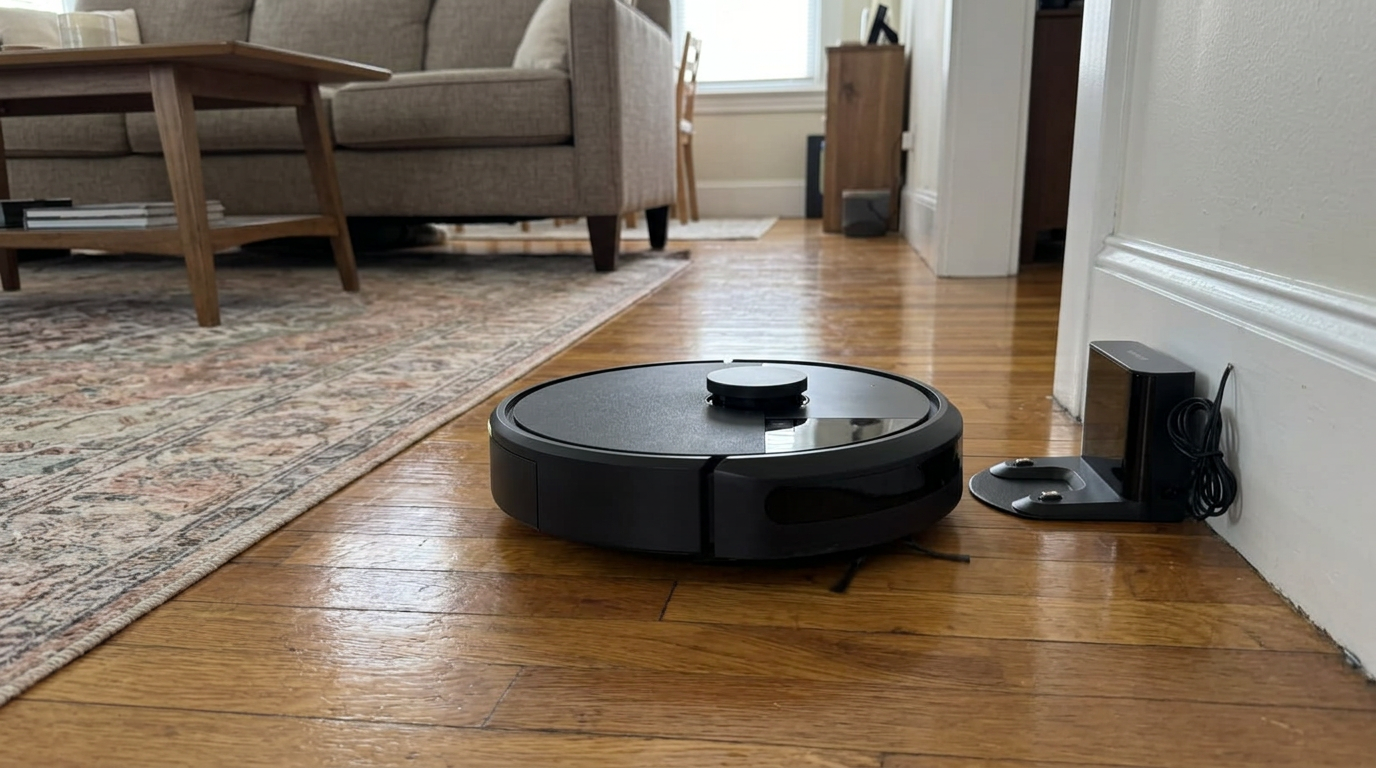
The 105 Vac did better than average at pulling grit out of carpet in lab testing.
A second lab put the 105 Combo through its own vacuum tests. It scored 90 out of 100 in practical cleaning against an 88 average, and its carpet airflow came in just under that lab’s category average.
Those testers also called it the strongest entry-level Roomba they had measured on carpet. Since the vacuum hardware is shared, I read both sets of results as describing the same cleaning ability.
Owners agree on everyday debris. Combo buyers talk about crumbs, dust and dog fur disappearing from tile and grout, while Vac owners mention neat vacuum lines on their carpet and a surprisingly full bin after the first run.
My take: if vacuuming is all you care about, there is no performance reason to pick one over the other. The decision comes down to your floors and whether you want a mop.
Carpet tip: Turn on the highest power level for rugs and runners, and set two cleaning passes in busy rooms. Then keep a regular vacuum for a monthly deep pass on thick carpet.
Pet hair and tangles
This is the weakest area for both robots, and it is the same weakness because they share a brush. iRobot uses a single bristle main brush here, not the rubber rollers on its pricier models.
In a seven-inch hair test, 79% of the hair ended up wrapped around the 105 Vac’s brush. The lab average was 38%, so you will be cutting hair off this brush far more often than on a typical robot.
It also collected only 29% of short pet hair that had been flattened into carpet, against an 81% average. That is a big gap, and it shows up most on medium and high-pile rugs.
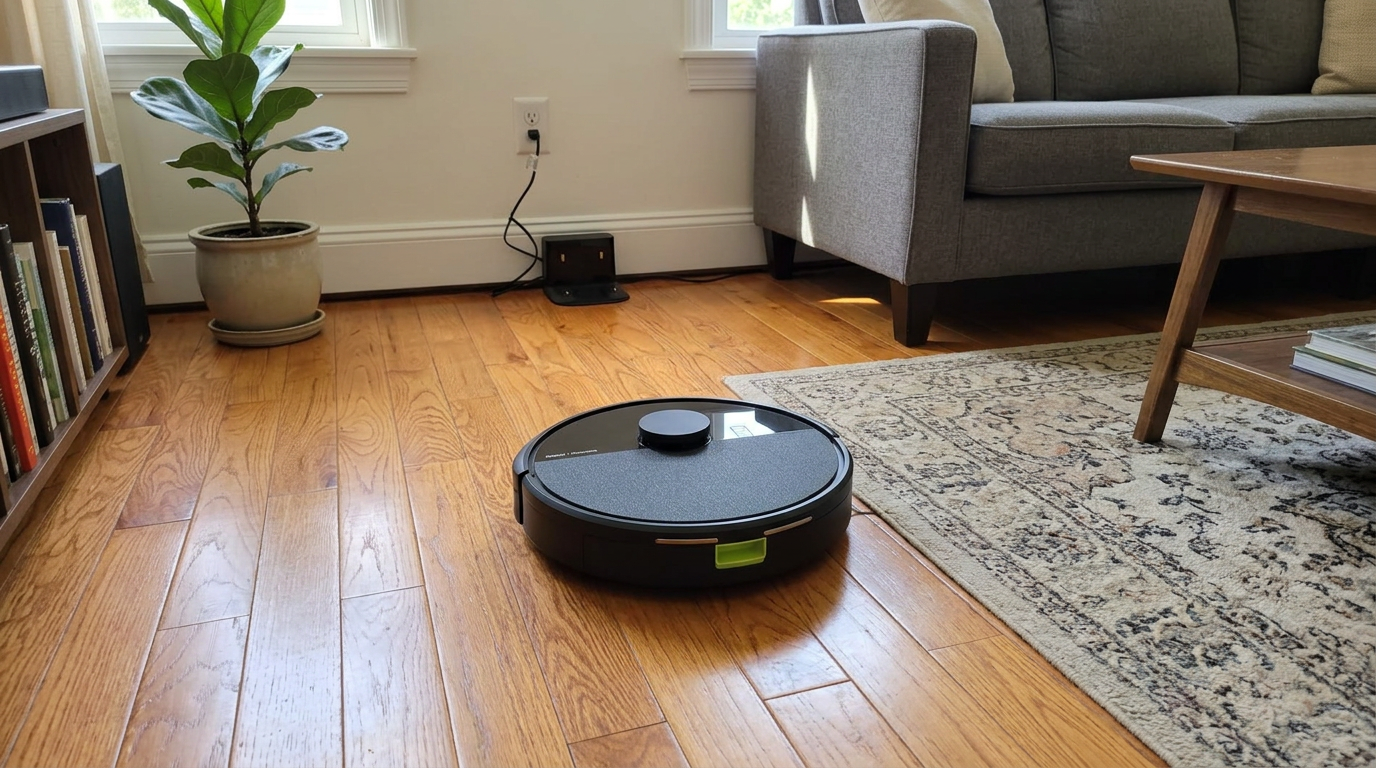
On hard floors, owners with shedding dogs and cats say both robots keep loose fur under control.
The Combo’s testers saw the same pattern, with hair tangling on the roller because it has no anti-tangle design. A separate three-month test of the whole 105 family scored hair handling at a middling 5 out of 10.
Real homes tell a kinder story on hard floors. One Combo owner with a husky and a malamute says daily runs finally let them keep up, and another with a white German Shepherd says it even pulls hair out of grout lines.
So my advice for pet owners is simple. On hard floors, both will handle shedding if you run them daily, and on carpet, neither replaces a good upright.
Pet owner tip: During shedding season, schedule a short daily run instead of one long weekly clean. Daily passes stop fur from packing into carpet, which is exactly where these robots struggle.
Brush tip: Use the included hair-cutting tool on the Combo, or small scissors on the Vac, to slice along the brush every week. Hair builds up at the end caps first.
Mopping
This round is not close, because the 105 Vac does not mop at all. It has no water tank, no pad and no mop modes.
The 105 Combo uses a microfiber pad on a plate under the bin. A small micro-pump feeds water from the tank to the pad, and you pick from three water levels in the app.
There is also SmartScrub, which makes the robot work back and forth over the floor. iRobot says it gives twice the scrubbing of the standard mop mode, and I would save it for kitchens and entryways.
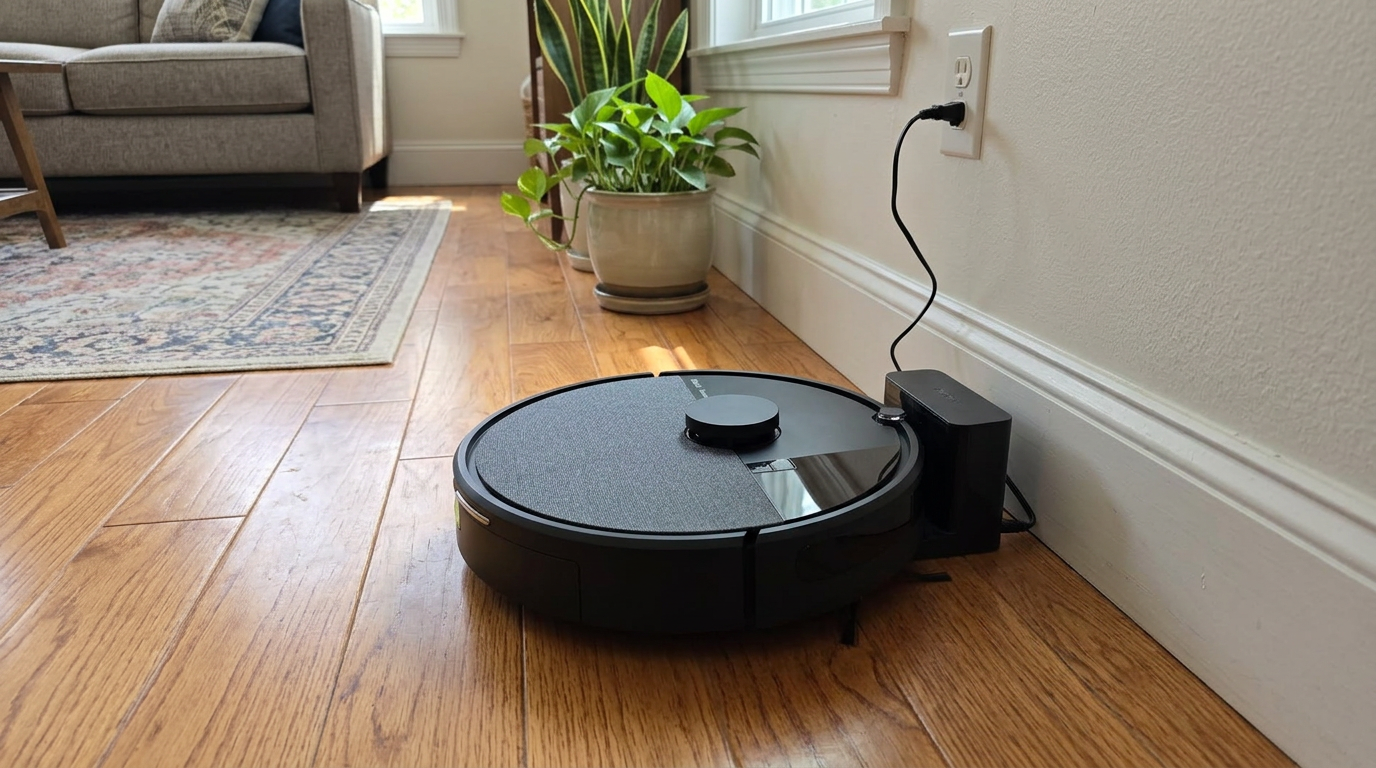
The Combo’s drag pad is made for daily wiping, not for scrubbing dried-on spills.
Carpet handling works differently from robots with lifting pads. The Combo detects carpet and simply stays off it whenever the pad is attached, so your rugs stay dry but also do not get vacuumed in that run.
For a home with a few area rugs, that means two kinds of jobs. I would run a vacuum-only pass with the pad plate removed a couple of times a week, and a vacuum-and-mop run for the hard floors on the other days.
Expectations matter here. Testers describe it as a basic drag-and-wipe mop, the three-month family test scored mopping 5.5 out of 10, and owners agree it keeps floors fresh but leaves sticky spills and textured tile for a manual mop.
The tank is small, at roughly 7 fluid ounces, and owners say they refill it before nearly every mop run. You also need to empty the tank after each job and rinse or swap the pad yourself.
Hardwood tip: Use the lowest water level on wood floors and plain cold water or an iRobot approved solution. iRobot warns against hot water, detergent or disinfectant, which can damage the robot.
Vac owner tip: If you choose the 105 Vac and still want clean hard floors, pair it with a spray mop once a week. Run the robot first so you are not pushing crumbs around.
Navigation and getting stuck
Both robots use iRobot’s ClearView LiDAR, and it is a huge step up from the old bump-and-go Roombas. They build a real floor plan, clean in tidy rows and work in the dark.
Mapping is quick too. Testers found the first map came together much faster than on earlier entry-level Roombas, and owners upgrading from older models keep mentioning it.
In one lab, the 105 Vac covered about 8 square feet per minute, slightly above the average. Its overall navigation score was just below average, which is normal for a robot at this level.
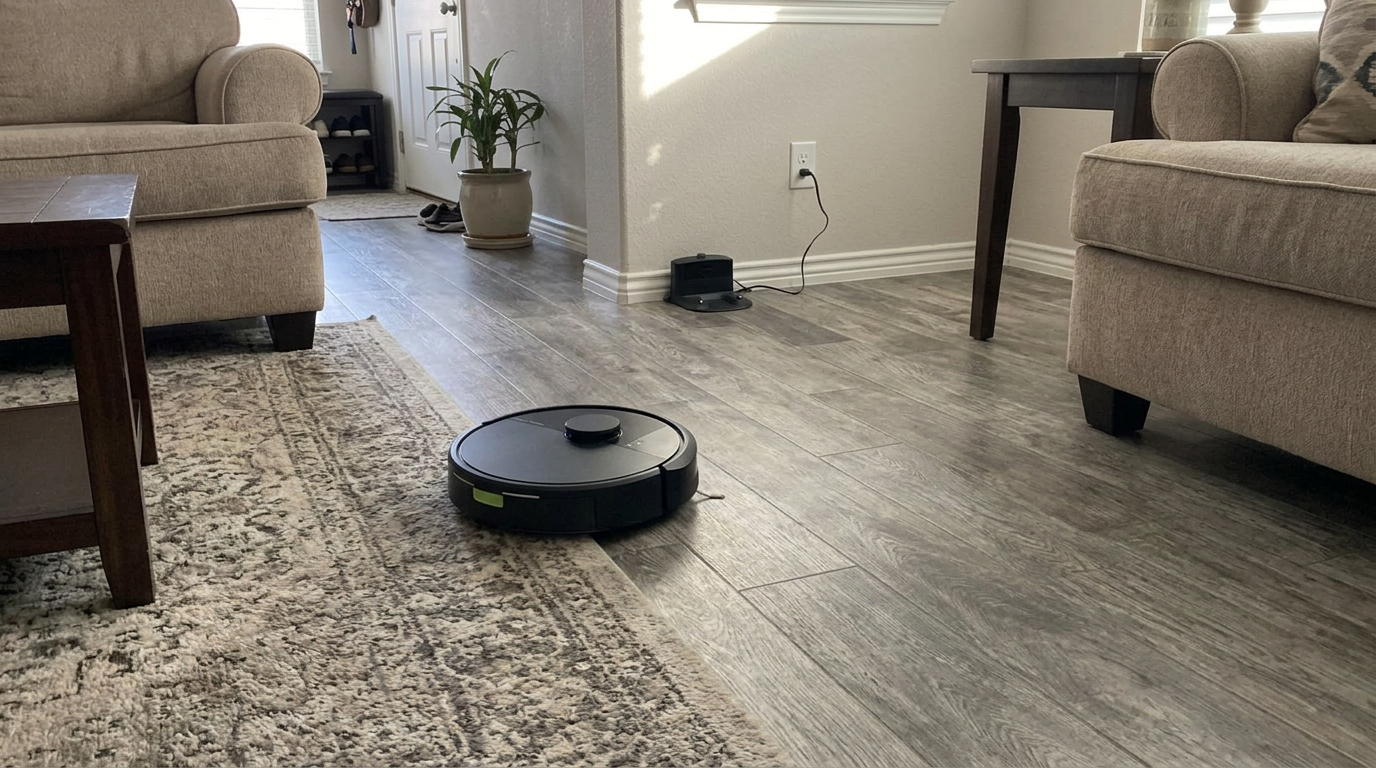
LiDAR mapping lets both robots clean room by room in neat rows.
Obstacle avoidance is the clear weak spot for both. Neither has a front camera or structured-light sensor, so they rely on LiDAR and the bumper, and the three-month family test gave clutter handling just 1.5 out of 10.
Owners report the same thing in plain words. Combo owners mention getting stuck on small rugs, cords and furniture legs, and Vac owners describe it climbing office chair wheels and catching on rug edges.
Both robots are listed as handling door sills of about 0.6 inch. If your home has taller raised doorways, check them before you buy either one.
Clutter tip: Do a two-minute pickup of cables, socks, toys and pet bowls before every run. With no camera on either robot, this one habit prevents most rescues.
Dock tip: Place the dock on hard floor against a wall with clear space on both sides. A cramped dock is the most common reason a robot circles around looking for home.
Battery, charging and runtime
iRobot rates the 105 Vac for up to 200 minutes on its gentlest setting. Product listings for the Combo vary, and several put it well below that, which makes sense since the pump and pad add work.
Lab results are a useful reality check. The 105 Vac covered an estimated 630 square feet per charge in testing, compared with an average of roughly 1,015 square feet.
That lines up with owners. One with a 1,600 square foot home says it cannot finish in one pass, and several Combo owners title their reviews around short runtime.
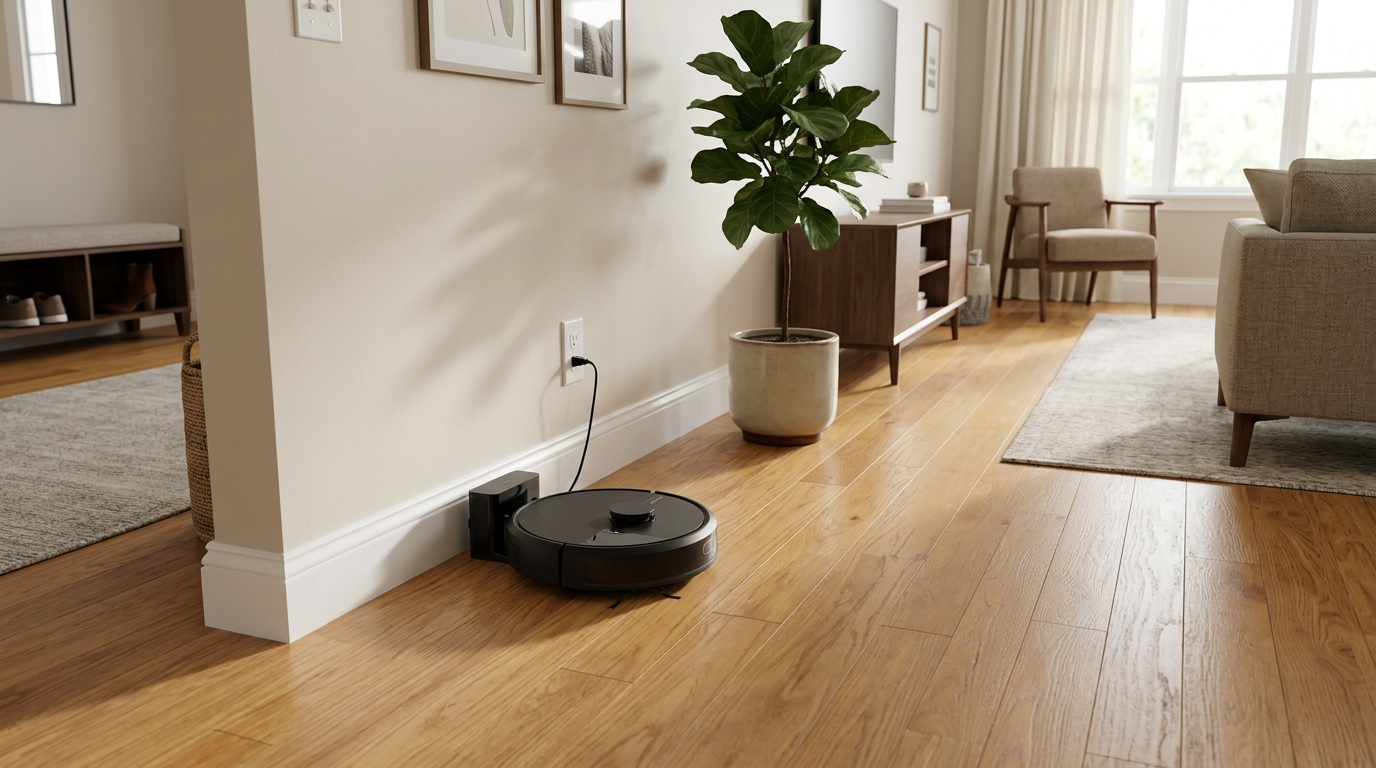
The 105 Vac heads back to its dock to recharge, then finishes the job.
Both robots support recharge and resume. When the battery runs low, they head home, top up and continue where they stopped.
The catch is the wait. Owners say it can take a few hours before the robot heads back out, so a whole-home clean on a larger floor plan can stretch across most of a day.
In a small or midsize apartment this barely matters. In a bigger house, I would split the home into two or three scheduled jobs, which is easy to do in the app.
Charging tip: Schedule big runs for the morning after you leave. That gives either robot time to finish, recharge and resume before you are home.
Warranty tip: Both robots carry a one-year limited warranty. Use yours daily during the return window, because battery and sensor faults tend to show up early.
App, mapping and smart home
Both robots run on the same Roomba Home app, so the feature list is nearly identical. You get room editing, schedules, keep-out zones, a choice of passes and suction per job, and up to three saved maps for multi-level homes.
The Combo adds mop controls, including mode, water level and SmartScrub. The 105 Vac highlights spot cleaning, which works one small area for up to five minutes.
Both work with Alexa, Siri and Google Assistant, and you can start a job from the robot’s buttons too. Owners like being able to watch progress live and get a notification when the job is done.
Both robots use the same Roomba Home app, with mop settings added on the Combo.
The app is also where most complaints live. Testers called the interface clunky, one lab saw the first firmware update take close to an hour, and some long-time owners miss the older app.
Connection problems come up in reviews of both models. Owners describe failed Wi-Fi setups, robots dropping off the network and voice commands that do not always go through.
One more detail caught my eye. A Combo owner says the robot will not accept Wi-Fi passwords with special characters, which is worth knowing before you start setup.
Wi-Fi tip: Both robots connect on 2.4 GHz only. If setup fails, temporarily split your router’s 2.4 GHz and 5 GHz networks or create a 2.4 GHz guest network, then switch everything back.
Map tip: If a robot starts cleaning the wrong rooms or skipping areas, delete the map and let it map again. Owners say a fresh map fixed their scheduling problems.
Noise
With the same motor and brushes, these two sound alike while vacuuming. Owners of both mostly describe them as quiet compared with an upright, especially on the lower power levels.
The Combo gives you one extra quiet option in mop-only mode, since it is wiping rather than vacuuming. That makes it a nice choice for a nap-time run in the kitchen.
Neither one has a loud self-empty cycle in these charge-only versions. If noise matters a lot, that is one more quiet benefit of the small dock.
Quiet tip: Use the lowest suction level for daytime runs while you work from home, and schedule full-power cleans for when the house is empty.
Maintenance and running costs
With charge-only docks, both robots need a little more hands-on time than a self-emptying model. You empty the bin yourself, usually after every run or two.
The 105 Vac is the easier of the two to live with. It has a dust-only bin, and the job is pop, tip and click back in.
The Combo adds water chores. You fill the small tank before mop runs, empty it after each job, and rinse or swap the microfiber pad, and some owners mention the bin filling up faster than they expected.
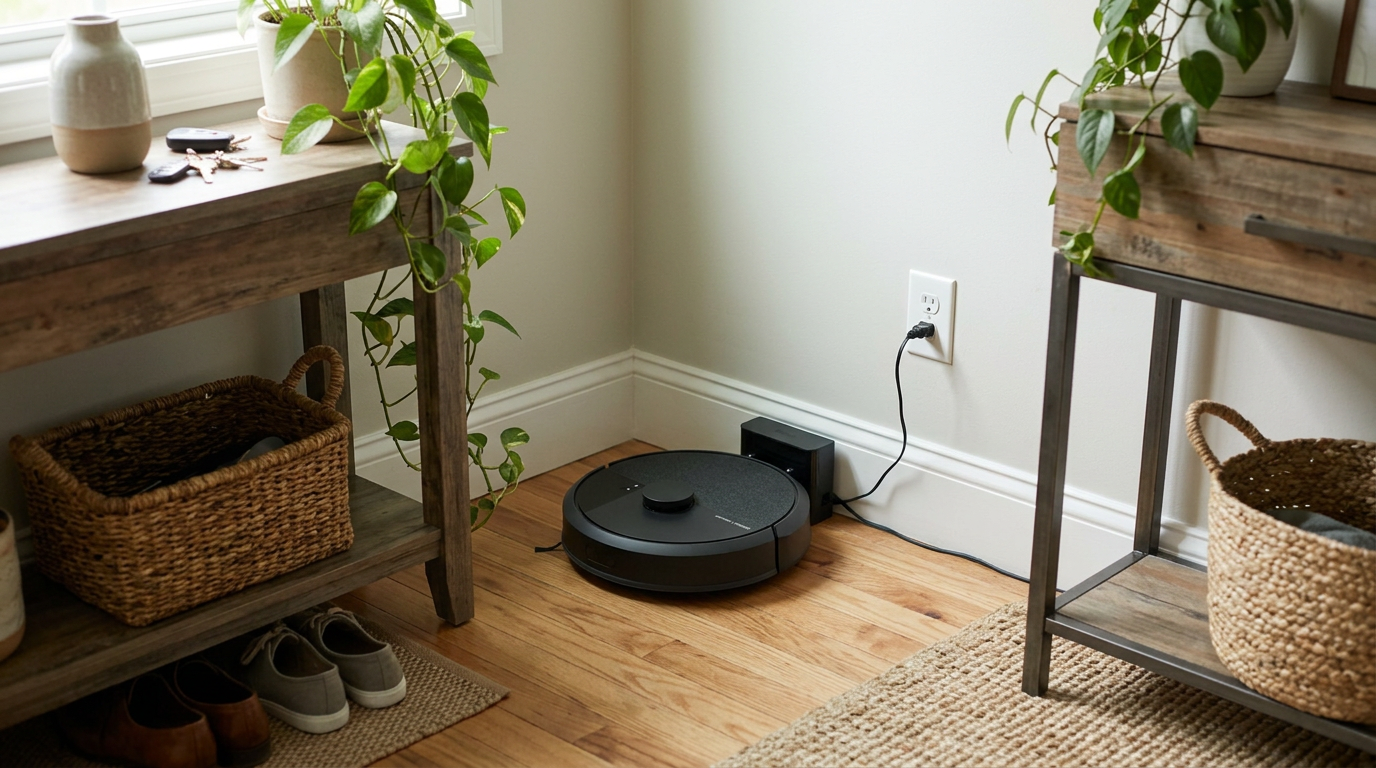
The 105 Vac’s dust-only bin is quick to empty after each run.
Running costs are low on both. There are no dust bags to buy with these docks, and you replace filters, side brushes and, on the Combo, mop pads every few months.
iRobot recommends cleaning the filter once a week, or twice a week with pets. That small habit keeps suction strong on either robot.
Independent lab results
The 105 Vac and 105 Combo went through tests at two different independent labs, plus a three-month home test of the whole 105 family. Because the methods differ, I read each number against its own lab’s average.
Since both robots share the same vacuum hardware, the vacuum results from one lab are a fair guide to the other robot as well. The mop results, of course, only apply to the Combo.
Roomba 105 Vac vs lab average
Roomba 105 Combo results
Higher is better for carpet cleaning, pet hair pickup and the scores, and lower is better for hair tangled. The pattern is clear: solid everyday vacuuming, weak hair and clutter handling, and a mop that is fine for light upkeep.
What owners say
The 105 Combo holds a 3.9-star average from more than 820 ratings, with 58% five-star reviews. The 105 Vac sits at 3.3 stars from more than 1,400 ratings, and 28% of those are one-star.
That gap surprised me, given how similar the robots are. Reading through the reviews, the Vac’s low scores come mostly from reliability, battery and app issues rather than cleaning results.
Owners love switching between vacuum, mop and both, and say it keeps busy hard floors noticeably cleaner day to day.
Automatic carpet avoidance comes up again and again, with owners relieved they do not need to set up no-mop zones.
Mopping is described as maintenance rather than scrubbing, and the small tank needs refilling before most runs.
Upgraders from older bump-and-go models praise the LiDAR rows, easy scheduling and strong pickup on carpet.
A vocal group reports battery life dropping after a few months, and some describe sensor errors or a unit that stopped working within a year.
Owners of both mention Wi-Fi dropouts, a clunky app and the robot getting caught under couches or on rug edges.
Reviews cannot tell you exactly how often a problem happens. They do show you what to test during your return window.
Which one should you buy?
After weighing everything, this comes down to one question: what is on your floors? The vacuum is identical, so the mop is the whole decision.
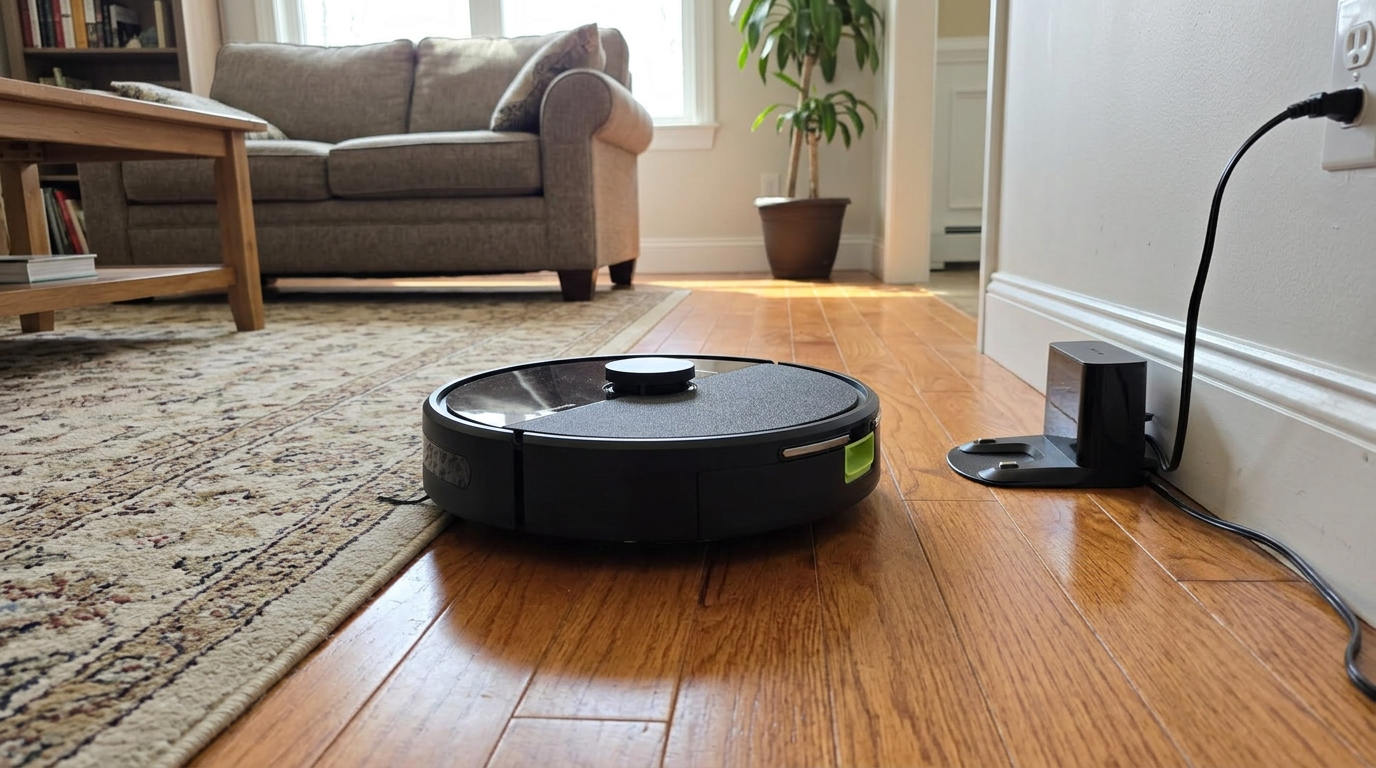
For homes with mostly hard floors, the 105 Combo is the more complete cleaner.
- Most of your floors are hardwood, tile or vinyl
- You want a daily wipe without getting out the mop
- You like having vacuum, mop or both in one robot
- You want the better-rated of the two
- Your home is mostly carpet
- You need a mop that scrubs sticky spills
- You do not want to fill and rinse anything
- Your home is mostly carpet or rugs
- You only want a vacuum
- You want the simplest daily routine
- You need a second robot for a carpeted floor
- You want your hard floors mopped
- You have long-haired pets on deep carpet
- You have a large home and want one-pass cleans
Pick the 105 Combo for hard floors that need a daily vacuum and wipe. Pick the 105 Vac for carpeted homes where a mop would just sit in a drawer.
My pick is the Roomba 105 Combo. It vacuums exactly as well as the 105 Vac, adds a useful daily mop that keeps your rugs dry, and it has the noticeably happier owners. You can always remove the pad and run it as a plain vacuum.
The Roomba 105 Vac is still a sensible choice for mostly carpeted homes, where a mop adds nothing. Just expect the same weak spots with long hair, clutter and runtime.
Whichever you choose, clear the floor before each run, check the brush for hair every week and give the dock some breathing room.
Roomba 105 Combo vs Roomba 105 Vac specifications
From the Amazon listings, iRobot specifications and independent lab tests. Checked November 6, 2026.
| Roomba 105 Combo | Roomba 105 Vac | |
|---|---|---|
| Claimed suction | 7,000 Pa, 4 power levels | 7,000 Pa, 4 power levels |
| Cleaning system | 4-stage, including mop pad | 3-stage |
| Cleaning modes | Vacuum, mop, vacuum and mop | Vacuum only |
| Mopping | Microfiber pad, micro-pump, 3 water levels, SmartScrub | None |
| Carpet handling | Detects and avoids carpet when mopping | Vacuums all floors |
| Water tank | About 7 fl oz, built into the bin | None |
| Main brush | Multi-surface bristle brush | Multi-surface bristle brush |
| Side brush | 1 edge-sweeping brush | 1 edge-sweeping brush |
| Navigation | ClearView LiDAR | ClearView LiDAR |
| Obstacle avoidance | LiDAR and bumper, no camera | LiDAR and bumper, no camera |
| Maps | Up to 3, rooms and keep-out zones | Up to 3, rooms and keep-out zones |
| Rated runtime | Varies by listing, shorter when mopping | Up to 200 min, recharge and resume |
| Lab coverage per charge | Not tested | About 630 sq ft |
| Door sills | About 0.6 in | About 0.6 in |
| Dock | Charge only | Charge only |
| Robot size | 13.2 x 13.2 x 4.1 in | 13.2 x 13.2 x 4.1 in |
| Weight | About 6.3 lb | About 6.2 lb |
| Wi-Fi | 2.4 GHz only | 2.4 GHz only |
| Voice control | Alexa, Siri, Google Assistant | Alexa, Siri, Google Assistant |
| Warranty | 1 year limited | 1 year limited |
| Amazon rating | 3.9 (820+ ratings) | 3.3 (1,400+ ratings) |
How I researched and compared them
This is a researched comparison built on published data, not a long-term test in my own home.
I started from both Amazon listings, the iRobot specifications and the owner’s guide the two robots share. Then I read through the most helpful owner reviews for each, more than 2,250 ratings in total.
I also used independent studio lab tests and a three-month home test of the 105 family. Because they come from different testers, I compare each result to its own average, and I treat single owner reports as warning signs rather than proof.
- Cleaning: hard floor pickup, carpet, pet hair and tangling.
- Mopping: pad design, water control and carpet protection.
- Navigation: mapping, coverage speed, obstacles and docking.
- Ownership: battery, noise, app, maintenance and long-term reliability.
Roomba 105 Combo vs 105 Vac FAQ
What is the difference between the Roomba 105 Combo and the 105 Vac?
The Combo adds a microfiber mop pad and a small water tank built into the bin, plus mop and vacuum-and-mop modes. Otherwise both share the same 7,000 Pa suction, brushes, LiDAR navigation, app and size.
Does the Roomba 105 Combo vacuum as well as the 105 Vac?
Yes. Both use the same suction, brushes and navigation, and you can remove the mop plate to run the Combo as a vacuum-only robot.
Does the Roomba 105 Vac mop?
No. It is a vacuum-only robot with no water tank or mop pad. If you want mopping in the 105 family, you need the Combo.
Will the Roomba 105 Combo get my rugs wet?
It should not. It detects carpet and stays off rugs whenever the mop pad is attached, which also means rugs are skipped in that run. Run a vacuum-only job to clean them.
Do these robots empty themselves?
Not in these versions. Both come with a charge-only dock, so you empty the bin by hand. iRobot also sells both robots with an AutoEmpty dock.
Which is better for pet hair?
They are the same here. Both keep up with loose fur on hard floors with daily runs, but both struggled with flattened hair in carpet and wrapped most long hair around the brush in lab testing.
Do they work with 5 GHz Wi-Fi?
No. Both connect only on 2.4 GHz. If your router combines both bands under one name, split them temporarily during setup.
Do they work with Alexa, Siri and Google?
Yes. Both robots work with Alexa, Siri and Google Assistant, and you can also start a clean from the app or the robot’s buttons.
Can I map more than one floor?
Yes. Both can save up to three maps, so you can carry the robot upstairs and it will recognize the floor it is on.


- Amazon product listing for the iRobot Roomba 105 Combo (ASIN B0DWG2BB7X), November 2026
- Amazon product listing for the iRobot Roomba 105 Vac (ASIN B0DX6KZR9T), November 2026
- iRobot specifications and the Roomba 105 Vac and Combo owner’s guide
- Independent studio lab tests of the Roomba 105 Vac and Roomba 105 Combo
- Three-month home test of the Roomba 105 family
- Verified Amazon owner reviews of both models
- Comparison published.