Philips 2200 Series review: simple fresh-bean coffee, with one big catch
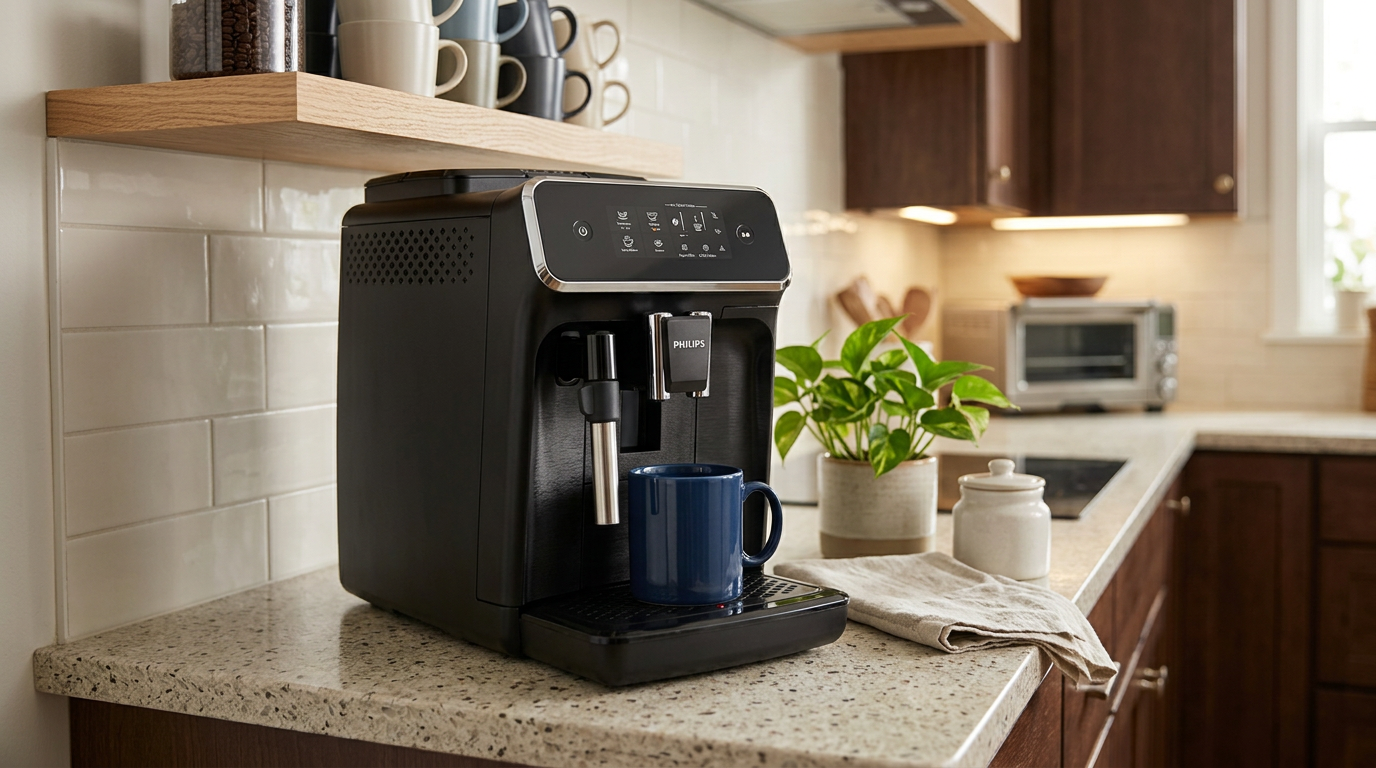
The Philips 2200 Series Fully Automatic keeps things refreshingly simple: fresh-ground coffee, hot espresso and a manual frother, without paying for features many people never use.
In this review
The Philips 2200 is an easy recommendation for people who mainly drink black coffee or espresso and want fresh beans without complexity. If you want one-touch lattes, this is the wrong version.
At a glance
Pros and cons
- Coffee is reported to come out properly hot
- Very simple touch controls
- Removable brew group
- Durable ceramic grinder
- Front-access water tank and drip tray
- Strong value for a bean-to-cup machine
- Fewer milk parts to clean
- No one-touch milk drinks
- Mostly plastic construction
- Pump is fairly loud
- Only three levels per setting
- No user profiles
- Finest grind settings have limited use
Who it’s for
- Mostly drink espresso or black coffee
- Want a machine that is simple to learn
- Are moving up from pods or drip coffee
- Don’t mind steaming your own milk
- Value practicality over premium materials
- Want one-touch cappuccinos or lattes
- Need a very quiet machine
- Want latte-art microfoam
- Share the machine with people who want saved profiles
- Want metal construction
The Philips range at a glance
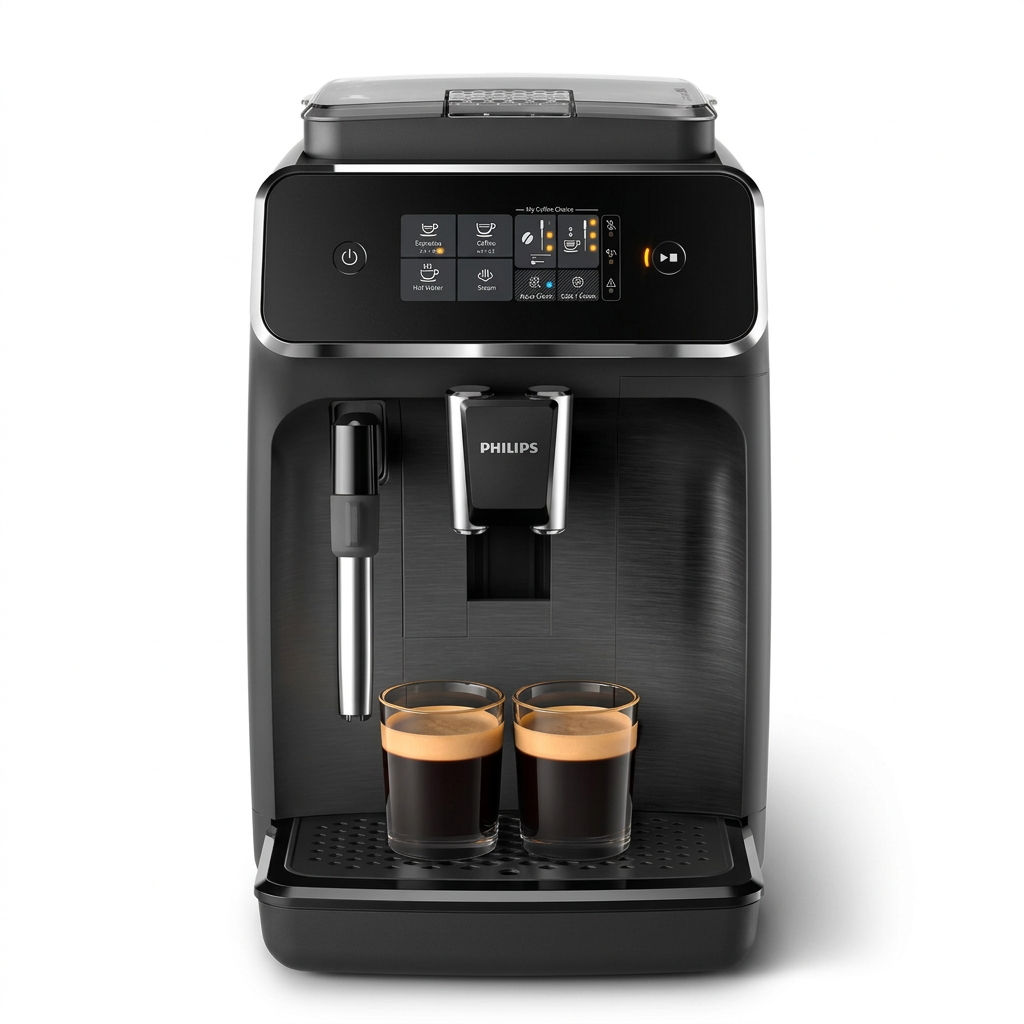
Philips 2200 Series
The simple choice: espresso, coffee and hot water at a touch, with a manual frother for milk.
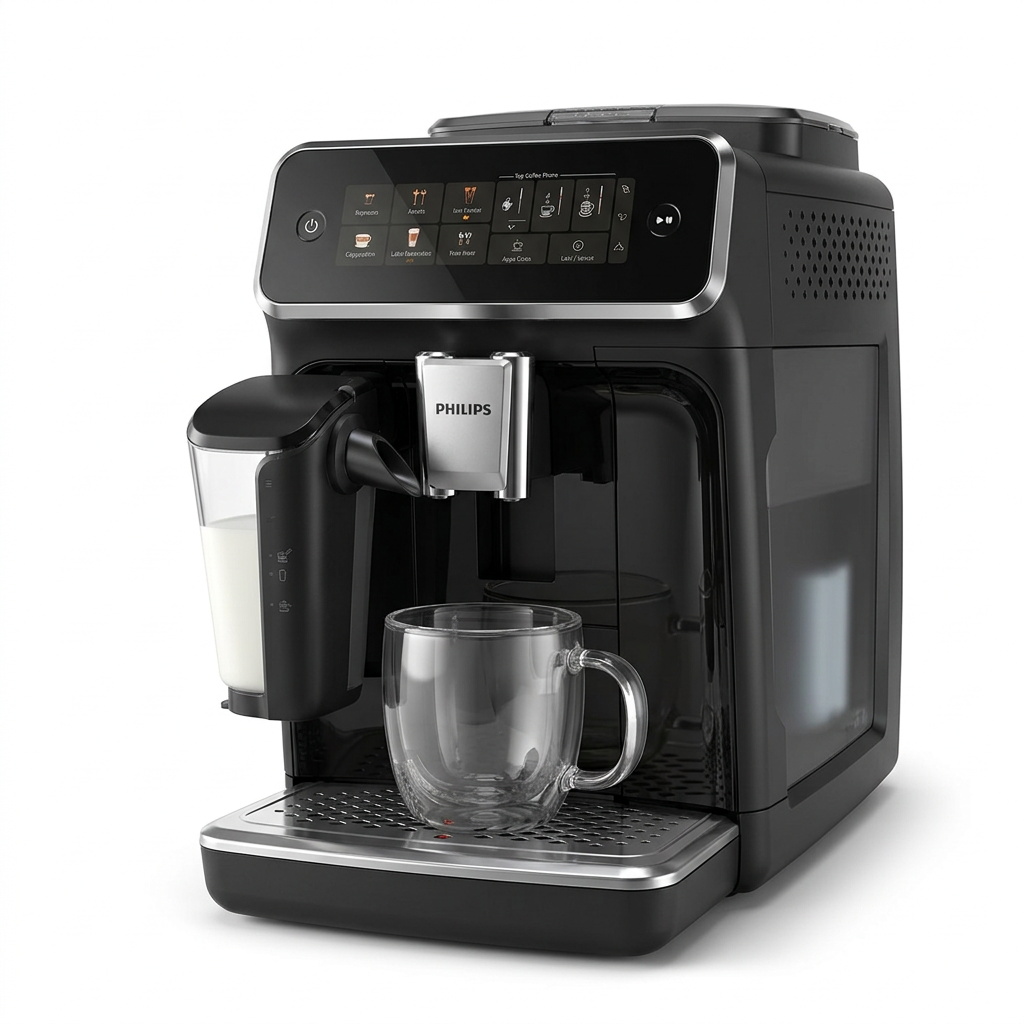
Philips 3300 Series
Six hot and iced drinks, the LatteGo milk system and SilentBrew for quieter mornings.
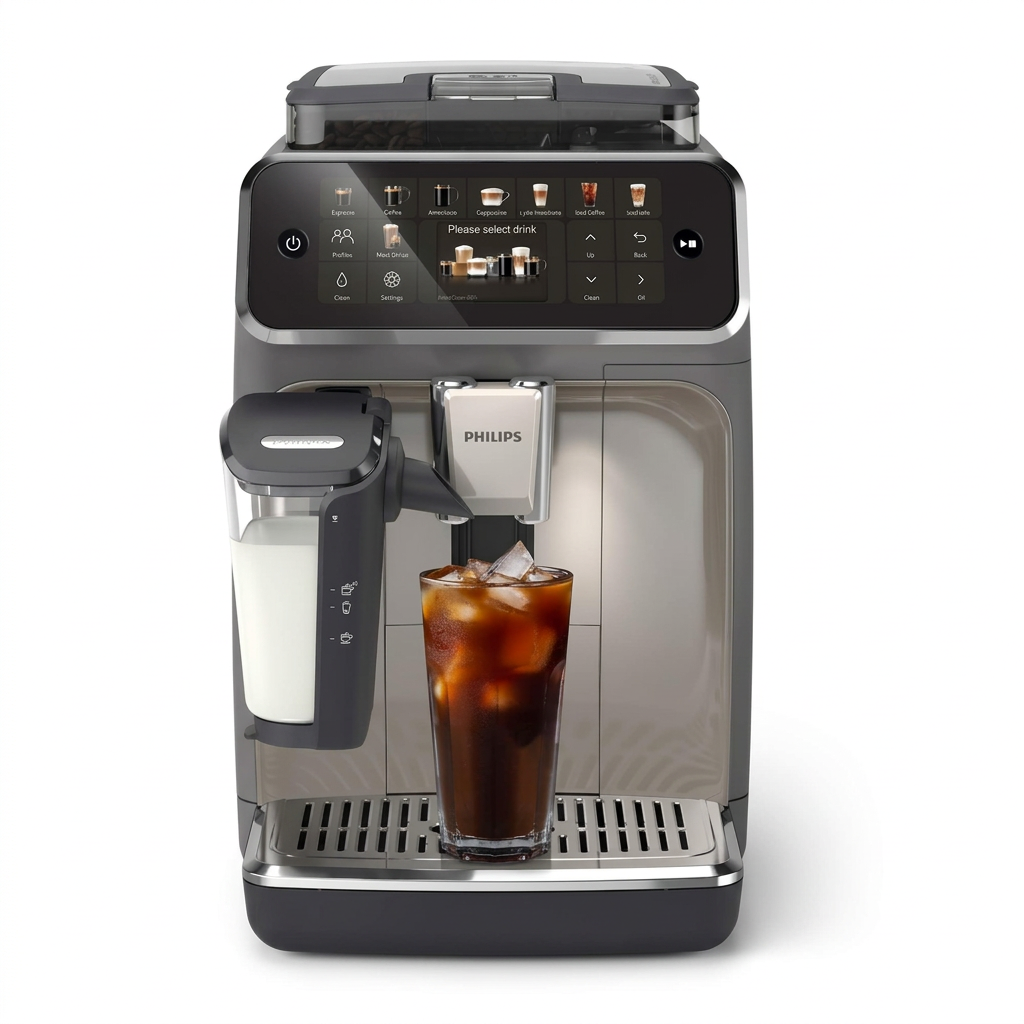
Philips 5500 Series
Twenty hot and iced recipes, a color display and saved profiles for everyone in the house.
Click through to see the current price on Amazon.
How I reviewed this machine
I want to be upfront about what this review is.
I did not run this machine in my own kitchen for this article, so you won’t find invented stories about my mornings with it here.
What I did was go through the Philips specification sheets, the support and care material, independent test results, and a large body of feedback from people who own one.
Then I weighed all of that against the one question that matters: is this a machine you’ll be happy to use every day?
Where a detail comes from a published test or from owners, I say so.
Where something is my own judgment, I say that too.
This matters because the 2200 is one of those products that looks simple on paper and gets more interesting once you study what owners actually complain about.
Most of those complaints turn out to be predictable, and many are avoidable if you know about them before you buy.
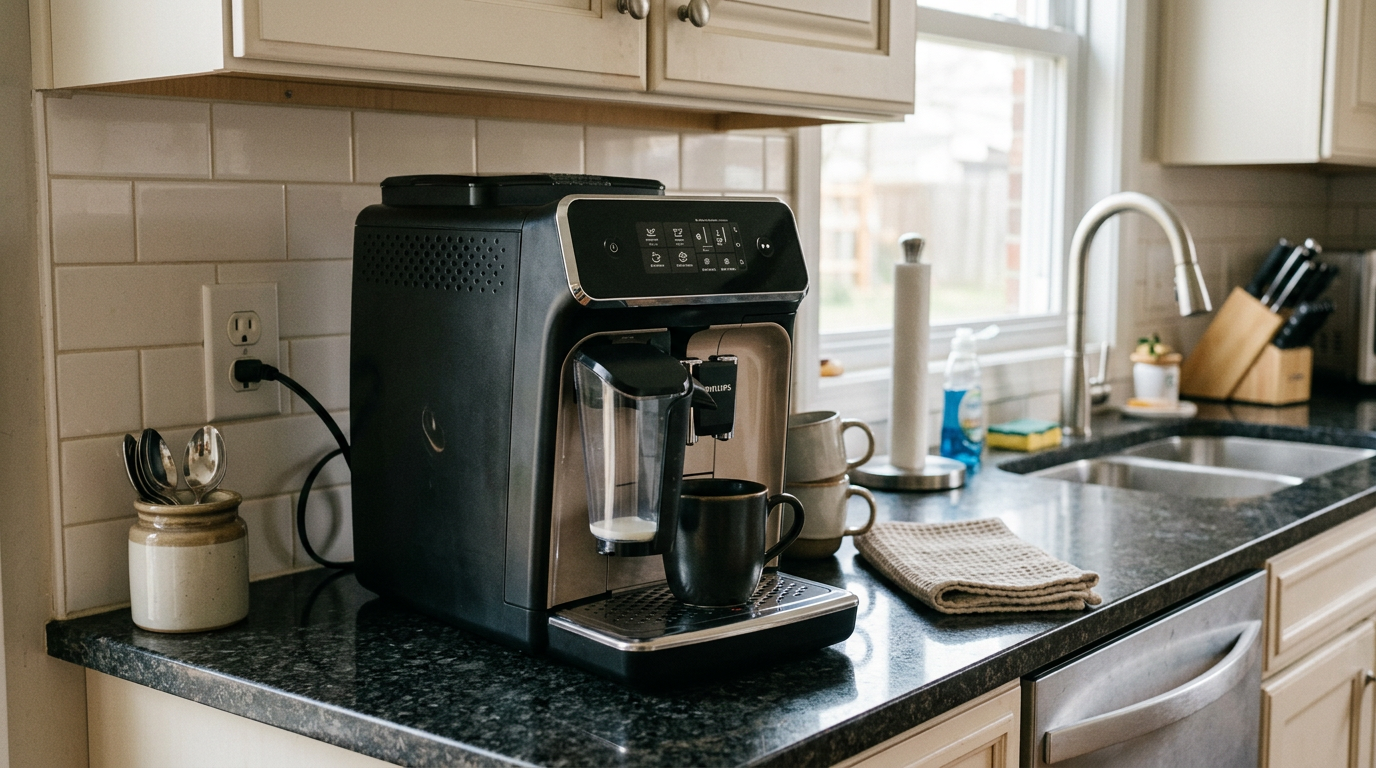
The 2200 is built to sit out on the counter and be used daily.
What the Philips 2200 Series actually is
The Philips 2200 is a bean-to-cup machine with a built-in grinder, a 15-bar pump and a compact plastic body.
You pour beans in the top, fill the tank at the front, and press a button.
The machine grinds, tamps, brews and dumps the used puck into an internal bin on its own.
The version I’m covering here is the EP2220/14, which uses the Classic Milk Frother.
That’s an important detail, because Philips also sells a 2200 with the LatteGo milk carafe, and the two are easy to mix up when you’re shopping.
This one does not make a cappuccino at the touch of a button.
It makes espresso and coffee automatically, then gives you a steam wand so you can froth milk yourself.
If you’re picturing a machine that does everything for you, including the milk, this isn’t that machine.
If you mostly drink coffee black, or you don’t mind spending under a minute steaming milk, the simpler design starts to make a lot of sense.
Fewer milk parts also mean fewer parts to clean and fewer things to go wrong.
Design, size and build quality
The 2200 measures about 9.7 inches wide, 14.6 inches tall and 17.1 inches deep.
The width is friendly, but the depth deserves attention.
At just over 17 inches front to back, it will fill a standard counter, and you’ll want a little breathing room behind it for the power cord.
Height matters as well, because you need clearance above the machine to pour beans into the hopper.
Measure the gap under your upper cabinets before you order, and allow a few extra inches for your hand and the bag.
The body is almost entirely plastic, and independent testers were blunt about that.
One test noted that even the drip tray cover, a part that is often metal on pricier machines, is plastic here.
I don’t see that as a dealbreaker at this level, but you should expect a practical appliance rather than a showpiece.
The good news is that the matte black finish and clean front panel look more modern than the build material suggests.
One of the nicer details is the water tank, which testers praised for being made of a slightly flexible plastic that feels secure in the hand.
It holds 60.9 fluid ounces and loads from the front, so you can refill it without dragging the machine forward.
The grounds container and drip tray are also accessed from the front, which is what you want on a counter with cabinets above it.
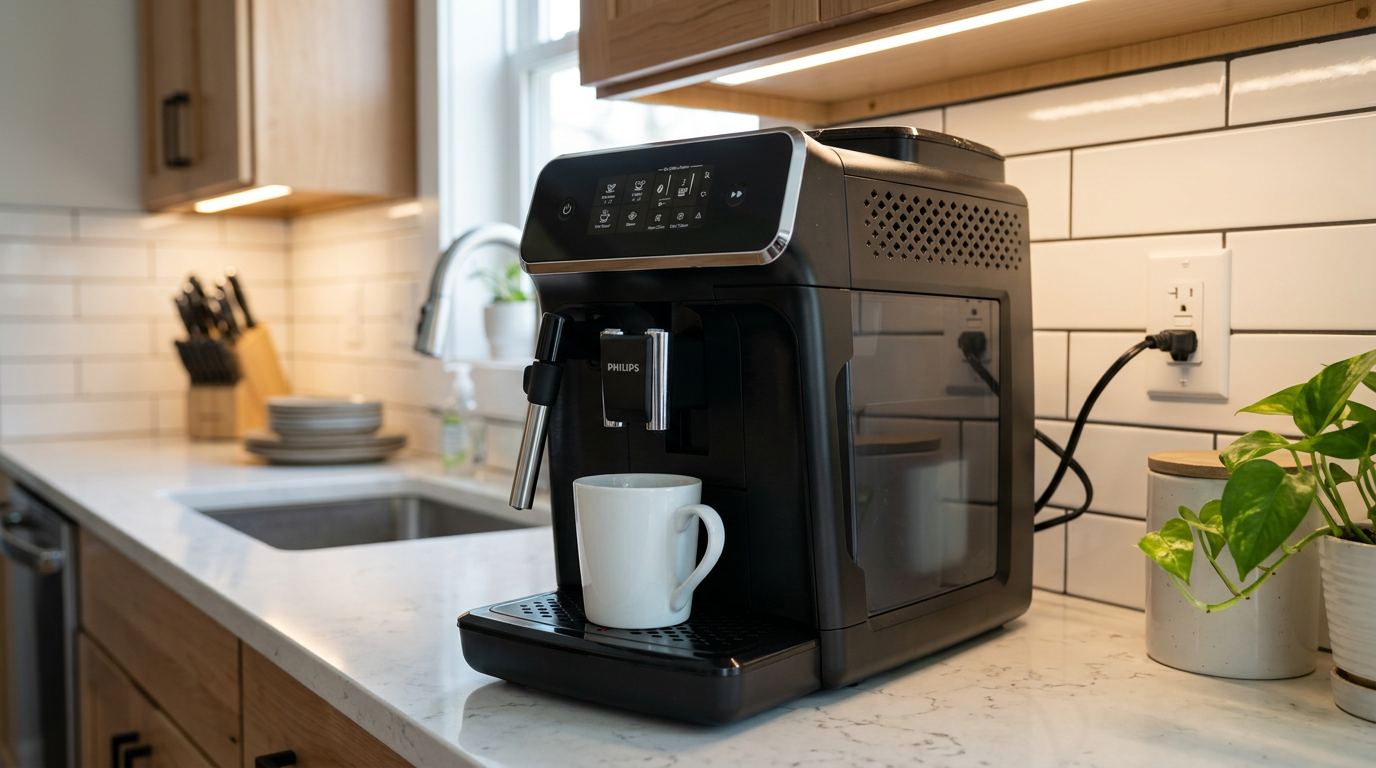
Front access to the tank and drip tray makes daily refills simple.
Setup and first use
Setup is straightforward by the standards of this category.
Philips includes a water hardness test strip, a measuring scoop and a tube of grease for the brew group.
The test strip is worth using on day one, because it tells the machine how often to ask for descaling.
If you install the AquaClean filter, the machine tracks it and prompts you when it’s time for a new one.
There’s one quirk I want to flag.
Published testing found that Philips sets the factory coffee volume lower than you might expect, so your first drinks may come out shorter than you’d like.
That’s easy to change, but the process isn’t fully obvious, and the tester needed the manual to do it.
My advice is to keep the manual nearby for the first hour.
Run a few rinse cycles, discard the first couple of drinks, and don’t judge the machine on its very first cup.
A new grinder and a new brew path both need a little time to settle in.
Coffee quality: espresso and everyday coffee
Temperature
The headline finding from independent testing is positive: the coffee comes out properly hot.
That’s a real win, because lukewarm coffee is one of the most common complaints about entry-level automatic machines.
Philips says its Aroma Extract system holds brewing water between about 194°F and 208°F while managing the flow rate.
Espresso and crema
The same testing described the espresso as good rather than exceptional.
A lighter roast produced a fairly pale shot with modest crema, though the tester noted the roast may have played a part.
I think that’s the fairest way to set your expectations.
This Philips machine makes a satisfying, convenient cup from fresh beans.
It does not replace a skilled home barista with a good manual setup, and owners coming from that world tend to notice the difference.
One owner who moved over from a manual machine described the espresso as decent but a step down, while still valuing the automation.
For someone coming from pods or a drip brewer, the jump in freshness and body is likely to feel far bigger.
Getting the most from your beans
Your bean choice will do a lot of the heavy lifting.
A medium or medium-dark roast is the safest place to start, because it’s more forgiving and tends to give a fuller-tasting shot.
I’d avoid very dark, shiny, oily beans, since those oils can gum up the grinder and brew path on any automatic machine.
Starting point: Published testing landed on grind setting 3, the strongest aroma setting, the hottest temperature and a short pour of around 0.8 ounces for espresso.
Use that as a baseline for espresso, then lengthen the pour if you prefer a milder drink.
The ceramic grinder and its 12 settings
The 2200 uses a 100% ceramic flat burr grinder with 12 adjustment steps.
Philips rates the grinder for at least 20,000 cups, which is a long life for a daily household machine.
How useful are 12 settings?
Twelve steps sounds like a lot of control, and on paper it is.
In practice, testers warned that the very finest settings aren’t really worth chasing on an affordable machine like this.
Going too fine can increase the risk of slow extraction, blockages and strain on the pump.
I’d treat the bottom of the range with caution and make small changes rather than big jumps.
Adjusting the grind
You’ll find the adjustment knob inside the bean compartment, and you should only turn it while the grinder is running.
That’s easy to forget, and it’s the kind of small rule that protects the machine over the long term.
The Aroma Seal over the hopper helps keep the beans fresher and also trims some grinder noise.
The hopper holds about 9.7 ounces, which is plenty for most households, though beans sitting there for weeks will still go stale.
If you only drink one cup a day, I’d keep the hopper partly full and top it up more often.
There is also a bypass for pre-ground coffee, handy when a guest wants decaf.
Milk frothing with the Classic Milk Frother
This is the section that should decide whether the 2200 is right for you.
How the frother works
The Classic Milk Frother is a simple steam wand with a sleeve that pulls air into the milk.
You put the tip into a pitcher of milk, press the steam button, press start, and wait for the milk to heat and foam.
Independent testing found that this produced a decent amount of usable froth without any real barista skill.
That’s a good outcome for a beginner.
What the wand can’t do
The same testing also pointed out the wand’s limits: it has a small range of movement and a limited amount of steam.
That means you shouldn’t expect glossy, latte-art-ready microfoam every time.
For a comfortable morning cappuccino, it should do the job well.
For anyone who wants to pour rosettas, it will probably feel limiting.
Technique and cleanup
There’s a practical side to consider, too.
The wand needs a quick wipe and a short purge after each use, because dried milk is stubborn and can block the tip.
The frother has only two parts and can go in the dishwasher, which makes the deeper cleaning painless.
Use a small pitcher with a spout that fits comfortably under the wand, and pull the frother out to the side when you steam.
Philips says semi-skimmed and full-fat cow’s milk, soy milk and lactose-free milk have been shown to froth well on its machines.
Cold milk straight from the fridge will generally give you more time to build foam before it gets too hot.
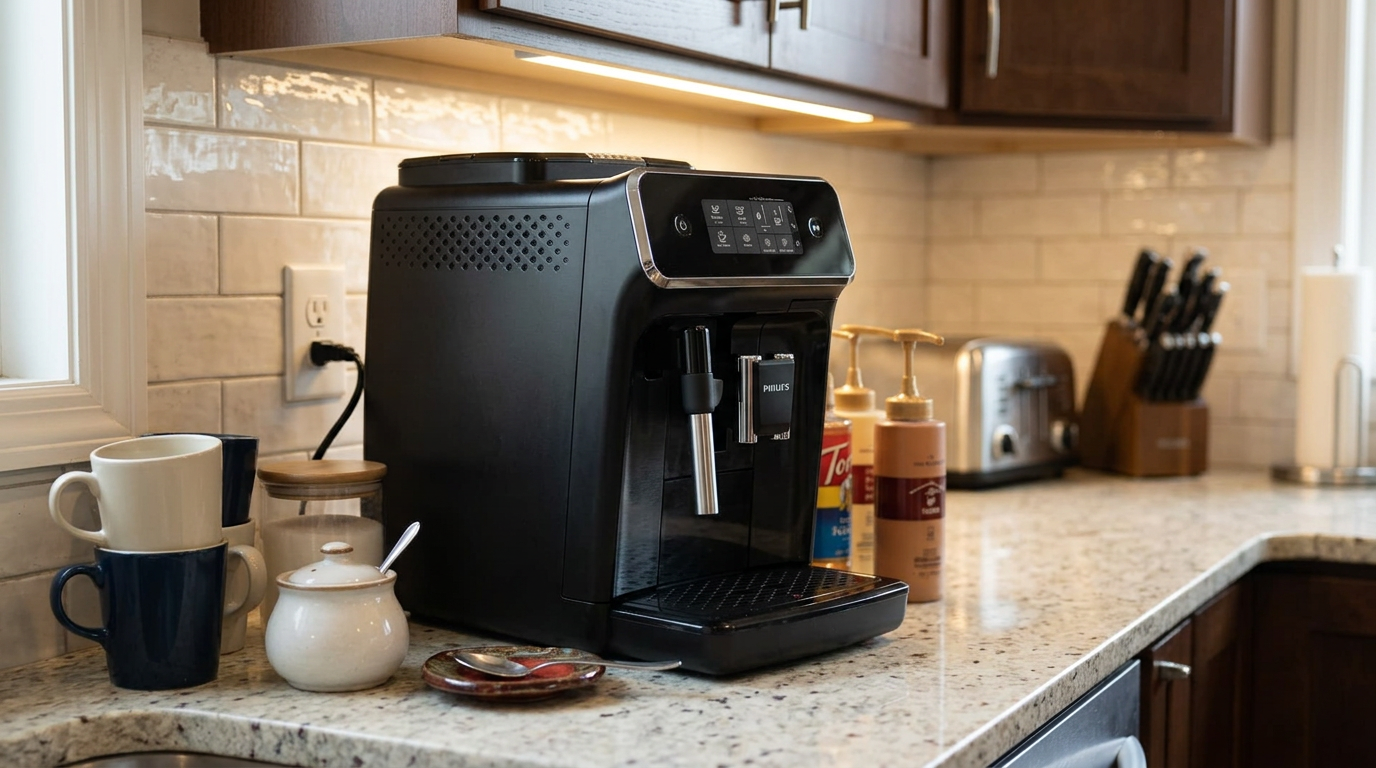
The Classic Milk Frother keeps milk drinks simple but hands-on.
Controls and customization
The front panel on the 2200 uses touch-sensitive icons, and this is one of the machine’s strongest points.
There isn’t a full screen with menus to dig through.
You choose espresso, coffee, hot water or steam, then tap to set strength and quantity.
Each setting has three levels, and the backlit icons make it obvious what you’ve selected.
Independent testers specifically called the operation simple and intuitive, and I can see why that matters for a household where several people share a machine.
You can also adjust temperature across three levels and brew two drinks at once when you’re not using milk.
A memo function lets you save your preferred drink length, but there are no separate user profiles.
If two people in the house want very different coffee, someone will be tapping a few extra icons each morning.
Honestly, I consider that a fair trade for a machine this easy to understand.
The spout adjusts between about 3.3 and 5.7 inches, which suits espresso cups and many regular mugs.
Very tall travel mugs may not fit, so check yours against that range.
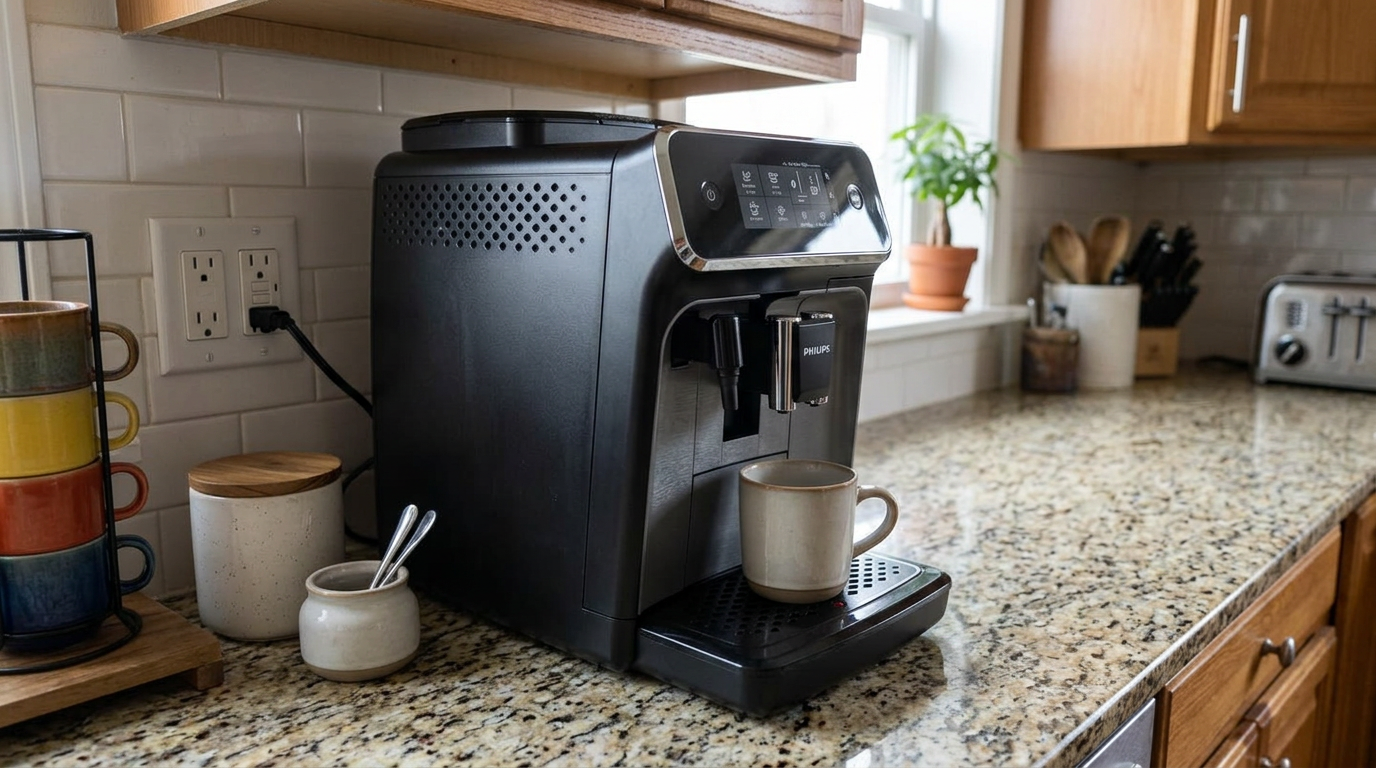
A simple touch panel makes the 2200 easy for the whole household.
Speed and noise
Nobody buys an automatic machine for silence, but noise is worth discussing here.
Testing described the grinder as high-pitched but only moderately loud.
The pump was the bigger offender and was called out as noticeably louder than the grinder.
If you brew at 6 a.m. in an open-plan home, that’s worth keeping in mind.
The Aroma Seal helps with grinder noise, but it does nothing for the pump.
Warm-up is another small point.
One owner described the machine as a little slow to start, and the rinse cycles at startup and shutdown add a bit more waiting and a bit more water in the drip tray.
Those rinses are normal and help keep the coffee path clean, so I wouldn’t try to avoid them.
I’d just plan on emptying the drip tray regularly, especially in the first few weeks while you learn its rhythm.
Cleaning and maintenance
Upkeep is the area where expectations matter most.
The brew group on the Philips 2200 is fully removable, which I consider essential on a machine you’ll own for years.
You turn off the machine, open the service door, pull the unit out and rinse it under the tap.
Testers called the routine sensible and reliable, and I think that’s accurate.
The drip tray and frother are dishwasher-safe, and the grounds container holds about 12 pucks before it needs emptying.
What “fully automatic” really means
Owner feedback adds some useful nuance here.
Some buyers describe maintenance as more involved than they expected from a “fully automatic” machine.
The appliance does a lot, but it still needs a person to rinse it, grease it and descale it.
The included lubricant is there for a reason, so follow the manual’s schedule for greasing the brew group.
If you skip that, the moving parts can begin to stick or complain.
Descaling and filters
Philips also has a guided descaling routine that walks you through the process.
With AquaClean filters replaced when prompted, the company claims you can go up to 5,000 cups without descaling.
That figure assumes eight filter replacements, so it’s not free or maintenance-free.
It also means you’ll want to budget for filters over time if you choose that route.
- Daily: Empty the drip tray and grounds bin when needed, and purge and wipe the wand after steaming.
- Weekly: Remove and rinse the brew group, then let it dry before refitting it.
- Regularly: Lubricate the brew group on the schedule in your manual.
- When prompted: Replace the AquaClean filter or run the descaling cycle.
What daily ownership looks like
Spec sheets don’t tell you much about living with an appliance, so here is how the published details translate into an ordinary week.
Based on the design, a typical morning should be short and predictable.
You switch the machine on, let it heat and rinse, place your cup under the spout, and tap the drink you want.
The rinse sends a little water through the coffee spout, so keep a cup or the drip tray in position when it starts.
After that, the machine grinds and brews on its own, leaving you free to make toast or pack a lunch.
If you want a cappuccino, you add one more step.
Brew your espresso, pour cold milk into a small pitcher, steam it with the wand, then spoon or pour the foam over the coffee.
Once you’ve done that a few times, I’d expect it to become an easy habit rather than a project.
The less glamorous jobs come at the end of the day.
The drip tray and grounds container will need emptying, and the water tank is best rinsed and refilled with fresh water rather than topped up for days.
At the weekend, it’s worth setting aside a few minutes to take out the brew group and rinse away coffee residue.
That is the rhythm you’re signing up for.
It’s far less work than a manual espresso setup, but it’s more involved than dropping a pod into a brewer.
What you can make with it
Although the panel lists only a small number of drinks, you can get more variety than that suggests.
Espresso is the obvious starting point, and the double-cup option makes it easy to brew a stronger drink or two shots at once.
The coffee button makes a longer drink, and it’s the one I’d expect most American households to use every day.
If you like a smoother cup with less intensity, try making an espresso and adding hot water from the machine for an Americano-style drink.
That approach can taste cleaner than simply pushing a long coffee through the same dose of grounds.
For a cappuccino, use a short espresso and roughly equal parts steamed milk and foam.
For a latte, use more steamed milk and less foam, keeping the wand a little deeper in the pitcher once the milk has expanded.
A flat white is more of a stretch, because that drink depends on fine microfoam that this frother may struggle to produce consistently.
Iced coffee is possible as well, even without a dedicated preset.
Brew a strong espresso over a small amount of ice, stir it to chill, then add more ice and cold milk or water.
Hot water is useful beyond coffee too, whether you want a quick cup of tea or need to preheat your mug.
None of this requires special accessories beyond a small milk pitcher and a spoon.
Long-term ownership and reliability
Any machine with a grinder, pump, heater and moving brew unit has more that can wear out than a basic drip coffee maker.
That’s simply the deal with this type of appliance.
What I like about the 2200 is that the key wear points are reasonably accessible to the owner.
The removable brew group means you can see and clean the part that deals with coffee residue most directly.
The 20,000-cup rating for the ceramic grinder suggests that the burrs themselves are unlikely to be the first concern in a typical home.
Even at four drinks a day, it would take more than a decade to reach that figure.
That doesn’t guarantee the rest of the machine will last that long, and I’d treat the number as a rating for the grinder alone.
Your best protection is consistent care.
Avoid oily beans, keep the grind sensible, follow the descaling prompts, and grease the brew group on schedule.
I’d also suggest checking the warranty terms on the listing when you buy, since coverage can vary by region and seller.
Keep your purchase records somewhere easy to find, because that will make any support claim simpler.
If an error light appears, start with the basics: check that the tank, drip tray, grounds container and brew group are all seated properly.
A surprising number of faults on automatic machines come down to a part that hasn’t been pushed fully home.
Choosing the right beans
Because the machine has limited fine-tuning, the beans you buy will shape the result more than any menu setting.
Look for a blend or single origin labeled as suitable for espresso, ideally with a recent roast date on the bag.
A medium roast usually offers a pleasant balance of sweetness and body.
A medium-dark roast tends to stand up better to milk, which makes it a good match if you’re steaming cappuccinos.
Light roasts can be more challenging because they often need a finer grind and more precise brewing than an affordable automatic machine can provide.
That doesn’t make them off-limits, but it may explain a thin or sour result.
Store the rest of the bag sealed, somewhere cool and dark, and avoid putting more in the hopper than you’ll use within a week or so.
When you switch to a new coffee, give it a few drinks before deciding whether it needs a different setting.
I’d also resist the urge to judge the machine with cheap, stale supermarket beans.
A fresh bag can change your impression of the same appliance entirely.
What owners say
Owner feedback on this model is large in volume and mixed in a way that I find useful.
At the time of writing, a recent snapshot of the Amazon listing showed about 3.9 out of 5 stars across more than 25,000 ratings.
That’s not a perfect score, and I wouldn’t pretend otherwise.
It does suggest that plenty of people like it, while a meaningful share run into frustrations.
The positive reports mostly focus on convenience and cost: fresh coffee at the press of a button, with less reliance on coffee shops.
The negative reports tend to fall into a few familiar buckets, including cleaning effort, noise, and coffee that doesn’t match a café-made drink.
Some of those concerns are about the category as much as this specific model.
I would read the low-star reviews before you buy, mainly to see whether the issues sound like things you’d actually mind.
Pay special attention to any mention of error lights or brew group trouble, because those can often be traced back to cleaning, seating the group correctly or grinding too fine.
If a problem persists after you’ve followed the manual, contact support rather than forcing parts into place.
Tips to get better results
A few habits should make a noticeable difference with this machine.
- Warm your cup first. Run a little hot water into it, so your espresso doesn’t lose heat immediately.
- Change one setting at a time. Otherwise you won’t know which adjustment improved the drink.
- Give the grinder a few drinks to respond. The grounds already in the path need to clear before a new setting shows up in the cup.
- Buy fresh, non-oily beans. Look for a roast date when you can, and buy amounts you’ll finish within a few weeks.
- Use filtered water if you skip AquaClean. Your coffee will taste cleaner and scale will build more slowly.
- Steam milk after brewing. It keeps the workflow simple and gets you used to a consistent routine.
Where it falls short
There are real compromises at this level, and I’d rather lay them out plainly.
The biggest is the absence of automatic milk drinks.
If everyone in your home wants a one-touch latte, the manual wand will start to feel like a chore.
The second is the build, which is plastic almost everywhere.
The third is the pump noise, which is more noticeable than you might expect from a compact appliance.
The fourth is limited personalization, with only a few levels for each setting and no user profiles.
And finally, the fine end of the grinder range isn’t as useful as the number 12 implies.
None of those issues makes this a bad machine.
They simply define the kind of buyer it serves best.
What published tests found
Here is how I would summarize the available evidence, translated into what it means for you.
| Area | What was found | What it means |
|---|---|---|
| Coffee temperature | Above typical entry-level results | A real strength |
| Espresso | Good, with modest crema on a light roast | Choose a medium or darker roast |
| Milk foam | Usable volume, limited steam | Fine for casual drinks |
| Grinder noise | High-pitched, medium volume | Acceptable |
| Pump noise | Louder than the grinder | Consider your morning routine |
| Setup | Simple, apart from setting drink volume | Keep the manual handy |
| Cleaning | Straightforward and reliable | Plan on a regular routine |
These are results reported by independent testers and owners, not measurements I took myself.
Full specifications
The Philips 2200 Series EP2220/14.
Specifications can vary slightly by region and retailer, so check the listing for the exact warranty and included accessories before you order.
Where the 2200 fits best
Features only matter in the context of how you’ll actually use a machine.
Here’s where I think the Philips 2200 makes the most sense, and where it starts to struggle.
Black coffee households
This is its natural home.
If nobody in the house needs milk, you’re not paying for a system you’ll never use, and daily cleaning stays minimal.
People moving up from pods or drip
The controls are simple enough that the jump shouldn’t feel intimidating.
You also get freshly ground coffee and the option to adjust strength without learning to pull a shot by hand.
Couples with one milk drinker
One cappuccino a morning is a manageable job with the wand.
Four in a row before school and work is a different story, because each one has to be steamed by hand.
Its narrow width suits a tight counter, as long as you have the depth.
Small offices
The simple panel helps when several people share a machine, and the two-cup option speeds up black coffee rounds.
For heavy all-day use, though, the 9.7-ounce hopper and 12-puck bin will need frequent attention.
Coffee hobbyists
If you enjoy dialing in shots and pouring latte art, I’d skip it.
The limited settings and modest steam wand will probably leave you wanting more control.
Is the Philips 2200 Series worth it?
For the right buyer, I think it is.
The appeal here is value: you’re getting a real grinder, hot coffee, simple controls and a removable brew group without paying for a large screen or dozens of drink recipes you may never use.
If you currently buy coffee out several times a week, a machine like this can make a lot of financial sense over time.
Just remember to factor in beans, filters if you use them, and descaling supplies.
It’s less compelling if your daily order is a latte and you want that drink with zero effort.
In that case, I’d look closely at the 2200 version with LatteGo, which adds one-touch milk drinks and a tubeless milk carafe.
That’s the single most important decision to make within this range.
Philips 2200 Classic Frother vs 2200 LatteGo
Philips sells the 2200 in two main milk versions, and this is the choice most shoppers need to get right.
The EP2220/14 covered here has the manual steam wand, while the EP2230 uses a two-part LatteGo milk container.
| 2200 Classic Frother | 2200 LatteGo | |
|---|---|---|
| One-touch drinks | Espresso, coffee | Espresso, coffee, cappuccino |
| Hot water | Yes | Check the listing |
| Milk method | Manual steam wand | Automatic LatteGo |
| Your effort for milk | Steam it yourself | Press a button |
| Milk parts | Two | Two, no tubes |
| Grinder | Ceramic, 12 steps | Ceramic, 12 steps |
| Best for | Black coffee, occasional milk | Daily cappuccinos |
Choose the Classic Frother if most of your drinks are black or you enjoy a little hands-on control.
Choose LatteGo if a one-touch cappuccino is the main reason you’re buying an automatic machine.
Philips 2200 vs 3300 vs 5500
If you’re comparing the wider Philips family, the main differences come down to milk, drink choice and noise.
All three share a 15-bar pump and a 12-step ceramic grinder, so the extra spend mostly buys convenience rather than a totally different brewing approach.
| Philips 2200 | Philips 3300 | Philips 5500 | |
|---|---|---|---|
| Presets | 2 coffees plus hot water | 6 hot and iced drinks | 20 hot and iced drinks |
| Milk system | Manual frother | LatteGo | LatteGo |
| Display | Touch icons | Display with drink icons | Color TFT display |
| SilentBrew | No | Yes | Yes |
| User profiles | No | No | 4 plus guest |
| Best for | Simple black coffee | One-touch milk basics | Big variety |
SilentBrew is Philips’ quieter brewing technology, which the company says cuts noise by 40%.
Feature sets can differ slightly by model number, so check the listing for the exact version you’re buying.
Other Philips machines to consider
If the manual frother or the pump noise puts you off, there are two clear steps up in the same family.
The Philips 3300 Series adds LatteGo, iced coffee and SilentBrew, which addresses the 2200’s two biggest weaknesses.
The Philips 5500 Series goes further, with 20 recipes and saved profiles for busy households.
How I rated it
My 7.9 overall score is an editorial judgment rather than a lab measurement.
I based it on Philips specifications, independent test reports and patterns in owner feedback.
I scored it highest for value and ease of use, because those are the areas where the evidence is most consistent.
Milk drinks scored lowest because you have to do the work yourself and the wand has clear limits.
Coffee quality landed in the middle: hot and enjoyable, but not remarkable.
- Coffee quality (7.6): reported temperature, espresso results and grinder range.
- Milk drinks (6.8): foam quality, effort and the limits of the wand.
- Ease of use (8.4): controls, setup, tank access and routine care.
- Value (8.8): what you get for the money compared with what you give up.
Final verdict
The Philips 2200 Series is a straightforward machine with a clear purpose.
It takes the fuss out of making fresh-bean coffee and espresso, keeps the controls simple, and leaves out the costly extras.
I’d recommend it most to black coffee and espresso drinkers, along with occasional cappuccino makers who are happy to steam their own milk.
I’d steer you away if you need one-touch milk drinks, very quiet operation or a premium feel.
Go in knowing that it still needs regular care, and it looks like a sensible, good-value way to bring fresh coffee into your daily routine.
Frequently asked questions
Does the Philips 2200 Series make cappuccino automatically?
No. This EP2220/14 version makes espresso and coffee automatically, and you froth the milk yourself with the Classic Milk Frother.
What is the best grind setting for the Philips 2200?
Published testing suggests starting around setting 3 for espresso. Only change the setting while the grinder is running.
Can I use pre-ground coffee?
Yes. The machine has a pre-ground option, which is useful for an occasional decaf.
Is the brew group removable?
Yes. You can remove it through the service door and rinse it under the tap.
Do I need to descale it?
Yes, unless you use and replace AquaClean filters as prompted. Philips claims up to 5,000 cups without descaling on that schedule.
Is it loud?
It is moderately loud. Testing found the pump louder than the grinder.
Can it brew two drinks at once?
Yes, for non-milk drinks.
Will a tall travel mug fit?
The spout adjusts up to about 5.7 inches, so measure your mug first.
Is the Philips 2200 Series worth it?
Yes, if you mostly drink black coffee or espresso and want simple controls. It scored 7.9 out of 10 in this researched review. If you want one-touch milk drinks, look at a LatteGo model.
What is the difference between the 2200 Classic Frother and LatteGo?
The Classic Frother is a manual steam wand. LatteGo is an automatic two-part milk container that makes cappuccino at the touch of a button.
Which parts are dishwasher-safe?
Philips lists the Classic Milk Frother and drip tray as dishwasher-safe. The brew group should only be rinsed under the tap.


- Philips specification sheets for the Series 2200, 3300 and 5500
- Philips coffee machine support and troubleshooting material
- Independent published tests of the Philips 2200 Series
- Amazon product listing for the Philips 2200 Series (ASIN B07VBPLPH5), November 2026
- Owner feedback and reviews, November 2026
- Review written and comparisons added.