Ninja AutoBarista Pro review: espresso, drip and cold brew from one smart machine
The Ninja AutoBarista Pro (AE1051) calibrates its own grinder, swaps between two bean hoppers in seconds and makes everything from triple-shot lattes to drip coffee and cold brew, as long as you don’t mind pouring the milk yourself.
In this review
If you want the widest range of drinks from one fully automatic machine, yes. The Ninja AutoBarista Pro (AE1051) makes espresso, real drip coffee, cold brew and iced lattes, has two swappable bean hoppers and a grinder that calibrates itself, and its steam-based milk frothing produces genuinely good microfoam. It asks more of you than a typical push-button machine: you pour the milk yourself, the drip tray fills fast and the self-calibrating grinder can take a few shots to settle. Buy it if you love variety and big, bold milk drinks; skip it if you want a hands-off machine that stays tidy.
Ninja AutoBarista Pro at a glance
Ninja AutoBarista Pro pros and cons
- Espresso, drip coffee, cold brew and iced drinks in one machine
- Two swappable 12-oz bean hoppers, no purging needed
- Grind IQ calibrates the grinder for new beans
- Big double and triple shots for bold milk drinks
- Real steam frothing with five presets, including cold foam
- Large 80-oz water tank
- Tall cup clearance fits big tumblers
- Exhaust fan helps keep the inside dry
- Brush and grease stored inside the side panel
- You pour the milk into the cup yourself
- Milk jug and whisk need washing after each drink
- Drip tray fills after about five drinks
- Single shots are thin and watery
- Grind IQ uses extra beans and time when switching
- No direct grind control beyond a small offset
- Basic display with a hard-to-read settings menu
- Large and heavy at almost 40 pounds
Who should buy the Ninja AutoBarista Pro?
- Homes where some people want espresso and others want drip coffee
- Iced latte and cold brew fans
- Anyone who switches between regular and decaf beans
- People who like big, strong lattes and cappuccinos
- Owners of large travel mugs and tumblers
- Small kitchens with little counter depth
- Anyone who wants milk poured into the cup automatically
- Espresso purists who want to control every variable
- People who dislike washing a milk jug daily
- Light users who make one coffee a day
First impressions of the Ninja AutoBarista Pro
The Ninja AutoBarista Pro is a big machine, and you feel it the moment you lift it out of the box.
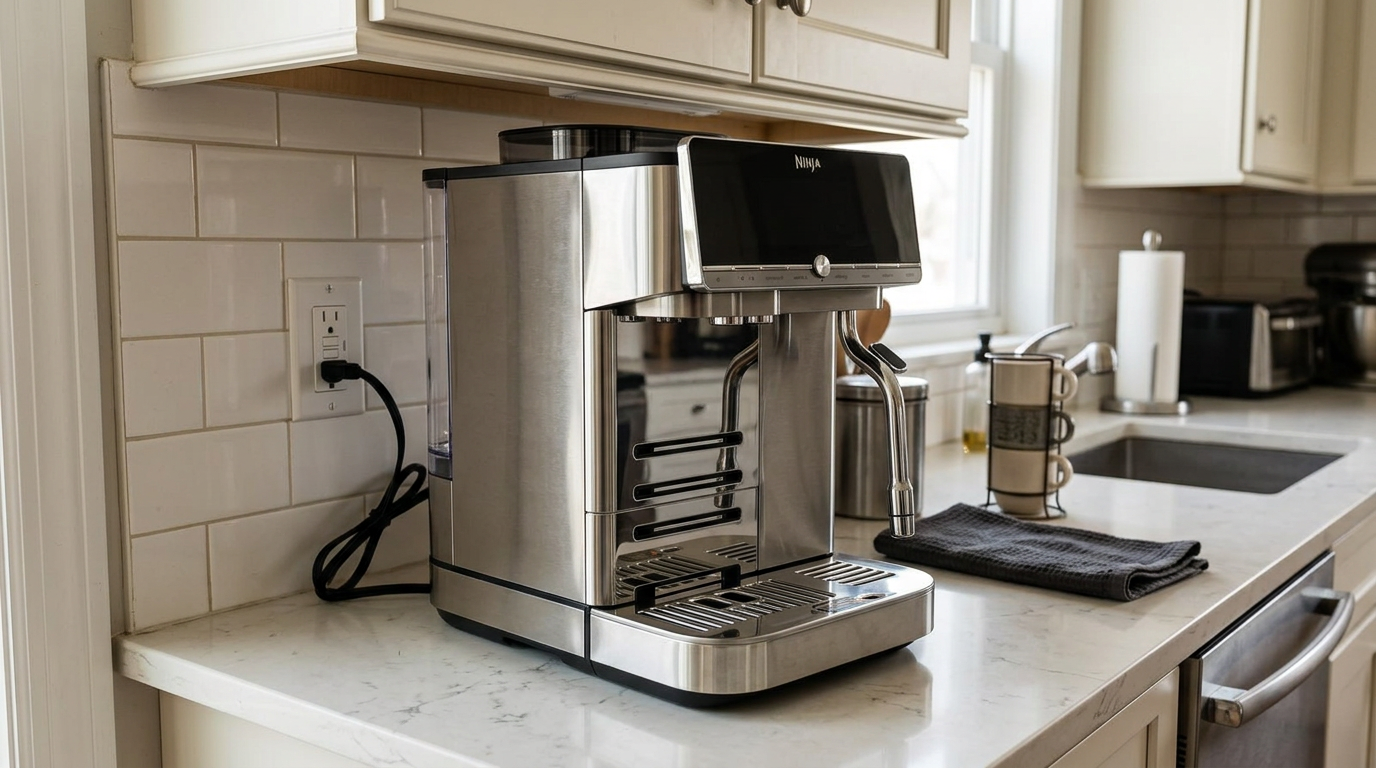
It weighs close to 40 pounds and measures roughly 10.7 inches wide, 17.8 inches deep and 15.8 inches tall.
It fit under my upper cabinets, but it took up noticeably more counter depth than most fully automatic machines I have used.
The finish on my unit is brushed stainless steel across the front and top, with black plastic around the controls and drip tray.
It looks solid and modern rather than elegant, closer to a serious kitchen appliance than a designer object.
The two bean hoppers on top give it a distinctive silhouette.
Setup took about twenty minutes.
You rinse the 80-ounce water tank, fit the filter, set your water hardness, load beans into one or both hoppers and let the machine rinse itself.
Then I ran Grind IQ for the first time, which pulls a few test shots while the machine works out where the grinder should sit for your beans.
The first drinks after that were already drinkable, and by the end of the first day they were good.
One detail I liked straight away: the removable side panel has a small brush and a tube of brew group grease clipped inside it.
It’s a simple idea, but it means the maintenance tools never get lost in a drawer.
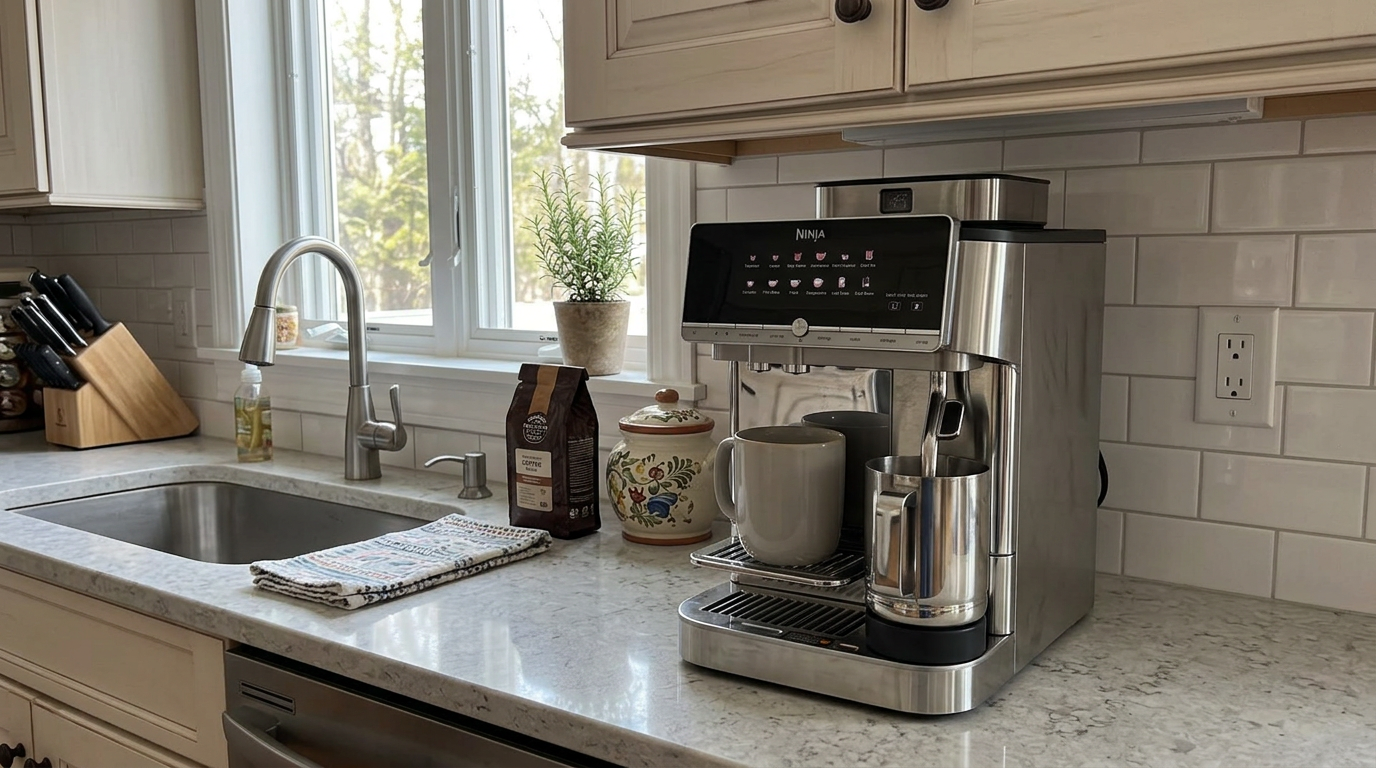
The AutoBarista Pro is deeper than most automatic machines, so measure your counter before you buy.
What the Ninja AutoBarista Pro actually is
The AutoBarista Pro is Ninja’s first fully automatic espresso machine, and it doesn’t follow the usual template.
Like any bean-to-cup machine, it grinds, doses, tamps and brews on its own.
But it adds things I hadn’t seen together on one machine before: two hoppers you can swap in seconds, a grinder that adjusts itself, a brew chamber big enough for triple shots, real drip coffee and a cold brew mode.
There are 13 one-touch drinks.
The black coffees are espresso, lungo, drip coffee, Americano, cold-pressed espresso, coffee over ice and cold brew.
The milk drinks are cortado, flat white, latte, cappuccino and iced latte, and you can also make frothed milk or cold foam on its own.
For each drink you choose a strength from one to five, and a number of shots from one to three.
Strength sets how much water passes through the coffee, so a five-bean drink is shorter and more concentrated.
The number of shots sets how much coffee is ground, so a triple uses three times the coffee of a single.
On the milk side you pick one of five froth styles and a temperature.
You can save your favorite version of each drink to one of two profiles, and there is a Brew Two function for making two drinks back to back.
The machine is rated at 1650 watts and brews espresso at 9 bar, which is the classic espresso pressure.
Swappable hoppers and Grind IQ
The two hoppers are the feature that made me most curious, and they work better than I expected.
Each one holds about 12 ounces of beans and has a metering system at the bottom, so when you lift a hopper off, it closes and takes its beans with it.
You don’t have to vacuum leftover beans out of the grinder or waste a cup purging the old coffee.
I kept a dark espresso blend in one hopper and a decaf in the other.
Switching took about five seconds: lift one off, set the other on, and pick it on the panel.
If you drink one kind of coffee in the morning and something gentler in the evening, this alone is a reason to consider the Pro over the standard AutoBarista.
Grind IQ is the other half of the story.
There is no grind dial anywhere on this machine.
Instead, when you add new beans, you run a Grind IQ cycle and the machine pulls two or three shots while it monitors how fast water flows through the coffee and how much pressure builds.
If the flow is off, it changes the grind for the next shot, choosing from 50 internal settings, until it is happy.
It is clever, and for most people it removes the hardest part of making espresso.
It also has costs.
Each calibration uses a few shots’ worth of beans and a few minutes of your time, and the machine never shows you which setting it picked.
If you want the coffee a touch finer or coarser, there is a grind offset in the settings menu that nudges it two steps either way, but that is the only manual control you get.
Some owners and testers report inconsistent shots in the first days until the calibration settles, and I saw a little of that too.
After a couple of days with the same beans, my results were steady.
Tip: Run Grind IQ every time you open a new bag of beans, not just when you change the type. Freshness changes how coffee grinds, and the machine needs to know.
How good is the espresso?
The espresso from the AutoBarista Pro is bold, and that is because it uses much more coffee than most automatic machines.
The brew chamber is noticeably wider and deeper than usual, and a double shot uses about 0.6 ounces of ground coffee.
A triple uses close to an ounce.
With fresh beans, the default settings of strength four and two shots gave me a creamy shot with good body, chocolate notes and a pleasant sweetness.
The crema was thicker and darker than I usually get from bean-to-cup machines.
Ninja uses a non-pressurized basket, which means the coffee itself has to create the resistance, just like on a manual espresso machine.
The upside is better texture when your beans are fresh. The downside is that stale supermarket beans give a thinner, flatter shot.
I would avoid the single shot setting entirely.
It grinds too little coffee for the water it uses, and my singles were weak and watery every time.
Several testers have found the same, and some found the medium strength settings weak as well.
Doubles and triples at strength four or five are where this machine is at its best.
Straight espresso fans may still find the volume in the cup varies a little from shot to shot.
Where the AutoBarista Pro shines is milk drinks.
A triple-shot latte or cappuccino tastes rich and coffee-forward, the way a strong café drink does, and the extra coffee easily cuts through a big glass of milk.
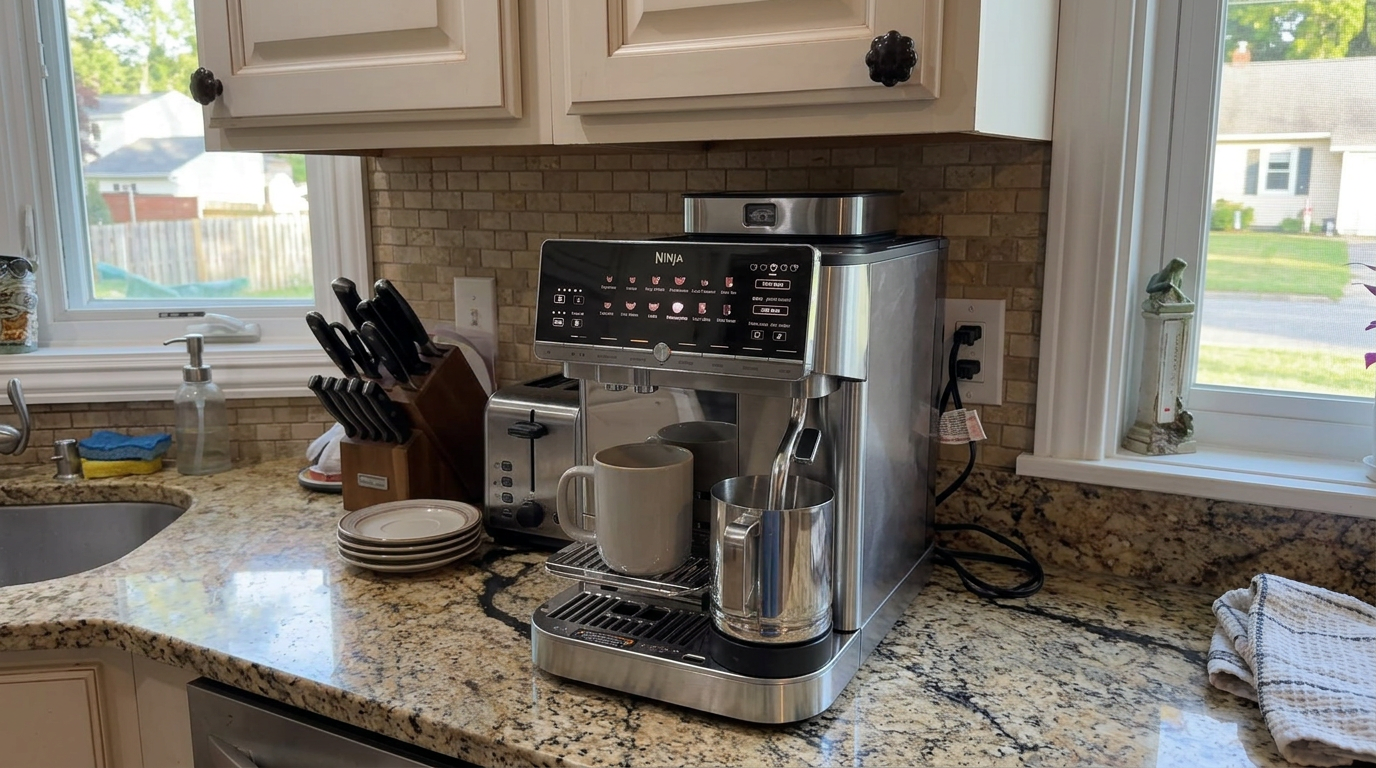
Double and triple shots are where the AutoBarista Pro’s large brew chamber pays off.
My settings: Strength 4 and two shots for espresso and flat whites; strength 5 and three shots for big lattes; the grind offset one step finer for a dark roast.
Drip coffee, cold brew and iced drinks
This is where the AutoBarista Pro does things most fully automatic machines can’t.
The Drip Coffee preset makes a real filter-style coffee rather than a long, over-extracted espresso.
It came out hot, full-flavored and clean, and it became my default first cup on weekdays.
If people in your house drink a mug of regular coffee rather than espresso drinks, this is a big deal.
Cold brew uses cooler water and a slower extraction to make a smooth, low-bitterness coffee in a few minutes rather than overnight.
It isn’t identical to a 12-hour steep, but it is smooth and naturally sweet, and it is much better than hot coffee poured over ice.
Over Ice brews a hot concentrated coffee designed to land on a glass of ice, and Cold-Pressed is a room-temperature espresso that works well in iced drinks.
The iced latte combines a shot with cold milk, and the Cold Foam preset whips cold milk into a thick, sweet topping without heating it.
On hot days, a cold brew with a cap of cold foam was easily my favorite drink from this machine.
Cup clearance is generous.
A tall 20-ounce tumbler fit under the spout, which matters if you take your coffee in the car.
Milk frothing with FrothPerfect
The AutoBarista Pro handles milk differently from most automatic machines, and you need to know that before you buy.
It does not pour milk into your cup.
Instead, you fill a stainless milk jug, set it on a small platform under a steam wand, and the machine froths the milk in the jug while it brews the espresso.
When both are done, you pour the milk into the drink yourself.
The frothing itself is excellent for an automatic machine.
The wand uses real steam and has a temperature probe inside, and a spinning magnetic whisk at the bottom of the jug keeps folding the foam into the milk.
The result is glossy, sweet microfoam, much closer to what a barista makes than the bubbly foam from most push-button systems.
There are five presets: steamed milk, thin froth, thick froth, extra-thick froth and cold foam.
Thin froth is right for flat whites and lattes, thick for cappuccinos, and extra thick for a classic dry cappuccino.
You can also choose low, medium or high milk temperature in the settings.
Oat milk made the best plant-based foam in my testing; almond milk was thinner and some owners report it struggles.
One mistake I made in my first week: I lifted the jug off as soon as the steaming stopped, and the drink was canceled.
The machine expects the jug to stay put while the espresso finishes, and it briefly restarts the whisk to keep the foam mixed.
Once you know that, it is a nice feature, because the milk is perfectly blended when you pour.
The jug has a rounded lip rather than a pointed spout, so latte art is hard.
I could manage a simple heart, but if you want to practice pouring, a separate pitcher with a sharp spout will help.
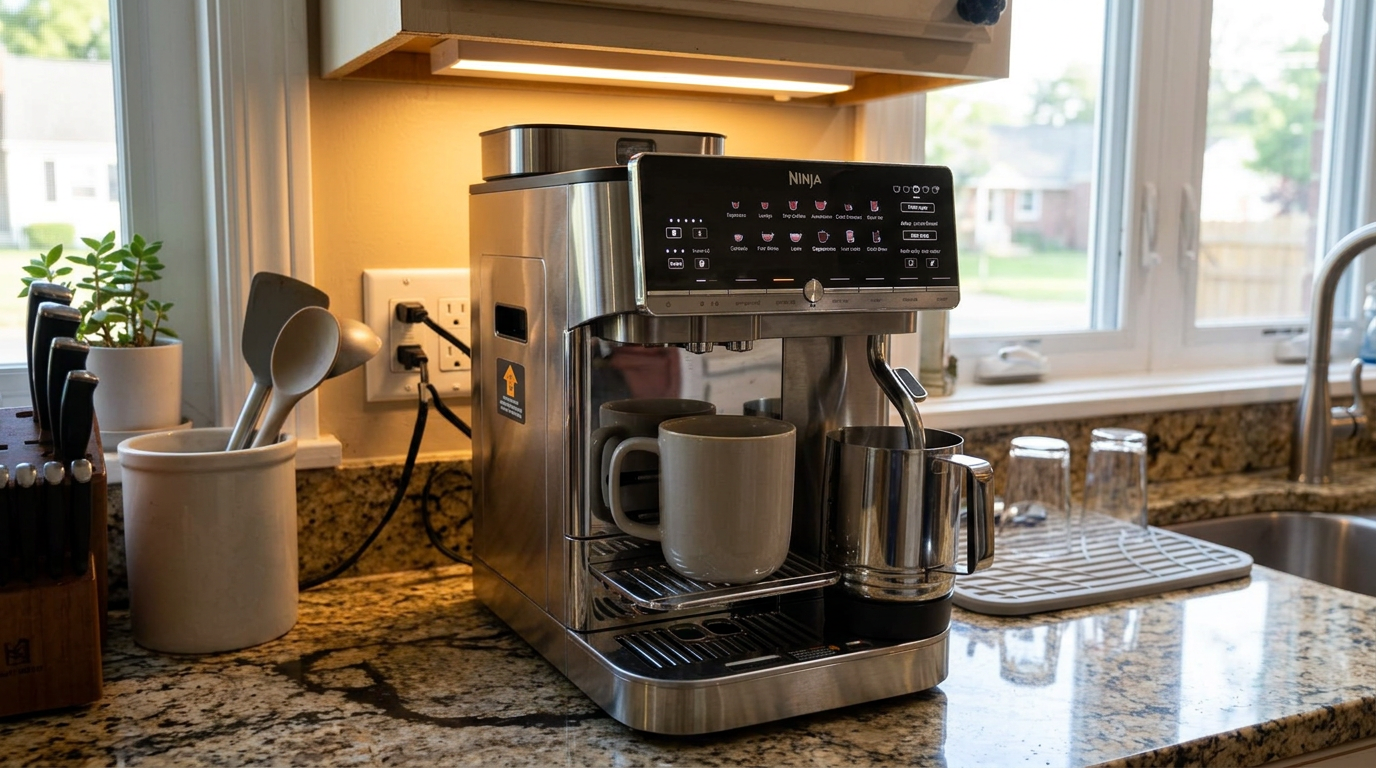
The milk jug sits under a real steam wand; you pour the foamed milk into the cup yourself.
Controls, profiles and settings
The control panel is functional rather than fancy.
Drinks are printed as fixed, backlit icons: black coffees across the top, milk drinks along the bottom.
When you tap one, it lights up and the rest dim, and the strength, shot and froth options appear beside it.
It is quick to use once you know where things are, and I liked that there are no nested menus for everyday drinks.
The two user profiles save your preferred strength, size, temperature and froth for each drink.
Two is fewer than some machines offer, so a family of four will end up sharing.
The settings menu is the weak point.
It lives on a small scrolling text display, and options are numbered rather than named in plain view.
Water hardness, eco mode, milk temperature, the grinder offset, manual rinse, grinder reset and clearing profiles are all in there, but finding them took me a few tries and a look at the manual.
The good news is you rarely need it after the first week.
There is a quiet exhaust fan at the back that runs while the machine is on.
It vents moisture from inside the machine, which helps prevent the damp, musty buildup that can happen in the brew area of automatic machines.
You can hear a faint hum if the kitchen is silent, but it never bothered me.
Speed, noise and heat-up
The AutoBarista Pro is not the fastest fully automatic machine, and that is mostly down to how much it does per drink.
From a cold start it needs a short warm-up and a rinse before the first drink, so I got into the habit of switching it on while I filled the kettle or fed the kids.
Once warm, a double espresso took a little under a minute.
Milk drinks take longer because the frothing and brewing overlap and then the machine re-whisks the milk.
A flat white or latte took around two and a half minutes from tap to finished drink in my kitchen, which matches what other testers have measured.
That isn’t instant, but you are getting barista-style steamed milk rather than a quick blast of foam.
Drip coffee and cold brew take a few minutes each, depending on size.
They are still much faster than brewing a full pot or steeping cold brew overnight, and there is no carafe to wash afterward.
Grinding is about as loud as most bean-to-cup machines: a firm, short burst rather than a whisper.
The steam wand hisses quietly while it froths, and the exhaust fan is barely audible.
It won’t wake a sleeping house from upstairs, but in an open-plan kitchen you will know it is running.
If you often make two drinks in a row, the Brew Two function helps.
It lines up a second drink so you aren’t standing at the machine pressing buttons twice, and it was handy on weekend mornings with guests.
An eco mode puts the machine to sleep sooner to save power, and a long standby setting keeps it ready for longer if you drink coffee throughout the day.
I left eco mode on during the week and switched to long standby on weekends.
Cleaning and daily upkeep
Cleaning is the area where the AutoBarista Pro asks more of you than most automatic machines.
The milk jug and its magnetic whisk need washing after every milk drink.
They are hand wash only, and the whisk is small enough to lose down the sink if you aren’t careful.
It takes a minute, but it is a minute every time.
The steam wand purges itself after frothing, and I wiped it with a damp cloth once a day.
The bigger daily job is the drip tray.
The machine rinses itself on startup and after brewing, and with the large shots it uses a lot of water.
I had to empty the drip tray roughly every five drinks, which is more often than I am used to.
The used-puck bin is large, so that part was easy.
The 80-ounce water tank lasted most of a day for two people, and it has a sturdy handle and a sensor that stops the machine before you run dry mid-drink.
Once a week, I removed the side panel, slid out the brew group and rinsed it under warm water.
The included brush and grease make the monthly lubrication simple.
The water filter cuts scale, but I would still descale on the schedule the machine sets for your water hardness, using the cleaning solution recommended in the manual.
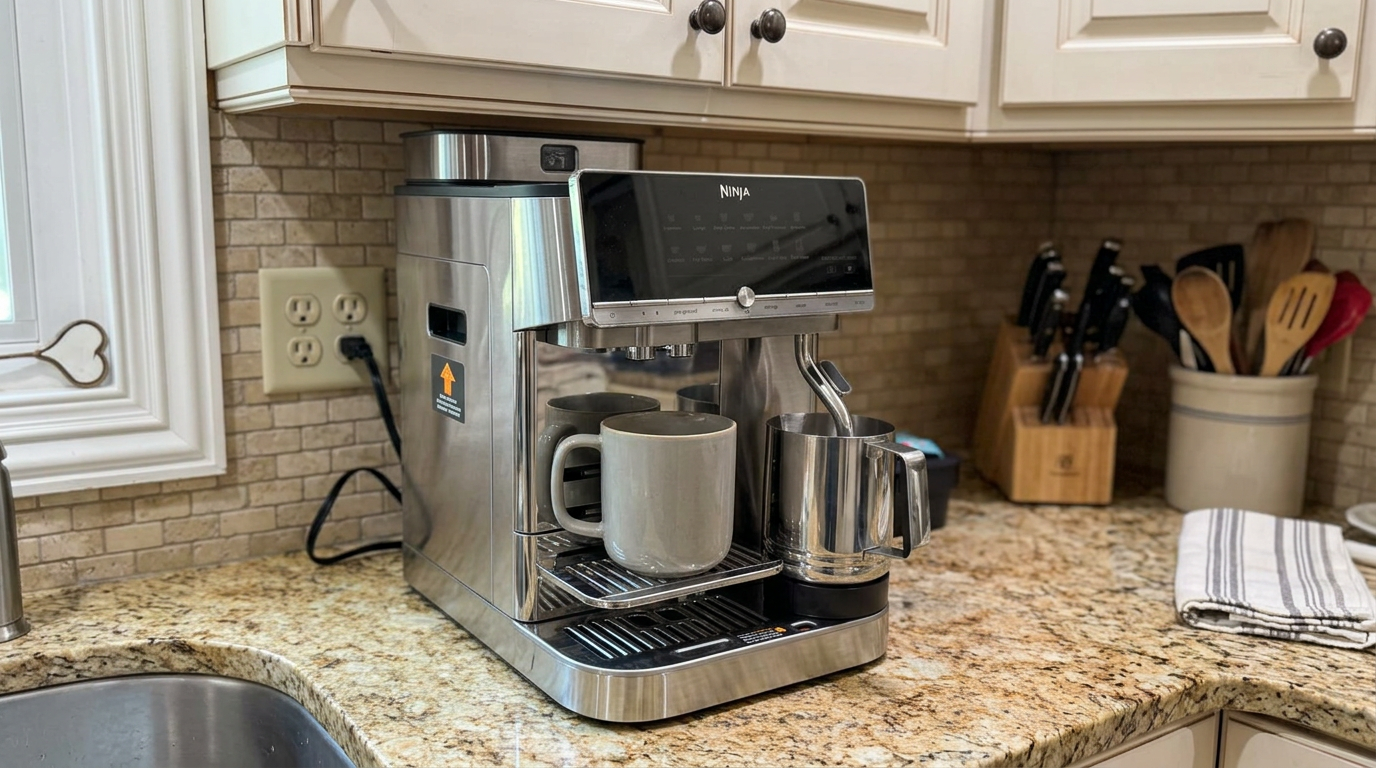
The side panel comes off to reach the brew group, with a brush and grease stored inside it.
What a normal week looks like
My household used the AutoBarista Pro for a mix of drinks: drip coffee first thing, a strong latte mid-morning, cold brew with cold foam in the afternoon and a decaf cappuccino after dinner.
That is six to eight drinks a day across two people.
At that pace, I refilled the water tank daily, emptied the drip tray two or three times a day, washed the milk jug after every milk drink and topped up the main hopper about twice a week.
Switching to the decaf hopper in the evening never took more than a few seconds.
It is more hands-on than a machine that pours milk straight into the cup, but the variety made up for it.
No other automatic machine I have used could make a proper mug of drip coffee and a cold brew from the same beans in the same morning.
Tips to get the best from the Ninja AutoBarista Pro
- Use fresh beans. The non-pressurized basket rewards fresh coffee with richer shots and thicker crema; stale beans taste flat.
- Skip the single shot. Doubles and triples taste far better; a single is thin.
- Run Grind IQ with every new bag. Even the same coffee grinds differently as it ages.
- Leave the jug in place. Lifting it early cancels the drink; wait for the espresso to finish.
- Empty the drip tray before it’s full. Make it part of the routine after every few drinks to avoid a spill.
- Use barista-style plant milks. They foam far better than regular almond or oat milk.
Where the Ninja AutoBarista Pro falls short
The AutoBarista Pro tries to do a lot, and a few compromises come with that.
The biggest for most people will be the separate milk jug.
If you want to press a button and walk away with a finished cappuccino, this machine won’t do that; you pour the milk and wash the jug.
The second is the self-calibrating grinder.
It is great when it works, but it uses beans and time to calibrate, and you can’t see or directly set the grind size.
People who enjoy fine-tuning espresso may find that frustrating.
Third, it is big, heavy and thirsty.
It needs real counter depth and side access to remove the brew group, and the drip tray fills quickly.
Finally, the single shot and medium strength settings can be weak, so plan on using doubles and higher strengths.
Ninja AutoBarista Pro test results
Here is how I rated each drink and task after using the AutoBarista Pro as my main machine, cross-checked against published tests and owner feedback.
Scores are out of 10.
| Drink or task | Rating | What stood out |
|---|---|---|
| Espresso (double) | 8.2 | Bold, creamy, good body |
| Espresso (single) | 5.8 | Thin and watery |
| Drip coffee | 8.8 | Hot, clean and full-flavored |
| Cold brew | 8.5 | Smooth, low bitterness, fast |
| Cappuccino | 8.6 | Glossy, dense foam |
| Latte (triple shot) | 8.9 | Rich and coffee-forward |
| Iced latte with cold foam | 8.7 | Thick, sweet cold foam |
| Bean switching | 9.4 | Five seconds, no purging |
| Daily cleaning | 6.6 | Jug, whisk and drip tray need frequent care |
| Ease of use | 7.6 | Simple drinks, clunky settings menu |
Ninja AutoBarista Pro specifications
From Ninja’s published specifications, the Amazon listing and my own measurements.
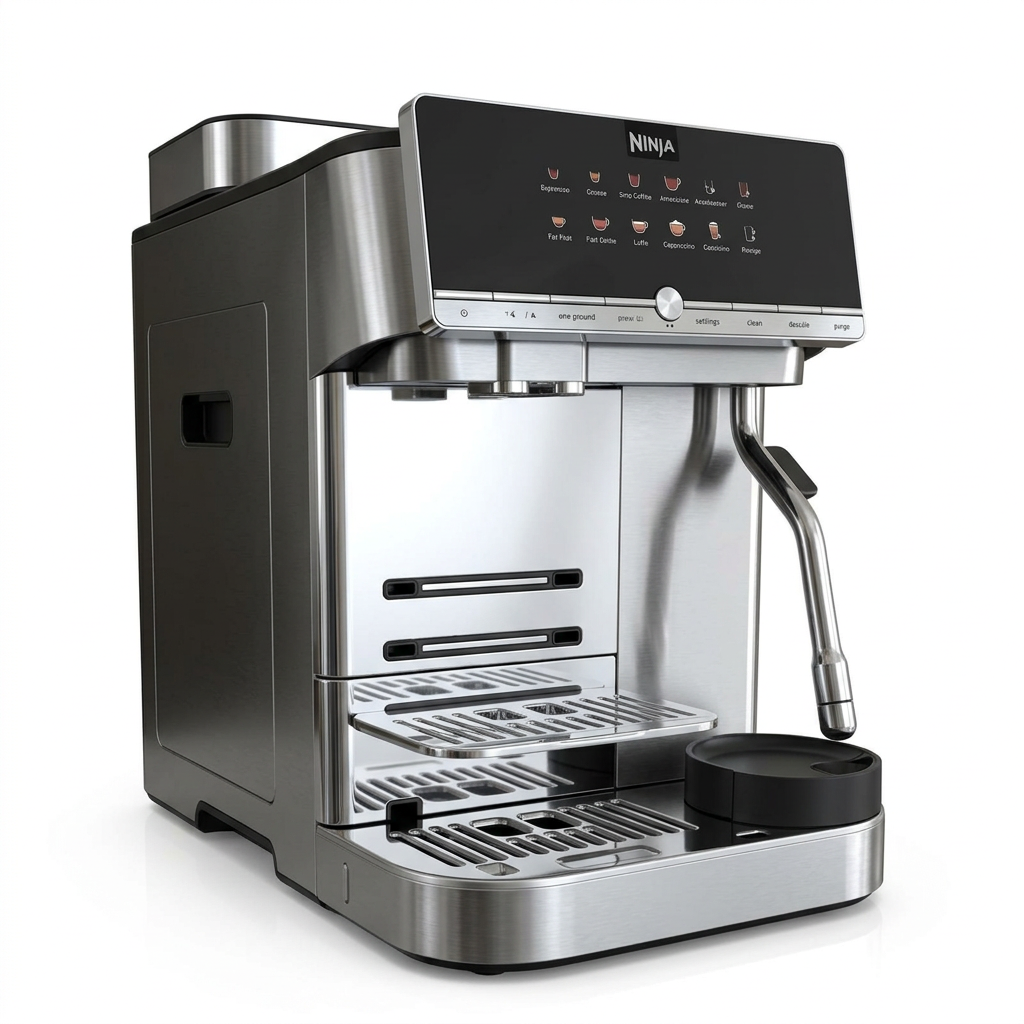
The AutoBarista Pro in stainless steel, with the steam wand on the right and the two hoppers on top.
Is the Ninja AutoBarista Pro worth it?
It depends on what you drink.
If your household wants espresso drinks, a proper mug of drip coffee and iced drinks, the AutoBarista Pro replaces two or three appliances with one, and that is where its value is strongest.
The swappable hoppers make it the easiest machine I have used for anyone who wants decaf on tap.
Compared with the standard Ninja AutoBarista (AE1001), the Pro adds the second hopper, three extra drinks (lungo, cortado and iced latte) and the extra-thick froth setting.
If you would use decaf or two different coffees, the Pro is the one to get.
If you only drink one coffee, the standard model gives you most of the experience.
If you mainly want a cappuccino at the touch of a button with the least possible cleanup, this isn’t the best match.
A machine that pours milk straight into the cup will suit you better, even if the foam is not quite as good.
Ninja AutoBarista Pro alternative
If you don’t need two hoppers, Ninja’s simpler model is worth considering.
How I tested and rated the Ninja AutoBarista Pro
I used the AutoBarista Pro as my main coffee machine for espresso, drip coffee, cold brew, iced drinks, lattes, cappuccinos and flat whites, with dairy, oat and almond milk.
I tested both hoppers with different beans, ran Grind IQ several times and tried every froth preset.
I cross-checked my impressions against the manufacturer’s specifications, published independent tests and a large set of owner reviews, so the score reflects how the machine holds up over months, not just the first week.
The overall score is a weighted editorial rating built from four parts:
- Coffee quality (8.3): espresso, drip coffee and cold brew flavor, body and consistency.
- Milk drinks (8.4): foam texture, temperature, cold foam and plant milk results.
- Versatility (9.3): drink range, bean switching and cup sizes.
- Ease of use (7.4): controls, setup, daily cleaning and maintenance.
I don’t accept payment for reviews, and the brand had no say in this article.
Final verdict on the Ninja AutoBarista Pro
The Ninja AutoBarista Pro is the most versatile fully automatic machine I have tested.
It makes strong, café-style milk drinks, a real cup of drip coffee, smooth cold brew and thick cold foam, and its swappable hoppers make switching to decaf effortless.
In exchange, you pour your own milk, wash the jug, empty the drip tray often and trust the grinder to calibrate itself.
If variety matters more to you than a completely hands-off routine, that trade is easy to accept.
For bold lattes, iced drinks and a house that can’t agree on one kind of coffee, the Ninja AutoBarista Pro is a very good choice.
It needs space, but the AutoBarista Pro replaces an espresso machine, a drip maker and a cold brew setup.
Ninja AutoBarista Pro FAQ
Is the Ninja AutoBarista Pro worth it?
If you want espresso, drip coffee, cold brew and iced drinks from one machine, yes. If you only want push-button cappuccinos with minimal cleanup, a machine that pours milk directly into the cup may suit you better.
What drinks does the AutoBarista Pro make?
It has 13 one-touch drinks, including espresso, lungo, drip coffee, Americano, cold-pressed, over ice, cold brew, cortado, flat white, latte, cappuccino and iced latte.
Does the Ninja AutoBarista Pro froth milk automatically?
Yes. It steams and whisks the milk in a jug automatically, with five presets including cold foam, but you pour the milk into the cup yourself.
What is Grind IQ?
Grind IQ pulls a few test shots when you add new beans, measures how the water flows and adjusts the grind automatically. You can nudge it two steps finer or coarser in the settings.
Can I adjust the grind size manually?
Only through a small offset of two steps either way. The machine chooses the base setting from 50 internal settings itself.
What is the difference between the AutoBarista and AutoBarista Pro?
The Pro adds a second swappable hopper, three extra drinks (lungo, cortado and iced latte) and an extra-thick froth preset.
Does it make real cold brew?
It brews with cooler water for a smooth, low-bitterness coffee in a few minutes, rather than pouring hot coffee over ice.
How big is the water tank?
About 80 fluid ounces, enough for most of a day for two coffee drinkers.
Is the milk jug dishwasher safe?
Ninja recommends washing the jug and whisk by hand after each milk drink.
Will a travel mug fit under the spout?
Yes. A tall 20-ounce tumbler fit in my testing.