EyeVac Home review
A plug-in, floor-level vacuum that replaces your dustpan. Sweep a pile toward it and it swallows the lot in seconds. Brilliant on hard floors, pointless on carpet.
In this review
If you sweep hard floors every day, especially around pets, a kitchen or a salon chair, the EyeVac Home is one of those gadgets that quietly changes a chore. It does one job, the dustpan job, and it does it fast. If your floors are mostly carpet or you rarely pick up a broom, skip it.
- No bending, no dustpan and no line of dust left behind
- Infrared sensor starts 1,000 watts of suction as you sweep, with a manual mode for full control
- One-gallon bagless bin and washable filters, so there are no bags to buy
- Dry debris on hard surfaces only: no carpet, wet spills or wet litter
- Needs an outlet within six feet of where you sweep
- Loud for a few seconds at a time, and a lot of money for a dustpan job
- Kitchens, mudrooms and entryways with tile, wood, vinyl or laminate
- Pet owners dealing with fur, kibble and dry litter
- Anyone with back or knee trouble who hates bending down
- Homes that are mostly carpeted
- People who already rely on a robot vacuum and never sweep
- Rooms with no free outlet near the sweeping zone
The EyeVac Home in numbers
Our picks at a glance
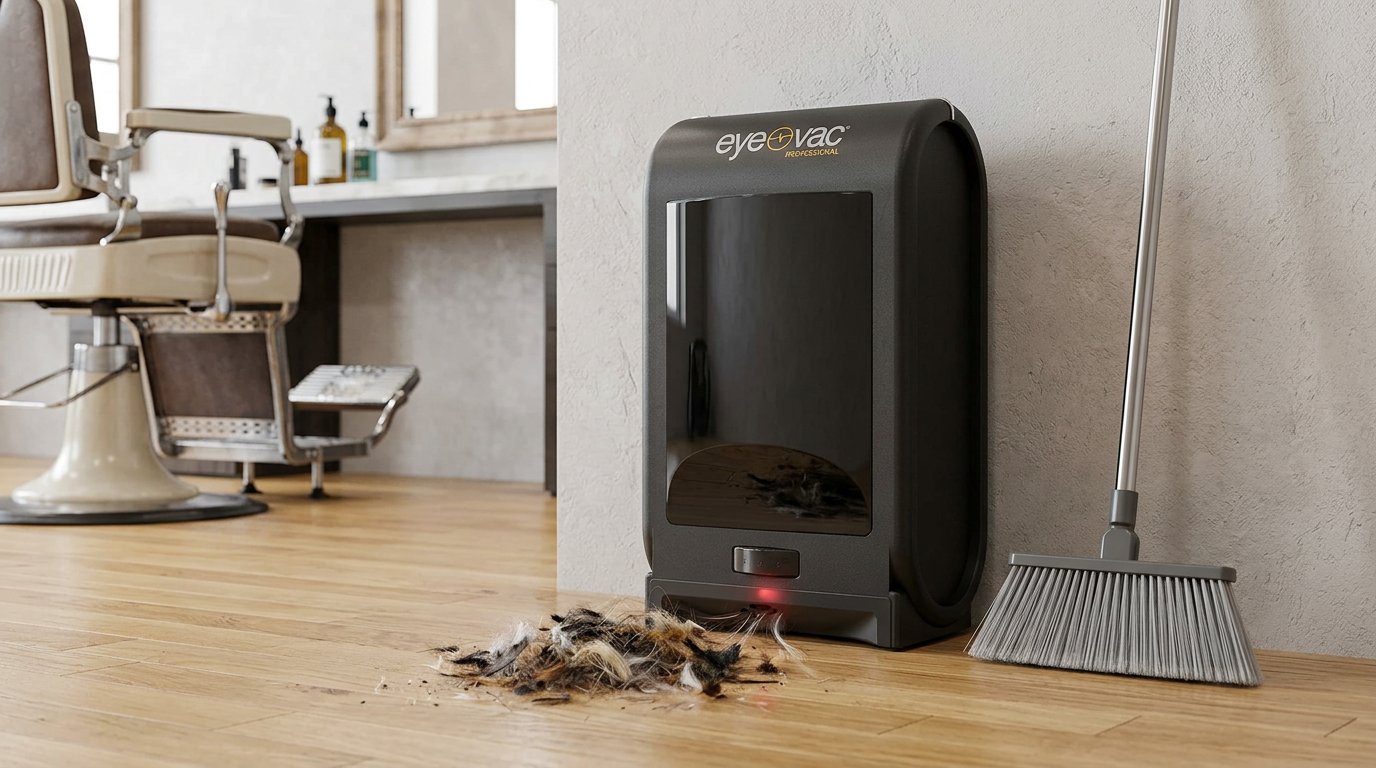
EyeVac Pro Touchless Vacuum
The most powerful EyeVac: a 1,400-watt motor, a 1.3-gallon bin and infrared sensors that switch it on when you sweep debris toward it.
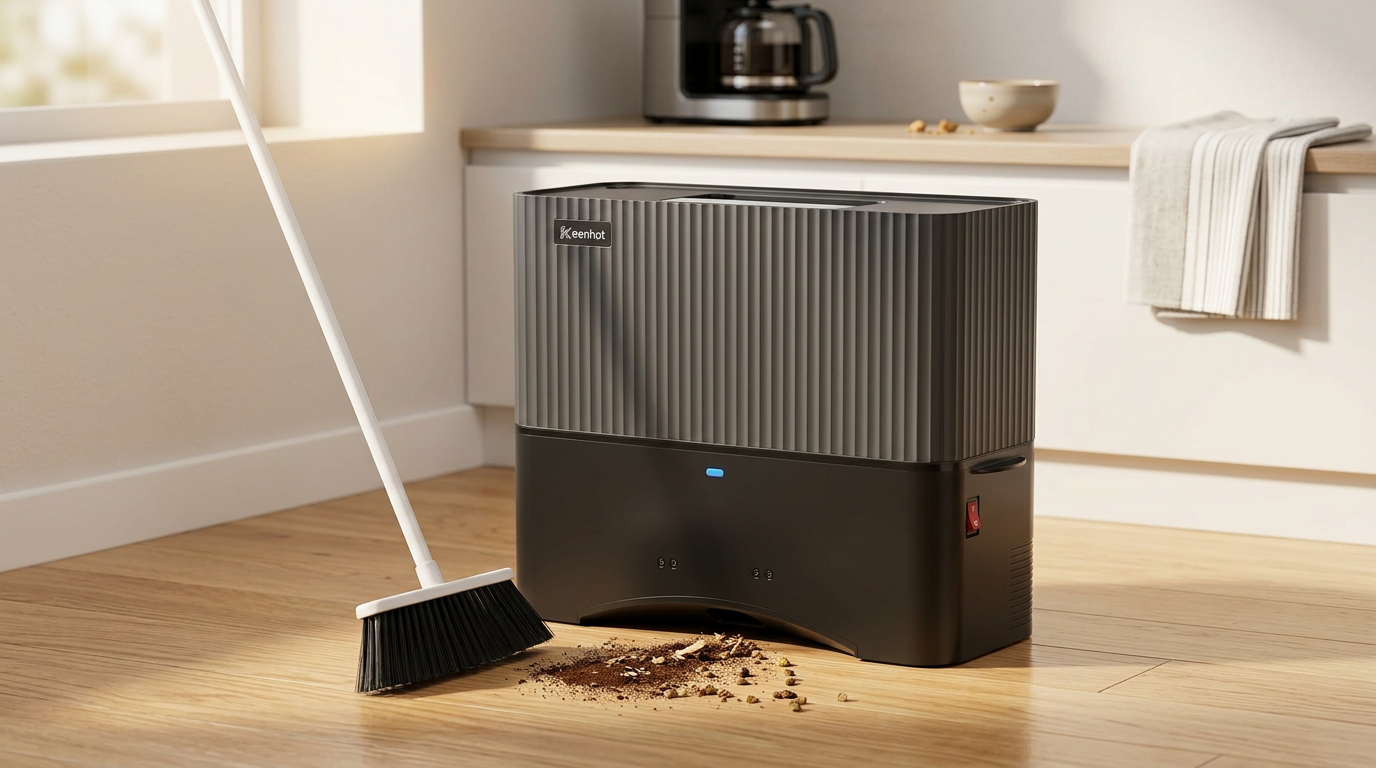
Keenhot Touchless Vacuum Automatic Dustpan
Compact and light at 4.3 pounds, with a HEPA filter and a 24-month replacement warranty for about half the price of an EyeVac.
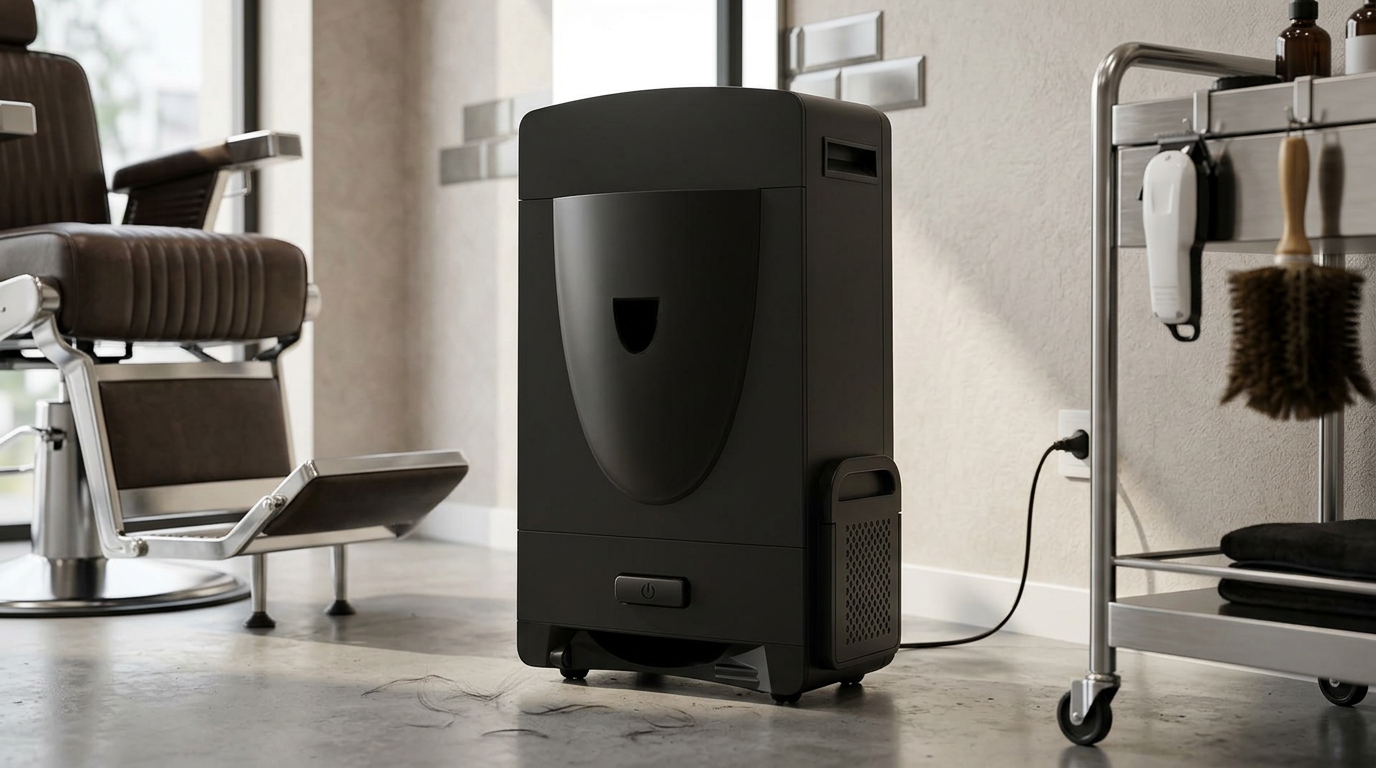
JRL FASTSWEEP Professional Hair Vacuum Cleaner
Built for hair clippings: a 1.8-gallon bin and two power levels, 500 watts for everyday sweeping and 1,200 watts for heavy cleanups.
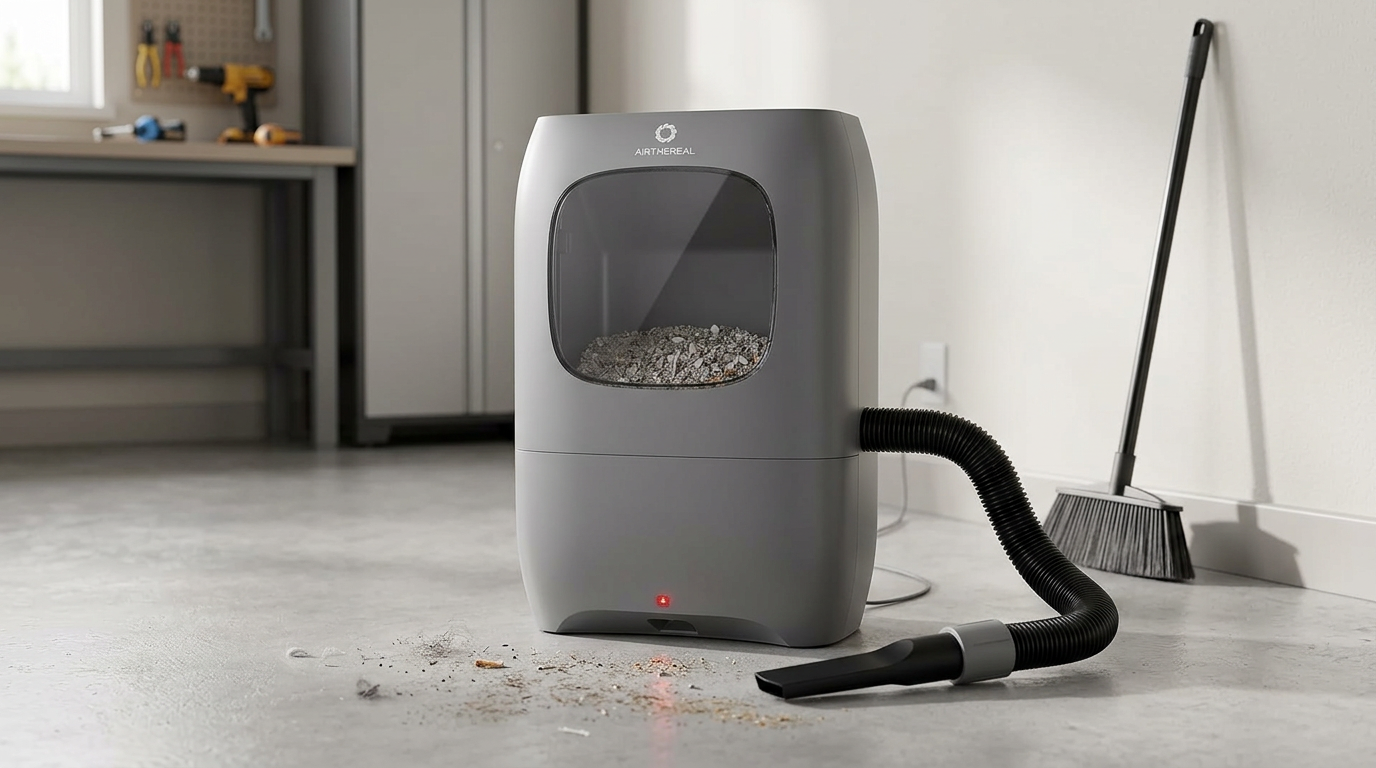
AIRTHEREAL T1 Touchless Vacuum Automatic Dustpan
The only pick with a built-in hose for manual cleaning, plus a 1.8-gallon bin and HEPA and activated carbon filtration.
Prices change often. Click through to see the current price on Amazon.
What the EyeVac Home actually is
The EyeVac Home is a stationary vacuum.
It sits on the floor against a wall or cabinet, plugs into a normal outlet and waits.
When you sweep dirt toward the slot at its base, an infrared sensor notices the movement and the motor kicks in.
The pile disappears in a couple of seconds, and the unit switches itself off again.
That is the whole idea.
There is no hose, no wand and no brush head.
The category is often called a touchless vacuum, an automatic dustpan or a stationary vacuum, and it has existed for years in hair salons and commercial kitchens.
Those built-in versions usually sit in a cabinet kickplate and need installation.
EyeVac took the concept and turned it into a freestanding appliance you can put down anywhere there is a plug.
The Home is the brand’s core model, with a 1,000-watt motor.
Above it sits the EyeVac Pro with a 1,400-watt motor, and there is also the EyeVac Air, which adds an air purifier to the same basic design.
For most households with a busy kitchen floor, the EyeVac Home is the one people buy.
It is also the one with by far the biggest pile of owner reviews behind it.
Its real trick is not replacing every cleaning tool, but removing the awkward dustpan stage from sweeping.
Think of it as an always-ready spot cleaner that works alongside your regular vacuum, which you will still want for whole-room cleaning, carpets and upholstery.
| Broom and dustpan | EyeVac Home | Upright vacuum | |
|---|---|---|---|
| Bending down | Every time | Never while sweeping | Rarely |
| Ready to go | Fetch it from the closet | Stays out and plugged in | Fetch it and plug it in |
| Last line of dust | Often left behind | Pulled in | Picked up |
| Carpets and rugs | ✕ | ✕ | ✓ |
| Bags to buy | None | None | Depends on model |
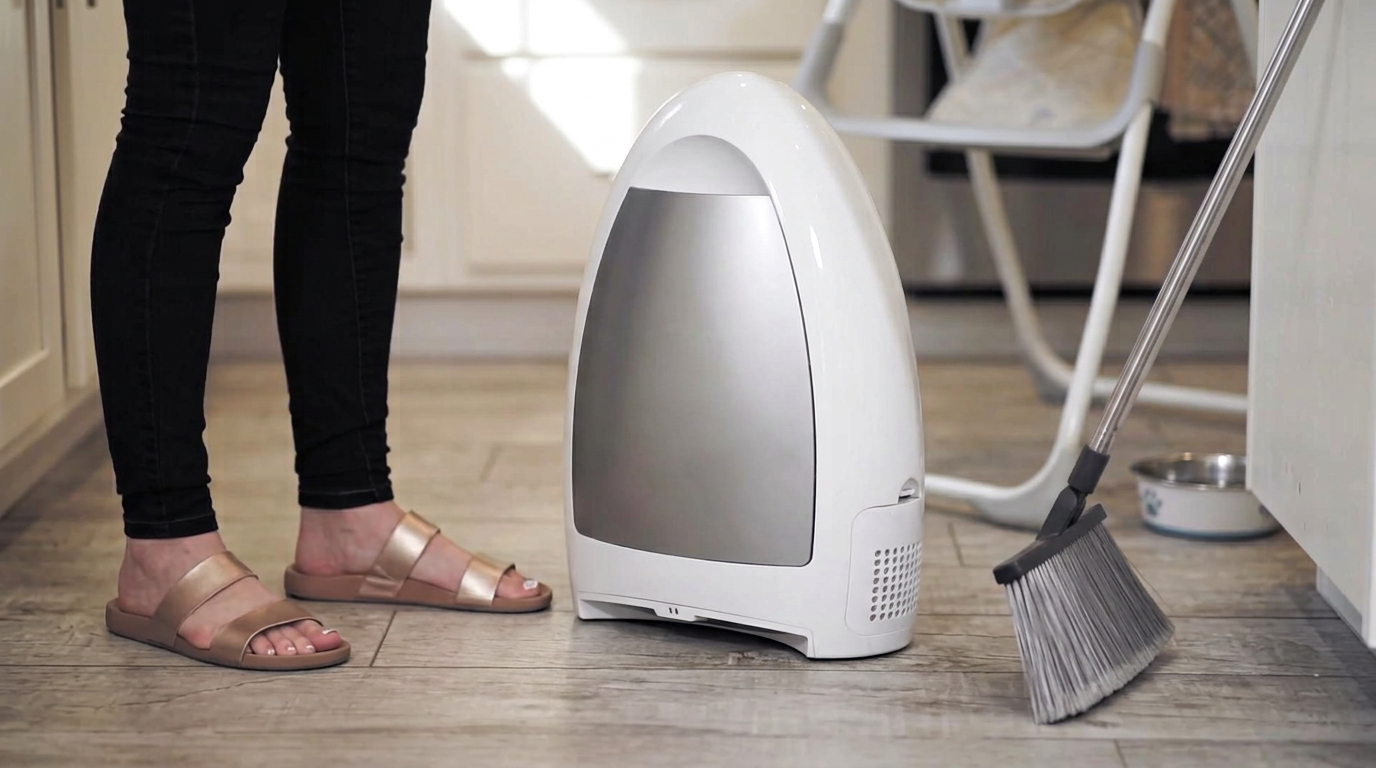
The EyeVac Home lives where the mess happens: in this case next to the pet bowls in the kitchen.
How it works
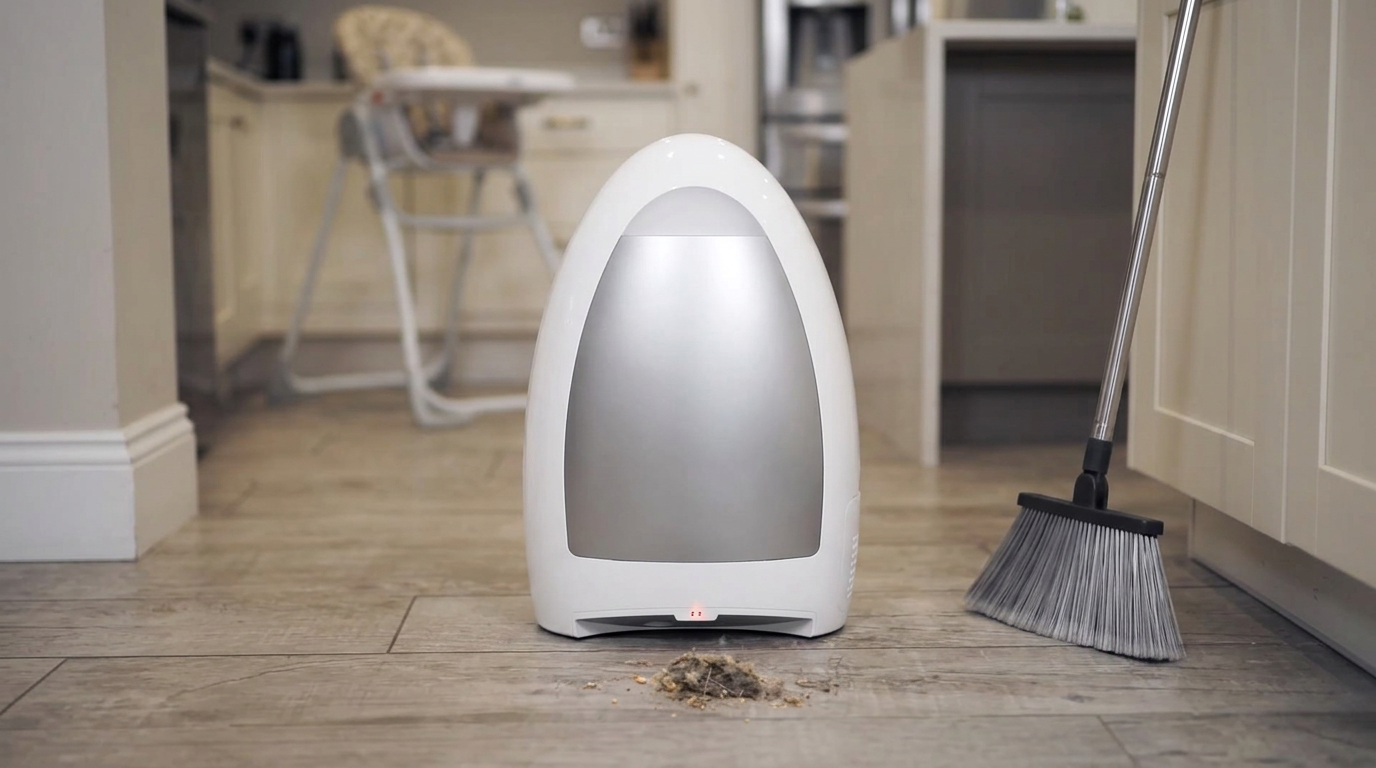
The intake is a wide, low slot across the bottom front of the unit.
Right above it sit the infrared sensors.
In Auto mode, the sensors pick up the motion of your broom and the debris coming toward them, and suction starts on its own.
According to the product listings, it keeps running while it still detects debris and then shuts off.
There is also a manual mode for when you want to run it on demand.
Retailer Sylvane describes the manual cycle as about 7.5 seconds, and each automatic cycle as under ten seconds.
In practice that means short bursts of noise rather than a vacuum droning for minutes.
Inside, air and debris swirl into a bagless canister with cyclonic action, pass a pre-motor filter and leave through a washable exhaust filter.
The cyclonic action keeps debris moving into the bin instead of packing it against the filters, which helps the unit hold its suction.
EyeVac markets the filtration as high-efficiency and some listings call the exhaust filter HEPA.
We could not find certification details for that claim, so treat it as a fine filter rather than a medical-grade one.
The size limit is roughly a quarter.
EyeVac says it picks up debris up to quarter-sized, which covers crumbs, cereal, rice, dry kibble, hair, dust bunnies and most grit.
Larger bits, like a dropped carrot end or a bottle cap, are better picked up by hand.
A good rule of thumb: if you would not put it through a standard vacuum, do not sweep it toward this one.
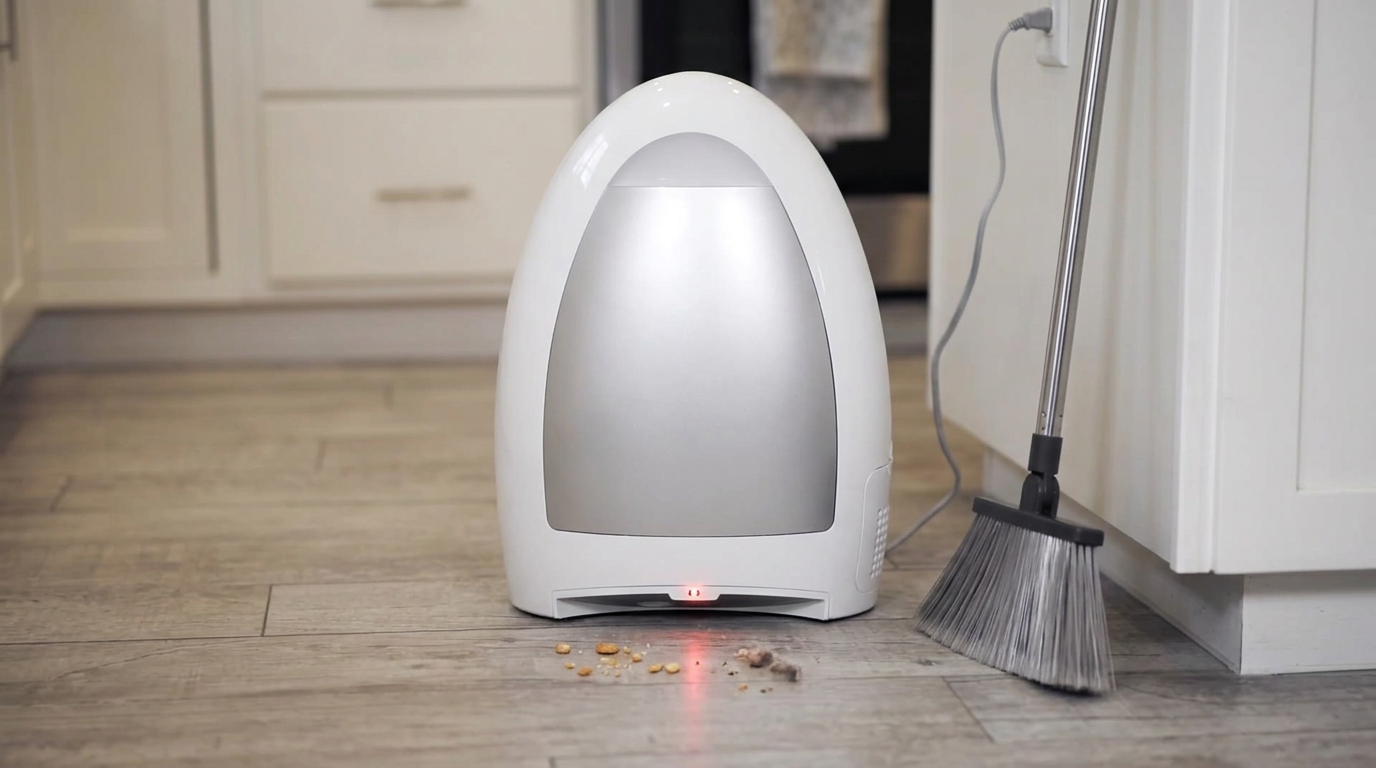
The red light at the base shows the sensor is active. Sweep toward it and the motor starts on its own.
Controls and the two modes
The control panel sits on the back of the unit, with the power control, mode selection, an activation button and the bin-full indicator.
Powering it on puts it in Auto mode, and a further press of the power control switches it to Manual.
| Auto mode | Manual mode | |
|---|---|---|
| Starts when | The sensors detect you sweeping toward it | You press the activation button |
| Best for | Everyday sweeping and several small piles in a row | Tabletops, workbenches and busy spots |
| Watch out for | Passersby can set it off | You need to reach the back of the unit |
Our tip: Switch to Manual mode if the unit sits in a busy hallway or on a workbench, so the motor only runs when you want it to.
A typical cleanup, step by step
- Place it. Put the unit somewhere accessible with room to sweep toward the front.
- Plug it in and pick a mode. Auto for sweeping, Manual for more control.
- Sweep dry debris toward the inlet. The broom does the gathering and the EyeVac does the collecting.
- Watch the light. Empty the bin when the full indicator comes on.
- Check the filters now and then. Shake them out or wash them when they need it.
Design and setup
The EyeVac Home is shaped like a rounded egg, about 18 inches tall, 13 inches wide and 8 inches deep.
Finishes vary by retailer and release, with white, high-gloss black, matte black, silver, rose gold, taupe, stone or gray and sage all mentioned.
The clear-front unit you may see in demos is there to show how debris moves inside, and the standard retail version may not have a see-through front.
That shape matters more than you might think.
Because it is going to live in plain sight, it has to look tidy, and the EyeVac does look more like a small appliance than a shop vac.
Several owners on retailer sites mention that guests ask what it is.
The Amazon listing puts the weight at 7.6 pounds, while some retailers list it heavier, up to 10 or 12 pounds, probably including packaging.
Either way, it is light enough to move with one hand when you mop, and heavy enough not to slide around when you sweep into it.
A built-in handle makes it easy to carry from room to room, and it weighs less than a gallon of milk.
Setup is simple.
Take it out of the box, put it against a wall or cabinet where you usually end up with your dustpan, and plug it in.
The cord is six feet long, which is the one real placement constraint.
You want the unit at the natural end point of your sweeping route, and you need an outlet within reach of that spot.
In a kitchen, that often means the end of a counter run or the corner by the pantry door.
Bob Vila’s reviewer made the same point about the bigger EyeVac Pro: placement makes or breaks how often you use it.
Put it in an awkward corner and you will go back to the dustpan.
Put it where your broom already goes and it becomes automatic.
Our tip: Park it where your sweeping route already ends, not in the spot where it looks tidiest.
One thing that is not in the box is a broom.
Any upright broom works, but one with angled, fairly stiff bristles makes it easier to push a tight pile right up to the slot.
You can also hold a dirty broom head in front of the inlet for a second to clean hair and fluff off the bristles, which several owners say they do daily.
Place it at the natural end of your sweeping route, within six feet of an outlet.
Performance by type of mess
EyeVac Home test.
Manufacturer specs, hands-on review, retailer Q&A answers and the patterns in thousands of owner reviews.
Those patterns are remarkably consistent.
| What you sweep | Works? | Worth knowing |
|---|---|---|
| Crumbs, cereal, rice | ✓ | Push the pile right up to the inlet |
| Flour, coffee grounds, sugar | ✓ | Picks up the fine line a dustpan misses |
| Pet hair and cut hair | ✓ | No brush roll to tangle |
| Dry kibble | ✓ | Pieces must be quarter-sized or smaller |
| Dry cat litter | ✓ | A few grains at a time |
| Grass, soil, small bits of mulch | ✓ | Small pieces only |
| Confetti, ribbon, paper scraps, beads | ✓ | Each item has to fit through the inlet |
| Sawdust and small workshop scraps | ✓ | Light amounts only |
| Drywall or concrete dust | ✕ | Clogs the filters quickly |
| Screws, gravel, wood offcuts | ✕ | Too big |
| Liquids, wet food, wet litter | ✕ | Dry debris only |
| Carpet and rugs | ✕ | You cannot sweep a rug toward it |
Kitchen crumbs and dry food
This is where the EyeVac Home shines.
Crumbs, spilled cereal, rice, coffee grounds, flour and sugar all vanish quickly, as long as you push them right up to the slot.
The big win over a dustpan is the fine line of dust that never quite makes it onto the pan.
The vacuum pulls that in too.
Our tip: Sweep several small piles toward the inlet one after another instead of one big heap, since each piece still has to fit through.
For families with small children, the high-chair zone is a classic spot for one, and it shows up in the product photos for a reason.
It also makes sense for quick evening cleanups after cooking or baking, because nothing has to be hauled out of a closet.
Wet food is a different story.
The EyeVac is a dry-only vacuum, so mashed banana, yogurt or soggy cereal still need a cloth.
Pet hair, kibble and litter
Pet owners make up a big share of the positive reviews.
Fur tumbleweeds, scattered kibble and the grit around food bowls are exactly the kind of daily mess this machine was built for.
Because there is no rotating brush roll, hair has nothing to wrap around.
A Best Buy shopper who owns three units said hair pickup has never caused tangling problems, and that emptying the bin and occasionally cleaning the filter is all the upkeep it needs.
Cat litter works, with limits.
An answer on Best Buy’s product page notes it handles dry litter but only a few grains at a time, and it should never take in wet litter.
So it is a good tool for the scatter around the box, not for emptying a tray.
Our tip: Keep it within sweeping distance of the food bowls or litter box, so hair and grit get picked up before they spread.
One thing it is not: a grooming vacuum.
It is not meant for use directly on an animal, only for the loose hair already on the floor.
If you have heavy shedders or several pets, EyeVac itself positions the 1,400-watt Pro for that job.
Cut hair in salons and home haircuts
Stationary vacuums started in hair salons, and that use case still fits perfectly.
After a haircut, you sweep a pile of hair to the base and it is gone, without the classic clump that sticks to the dustpan lip.
Owners on the Woot forum mention salons using similar units, and families who cut their kids’ hair at home buy the EyeVac for the bathroom for the same reason.
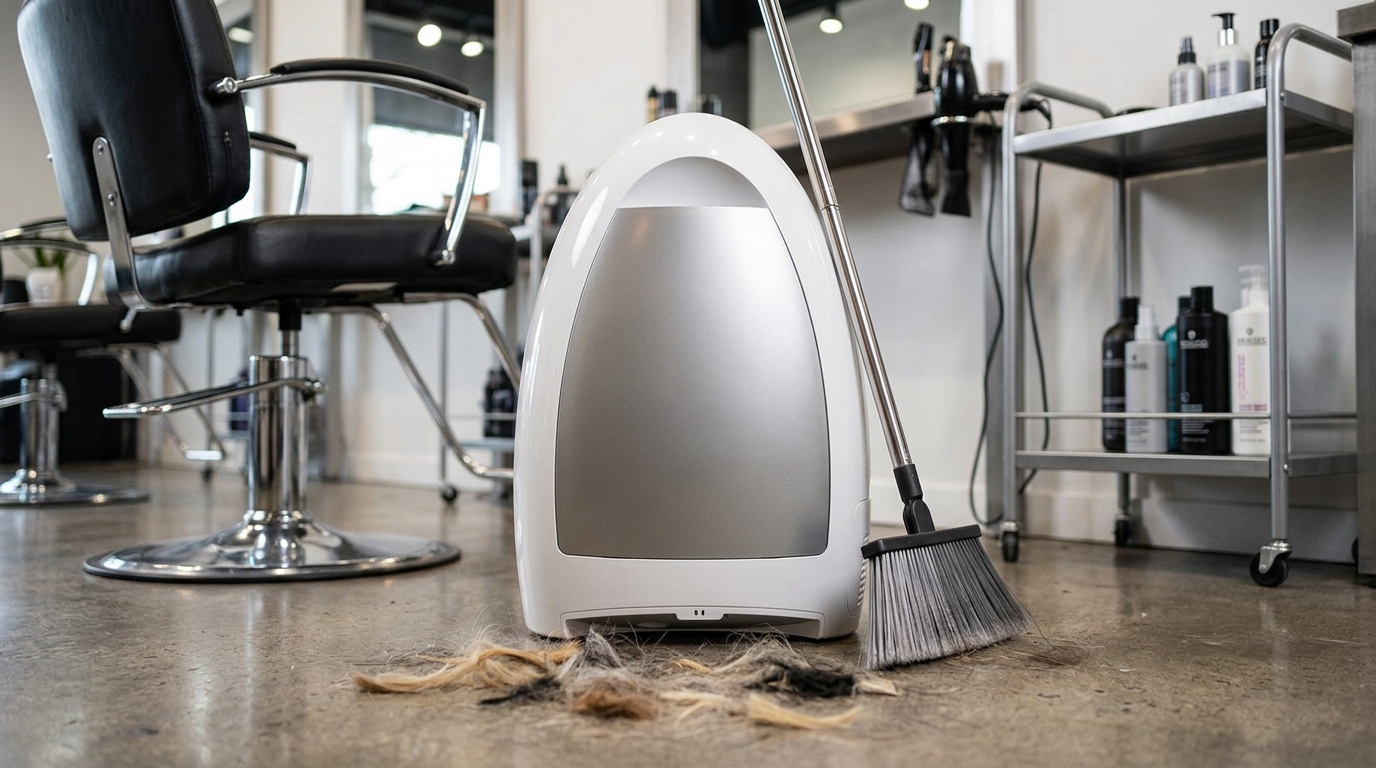
Hair is one of the easiest jobs for a touchless vacuum: no brush roll means nothing to tangle.
Garage and workshop floors
On a sealed concrete garage floor, the EyeVac can handle sawdust, leaf bits, dried mud and general grit.
Keep the quarter-sized limit in mind, though.
Screws, gravel and wood offcuts are too big, and fine drywall or concrete dust will clog the filters quickly.
For real construction dust, a shop vac with a proper filter is the better tool.
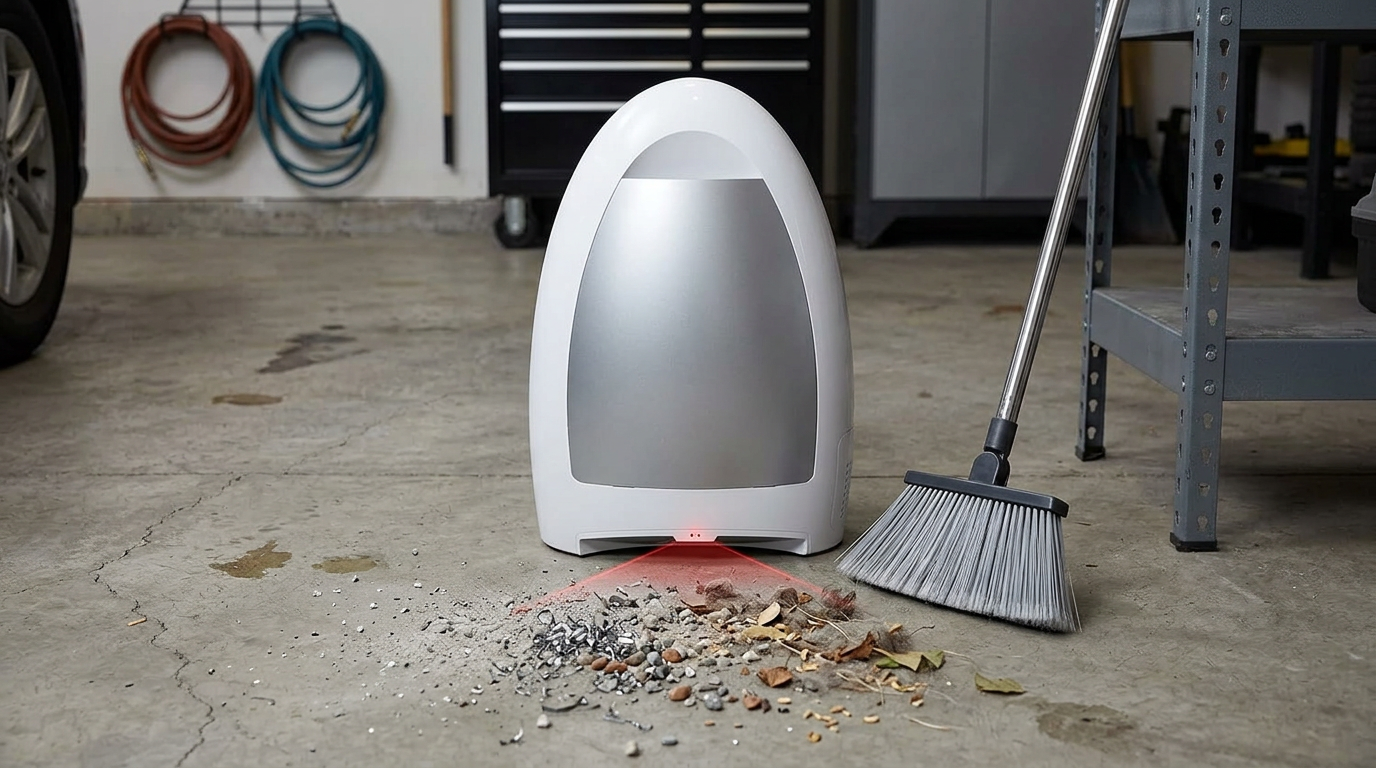
In a garage it works for light debris, but large or very fine dust is better left to a shop vac.
Entryways and outdoor dirt
People and pets carry in grass, soil and small stones, and entryways are where that mess starts.
Keeping the unit near a busy door lets you deal with it before it gets tracked through the house.
Craft rooms and hobby benches
Beads, paper scraps, confetti and ribbon can all be swept toward the inlet, as long as each item is small enough to fit.
The same goes for small scraps from leatherworking or woodworking, gathered with a broom or brush.
Skip anything that could damage the motor or create a safety hazard.
Countertops and workbenches
The unit can also sit on an elevated surface for small jobs like crumbs on a counter or scraps on a bench.
Place it securely, stick to dry material and use Manual mode so it does not start every time you walk past.
Carpet and rugs
Simply put: no.
EyeVac says the Home is designed for hard flooring of all types, such as wood, tile, linoleum, vinyl and sealed concrete.
It only works with what you sweep to it, and you cannot sweep a rug.
You will still need a regular vacuum for carpets, upholstery and stairs.
It is also not designed for reaching into narrow spaces.
Bending, weight and easy access
This is the benefit that matters most to a lot of buyers.
Dustpan cleanup means crouching, holding the pan to the floor and trying to chase every last particle onto it, often over several attempts.
With the EyeVac you stay standing and sweep toward the inlet.
That can help anyone who finds bending, crouching or getting back up uncomfortable.
It may also change how often you clean, because a two-second job gets done right away instead of waiting for the next big vacuuming session.
Its small footprint means it can stay out where you need it, and the handle covers the times it has to move.
Noise
The EyeVac Home is not quiet.
The Amazon listing rates it at 75 dB, which is about as loud as a typical upright vacuum.
One roundup lists it at 65 dB, so the real figure probably depends on where you measure.
What makes it tolerable is the duration.
A cycle lasts a few seconds, then it is silent again.
It can startle pets the first few times, and it is not something you want to trigger next to a sleeping baby, but most owners stop noticing it within days.
EyeVac figure is the rating on the Amazon listing. Other levels are typical figures from the NIH’s National Institute on Deafness and Other Communication Disorders and the Center for Hearing and Communication.
Each cycle lasts only a few seconds, so the noise is over almost as soon as it starts.
Emptying and filters
The canister holds roughly a gallon, according to the Amazon listing and most retailers.
For a stationary vacuum that only takes in swept piles, that is a lot.
Most households will empty it every week or two, and a light on the unit tells you when it is full.
To empty it, you pull the canister out of the body, take off the lid and the pre-motor filter, and tip the contents into the trash.
EyeVac says the canister opening fits into most trash cans, which helps limit the dust cloud.
Some dust still escapes, and the pre-motor filter catches a layer of fine dirt and hair that you need to tap or brush off.
This is the part of ownership that skeptics point to most.
On the Woot forum, one commenter worried that elderly parents would still have to bend down to empty it, and another asked how hard it is to clean out.
Those are fair points.
You trade bending down every day for a short, slightly messy emptying job every week or so.
The filters are washable.
Some listings mention three high-efficiency washable filters, while our notes on the unit show two: one at the front and one at the side.
An EyeVac representative answering on Best Buy said the filter is designed to never need replacing.
To clean it, you switch the unit off, empty the canister, rinse the filters and let every part dry completely before you put it back together.
EyeVac also offers replacement filters free of charge, with you paying shipping and handling.
Our advice: own a spare set, so you can swap in dry filters while the washed ones air out.
Putting damp filters back in is the quickest way to get a musty smell.
Our tip: Tap the filters clean every time you empty the bin, because pet hair and fine dust build up on them faster than you think.
| Job | When | How |
|---|---|---|
| Empty the bin | When the full light comes on, usually every week or two | Switch off, pull out the canister and tip it into the trash |
| Shake out the filters | Each time you empty it | Tap or brush away loose dust |
| Wash the filters | When they look dirty, sooner with pets or fine dust | Rinse and let dry completely |
| Buy consumables | Never in normal use | No bags, and filters are reusable |
The canister slides out of the body for emptying; the bin-full light tells you when.
What owners report
With over 15,000 ratings on Amazon averaging around 4.6 out of 5, the EyeVac Home has one of the deepest review records in this small category.
A Woot forum user citing the listing a while back saw over 9,000 reviews at 4.7 stars, so the score has held up as the count kept growing.
The praise centers on a few things.
Owners love that it is always there and always ready, so a small mess gets cleaned right away instead of waiting for the big vacuum to come out.
People with bad backs, bad knees or limited mobility say it makes sweeping manageable again.
One Woot commenter with a disabled partner bought it for that reason, and another tall buyer with a bad back saw it as a way to stop asking his daughter to hold the dustpan.
Pet owners and parents of small children are the other big fan base.
At Sylvane, all five reviewers recommended it, with one buying a second unit for their daughter.
The criticism is just as consistent.
The most common line is that it is an expensive dustpan, and Woot commenters called it a luxury item.
Others point out that a robot vacuum can take care of the same daily crumbs without any sweeping at all.
Being corded and stationary also means it only helps in one spot, so larger homes sometimes end up buying two.
A few individual complaints pop up too.
One Best Buy shopper reported a chemical smell on first use, and another had a unit whose power light would not come on out of the box.
Those appear to be isolated cases rather than a pattern, and the warranty and return window cover them.
Lifestyle site Brit+Co, in a sponsored piece, also called it the model it would recommend for most kitchens, while noting it does not replace a full vacuum.
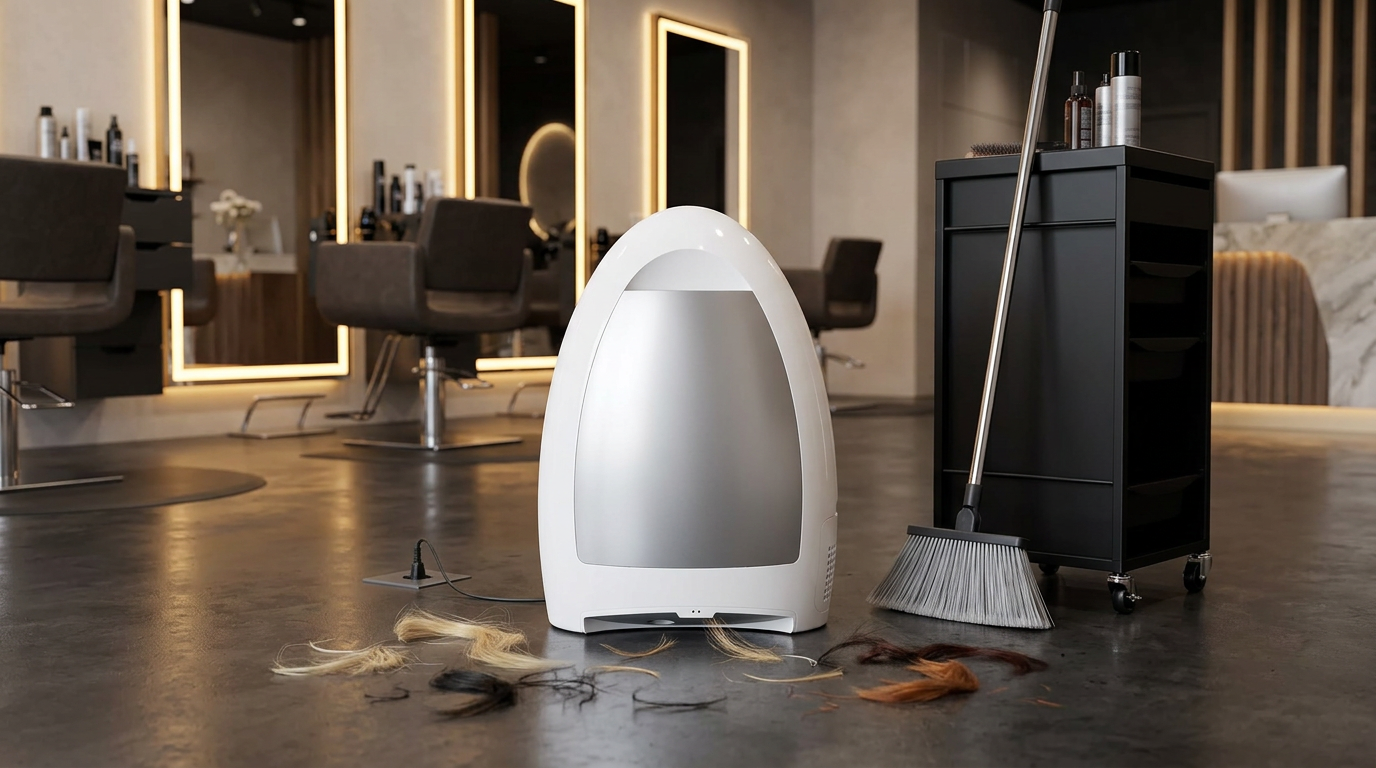
Salons were the original home of the stationary vacuum, and the EyeVac fits right in.
| What owners say | Tone | Where it came up |
|---|---|---|
| Always there and always ready | ✓ | Retailer reviews |
| Makes sweeping manageable with a bad back or knees | ✓ | Woot forum |
| Hair pickup has never caused tangling | ✓ | Best Buy |
| An expensive dustpan, a luxury item | ✕ | Woot forum |
| A robot vacuum can handle the same daily crumbs | ✕ | Owner comments |
| Corded and only helps in one spot | ✕ | Owner comments |
Is it worth the money?
At a typical price of around $169, the EyeVac Home costs more than a decent cordless stick vacuum on sale.
So the honest question is not whether it works, but whether you sweep enough for it to matter.
If you sweep once a week, a $15 dustpan does the same job.
If you sweep the kitchen two or three times a day because of a dog, a toddler or a busy cooking routine, the EyeVac saves dozens of small bends a week and makes the job noticeably faster.
Over a few years, that adds up.
There are no bags to buy and the filters are designed to last, so running costs are close to zero beyond electricity.
For people with mobility issues, the value case for the EyeVac Home is even stronger.
Being able to clean up without bending can be the difference between doing it yourself and asking for help.
No bags, no replacement filters to buy: running costs are close to zero.
What each sweep costs you
| How often you sweep | Sweeps in 3 years | Cost per sweep |
|---|---|---|
| Once a week | 156 | $1.08 |
| Once a day | 1,095 | $0.15 |
| Three times a day | 3,285 | $0.05 |
Our math, based on the $169 typical price and three years of use, excluding electricity.
Prices move, so check the current price on Amazon before you buy.
Specifications
From the Amazon listing and retailer pages. Where sources disagree, we note it.
How it compares
| EyeVac Home | EyeVac Pro | Built-in kickplate vacuum | |
|---|---|---|---|
| Type | Freestanding | Freestanding | Installed in cabinet base |
| Motor | 1,000 W | 1,400 W | Varies |
| Typical price | $169 | $229 | Varies, plus install |
| Activation | Infrared sensor | Infrared sensor | Usually foot switch |
| Best for | Most kitchens | Heavy shedders | Renovations |
Motor power
Bin size
JRL FASTSWEEP shown at its high power setting. It also has a 500-watt mode.
Alternatives
The EyeVac Pro is the natural step up.
Its 1,400-watt motor gives it more pull, and Bob Vila’s reviewer gave it 4.5 out of 5 after two weeks of use in a kitchen with a dog, praising how rarely a second sweep was needed.
The same review noted the bin lacks a carry handle and the build feels plasticky.
If you have the budget and a heavily shedding dog, it is worth the extra $60.
If you are renovating a kitchen, a built-in kickplate vacuum such as the Sweepovac hides inside the cabinet base and takes up no floor space.
The catch is installation and a higher total cost.
And if you hate sweeping altogether, a robot vacuum is the other route.
It will not give you instant cleanup after a spill, but it can keep crumbs and fur under control without you lifting a broom.
Our tip: If you already own a robot vacuum, let it handle the daily floor passes and keep the EyeVac for the spills that cannot wait.
The EyeVac Home is the most flexible option: put it in the kitchen, bathroom or garage.
Shopper questions
Common questions from retailer Q&A pages, with answers based on the manufacturer’s responses and specs.
Frequently asked questions
Do I ever need to replace the filters?
EyeVac says the filters are designed to last the life of the unit. Rinse them, let them dry completely, and reinstall. Replacement filters are available from EyeVac for the cost of shipping and handling.
Does it work on carpet?
No. It only takes in what you sweep to it, so it is made for hard floors like wood, tile, vinyl, laminate and sealed concrete.
Can it pick up wet messes?
No. It is a dry-only vacuum. Wet food, liquids and wet litter can damage it.
How big can the debris be?
Up to about the size of a quarter. Pick up anything larger by hand.
Does it replace my regular vacuum?
No. It is a spot cleaner for small dry messes, so you will still want a regular vacuum for carpets, upholstery and whole-room cleaning.
What is the difference between Auto and Manual mode?
In Auto mode the infrared sensors start the motor as you sweep toward it. In Manual mode it only runs when you press the activation button.
Can I use it on a countertop?
Yes, for small dry jobs like crumbs or bench scraps. Place it securely and use Manual mode.
Can I vacuum my pet with it?
No. It is for loose hair already on the floor or another suitable surface, not a grooming tool.
Is a broom included?
No. Any upright broom works, ideally one with angled, fairly stiff bristles.
How often do I need to empty it?
With a canister of about a gallon, most households empty it every week or two. A light tells you when it is full.
Our picks at a glance
EyeVac Pro Touchless Vacuum
The most powerful EyeVac: a 1,400-watt motor, a 1.3-gallon bin and infrared sensors that switch it on when you sweep debris toward it.
Keenhot Touchless Vacuum Automatic Dustpan
Compact and light at 4.3 pounds, with a HEPA filter and a 24-month replacement warranty for about half the price of an EyeVac.
JRL FASTSWEEP Professional Hair Vacuum Cleaner
Built for hair clippings: a 1.8-gallon bin and two power levels, 500 watts for everyday sweeping and 1,200 watts for heavy cleanups.
AIRTHEREAL T1 Touchless Vacuum Automatic Dustpan
The only pick with a built-in hose for manual cleaning, plus a 1.8-gallon bin and HEPA and activated carbon filtration.
Prices change often. Click through to see the current price on Amazon.