Louis Tellier raclette melter review: the real Swiss way, at home
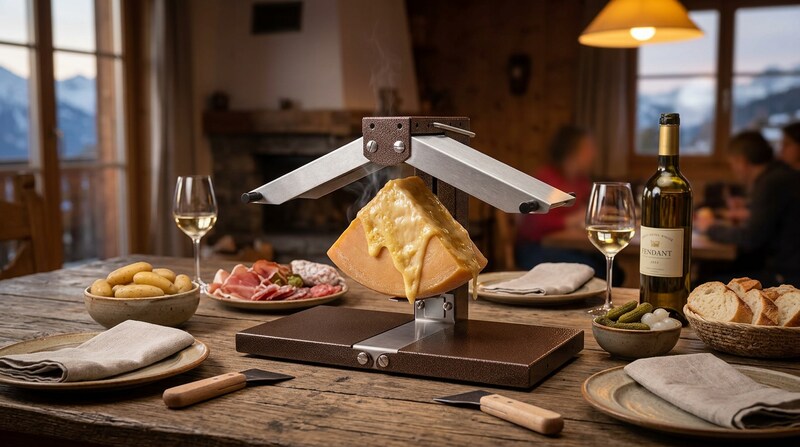
A French-made quarter-wheel melter with adjustable heating rods, a removable cheese holder and a scraping knife in the box. It turns raclette night into the real thing instead of little pans. It's pricey, though, and it only does one job.
In this review
If raclette is a regular thing in your house, the Louis Tellier Brézière is the upgrade that makes it feel like a Swiss mountain hut instead of a party grill. The adjustable heating rods, the removable holder and the made-in-France build are exactly what this kind of machine needs. It's a single-purpose appliance at a premium price, so it only makes sense if you'll use it more than once a winter.
Louis Tellier raclette melter at a glance
Louis Tellier raclette melter pros and cons
- Melts straight from a quarter wheel, the traditional way
- Adjustable heating rods let you control melting and browning
- Removable cheese holder makes loading and cleaning easier
- Also takes a smaller 1/6 wheel
- Stainless steel build, made in France
- Raclette knife included in the box
- Folds for storage and has a built-in safety switch
- Expensive for a single-purpose appliance
- Only melts cheese, it doesn't grill anything else
- Needs a quarter wheel of raclette, which isn't sold everywhere
- Cheese drips need attention during cleanup
Who should buy the Louis Tellier raclette melter?
- Households that do raclette several times a winter
- Small dinner parties of 2 to 6 people
- Anyone who wants the traditional scrape-from-the-wheel experience
- Cheese shops, wine bars and small restaurants
- Gifts for cheese lovers who already own everything else
- People who want to grill meat and vegetables at the table too
- Big parties of eight or more
- Occasional raclette eaters who'd use it once a year
- Small kitchens with no storage room for another appliance
First impressions of the Louis Tellier raclette melter
Most raclette at home happens on a party grill with little pans.
Everyone slices their own cheese, slides a pan under the heater and waits.
It's fun, but it's not what you get in a Swiss restaurant.
There, a big piece of the wheel sits under a heater and someone scrapes the bubbling top straight onto your plate.
The Louis Tellier Brézière is built to bring that version home.
My first impression is that it looks like a piece of professional kit rather than a gadget.
It's mostly stainless steel, with a heating arm on top, a cheese holder underneath and a flat base where your plate goes.
There are no screens and no apps.
It's a heater, a holder and a knife, and that's the point.
Louis Tellier is a French brand best known for professional kitchen tools, from mandolines to food mills.
This melter comes from the same world: it's sold to restaurants and cheese shops as well as home cooks.
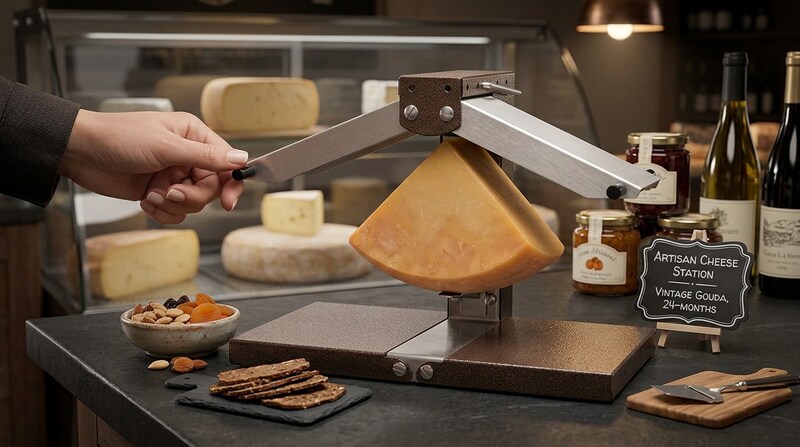
The whole idea: melt the face of the wheel, then scrape it straight onto the plate.
What the Louis Tellier raclette melter actually is
The machine sold on Amazon is the Louis Tellier Brézière, model number BREZ02.
It's a tabletop raclette melter designed for a quarter wheel of cheese, and a 1/6 wheel fits too.
Louis Tellier says it serves 2 to 6 people.
The US version runs on 110 to 120 volts with a standard US plug, and it's rated at 900 watts.
That's a modest figure, about the same as a small toaster oven.
The heat comes from electric heating rods mounted above the cheese.
You can move those rods to set how close the heat sits to the cut face of the wheel.
The listing mentions six settings in total.
The cheese itself sits in a removable holder that you can take out to load a new piece or to clean.
The box also includes a raclette knife, the flat, blunt scraper you use to push the melted layer off the wheel.
The build is stainless steel and steel, and the machine is made in France.
It weighs about 8.7 pounds and measures roughly 17.5 inches deep, 8.5 inches wide and 11.8 inches tall.
How a quarter-wheel raclette melter works
The principle is old.
Swiss herders used to hold a half wheel of cheese next to an open fire and scrape off the soft layer as it melted.
The word raclette comes from the French verb racler, which means to scrape.
A melter like this replaces the fire with electric heating rods.
You clamp the wheel into the holder with the cut face pointing up toward the heater.
After a few minutes, the top layer softens, bubbles and starts to brown at the edges.
Then you tilt the holder, hold a plate underneath and scrape the melted layer off with the knife.
While you serve one plate, the next layer is already warming up.
That's the big difference from a pan-style party grill.
With pans, everyone waits for their own little portion, and the cheese is cut into slices first.
With a wheel melter, service is continuous and the cheese keeps its rind, which adds flavor and a bit of chew.
As the wheel gets used up, the cut face drops lower.
That's where the adjustable rods matter, because you can bring the heat back down to the cheese.
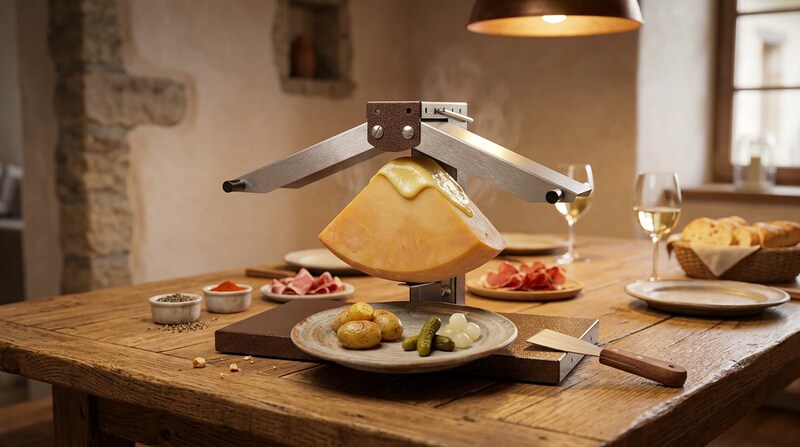
Plate under the wheel, scrape, serve, repeat.
Louis Tellier raclette melter design and setup
The Brézière has a simple layout.
A flat base sits on the table.
An upright holds the heating arm, and below it a swiveling cheese holder grips the wheel.
At about 17.5 inches deep, it takes up roughly the space of a large cutting board.
That's fine on most dining tables, but you'll want it in the middle where everyone can reach.
Setup is mostly about the cheese.
You trim the wheel if needed, push it into the holder with the cut face up, and plug the machine in.
Then you set the rods to the distance you want and give it time to heat.
My advice is to take the cheese out of the fridge an hour before.
A cold wheel melts more slowly, and the first round always takes the longest.
Think about the cord as well.
The machine has to sit in the center of the table, so plan where the cable runs so nobody catches it with an elbow.
A heatproof board or trivet under the base is a good idea on a wooden table, mostly to catch drips.
When dinner is over, the melter folds up for storage, which helps it fit into a cupboard.
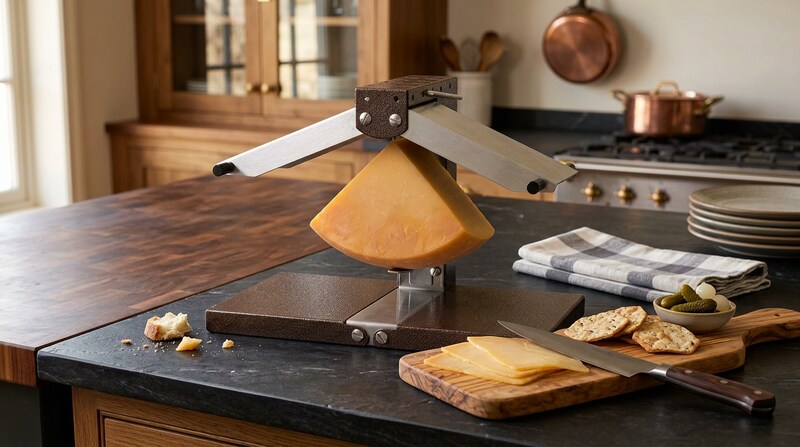
The footprint is about the size of a large cutting board.
Louis Tellier raclette melter performance
With a raclette melter, performance comes down to three questions.
How fast does the first layer melt, how evenly does it melt and how well does it keep up once everyone has a plate?
Melting speed
At 900 watts, this isn't a blast furnace, and it doesn't need to be.
Raclette cheese melts at a fairly low temperature, and you want it soft and bubbling, not burnt.
The first round is the slowest, especially with a wheel that's still cold in the middle.
After that, the face is already warm, so each new layer comes faster.
The rhythm suits a dinner well: a scrape, a few minutes of eating, then the next scrape.
Even melting and browning
The adjustable rods are the best feature here.
Closer heat gives you a quicker melt and more browning around the edges, which many raclette fans love.
Further away gives a softer, paler layer that's easier to scrape cleanly.
Being able to choose means you can match the heat to the cheese and to your guests.
A quarter wheel also has a wedge shape, so the thin point and the thick rind end don't sit at the same distance.
Turning the holder a little between rounds is the easy fix if one side runs ahead of the other.
Keeping up with a group
For two to four people, a quarter wheel melter is close to ideal.
Everyone gets fresh cheese at a comfortable pace, and there's always a layer warming.
At six, it still works, but expect a short queue.
That's normal for this style of raclette, and in Switzerland the waiting is part of the meal.
For bigger groups, Louis Tellier also makes half-wheel machines, or you can run two melters.
What it doesn't do
This isn't a grill.
There's no hot plate on top for steak, shrimp or vegetables, which many party raclettes have.
You boil the potatoes and prepare everything else in the kitchen, and the melter only does the cheese.
If the grilling part is what your family likes, a party grill is the better buy.
Running a raclette night with the Brézière
A machine like this is only as good as the dinner around it, so here's how I'd set one up.
The classic sides
Small waxy potatoes, boiled in their skins, are the base.
Keep them warm in a covered dish or a basket lined with a cloth.
Add cornichons and pickled pearl onions for acidity, because they cut through the richness of the cheese.
Air-dried beef, ham and salami round out the table.
A crisp, dry white wine is the traditional match, and black tea is the classic Swiss alternative.
How much cheese you need
A common rule of thumb is about 200 to 250 grams of cheese per person for a main meal.
A quarter wheel of raclette usually weighs well over a kilo, so it feeds a group of four to six with some left over.
Leftover cheese keeps well wrapped in wax paper in the fridge, and it's great on toast or in a gratin.
Who scrapes?
In a restaurant, one person runs the machine.
At home, I'd let everyone take a turn, because scraping the wheel is half the fun.
Just keep the knife on a board next to the melter, because it gets hot and greasy.
Potatoes, pickles, cured meat and a dry white wine are the classic match.
Which cheese to buy for a quarter-wheel melter
The machine is built around a quarter wheel, so buying the cheese takes a little planning.
Swiss raclette and French Raclette de Savoie are the classics.
Both are made to melt smoothly without turning oily, and both have a washed rind that gets nicely crisp under the heater.
Cheese shops and well-stocked supermarkets often sell quarter wheels around the holidays, and many will cut one if you ask a few days ahead.
Online cheese sellers ship them too.
If raclette is hard to find, other good melting cheeses can work, for example a young Gruyère, Fontina or Comté.
They melt differently, so you'll want to adjust the rod distance and keep an eye on the first round.
Pre-sliced raclette, the kind sold for pan grills, doesn't work in this machine.
You need a solid piece of wheel that the holder can grip.
Cleaning the Louis Tellier raclette melter
Melted cheese gets everywhere, and cleanup is the least glamorous part of any raclette.
The removable holder is a real help here, because you can take it out and wash it properly instead of scrubbing around it.
The stainless steel surfaces wipe down well once the grease is softened.
Let the machine cool down completely first.
Then scrape off any hardened cheese with a plastic scraper, and wipe the base with hot, soapy water.
Keep water away from the heating rods and the electrical parts, and never put the main unit in water.
My advice is to wipe drips during the evening too, while the cheese is still soft.
It takes seconds then and minutes later.
A sheet of parchment or a small tray under the wheel catches the worst of it.
Safety and storage
The heating arm gets hot, and it sits at hand height in the middle of the table.
That's worth keeping in mind with kids at dinner.
Louis Tellier builds in a safety switch, and the stainless body is sturdy enough that it won't tip over easily.
Still, give it space, and keep paper napkins and the cord away from the heater.
For storage, the melter folds down, so it doesn't need a cupboard of its own.
At almost 9 pounds, it's not something you'll carry around daily, but it's easy enough to bring out for a dinner.
Is the Louis Tellier raclette melter worth the money?
On Amazon, the Brézière sells for about $330.
That's a lot more than a party grill with pans, which you can find for well under $100.
So the real question is how often you'll use it.
If raclette is a once-a-year novelty, a party grill gives you most of the fun for a fraction of the price.
If it's a winter tradition in your house, the melter changes the meal.
You get the scraped, rind-on cheese of a Swiss restaurant, and nobody spends the evening fiddling with tiny pans.
The build quality also counts.
A stainless steel, made-in-France machine with a simple heating design should last a long time, and that softens the price over the years.
For a cheese shop or a wine bar, it's an easy decision, because it's a working tool that pays for itself.
Prices move, so check the current price on Amazon before you buy.
Louis Tellier raclette melter specifications
From the Amazon listing and Louis Tellier's product information.
Quarter-wheel melter vs party grill vs half-wheel melter
The Brézière sits between the cheap party grill most people own and the big half-wheel machines used in restaurants.
| Louis Tellier Brézière | Party grill with pans | Half-wheel melter | |
|---|---|---|---|
| Cheese | 1/4 or 1/6 wheel | Pre-sliced | 1/2 wheel |
| Serves | 2 to 6 | 4 to 8 | 6 to 12 |
| Grills food | No | Yes | No |
| Experience | Traditional scraping | Individual pans | Traditional scraping |
| Typical price | About $330 | Under $100 | $400 and up |
| Best for | Small dinners | Casual parties | Restaurants, big groups |
Best Louis Tellier raclette melter alternatives
If the price or the single purpose of the Brézière puts you off, there are a few other routes.
A party grill with individual pans is the cheapest way in.
Look for one with a granite or cast iron top, so you can grill meat and vegetables while the cheese melts below.
For bigger groups, a half-wheel melter, including Louis Tellier's own larger models, keeps more people fed at once.
Some European brands make stylish quarter-wheel melters as well, but check the voltage, because many are sold only in 220 to 240-volt versions.
And if you just want melted cheese now and then, your oven's broiler and a cast iron pan will get you surprisingly close.
How I scored the Louis Tellier raclette melter
I looked at the Louis Tellier Brézière for the job it's built for: melting a quarter wheel of raclette for a small dinner.
I based the scores on Louis Tellier's published specifications, the Amazon listing, retailer information and how this style of melter compares with party grills and bigger wheel machines.
- Melting (8.6): heat control, the adjustable rods and how well the design keeps up with a small group.
- Ease of use (8.4): loading the wheel, setup at the table and serving.
- Cleaning (7.6): the removable holder and stainless surfaces against the mess of melted cheese.
- Value (7.2): price against build quality, lifespan and how often you'll use it.
The overall score of 8.2 is an editorial rating. BrasQ editor-in-chief Ryan Mitchell reviewed the facts and figures before publication.
Louis Tellier raclette melter FAQ
Is the Louis Tellier raclette melter worth it?
Yes, if you have raclette several times a year. It scored 8.2 out of 10 in our review, thanks to the adjustable heating rods, the removable holder and the solid French build. For a once-a-year dinner, a party grill is a cheaper choice.
What size cheese does it take?
It's designed for a quarter wheel of raclette cheese, and a 1/6 wheel also fits. Pre-sliced raclette doesn't work in it.
How many people does it serve?
Louis Tellier says 2 to 6 people. It's at its best for two to four, with a short wait between plates for larger groups.
What is the wattage?
The US version is rated at 900 watts and runs on 110 to 120 volts with a standard US plug.
Does it come with a raclette knife?
Yes. A raclette knife for scraping the melted cheese is included in the box.
Can I grill meat or vegetables on it?
No. It only melts cheese. Potatoes and other sides are prepared separately. If you want to grill at the table, a party grill is the better fit.
How do I clean it?
Let it cool completely, take out the removable cheese holder and wash it, then wipe the stainless steel body with hot, soapy water. Keep water away from the heating rods and electrical parts.
Where is it made?
The Brézière is made in France by Louis Tellier, a French maker of professional kitchen tools.
- Amazon product listing for the Louis Tellier raclette cheese melter (ASIN B0BYFVK2BJ), October 2026
- Louis Tellier product information for the Brézière (BREZ02)
- Retailer listings for Louis Tellier raclette machines
- Review published.