LoafNest No-Knead Artisan Bread Kit review: crusty bread without the kneading
A 2-quart cast iron Dutch oven with a perforated nonstick silicone liner, built for no-knead artisan loaves. Flour, water, salt and yeast, a long rest, and very little hands-on work. It is a pricey way to bake one loaf at a time, though, and the timing takes planning.
In this review
I came away from my time with the LoafNest No-Knead Artisan Bread Kit impressed by how simple it makes crusty, homemade bread. The covered cast iron pot keeps moisture in early in the bake for a crisp crust and a tender inside, and the perforated liner means the loaf lifts out cleanly. The method needs planning because of the long rest, and the price is high for what is essentially a small Dutch oven and a liner. If you want artisan-style loaves without learning to knead and shape, it is a very easy way in.
LoafNest No-Knead Artisan Bread Kit at a glance
LoafNest No-Knead Artisan Bread Kit pros and cons
- No kneading and no shaping needed
- Covered cast iron pot creates a steamy environment for a crisp crust
- Perforated nonstick liner makes it easy to lift the loaf out
- Uses simple ingredients: flour, water, salt and yeast or sourdough
- Compact 2-quart size
- Oven safe up to 260°C (500°F), according to the listing
- Expensive compared with a basic Dutch oven
- Bakes one modest loaf at a time
- Long rest times mean you need to plan ahead
- Heavy for its size, at about 9.5 pounds
Who should buy the LoafNest No-Knead Artisan Bread Kit?
- Beginners who want to bake bread without kneading
- Busy people who can mix in five minutes and bake later
- Small households that eat one loaf every few days
- Sourdough and yeasted artisan-style loaves
- Anyone who has struggled with dough sticking to a Dutch oven
- Experienced bakers who already own a Dutch oven
- Large families who need bigger loaves
- Sandwich-loaf and soft-bread fans
- Anyone who wants fresh bread on short notice
First impressions of the LoafNest bread kit
Homemade bread has a reputation for being hard work.
Kneading, shaping and getting a good crust can feel like skills that take years to learn.
The LoafNest No-Knead Artisan Bread Kit is built around the opposite idea.
It offers a straightforward way to explore homemade bread without making kneading part of the process.
My first impression was how compact and purposeful the kit feels.
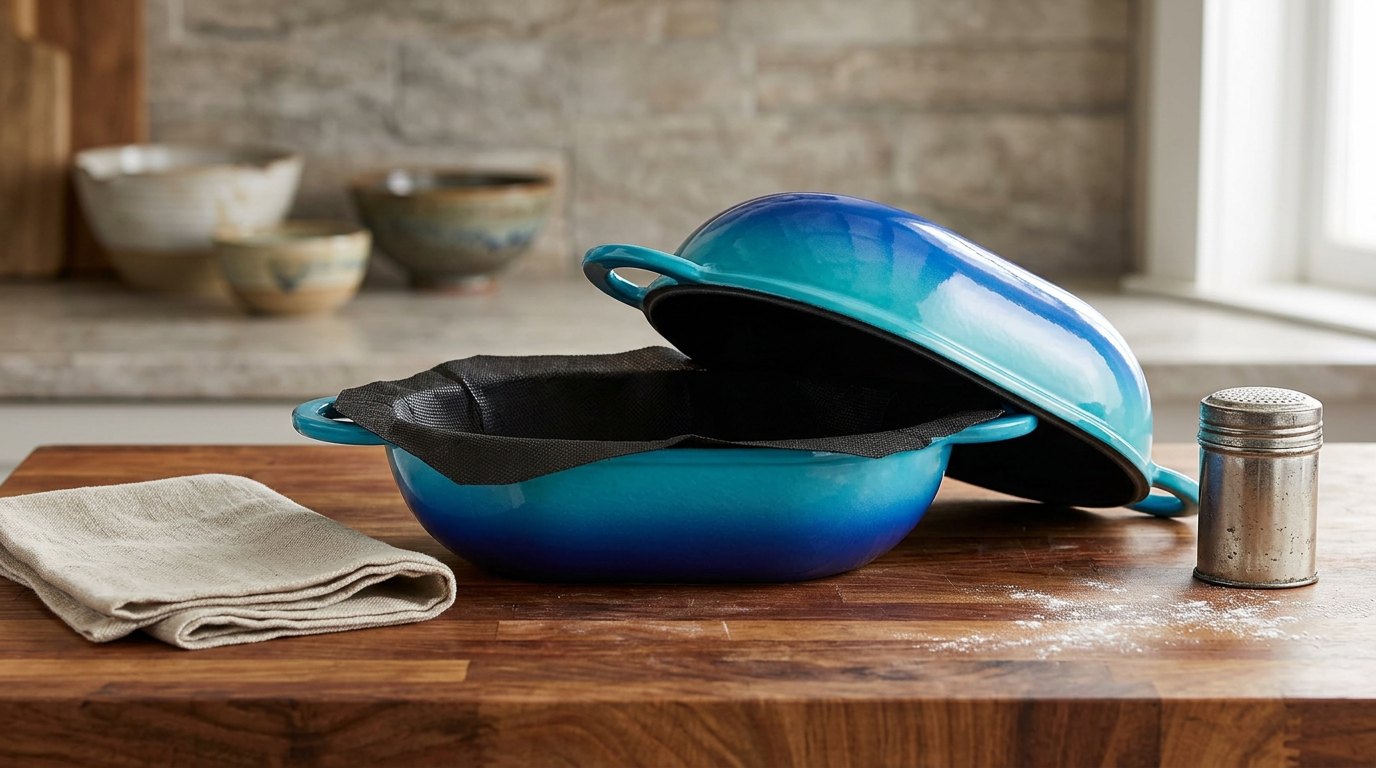
It is a small, oval cast iron Dutch oven in a striking blue gradient finish, with a perforated nonstick liner that fits inside.
That is it.
No mixer, no proofing basket, no baking stone.
The simplicity is the point.
The no-knead approach is attractive for anyone who wants to try artisan-style loaves using simple ingredients and a longer resting period instead of intensive handwork.
The LoafNest is a compact cast iron pot designed around one artisan loaf.
What the LoafNest kit actually includes
The Amazon title does not lead with a brand name, so it is worth knowing who makes it.
The Amazon listing is for LoafNest, a family-run company that designs its bread kits in the Netherlands.
According to LoafNest, the kit includes two parts:
- A 2-quart cast iron Dutch oven with a lid
- A perforated nonstick silicone liner shaped to fit inside it
LoafNest says the Dutch oven is made in China and the liner in France.
The listing calls the material cast iron and shows an enameled finish on the outside.
Amazon lists the item at about 9.06 inches wide, 5.71 inches deep and 5.71 inches tall, and about 9.5 pounds.
The upper temperature rating is listed as 260°C, which is 500°F.
As kits can vary over time, I would check exactly which accessories and instructions are included when you order.
I would also confirm the material, oven limit and preheating guidance in the instructions before the first bake.
How the LoafNest no-knead method works
The LoafNest method is a version of the classic no-knead bread technique.
Instead of kneading to build gluten, you let time do the work.
Mixing
You mix flour, water, salt and yeast, or sourdough starter, into a shaggy dough.
LoafNest says the hands-on part takes less than five minutes.
There is no kneading, and no shaping into a tight ball.
The long rest
The dough then rests for many hours.
During that long fermentation, the gluten develops on its own and the flavor deepens.
This is the part that needs planning.
I find it easiest to mix in the evening and bake the next day, or mix in the morning and bake for dinner.
Into the liner
The dough goes into the perforated silicone liner, which sits in the cast iron pot.
The liner holds the shape of the loaf, so you do not need shaping skills.
Baking
The pot goes into a hot oven with the lid on.
The closed pot traps steam from the dough during the early stages of baking.
That moist environment lets the loaf rise fully before the crust sets.
Then the crust browns and crisps as the bake goes on.
Following the recipe's fermentation times, and the instructions on preheating and baking, makes a meaningful difference to the final texture.
LoafNest bread results: crust and crumb
The test that matters is simple: does it make a loaf you are proud of?
The crust
A covered cast iron pot is one of the best tools for crust at home.
It retains heat well and keeps moisture in during the early part of the bake.
That supports a crisp, deeply colored crust that crackles as it cools.
The crumb
The long, slow fermentation and the steamy start help the inside stay tender and open.
No-knead dough tends to be wetter than kneaded dough, which gives that airy, irregular crumb you see in bakery loaves.
Consistency
LoafNest's own claim is that the system takes guesswork out of the process.
In my experience with this style of baking, the biggest variables are flour, water temperature and how long the dough rests.
Keep those consistent and the results stay consistent too.
Loaf size
The 2-quart pot makes a modest, oval loaf.
That suits a small household that wants fresh bread every few days.
If you need bigger loaves, you will need a larger Dutch oven.
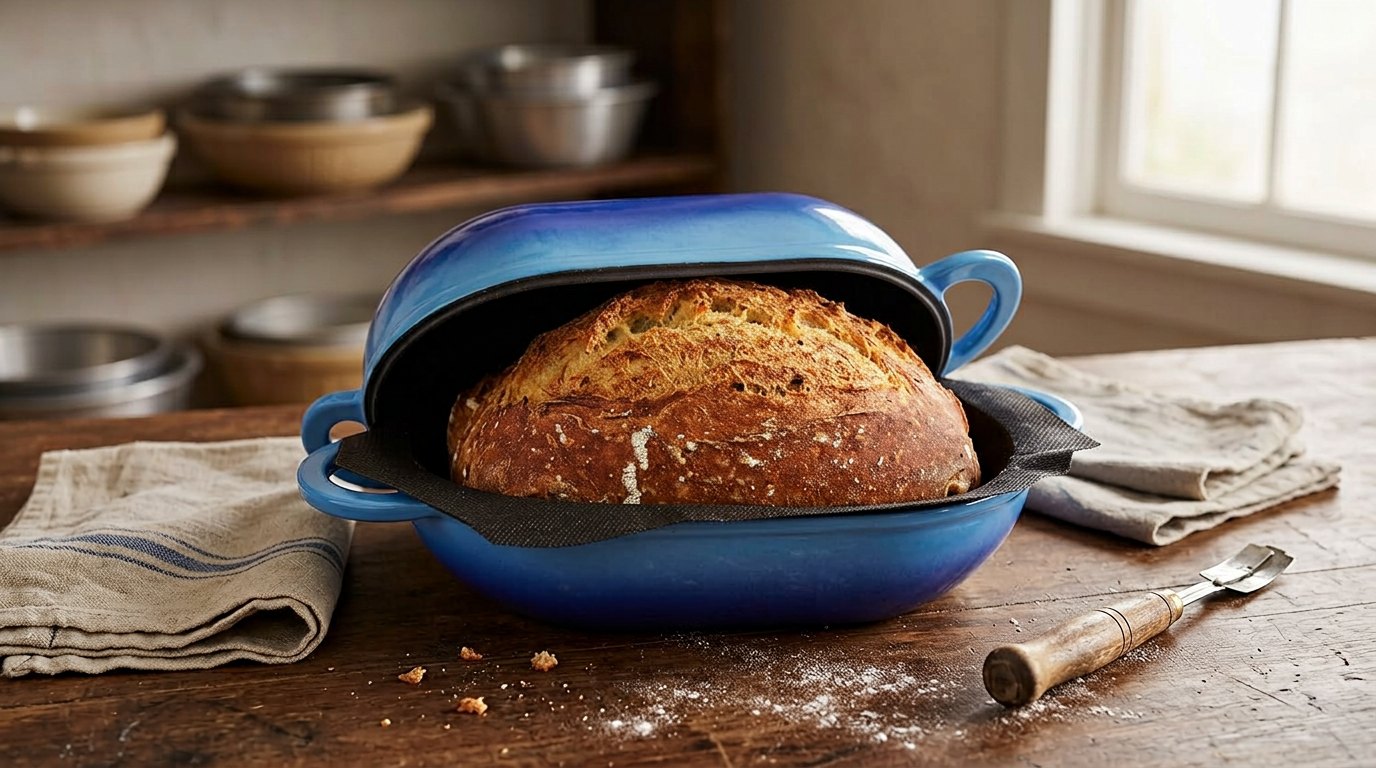
The covered pot traps steam early in the bake, which helps build a crisp crust.
Why the perforated liner matters
The silicone liner is the part that makes LoafNest different from an ordinary Dutch oven.
Anyone who has baked bread in a regular Dutch oven knows the tricky moment.
You have to lower a soft, sticky dough into a blazing hot pot without burning yourself or deflating it.
Then you hope it does not stick to the bottom.
The liner solves both problems.
The dough sits in the liner, and the liner sits in the pot.
The perforations let heat reach the dough and let moisture escape where it needs to.
The nonstick surface means the finished loaf lifts out cleanly.
It also keeps the cast iron cleaner, because the dough never touches it directly.
For beginners, that alone removes one of the most stressful parts of artisan bread.
LoafNest design and build
The Dutch oven is oval rather than round, which gives you a loaf shape that is easier to slice.
The blue gradient finish is eye-catching enough to leave out on the stove.
Small handles on the sides help you lift the pot in and out of the oven.
Use thick oven mitts, because cast iron holds heat for a long time.
At about 9.5 pounds, it is heavy for its size.
That weight is part of why it bakes well, because the mass stores heat and releases it evenly.
The compact size is a plus in a small kitchen.
It fits in a cupboard or on a shelf more easily than a large Dutch oven.
It also only bakes one loaf, so you will not be using it for big batches of stew.
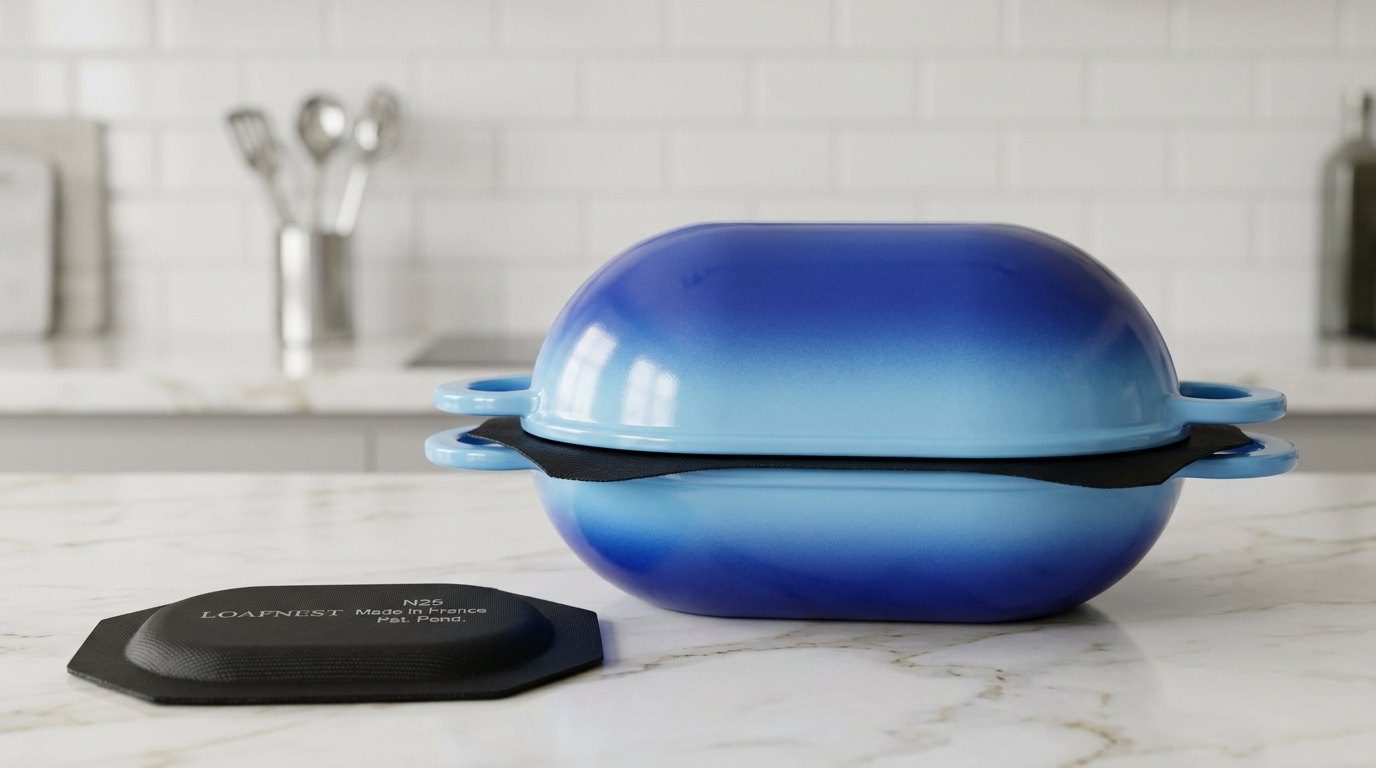
The oval cast iron pot is compact enough to store in a cupboard.
What a LoafNest baking day looks like
The no-knead method is easy, but it runs on a different clock from most cooking.
Here is how a typical bake fits into a day.
The evening before
Mix flour, water, salt and a small amount of yeast in a bowl.
It takes a few minutes, and the dough looks rough and sticky.
That is normal.
Cover it and leave it at room temperature overnight.
The next morning or afternoon
The dough will have risen and become bubbly and loose.
Tip it into the liner, following the LoafNest instructions for any second rise.
Because the liner holds the shape, there is no folding or shaping to worry about.
Baking
Bake with the lid on first, so the pot holds steam around the loaf.
Then follow the recipe for any time with the lid off, if it calls for it, to deepen the color of the crust.
Cooling
Lift the loaf out with the liner and move it to a wire rack.
Leave it alone for at least an hour.
The total
The hands-on time is tiny.
The waiting is long.
Once you get used to that rhythm, it fits easily around work and family life.
Ingredients and variations
One of the best things about this kind of bread is how few ingredients it needs.
LoafNest's basic idea is flour, water, salt and yeast, or sourdough starter.
Flour
Bread flour with a higher protein content gives a chewier crumb and a taller loaf.
All-purpose flour works too, with a slightly softer result.
Swapping in some whole wheat or rye adds flavor and makes the crumb denser.
Yeast or sourdough
Instant or active dry yeast is the easiest place to start.
Sourdough takes longer but adds a gentle tang and better keeping quality.
Add-ins
Once you have the basic loaf down, it is easy to experiment.
Seeds, olives, dried herbs, cheese or chopped nuts can all go in with the flour.
I would change one thing at a time, so you know what made the difference.
Salt
Do not skip it.
Salt controls fermentation and gives bread its flavor.
Cleaning the LoafNest kit
Because the dough sits in the liner, the pot usually stays fairly clean.
LoafNest's comparison table marks its kits as dishwasher and oven safe.
I would still read the care instructions that come with the kit, because enameled cast iron often lasts longer with hand washing.
For the liner, warm soapy water and a soft brush clear crumbs from the perforations.
Let both parts dry completely before storing them.
Avoid metal scourers on the enamel and the silicone.
And let the pot cool before washing it, because a sudden temperature change is hard on cast iron.
Why you should let the loaf cool
It is tempting to cut into a loaf the moment it comes out of the oven.
I would wait.
Bread keeps cooking from the inside as it cools, and the crumb is still setting.
Cutting too soon gives you a gummy, dense middle.
Letting the loaf cool on a wire rack for at least an hour makes a meaningful difference to the final texture.
It also keeps the crust crisp, because steam can escape rather than soften it.
Is the LoafNest bread kit worth the money?
At the time of writing, the kit costs about $166 on Amazon.
That is the biggest catch.
A basic cast iron Dutch oven costs far less and can also bake no-knead bread.
So you are paying for the specific design: the oval shape, the liner and the convenience of a system built around one task.
On Amazon, it has an average rating of about 4.5 out of 5 from more than a thousand ratings at the time of writing.
If you already own a Dutch oven and are comfortable with parchment paper, you probably do not need this.
If you are new to bread and want the easiest possible route to a crusty loaf, the liner removes the most stressful part.
It is a good way to try rustic breadmaking without building a big collection of specialized equipment.
Prices move, so check the current price on Amazon before you buy.
My tips for better no-knead bread
- Weigh flour and water with a kitchen scale for consistent results.
- Use lukewarm water to help the yeast get started.
- Plan the rest: mix in the evening, bake the next day.
- Follow the recipe's fermentation times rather than rushing them.
- Use thick oven mitts; cast iron stays hot for a long time.
- Cool the loaf on a rack for at least an hour before slicing.
- Try adding seeds, herbs or a little whole wheat flour once you know the basic recipe.
Common no-knead mistakes to avoid
Even with an easy method, a few things trip people up.
Rushing the rest
Cutting the fermentation short gives a dense loaf with little flavor.
If your kitchen is cool, the dough needs more time, not less.
Too much flour
Adding flour to make the dough easier to handle makes the bread tighter and drier.
No-knead dough is supposed to be sticky.
The liner is there so you do not have to handle it much.
Measuring by volume
Cups of flour vary a lot depending on how you scoop.
A kitchen scale is the easiest upgrade for more consistent results.
Slicing too early
A hot loaf is still setting inside.
Give it time on the rack, and the texture will be much better.
LoafNest alternatives
A standard round cast iron Dutch oven with parchment paper is the budget alternative.
It bakes larger loaves and doubles as a stew pot.
A ceramic bread cloche gives a similar steamy bake with a lighter base.
A cast iron bread pan, which opens like a clamshell with a shallow base, makes it easier to load dough without a deep pot.
And for sandwich loaves rather than crusty artisan bread, a bread machine or a simple loaf pan makes more sense.
LoafNest No-Knead Artisan Bread Kit specifications
From LoafNest and the Amazon listing.
How I tested and scored the LoafNest No-Knead Artisan Bread Kit
I used the LoafNest No-Knead Artisan Bread Kit the way it is meant to be used: mixing simple no-knead dough, letting it rest, and baking crusty loaves in the covered pot.
I paid attention to four things, and each one gets its own subscore.
- Ease of use (8.8): mixing, timing, loading the dough and getting the loaf out.
- Bread results (8.6): crust, crumb and consistency.
- Build quality (8.4): the cast iron pot, enamel finish and liner.
- Value (6.8): price compared with a regular Dutch oven.
The overall score of 8.2 is an editorial rating. I also checked LoafNest's published specifications. BrasQ editor-in-chief Ryan Mitchell reviewed the facts and figures before publication.
LoafNest No-Knead Artisan Bread Kit FAQ
Is the LoafNest bread kit worth it?
Yes, if you are new to bread and want the simplest route to crusty artisan loaves. If you already own a Dutch oven, the price is harder to justify.
Who makes the No-Knead Artisan Bread Kit?
The Amazon listing is for LoafNest, a family-run company that designs its kits in the Netherlands.
What is included?
A 2-quart cast iron Dutch oven with lid and a perforated nonstick silicone liner.
Do I need to knead the dough?
No. You mix flour, water, salt and yeast or sourdough, and a long rest develops the gluten.
What is the maximum oven temperature?
The listing gives an upper temperature rating of 260°C (500°F). Check the instructions that come with your kit.
How big is the loaf?
The 2-quart pot makes a modest oval loaf, suited to a small household.
Can I use sourdough?
Yes. LoafNest says the method works with yeast or sourdough.
- Hands-on use of the LoafNest No-Knead Artisan Bread Kit by Thomas Walker
- Amazon product listing for the LoafNest No-Knead Artisan Bread Kit, 2 qt (ASIN B07B7BB4PY), October 2026
- LoafNest product information and comparison table
- Review published.