Emile Henry Bread Cloche review: crusty loaves from a French ceramic dome
A glazed ceramic base and bell-shaped lid, made in France, that traps steam around your loaf for a crisp, chewy crust. It is lighter than cast iron and you can proof the dough right in it. It costs a lot for a single-purpose bake pan, though, and ceramic is less forgiving than iron.
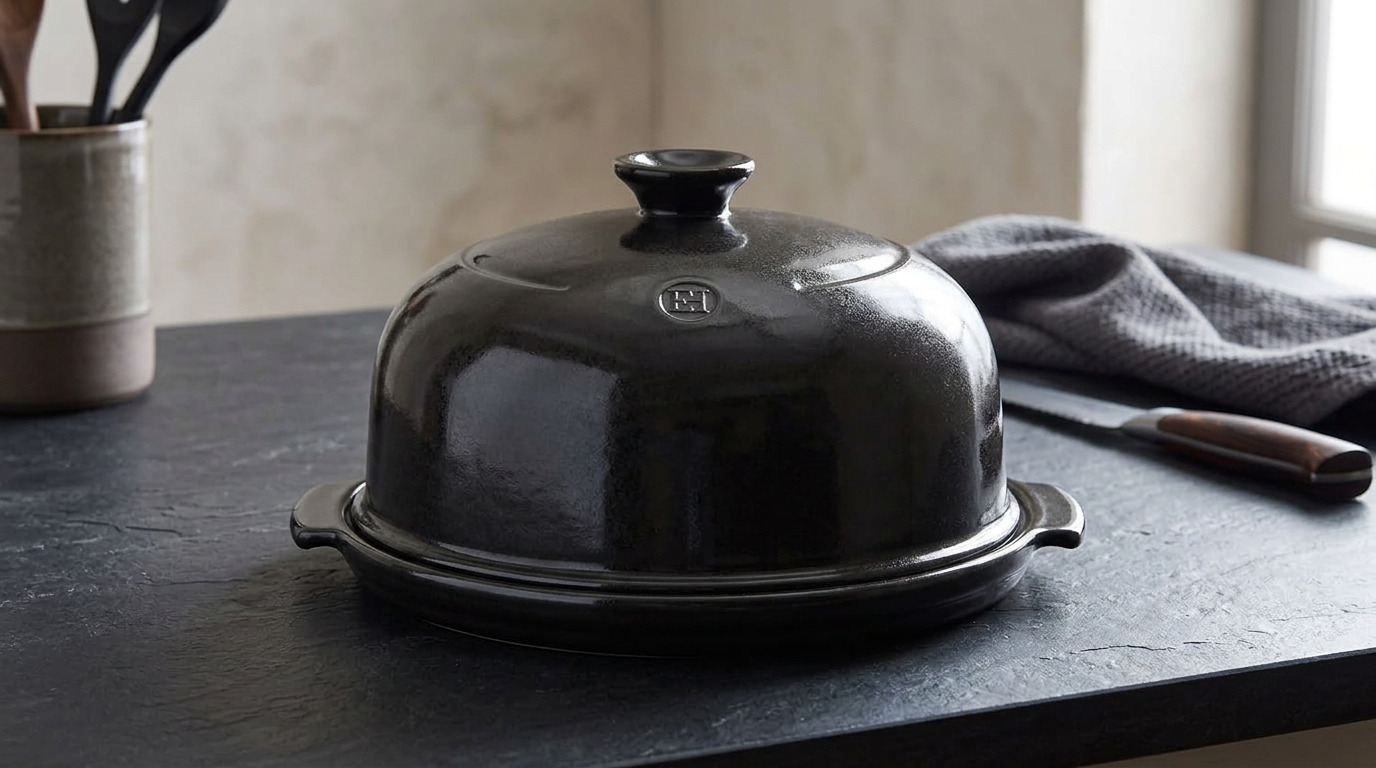
Images are AI-generated illustrations based on the manufacturer's product photo.
In this review
The Emile Henry Bread Cloche is one of the nicest ways to bake a round loaf at home. The domed lid traps steam for a blistered, crackly crust, the shallow base makes it easy to load dough, and it is much lighter than a cast iron Dutch oven. It is expensive for a pan that does one job, it is sized for a fairly small loaf, and ceramic can crack if it is dropped or abused. If you bake bread every week and value how your kitchen tools look and feel, it is a lovely buy.
Emile Henry Bread Cloche at a glance
Emile Henry Bread Cloche pros and cons
- Crisp, crackly crust thanks to trapped steam
- Shallow base makes loading dough easy and safe
- You can proof the dough directly in the cloche
- Lighter than a cast iron Dutch oven
- Freezer to oven, up to 500°F for baking
- Made in France with a 10-year warranty
- Beautiful enough to serve from
- Expensive for a single-purpose pan
- Sized for a loaf of about 3 cups of flour
- Ceramic can crack or chip if dropped
- Some bakers get less oven spring than in a Dutch oven
- Warranty depends on buying from an authorized seller
Who should buy the Emile Henry Bread Cloche?
- Weekly sourdough and artisan bread bakers
- No-knead bread fans
- Bakers who find cast iron too heavy
- Gift buyers for a keen home baker
- Anyone who wants to bake and serve in one dish
- Bakers of large or oval loaves
- Occasional bakers on a budget
- People who already own a cast iron Dutch oven
- Anyone rough on their bakeware
Why I looked closely at the Emile Henry cloche
Home bread baking has one big problem: steam.
Professional bakeries inject steam into their ovens during the first minutes of baking.
That moisture keeps the crust soft long enough for the loaf to expand, then lets it set into a thin, crackly shell.
Home ovens vent that moisture away.
The usual fix is to bake inside a covered pot, so the loaf creates its own steam.
Most people use a cast iron Dutch oven, but it is heavy and its deep walls make loading the dough awkward.
The Emile Henry Bread Cloche takes a different approach: a shallow ceramic base with a tall bell-shaped lid.
I wanted to know whether it really bakes better bread than a Dutch oven, and whether it is worth around $200.
I went through Emile Henry's specifications, a large sample of owner reviews from both casual and serious bakers, and how it compares with the alternatives.
As a former restaurant cook who bakes bread at home, I paid particular attention to crust, rise and day-to-day handling.
Illustration: the charcoal glaze looks good enough to bring the cloche to the table.
What the Emile Henry Bread Cloche actually is
The Emile Henry Bread Cloche is a two-piece ceramic baker.
There is a flat, round base with a low rim and a domed lid with a knob on top.
Emile Henry is a French ceramics company that has made ovenware in Burgundy since 1850.
The cloche is made in France from what the company calls all-natural materials.
The version I reviewed is the charcoal color, which measures about 13.2 by 11.2 by 7 inches with the lid on.
Emile Henry sizes it for a round loaf made with about 3 cups of flour.
That is a medium loaf, roughly the size of a typical bakery boule.
The ceramic is rated for temperatures from -20°C to 270°C, or about -4°F to 518°F.
Emile Henry says you can take it straight from the freezer into a hot oven at 500°F.
It is dishwasher safe and comes with a recipe and instruction booklet.
It is backed by a ten-year warranty.
How a bread cloche works
The idea behind a cloche is centuries old.
Bakers once covered loaves with a clay bell on the hearth to trap moisture.
The Emile Henry cloche works the same way.
As the dough heats, water in it turns to steam.
The domed lid traps that steam around the loaf.
The moist air keeps the surface flexible, so the loaf can rise fully in the oven, which bakers call oven spring.
Then you remove the lid for the last part of the bake.
The dry heat sets and browns the crust.
Proofing in the cloche
One thing that sets this cloche apart is that you can proof the dough directly in it.
You shape the loaf, place it on the floured base, cover it with the lid and let it rise.
Then the whole thing goes into the oven.
That avoids the trickiest step of Dutch oven baking: dropping a soft, risen dough into a scorching hot pot.
Many bakers still prefer to preheat the cloche and bake on a hot base for a crisper bottom crust.
Both methods work, and owners use both.
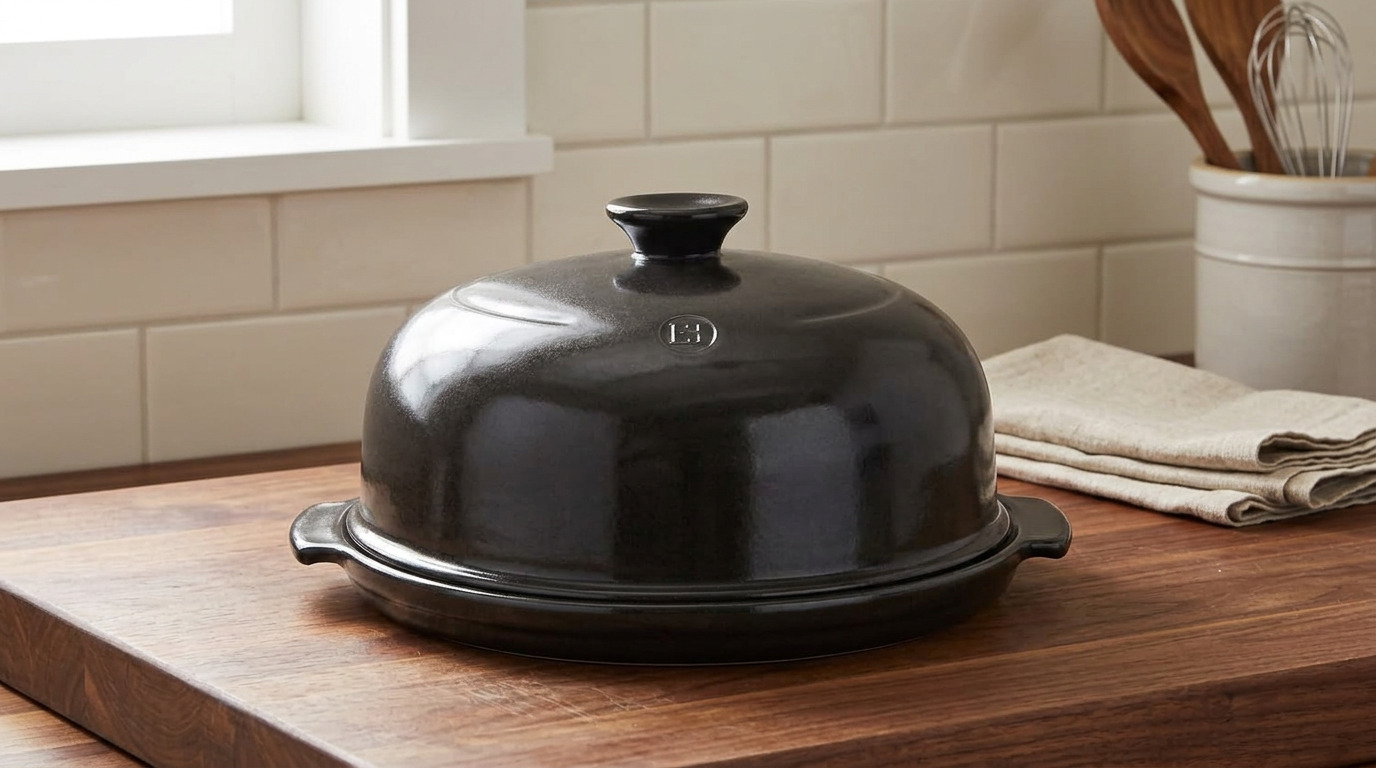
Illustration: the shallow base makes it easy to slide a loaf in without touching hot walls.
Baking performance: crust, crumb and rise
Here is what owners report across hundreds of reviews.
Crust
The crust is where the cloche earns most of its praise.
One owner who bakes two sourdough loaves a week said it gives a perfect loaf with a soft, tender inside and a crispy crust.
Another said it made a real difference to her sourdough, even though she is not new to bread making.
A third, who bakes from Artisan Bread in 5 Minutes a Day, said it made everything easier because many recipes work better when baked covered.
Rise and oven spring
Rise is where opinions split.
One experienced sourdough baker baked side by side with her Le Creuset Dutch oven.
She tried steam and no steam, preheating and a cold start, and found the loaves in the cloche did not rise as tall.
Another owner said her first loaf did not brown properly until she took the lid off.
My read is that the tall dome holds a bigger volume of air than a snug Dutch oven.
More air means the steam is a little less concentrated around the loaf.
For most home bakers, the difference is small.
For bakers chasing maximum oven spring, a snug cast iron combo cooker may still have the edge.
Bottom crust
A preheated ceramic base gives a well-baked bottom crust.
If you proof in a cold cloche, expect a slightly softer base unless you finish the loaf directly on the oven rack for a few minutes.
A simple method that works
Owners have shared plenty of tips, and they line up with what I would recommend.
Here is a reliable starting point for a sourdough or no-knead loaf.
- Preheat: Put the empty cloche, lid on, into a cold oven and heat to 475–500°F for 30–45 minutes.
- Load: Dust the base with flour or semolina, or use parchment, and turn the shaped loaf onto it. Score the top.
- Bake covered: Bake with the lid on for about 20–25 minutes.
- Uncover: Remove the lid and bake another 15–25 minutes, until deep brown.
- Cool: Let the loaf cool on a rack for at least an hour before slicing.
If you prefer the proof-and-bake method, let the dough rise in the cloche at room temperature, then put it into a hot oven.
Add a few minutes to the covered time, because the ceramic starts cold.
Every oven is different, so treat these times as a starting point.
And always use oven mitts: the dome holds a lot of heat.
Design and handling
The cloche is genuinely good-looking.
The charcoal glaze has a slight speckle, and Emile Henry also makes it in red and other colors.
One owner owns two, in black and red, and uses both for sourdough.
Another said other ceramic cloches looked ordinary and fragile next to this one.
Lighter than cast iron
Weight is a real advantage.
One owner bought it because their cast iron cloche was too heavy for his wife, and said it works just as well.
Lifting a 500°F cast iron Dutch oven in and out of the oven is the least pleasant part of home bread baking.
The cloche makes that noticeably easier.
Size
The 3-cup-flour capacity is the main limitation.
One owner divided a large batch of dough and baked half in the cloche and half elsewhere, which was one reason she would not buy it again.
If you bake large boules or long batards, look at a bigger oval baker instead.
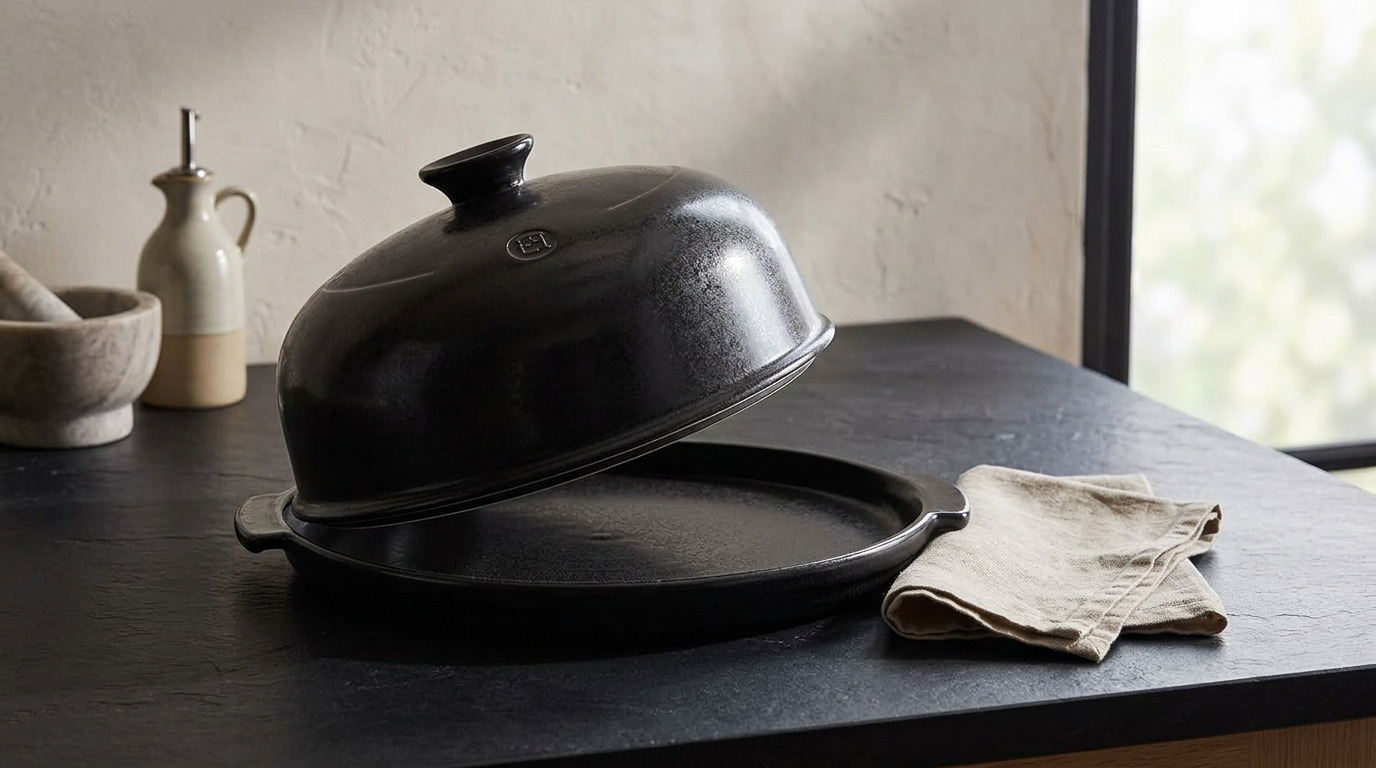
Illustration: the bell-shaped lid traps steam around the loaf during the first part of the bake.
Durability and warranty
Emile Henry ceramic is known for handling heat well.
The company says its ceramic goes from freezer to hot oven without cracking.
But ceramic is still ceramic.
It will not survive a drop onto a hard floor the way cast iron will.
One owner who loves her cloche dropped it while washing it because it was soapy and slippery.
Another owner found cracks in the bottom of her base and contacted the manufacturer for a replacement.
A third received a cloche with a broken lid knob, returned it, and the second one arrived fine.
One owner put it simply: it works fine, but there is always the danger of breaking it.
The warranty fine print
Emile Henry backs the cloche with a ten-year warranty.
One owner pointed out that for the warranty to apply, your receipt should show the item was sold by Amazon or an authorized seller.
When you order, check that the listing says it is sold by Amazon or by an authorized Emile Henry retailer, and keep your receipt.
Cleaning
Emile Henry says the cloche is dishwasher safe.
In practice, a brush and hot water are usually enough, because you are mostly removing flour.
If you hand wash, rinse off the soap and dry it well before handling, so it does not slip.
Common mistakes and how to avoid them
Most disappointing first loaves come down to a few fixable things.
- Not preheating long enough: Ceramic takes longer to heat through than cast iron. Give it at least 30 minutes at full temperature if you preheat.
- Leaving the lid on too long: If the crust is pale, remove the lid earlier and bake uncovered for longer.
- Too much dough: Stick to roughly 3 cups of flour. An overfilled cloche gives a squashed, pale top.
- Under-proofed dough: A loaf that does not rise well is often under-proofed rather than the fault of the pan.
- Sticking: Use semolina, rice flour or parchment on the base, especially for wet sourdough.
- Thermal shock: Do not put a hot cloche on a cold, wet counter or splash it with water.
One owner said she should have received a recipe booklet and only found it mentioned in the listing later.
If yours is missing, Emile Henry's customer service can help, and the method above is a reliable place to start.
Should you choose a cloche or a Dutch oven?
If you are deciding between the two, here is how I would think about it.
Choose the Emile Henry cloche if you bake round loaves every week, dislike lowering dough into a deep pot, find cast iron too heavy, or want to proof and bake in one dish.
Choose a Dutch oven if you want one pot for bread, stews, soups and braises, bake large loaves, or want to spend less.
Choose a cast iron combo cooker if maximum oven spring is your top priority and weight does not bother you.
Plenty of serious bakers own more than one.
One owner who uses a cast iron cloche bought this Emile Henry for his wife because it is lighter, and said it works just as well.
Another owner simply wrote that his wife absolutely loves it.
In the end, the best bread pan is the one you enjoy using every week.
Is the Emile Henry Bread Cloche worth the money?
At around $200 on Amazon at the time of writing, the Emile Henry cloche is a premium purchase.
For comparison, a basic cast iron Dutch oven costs a fraction of that and bakes excellent bread.
So this is not the cheapest way to get a great crust.
What you pay for is the experience: easier loading, proofing in the same dish, a lighter pan and a piece you are happy to put on the table.
One owner admitted she hesitated because Emile Henry items are expensive, but said she did not mind paying once she saw the quality.
If you bake bread every week, I think the cloche is worth it for the convenience and the results.
If you bake a few times a year, a cast iron pot gives you most of the benefit for much less money.
Prices change often, so check the current price on Amazon before you buy.
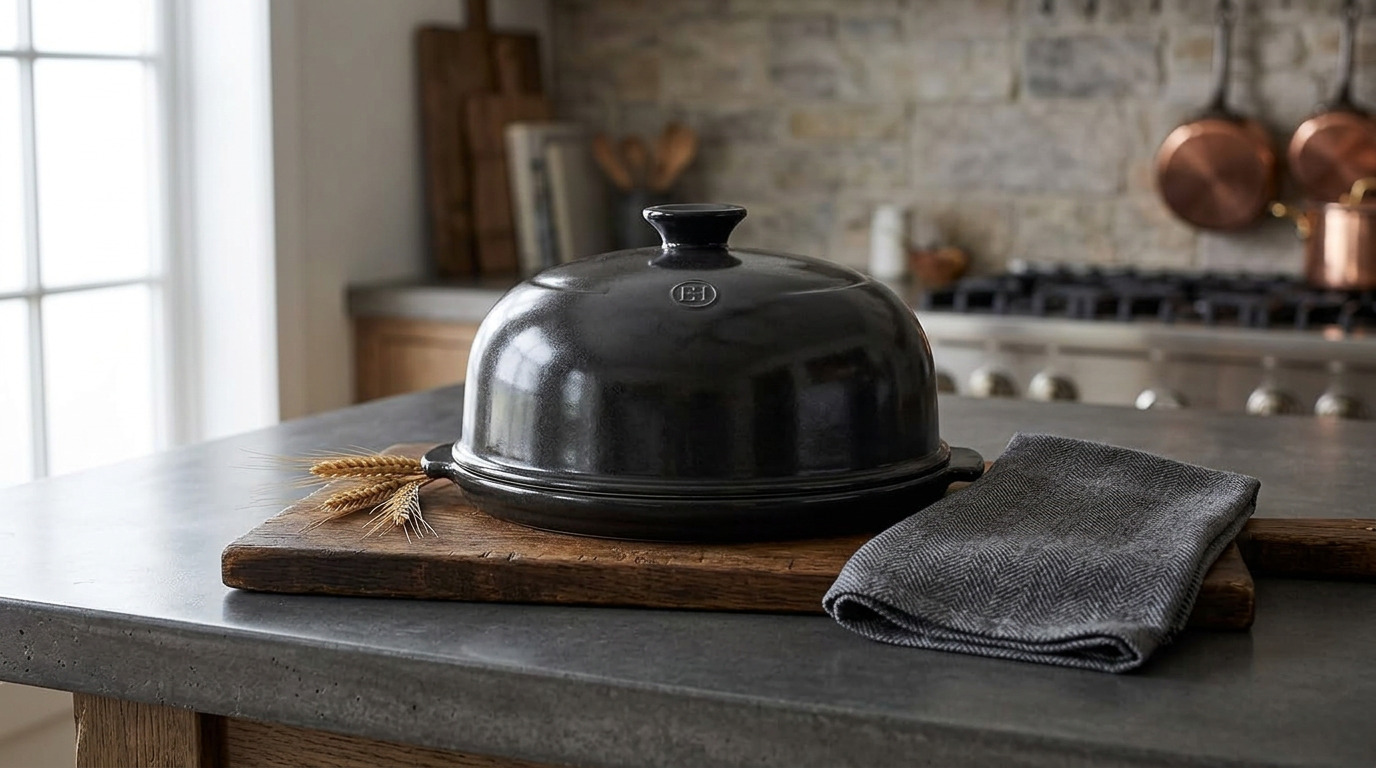
Illustration: the cloche works for sourdough, no-knead and yeasted round loaves.
Emile Henry Bread Cloche specifications
From Emile Henry's specifications and the Amazon product page.
| Spec | Detail |
|---|---|
| Material | Glazed ceramic, all-natural materials |
| Made in | France |
| Size | About 13.2 × 11.2 × 7 inches |
| Capacity | Round loaf of about 3 cups of flour |
| Temperature range | -20°C to 270°C (about -4°F to 518°F) |
| Freezer to oven | Yes, to 500°F |
| Proofing | Yes, dough can rise in the cloche |
| Cleaning | Dishwasher safe |
| Warranty | 10 years |
| Rating | 4.5 out of 5 from about 900 Amazon ratings |
Bread cloche vs Dutch oven vs cast iron combo cooker
These are the three most popular ways to bake covered bread at home. The cloche wins on handling and looks, the Dutch oven on versatility and price, and the combo cooker on oven spring.
| Emile Henry cloche | Enameled Dutch oven | Cast iron combo cooker | |
|---|---|---|---|
| Loading dough | Easy, shallow base | Awkward, deep walls | Easy, shallow base |
| Weight | Light | Heavy | Heavy |
| Proof in the pan | Yes | Not usually | Not usually |
| Other uses | Mostly bread | Soups, stews, braises | Frying, bread |
| Durability | Can crack if dropped | Enamel can chip | Nearly indestructible |
| Best for | Weekly bread bakers | All-round cooks | Serious sourdough bakers |
Emile Henry Bread Cloche FAQ
Is the Emile Henry bread cloche worth it?
For weekly bread bakers, yes. It scored 8.0 out of 10 in our expert review for its crust, easy loading and light weight. Occasional bakers can get similar results from a cheaper cast iron pot.
Is a bread cloche better than a Dutch oven?
It is easier to load and lighter, and you can proof in it. Some bakers get slightly more oven spring from a snug cast iron Dutch oven or combo cooker.
How big a loaf does it hold?
Emile Henry sizes it for a round loaf made with about 3 cups of flour.
Can I proof the dough in the cloche?
Yes. Emile Henry designed it so you can proof and bake in the same dish.
What temperature can it handle?
It is rated from -20°C to 270°C, about -4°F to 518°F, and can go from the freezer into a 500°F oven.
Is it dishwasher safe?
Yes, according to Emile Henry.
Where is it made?
In France.
What warranty does it have?
Ten years. Buy from Amazon or an authorized seller and keep your receipt so the warranty applies.
- Amazon product listing and verified owner reviews for the Emile Henry Ceramic Bread Cloche (ASIN B00WU4L7AG), October 2026
- Critical and positive owner reviews on Amazon, October 2026
- Manufacturer specifications from Emile Henry
- Review published.