Chef Preserve Compact Vacuum Sealer review: vacuum sealing that lives in a drawer
A rechargeable handheld vacuum sealer with reusable bags and glass containers. It seals a bag in about five seconds, switches itself off and fits in a kitchen drawer. The seal depends on positioning the valve right, and it does not replace safe food storage.
In this review
I like the Chef Preserve Compact Vacuum Sealer because it makes vacuum sealing small and casual. It lives in a drawer, charges like a phone and seals a reusable bag at the press of a button. The glass containers handle soups, marinades and delicate food that bags cannot. You do need to place the bag valve correctly for a good seal, and vacuum sealing never replaces proper refrigeration or freezing. For leftovers, portioning and meal prep without a bulky machine, it is a useful tool.
Chef Preserve Compact Vacuum Sealer at a glance
Chef Preserve Compact Vacuum Sealer pros and cons
- Small enough to store in a kitchen drawer
- Rechargeable, so no cord on the counter while you seal
- One-button operation that switches off automatically
- Seals a bag in about five seconds, according to Chef Preserve
- Reusable, BPA-free bags cut down on disposable bags
- Glass containers handle liquids and delicate foods
- Bags and containers are dishwasher, freezer and microwave safe
- Seal depends on correct valve placement
- Uses its own valve bags rather than any vacuum bag
- Bundle price is high compared with basic sealers
- Not designed for heat-sealing large batches
Who should buy the Chef Preserve Compact Vacuum Sealer?
- Leftovers and everyday fridge organization
- Portioning groceries and bulk buys
- Meal prep and batch cooking
- Cheese, vegetables, fruit and cooked food
- Small kitchens without room for a countertop sealer
- Hunters and bulk meat buyers who seal dozens of packs
- Sous vide cooks who need heat-sealed bags
- Anyone who wants to use cheap generic vacuum rolls
- Very tight budgets
First impressions of the Chef Preserve vacuum sealer
I have always liked the idea of vacuum sealing more than the machines that do it.
Countertop sealers are big, need a cord and a roll of bags, and tend to live in a cupboard where they are forgotten.
The Chef Preserve Compact Vacuum Sealer takes a different approach.
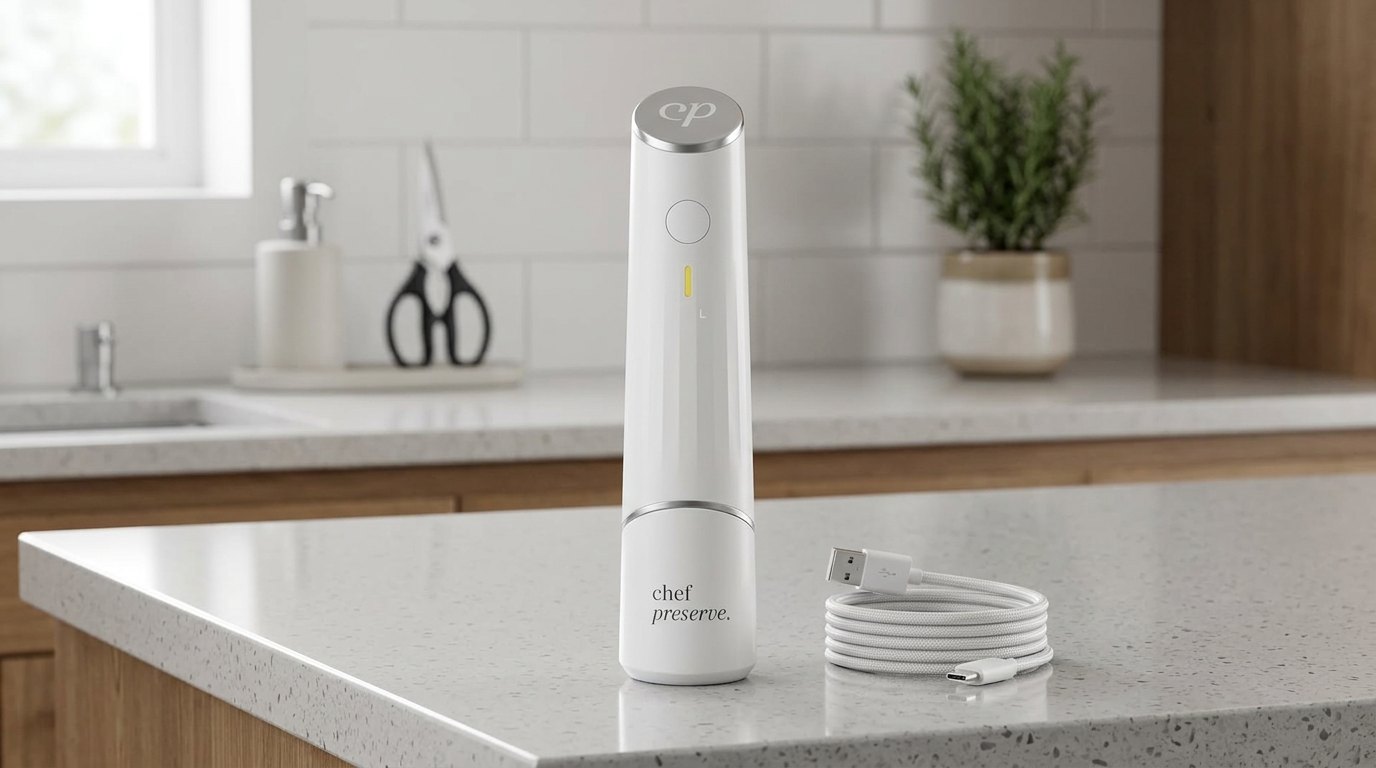
It is a small, handheld unit that looks a bit like a slim electric pepper mill.
My first impression was that it is designed to be used casually and often.
I can keep it in a kitchen drawer and bring it out whenever I want to organize leftovers or split groceries into smaller portions.
That compact design is a convenient alternative to a bulky countertop machine.
It is a tool you reach for in passing, rather than an appliance you have to set up.
I also like that it does not need much thought.
There are no modes to choose, no bags to cut from a roll and no strip to clean.
You fill a bag, close it, press a button and put it away.
For a kitchen gadget, that kind of simplicity is often what decides whether it gets used every week or forgotten after a month.
It is a promising tool for meal planning, portion control and keeping frequently used ingredients organized without giving a lot of kitchen space to another appliance.
The sealer is small enough to keep in a drawer and charges with a cable.
What the Chef Preserve bundle includes
This listing is Chef Preserve's starter bundle.
According to the listing, it includes:
- 1 compact vacuum sealer
- 30 reusable vacuum bags
- 3 glass vacuum containers
The sealer has a rechargeable battery and comes with a charging cable.
The manufacturer describes it as lightweight and about eight inches long.
The model number on the listing is CP.V2.1.
Chef Preserve sells several bundles with different numbers of bags and containers.
So I would check the exact contents of the listing you are buying, because some versions add extra containers and accessories.
How the Chef Preserve sealer works
The system works differently from a classic heat sealer.
Valve bags
Each reusable bag has a zip closure and a small one-way valve on the side.
You fill the bag, press the zip closed, then put the sealer on the valve.
One button
Press the button and the sealer pulls the air out through the valve.
Chef Preserve says it vacuum seals a bag in about five seconds and switches off automatically when it is done.
There are no settings to choose and no heat strip to wait for.
Glass containers
The glass containers have lids with their own valves.
You seal them the same way, by placing the sealer on the lid valve and pressing the button.
That lets you vacuum seal things that would not work in a bag.
Getting a good seal
The quality of the seal is everything with food storage.
I make sure the bag opening is fully closed along the zip and the valve is flat and clean before I place the sealer on it.
If the valve sits on a crease, or a crumb gets in the way, the seal can fail.
Positioning the sealer squarely over the valve is the main skill to learn, and it is a quick one.
Chef Preserve sealing performance
Cheese, vegetables and fruit
These are the everyday jobs where the Chef Preserve is most useful.
Sealing a block of cheese, a bag of chopped vegetables or cut fruit keeps them tidy and protected in the fridge.
It is much easier to see what you have when everything is flat and portioned.
Cooked food and leftovers
Leftovers go into a bag or a glass container and get sealed in seconds.
That makes the fridge easier to organize and helps food stay in better condition.
Groceries and portions
When I buy larger packs, I can split them into meal-sized portions before they go in the fridge or freezer.
That is the kind of small habit that cuts down on waste.
Liquids and delicate foods
Bags and liquids do not mix well with a vacuum.
The glass containers handle that job.
Chef Preserve says they let you seal soups, stews and marinades, plus delicate foods such as bread, lettuce and pastries that would be crushed in a bag.
Speed
A five-second seal means it never feels like a chore.
That is what makes it different from a countertop machine.
I end up sealing more food simply because it takes so little effort.
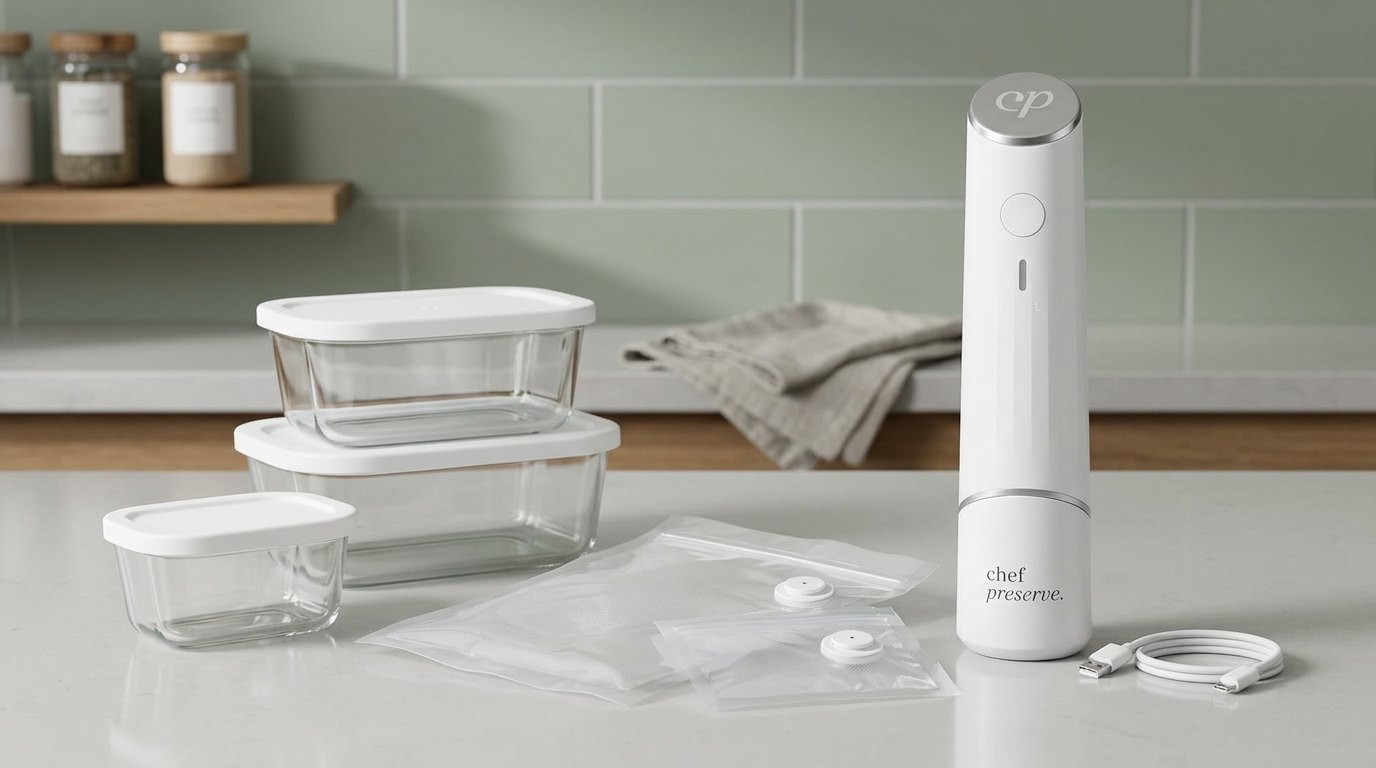
The bundle includes glass containers for liquids and delicate foods.
Reusable bags and glass containers
The reusable bags are a big part of the appeal for me.
They reduce reliance on disposable food storage bags.
Chef Preserve says the bags are BPA free, odor free and leak proof.
They are listed as safe in the dishwasher, freezer, refrigerator and microwave.
After use, I rinse them, wash them and let them dry fully, ideally turned inside out.
For raw meat or fish, I would use a bag once and then wash it very thoroughly, or keep some bags only for raw proteins.
The glass containers are also listed as dishwasher, freezer, refrigerator and microwave safe.
They stack neatly and let you see what is inside at a glance.
For leftovers you will reheat, being able to go from fridge to microwave in the same container is handy.
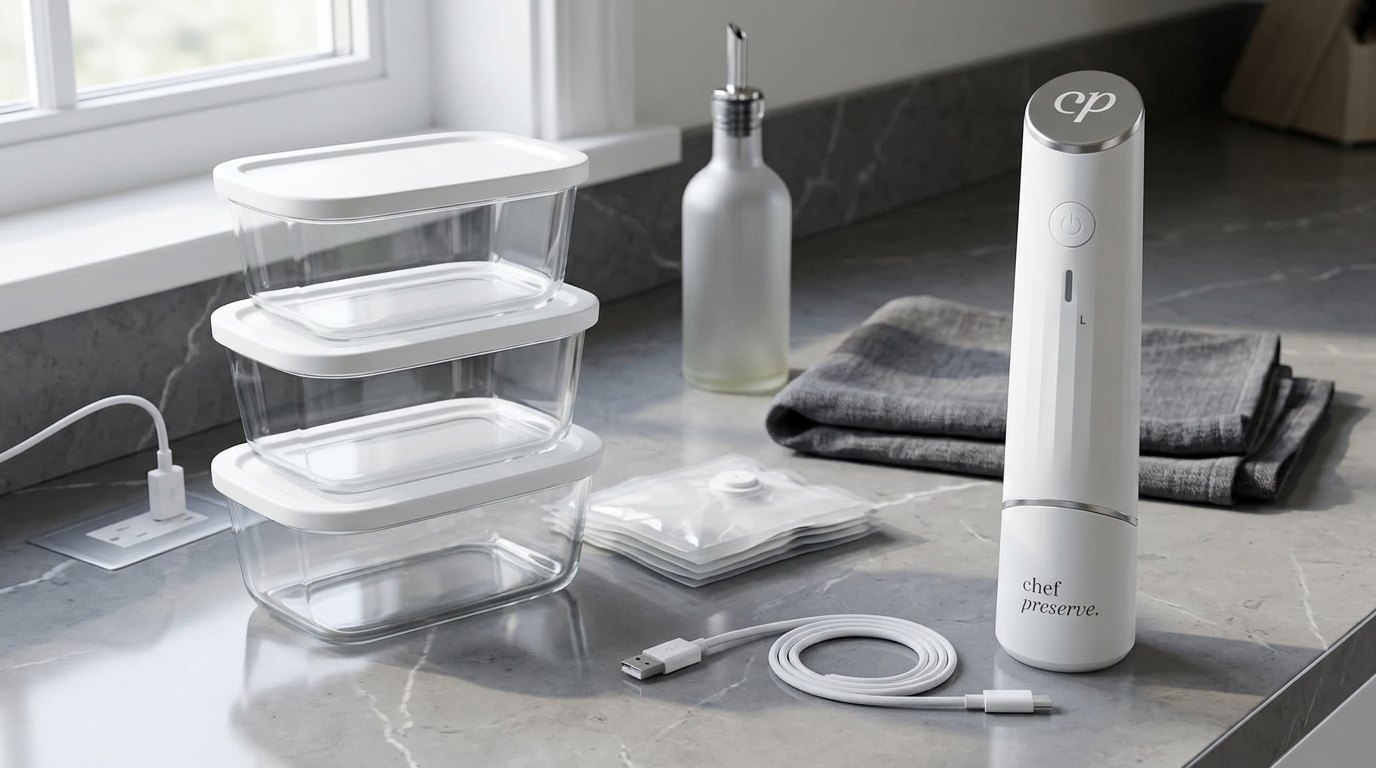
Glass containers stack neatly and can go in the microwave.
Chef Preserve design and battery
The sealer is a slim white cylinder with a simple button and a soft-touch base that sits over the valve.
It is light and easy to hold in one hand.
Because it runs on a rechargeable battery, there is no cord trailing across the counter while you work.
I charge it now and then and keep it in a drawer between uses.
The automatic operation makes the process straightforward without complicated settings.
That simplicity is a strength.
There is nothing to adjust and nothing to get wrong, apart from placing it squarely on the valve.
Handheld vs countertop vacuum sealers
If you are choosing your first vacuum sealer, the type matters more than the brand.
Handheld sealers like the Chef Preserve
They are small, quick and easy to store.
They use reusable valve bags and containers rather than heat-sealed plastic.
They are best for everyday jobs: leftovers, cheese, vegetables, portions and meal prep.
Countertop heat sealers
They pull air out of a plastic bag and then melt the bag closed with a heat strip.
They are faster for large batches and make permanent seals that suit long-term freezing and sous vide cooking.
They are also bigger, need a power cord and use disposable bags or rolls.
Which to choose
If you mostly want a tidier fridge and less waste in daily cooking, a handheld sealer makes more sense.
If you buy meat in bulk, hunt or fish, or cook sous vide often, a countertop sealer is the better tool.
Some kitchens use both.
How it fits into meal prep
The Chef Preserve is at its best on a meal prep day.
I cook a few components, such as grains, roasted vegetables and a protein.
Then I portion them into bags or glass containers and seal each one.
The flat bags stack neatly in the fridge and freezer, which saves a surprising amount of space.
The glass containers hold sauces, soups and anything I want to reheat in the same dish.
Because each seal takes only a few seconds, sealing a dozen portions does not feel like a chore.
It also makes it easier to see what is in the fridge, which means less food gets forgotten at the back.
Freezer tips
For freezing, I lay bags flat on a tray until they are frozen, then stand them upright like files.
Wet foods are easier to seal if you freeze them briefly in the bag first, so liquid is not drawn toward the valve.
Writing the contents and date on each bag saves guesswork later.
What vacuum sealing does and does not do
It is worth being clear about what a vacuum sealer can and cannot do.
Removing air slows down drying, freezer burn and oxidation.
That helps food keep its quality and texture for longer.
But vacuum sealing does not eliminate the need for proper refrigeration, freezing or safe food handling.
Sealed food that needs to be refrigerated still needs to be refrigerated.
Some bacteria grow without oxygen, so vacuum sealing is not a way to keep perishable food at room temperature.
I treat the Chef Preserve as a way to store food better in the fridge and freezer, not as a replacement for them.
Follow normal food safety guidance on how long leftovers and raw ingredients should be kept.
Cleaning the Chef Preserve system
The sealer itself only needs a wipe with a damp cloth.
Do not submerge it, because it is an electrical device with a battery.
If liquid gets near the base, wipe it dry before the next use.
The bags and containers go in the dishwasher, according to Chef Preserve.
I let bags dry completely before storing them, because trapped moisture can cause odors.
Keeping the bag valves clean is important, because residue on a valve is the most common cause of a weak seal.
Is the Chef Preserve vacuum sealer worth the money?
At the time of writing, the starter bundle costs about $159 on Amazon.
That is more than a basic countertop vacuum sealer.
You are paying for the compact, rechargeable design, the reusable bags and the glass containers.
On Amazon, the listing has an average rating of about 4.6 out of 5 from more than 2,000 ratings at the time of writing.
If you want vacuum sealing for everyday leftovers and meal prep, and you do not have room for a big machine, it is good value in convenience.
If you seal large amounts of meat for long-term freezing, a countertop heat sealer with rolls is faster per bag and cheaper to run.
Chef Preserve claims the system pays for itself by reducing waste.
How true that is depends on how much food you currently throw away.
Replacement bags and containers are an ongoing cost to keep in mind, although reusable bags last a long time with care.
Prices move, so check the current price on Amazon before you buy.
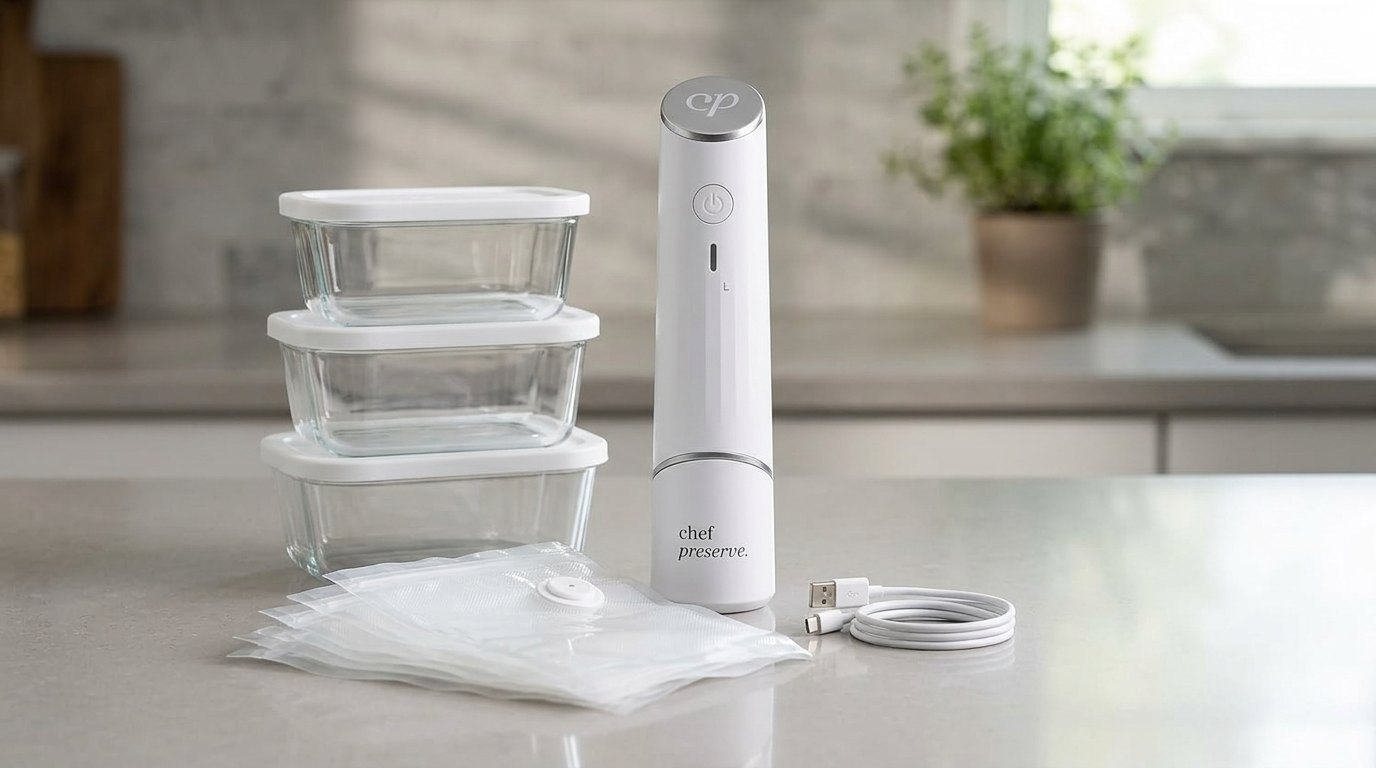
The whole system is compact enough for a small kitchen.
My tips for using the Chef Preserve
- Press the zip closed along its full length before sealing.
- Make sure the valve is flat and free of crumbs or liquid.
- Hold the sealer straight over the valve until it stops.
- Freeze wet foods flat in a tray first, then bag and seal them.
- Use glass containers for soups, sauces and marinades.
- Label bags with the contents and the date.
- Keep a few bags only for raw meat and fish.
What I seal with it, and what I skip
Good candidates
- Hard and semi-hard cheese, which dries out quickly in open packaging
- Chopped vegetables and herbs for the week
- Cut fruit and berries
- Cooked grains, pasta and roasted vegetables
- Portions of meat, fish and chicken for the freezer
- Coffee beans and nuts, which lose flavor when exposed to air
Better in a glass container
- Soups, stews and sauces
- Marinades, where the vacuum helps the marinade work into the food
- Salad leaves, bread and pastries that would be crushed in a bag
Things I would not seal
- Soft cheeses and mushrooms, which do better with a little air
- Raw garlic and onions without refrigeration
- Anything still hot; let food cool first so steam does not affect the seal
Keeping a short list like this near the drawer helps everyone in the house use the system well.
Chef Preserve alternatives
A countertop heat sealer is the classic alternative for bulk sealing and sous vide.
It is faster for big batches but takes up more space and uses disposable rolls.
Other handheld sealers work in a similar way and sometimes cost less, though bag systems are not always interchangeable.
And if you mainly want better leftovers storage, a good set of airtight glass containers without vacuum is the budget option.
Chef Preserve Compact Vacuum Sealer specifications
From Chef Preserve and the Amazon listing.
How I tested and scored the Chef Preserve Compact Vacuum Sealer
I used the Chef Preserve Compact Vacuum Sealer for everyday kitchen jobs: leftovers, portioning groceries, cheese and vegetables, and storing soups in the glass containers.
I paid attention to four things, and each one gets its own subscore.
- Ease of use (8.8): the one-button operation, valve placement and charging.
- Sealing (8.0): how reliably bags and containers seal.
- Convenience (9.0): size, storage and how quickly it fits into daily cooking.
- Value (7.2): bundle price compared with alternatives.
The overall score of 8.2 is an editorial rating. I also checked Chef Preserve's published specifications. BrasQ editor-in-chief Ryan Mitchell reviewed the facts and figures before publication.
Chef Preserve Compact Vacuum Sealer FAQ
Is the Chef Preserve vacuum sealer worth it?
Yes, if you want quick, compact vacuum sealing for leftovers and meal prep. For bulk meat sealing, a countertop heat sealer is more efficient.
What is included in the bundle?
One compact vacuum sealer, 30 reusable vacuum bags and 3 glass vacuum containers, according to the listing.
How long does it take to seal a bag?
Chef Preserve says about five seconds, and the sealer switches off automatically.
Is it rechargeable?
Yes. It has a rechargeable battery and comes with a charging cable.
Can I vacuum seal soup?
Use the glass containers for liquids such as soups, stews and marinades.
Are the bags reusable?
Yes. They are listed as BPA free and dishwasher, freezer, fridge and microwave safe.
Does vacuum sealing replace the fridge?
No. Sealed perishable food still needs to be refrigerated or frozen and handled safely.
- Hands-on use of the Chef Preserve Compact Vacuum Sealer by Thomas Walker
- Amazon product listing for the Chef Preserve Compact Vacuum Sealer bundle (ASIN B0DS1Z2VW1), October 2026
- Chef Preserve product information
- Review published.