The Best Electric Lunch Box of 2026
I packed refrigerated lunches into five electric lunch boxes and heated, carried and washed each one. The EAST OAK Cordless Electric Lunch Box came out on top: it heats a cold meal with no outlet nearby, keeps rice and meat moist, and the food container comes out for easy cleaning.
We choose products independently. We may earn a commission through links on this page; your price stays the same. Affiliate policy
In this guide
The short answer
- Best pick for most people: the EAST OAK Cordless Electric Lunch Box. A built-in battery heats lunch anywhere, and it kept rice, meat and vegetables moist in my tests.
- Best for big appetites: the LISHZEN Electric Lunch Box. A 2.8-liter, two-layer design with the fastest heating I saw.
- Best cordless for larger meals: the Drafin Electric Heated Lunch Box. A 6.3-cup container and a 20,000 mAh battery.
- Best for drivers: the TRAVELISIMO Electric Lunch Box. Runs on 12V, 24V and 110V, with a stainless-steel container.
- Best for soup and small lunches: the Crock-Pot 20oz Lunch Crock. The simplest one here, and the container is dishwasher-safe.
Our picks at a glance
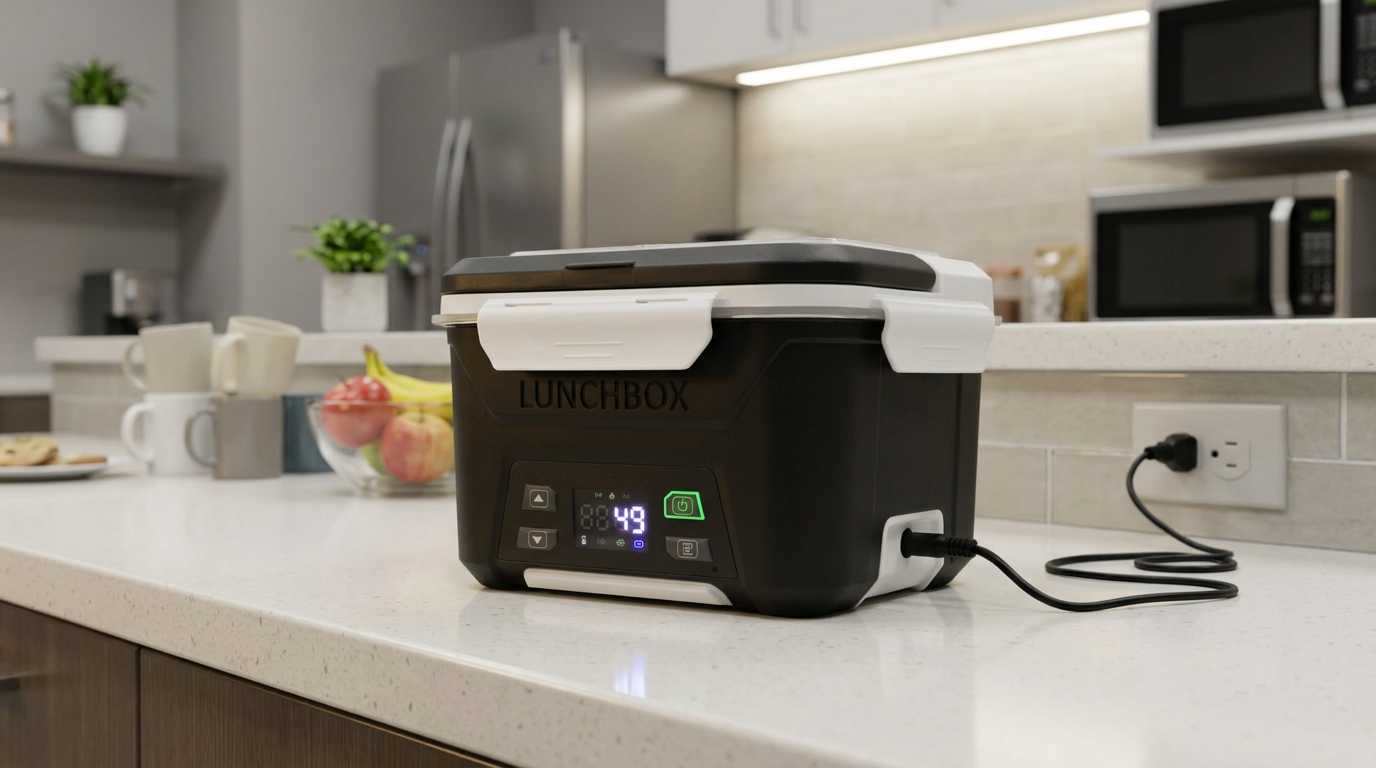
EAST OAK Cordless Electric Lunch Box
Battery-powered, with a 1.3-liter container and a schedule function. It heated my cold lunches without an outlet and kept them moist.
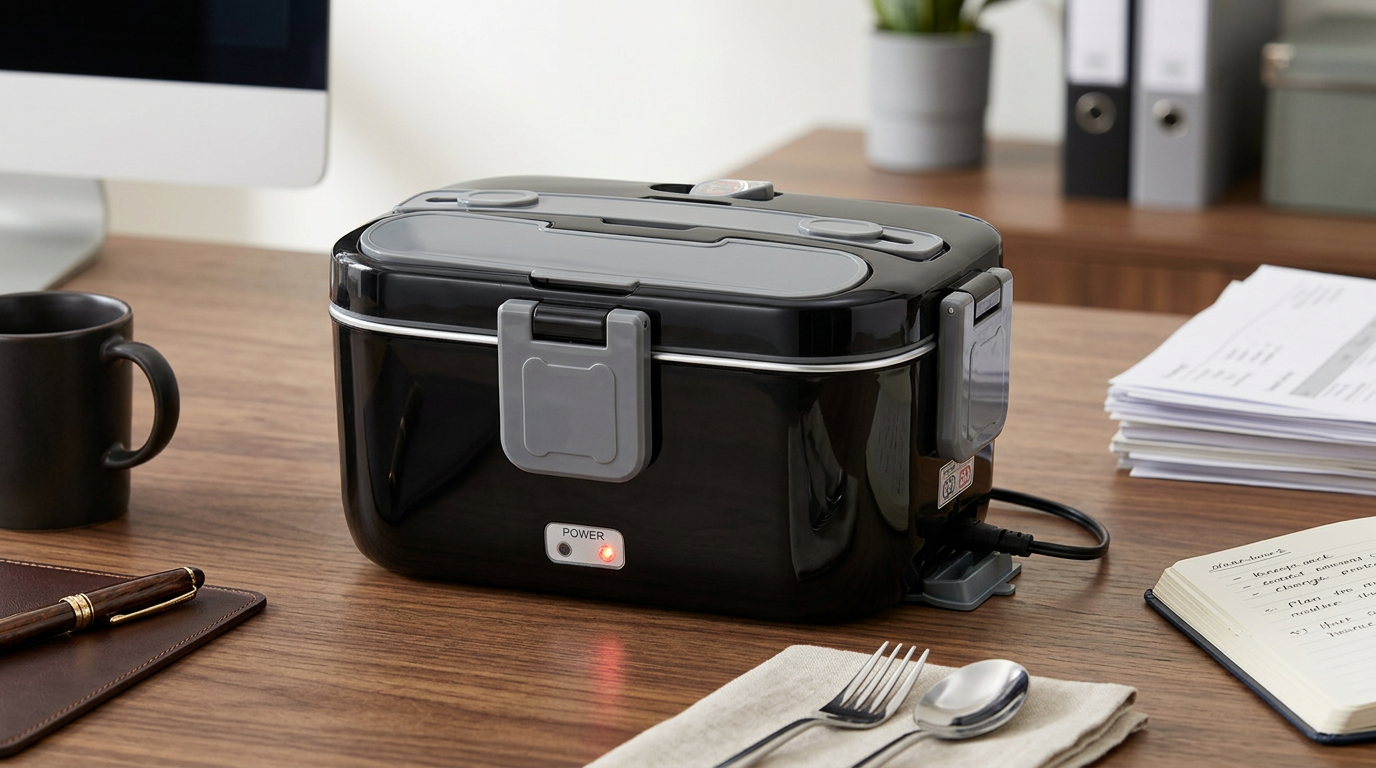
LISHZEN Electric Lunch Box
A 2.8-liter, two-layer box that keeps the main dish and sides apart. It was the quickest to heat a cold meal in my tests.
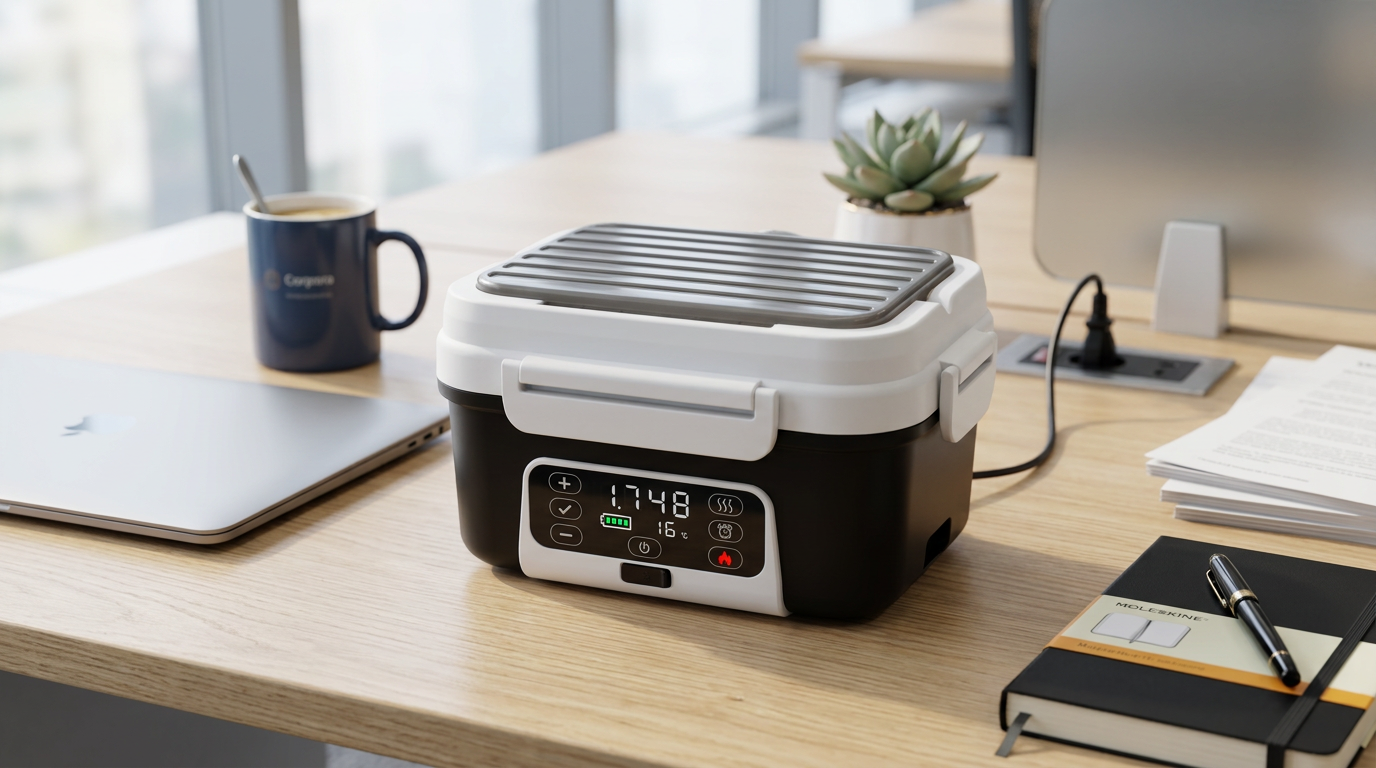
Drafin Electric Heated Lunch Box
A cordless 100W box with a 6.3-cup container and a 20,000 mAh battery. Roomy and portable, but slower to heat than the plug-in models.
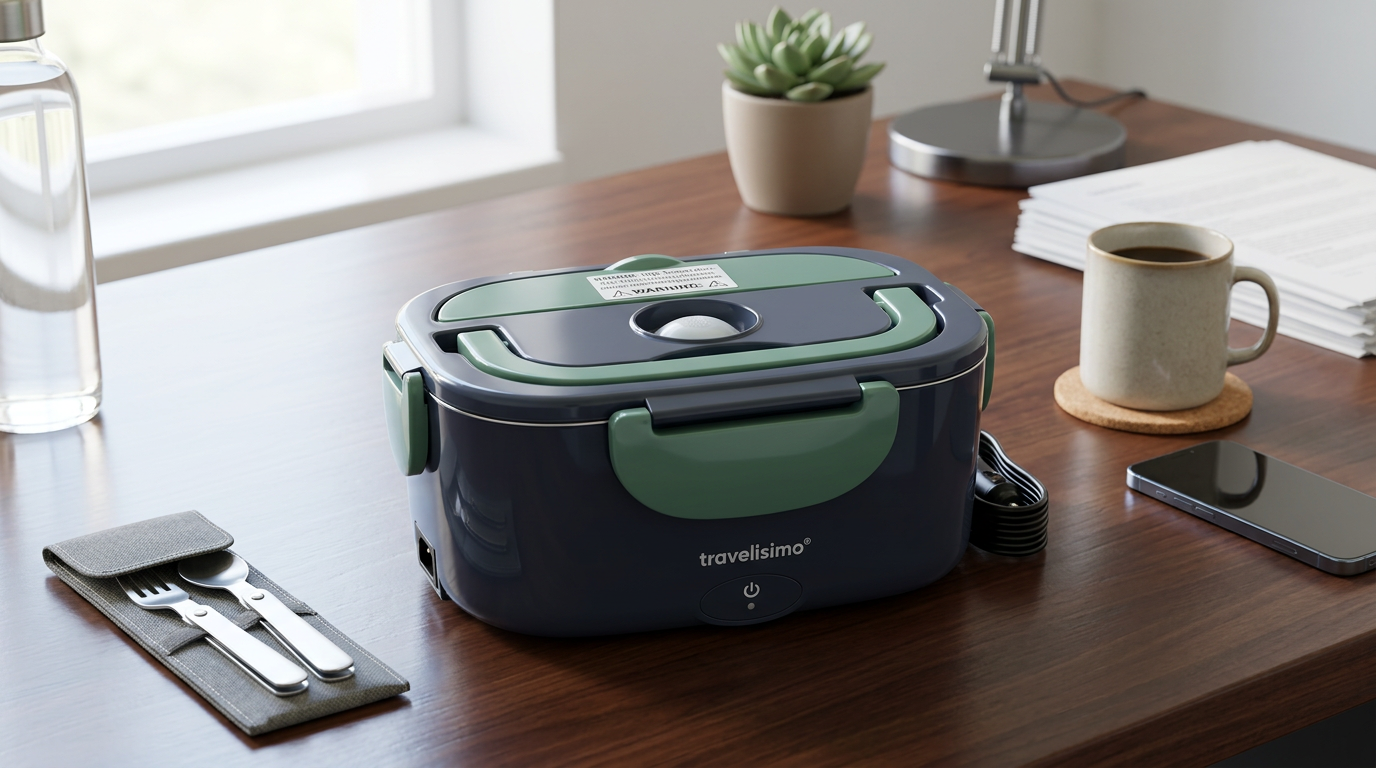
TRAVELISIMO Electric Lunch Box
A 100W, 1.5-liter warmer with 12V, 24V and 110V cords, so it works in a car, a truck or at the office.
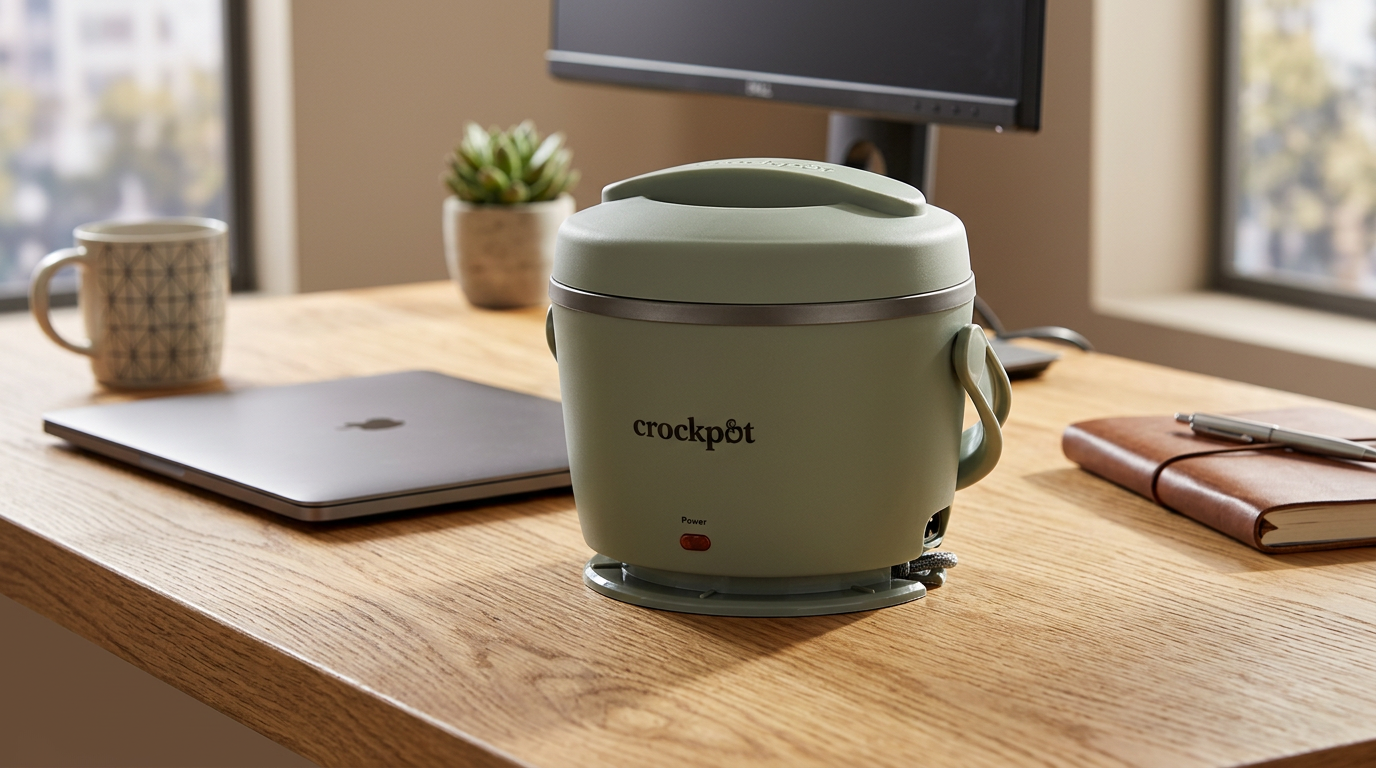
Crock-Pot 20oz Portable Electric Food Warmer
A compact plug-in warmer for one small portion. Great with soups and stews, and the inner container and lid go in the dishwasher.
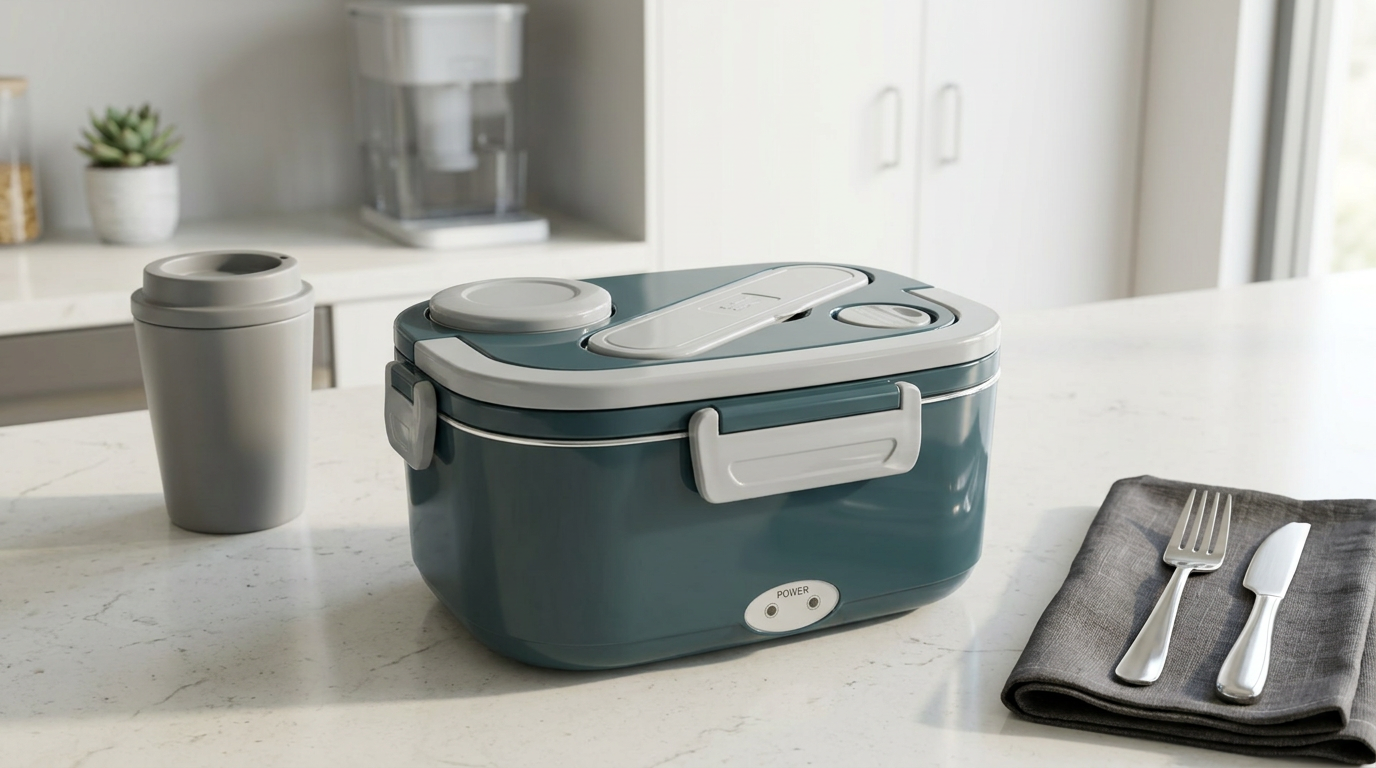
HOLDRUBY Electric Heated Lunch Box
A low-cost 100W box with a 1.5-liter stainless-steel bowl. I haven't tested it yet, so it has no score; details below come from the listing.
Prices change often. Click through to see the current price on Amazon.
Compare our picks side by side
Heating times are from my own tests with refrigerated meals. Specifications come from the manufacturers and retailer listings.
"Not listed" means I could not find the figure in official product information.
| 6 models compared | Our pick | Big appetites | Cordless, larger | Drivers | Soup | Not yet tested |
|---|---|---|---|---|---|---|
| My test results | ||||||
| Rating | 4.6/5 | 4.5/5 | 4.4/5 | 4.3/5 | 4.2/5 | Not tested |
| Time to heat a refrigerated meal | 30–40 min | 25–35 min | 30–40 min | 25–35 min | 30–45 min (small portion) | Not tested |
| Power | ||||||
| Cordless (built-in battery) | ✓ | ✕ | ✓ | ✕ | ✕ | ✕ |
| Battery | 59.2 Wh | — | 20,000 mAh | — | — | — |
| Car power (12V) | Not listed | ✓ | Not listed | ✓ | ✕ | ✓ |
| Rated power | Not listed | Not listed | 100 W | 100 W | Not listed | 100 W |
| Scheduled heating | ✓ | ✕ | Not listed | ✕ | ✕ | ✕ |
| Capacity and build | ||||||
| Capacity | 1.3 l (5.5 cups) | 2.8 l, two layers | 1.5 l (6.3 cups) | 1.5 l + 0.45 l side | 20 oz (0.6 l) | 1.5 l + 0.45 l side |
| Separate compartments | Removable divider | ✓ | Not listed | ✓ | ✕ | ✓ |
| Stainless-steel food container | ✓ | ✓ | Not listed | ✓ | ✓ | ✓ |
| Removable food container | ✓ | ✓ | ✓ | ✓ | ✓ | ✓ |
| Weight | 2.8 lb | 2.8 lb | Not listed | Not listed | 1.7 lb | Not listed |
| Carry bag included | ✓ | ✓ | Not listed | ✓ | ✕ | Not listed |
| Warranty | Not stated | Not stated | Not stated | Not stated | 1 year | Not stated |
| Best for | Commuters and outdoor workers with no outlet nearby. | Big eaters and meals with several parts. | Cordless use with a larger portion. | Drivers and office workers with an outlet. | Soups and small lunches at a desk. | Budget buyers who drive (untested). |
How I tested
I used each of the five tested lunch boxes the way you would on a normal workday. I packed a refrigerated meal, switched the box on, and timed how long it took until the food was warm all the way through.
I reheated the kinds of lunches people actually bring: rice, pasta, meat, vegetables, soups and stews. I stirred halfway when a portion was thick, and noted when the center lagged behind the edges.
I also carried each one in a work bag, checked how much room it took, and washed every container after saucy meals. For the two cordless models, I charged the battery first and paid attention to how often I had to top it up.
In this round I judged warmth by stirring and tasting, not with a probe thermometer. I'll add measured food temperatures in the next update. The HOLDRUBY is listed for comparison only; I haven't tested it, so it has no score.
Who is an electric lunch box for?
An electric lunch box is a small, slow food warmer. You pack a cold meal in the morning, and it heats the food in its own container by lunchtime.
It suits anyone who can't get to a microwave, or doesn't want to queue for one. Think truck drivers, nurses, construction crews, field technicians, teachers and office workers in buildings with one shared microwave.
Cordless models go further. They work on a building site, in a park, or in a car you can't leave running.
It is not a cooker. None of the boxes I tested is meant to cook raw food, and none heats as fast as a microwave.
If you need hot food in two minutes, this isn't the tool. If you can start it 30 to 40 minutes before you eat, it works well.
Our picks in depth
EAST OAK Cordless Electric Lunch Box
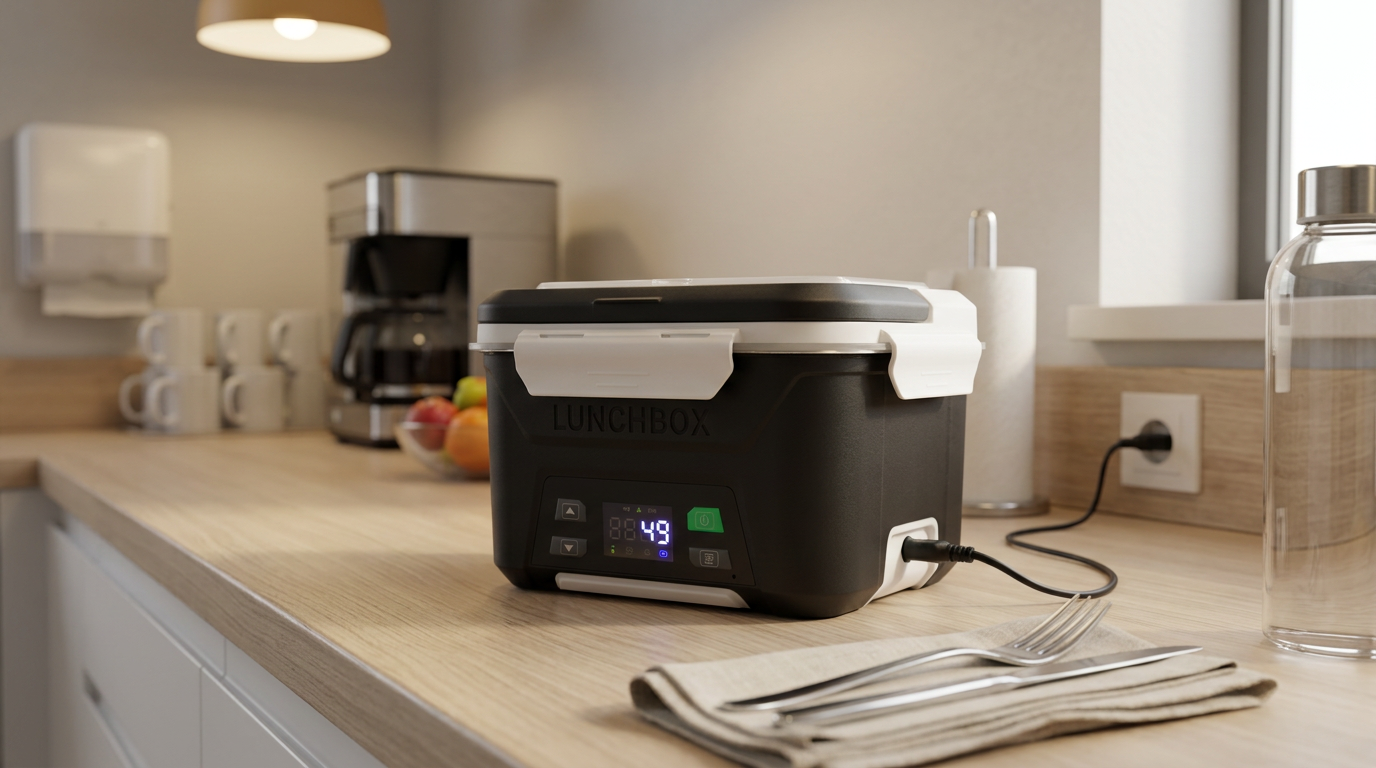
The EAST OAK Cordless Electric Lunch Box is the one I'd buy. It doesn't need a wall socket or a car outlet, and that changes where you can have a hot lunch.
A 59.2 Wh battery sits in the base, and a display shows the charge left as a percentage. That small detail took the guesswork out of whether I needed to charge it the night before.
In my tests, a refrigerated meal took about 30 to 40 minutes to heat. Stirring once helped spread the warmth evenly.
EAST OAK also lets you set a mealtime, and the box starts heating ahead of it on its own. The brand says it heats for about two hours on a charge and then keeps food warm for about another hour.
Food quality was the best of the cordless pair. Rice, meat and vegetables stayed moist as long as I left the lid closed.
The container holds 1.3 liters, or about 5.5 cups. That's fine for a normal lunch, but a very large portion felt cramped.
A removable divider lets you keep a side apart from the main dish. An insulated carry bag comes in the box.
Cleanup was easy because the food container comes out of the heating base. The base itself only needs a wipe.
The catch is the battery. You have to remember to charge it, and runtime limits how much you can do on one charge.
EAST OAK says to use only the original charger and battery. The inner container contains nickel, which matters if you have a nickel allergy.
- Truly cordless, with a charge display
- Scheduled heating
- Kept rice and meat moist
- Removable container and divider
- Needs charging before use
- Large portions feel cramped
- Not fast: 30 to 40 minutes
Choose this if you commute, drive or work outdoors and want a hot lunch without hunting for an outlet.
LISHZEN Electric Lunch Box
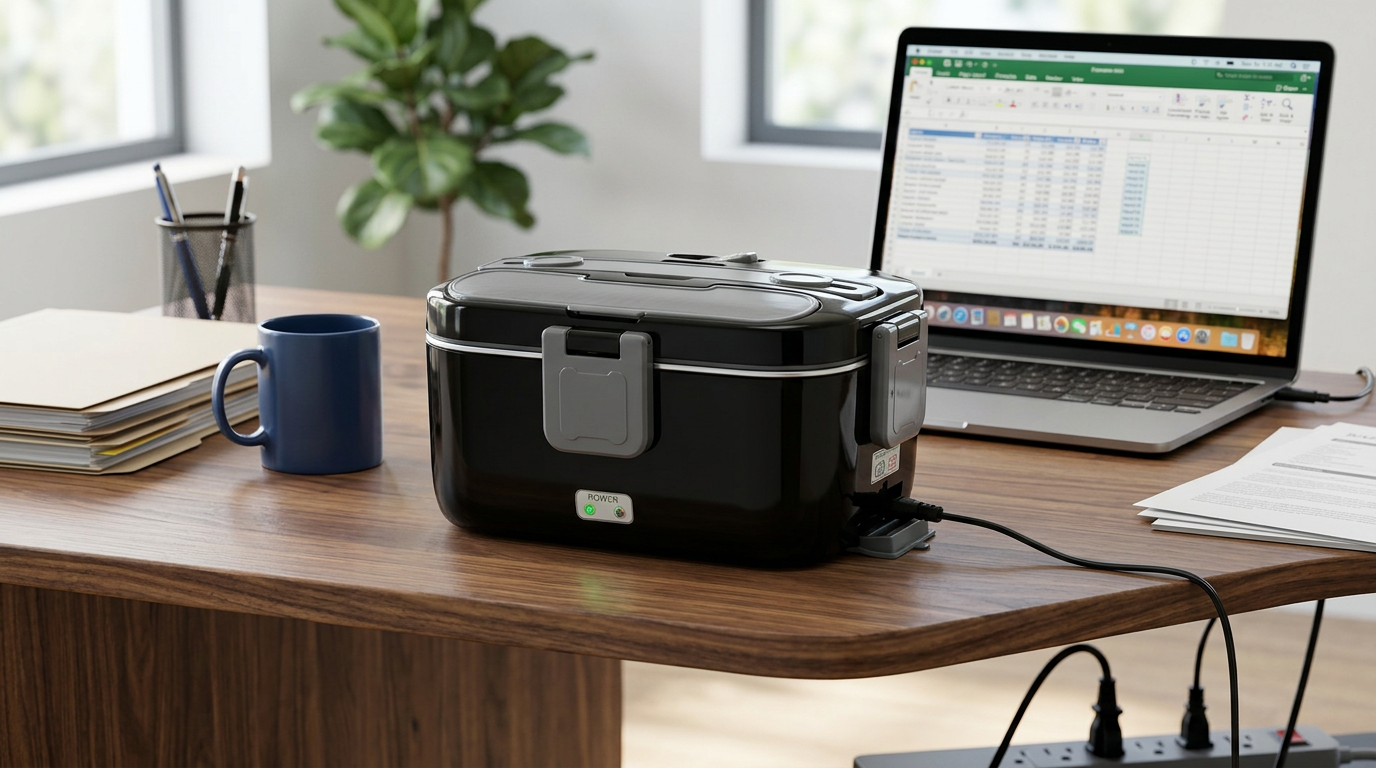
If one container is never enough, the LISHZEN Electric Lunch Box is the one to get. It's a two-layer design with 2.8 liters of space in total.
That meant I could pack a main dish in one layer and sides in the other. Having the separate compartment helped keep side dishes apart from the main meal.
It was also the fastest to heat in my tests. A refrigerated meal was warm in about 25 to 35 minutes.
With bigger portions, stirring halfway helped. Food came out moist rather than dried out.
The LISHZEN plugs in, and the power options covered both my car and my desk. Operation is simple: connect it and wait.
The containers are stainless steel and lift out, which made washing up much easier after saucy meals. A carry bag and a utensil are included.
The downside is bulk. At about 2.8 pounds, and with two layers, it took up noticeably more space in my bag than the compact models.
It also needs a power source. No outlet, no hot lunch.
- Fastest heating in my tests (25–35 min)
- 2.8 liters across two layers
- Keeps main dish and sides apart
- Easy-to-wash removable containers
- Bulky in a bag
- Needs an outlet
Choose this if you bring big lunches or like your meal in separate parts, and you have power nearby.
Drafin Electric Heated Lunch Box
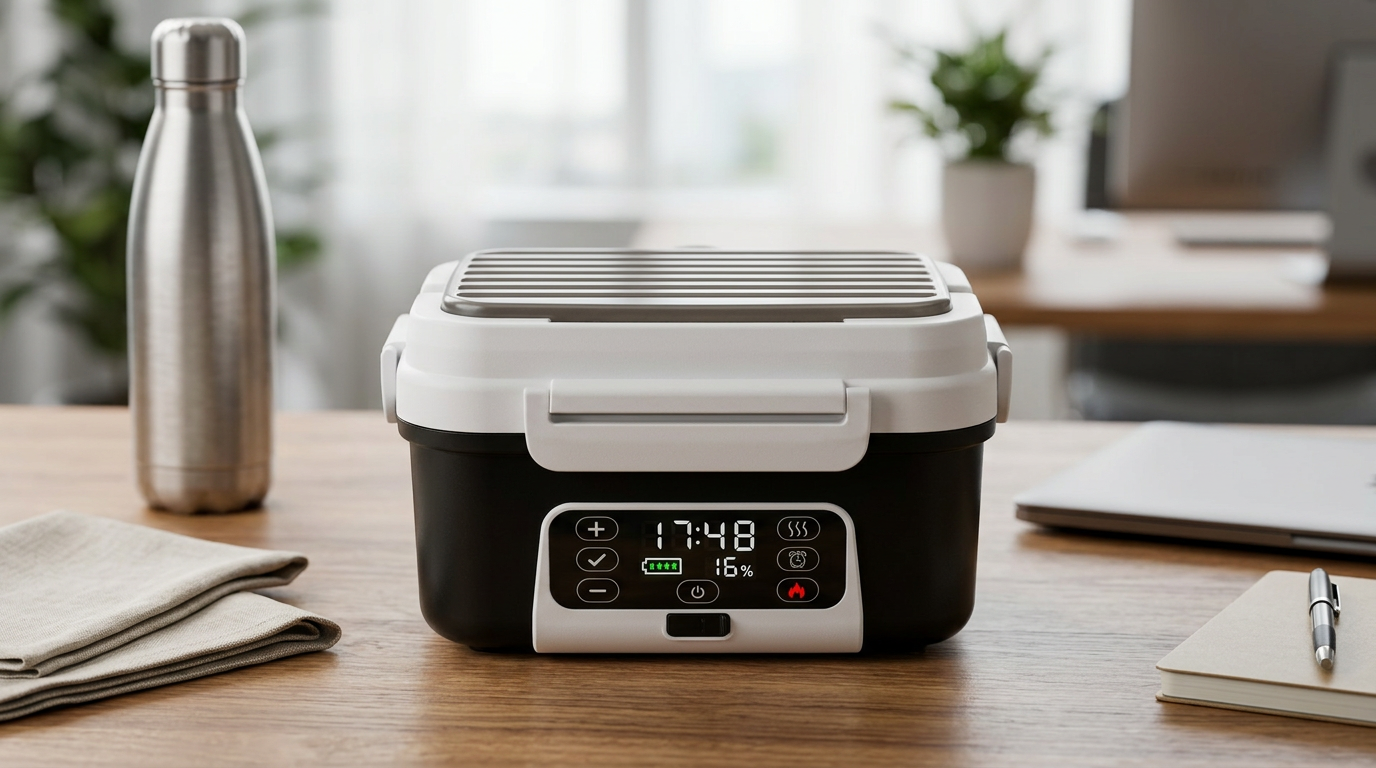
The Drafin Electric Heated Lunch Box is the other cordless model I tested. Drafin lists a 20,000 mAh battery, a 100W heater and a 6.3-cup container.
That's a little more room than the EAST OAK, and I had space for a substantial lunch. If you eat more than average but still want to go cordless, this is the one to look at.
A refrigerated meal heated evenly in about 30 to 40 minutes. The center took longer than the edges, so I stirred thicker food.
Rice and pasta kept their moisture reasonably well. Denser dishes needed that stir to avoid a cool middle.
Not needing an outlet made it easy to use on the move and at places with no socket in reach. Setup was simple, but charging adds a step to your routine.
The food container comes out and was easy to wash. The housing with the electronics only needs wiping.
Heating took longer than I expected for a 100W box. And if you plan to heat more than one meal between charges, keep an eye on the battery.
It came third overall because the EAST OAK did the same job a little better. Still, it's the cordless pick if capacity matters most to you.
- Cordless, with a large 6.3-cup container
- Even heating with a stir
- Easy to wash
- Slower than expected
- Battery limits repeated use
- Center lags behind the edges
Choose this if you want cordless convenience and a bigger portion more than you want speed.
TRAVELISIMO Electric Lunch Box
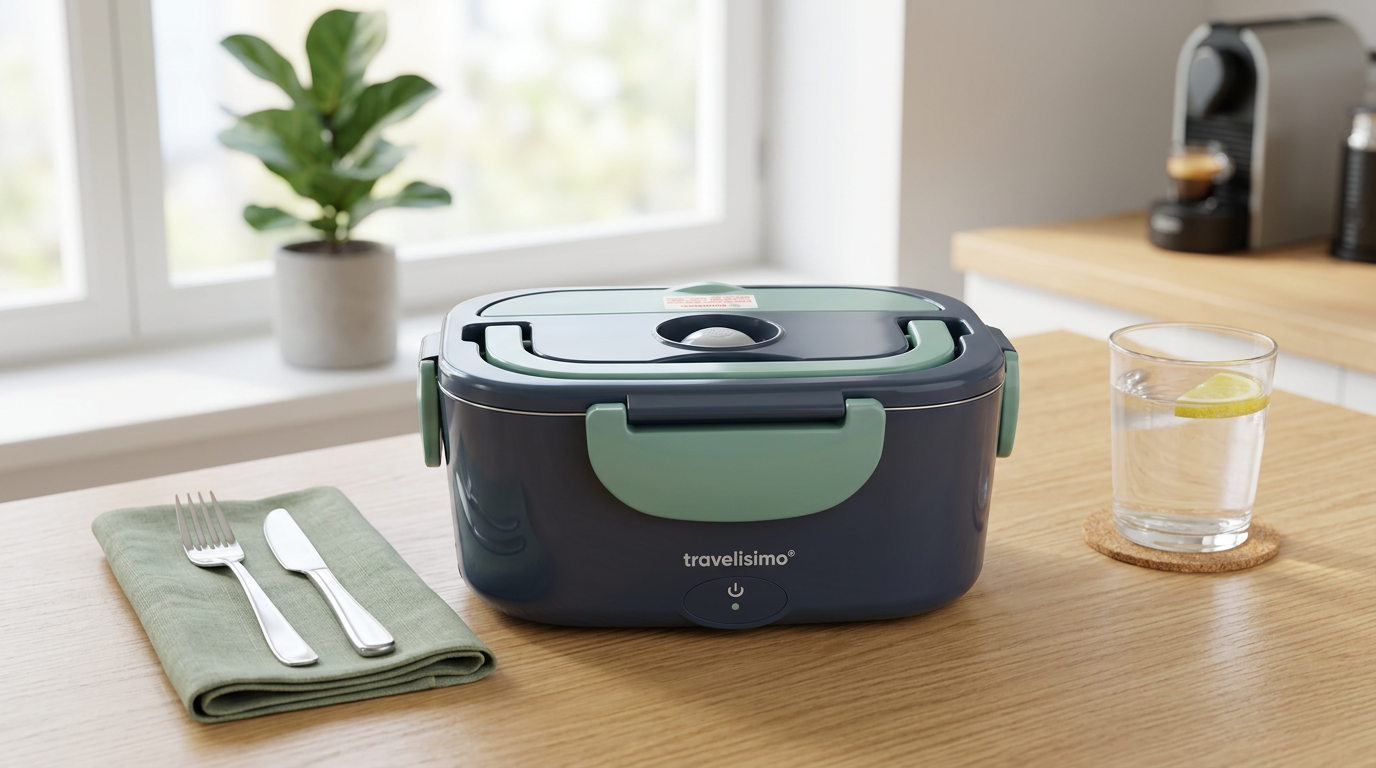
The TRAVELISIMO Electric Lunch Box is made for people who spend the day near a car or a desk. It comes with power options for 12V cars, 24V trucks and a 110V wall socket.
Being able to switch between the car and the office without buying anything extra was the reason it earned its spot.
The heater is rated at 100W, and the main container is 1.5 liters of stainless steel. A separate 0.45-liter container holds a side dish.
A refrigerated meal warmed in about 25 to 35 minutes. Dense foods needed more time.
Rice, vegetables and pasta reheated reasonably well. Thicker portions needed mixing to get the warmth consistent.
The controls are simple, and the extras that come with it were useful. A carry bag is included.
The stainless-steel container lifts out, so washing it was easy.
There's no battery, so it always needs a power connection. And like every box here, it's much slower than a microwave.
- 12V, 24V and 110V power
- Stainless-steel container plus a side container
- Simple controls
- Needs a power connection
- Dense food takes longer
Choose this if you drive for work or always have an outlet at your desk.
Crock-Pot 20oz Portable Electric Food Warmer
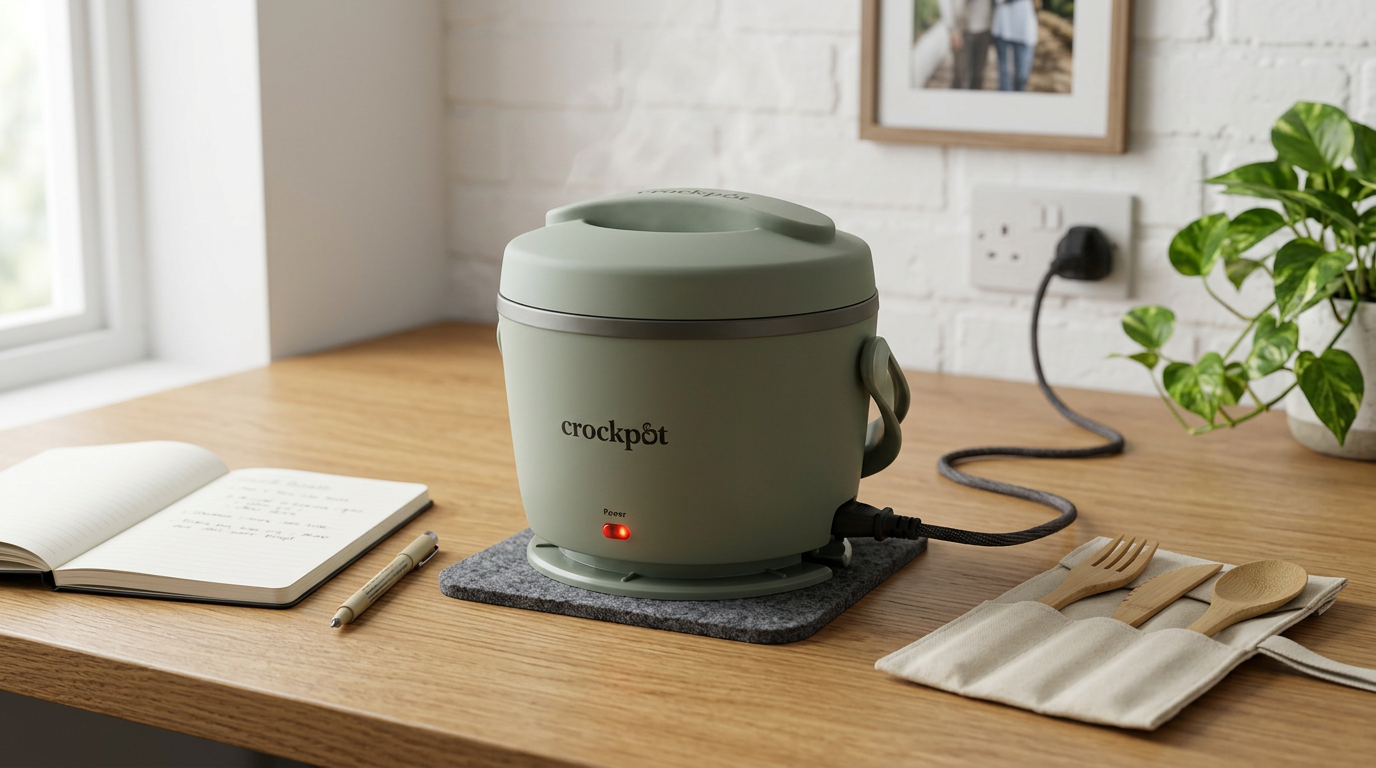
The Crock-Pot 20oz Lunch Crock is the simplest box I tested. You put food in the inner container, plug it in, and wait.
It's small and light, at 1.7 pounds, with a carry handle and a cord that detaches for storage. It was easy to bring to my desk.
Heating is gentle. A small refrigerated portion took about 30 to 45 minutes to warm up.
It shines with soups, stews and pasta with sauce. Dry food was less pleasant without a splash of sauce or water.
The 20-ounce container is the main limit. It worked for a modest lunch, but it felt small if you're hungry.
Cleanup was the easiest of the group. Crock-Pot says the inner container and lid are dishwasher-safe; the outer base just needs a damp cloth.
There's no battery and no car cord, so it only works at a wall socket. Crock-Pot backs it with a one-year limited warranty, the only clearly stated warranty among my picks.
- Very simple to use
- Compact and light
- Dishwasher-safe container and lid
- 1-year warranty
- Only 20 ounces
- Wall socket only
- Dry foods need sauce
Choose this if you eat lighter lunches, love soup, and want something that just works at your desk.
HOLDRUBY Electric Heated Lunch Box
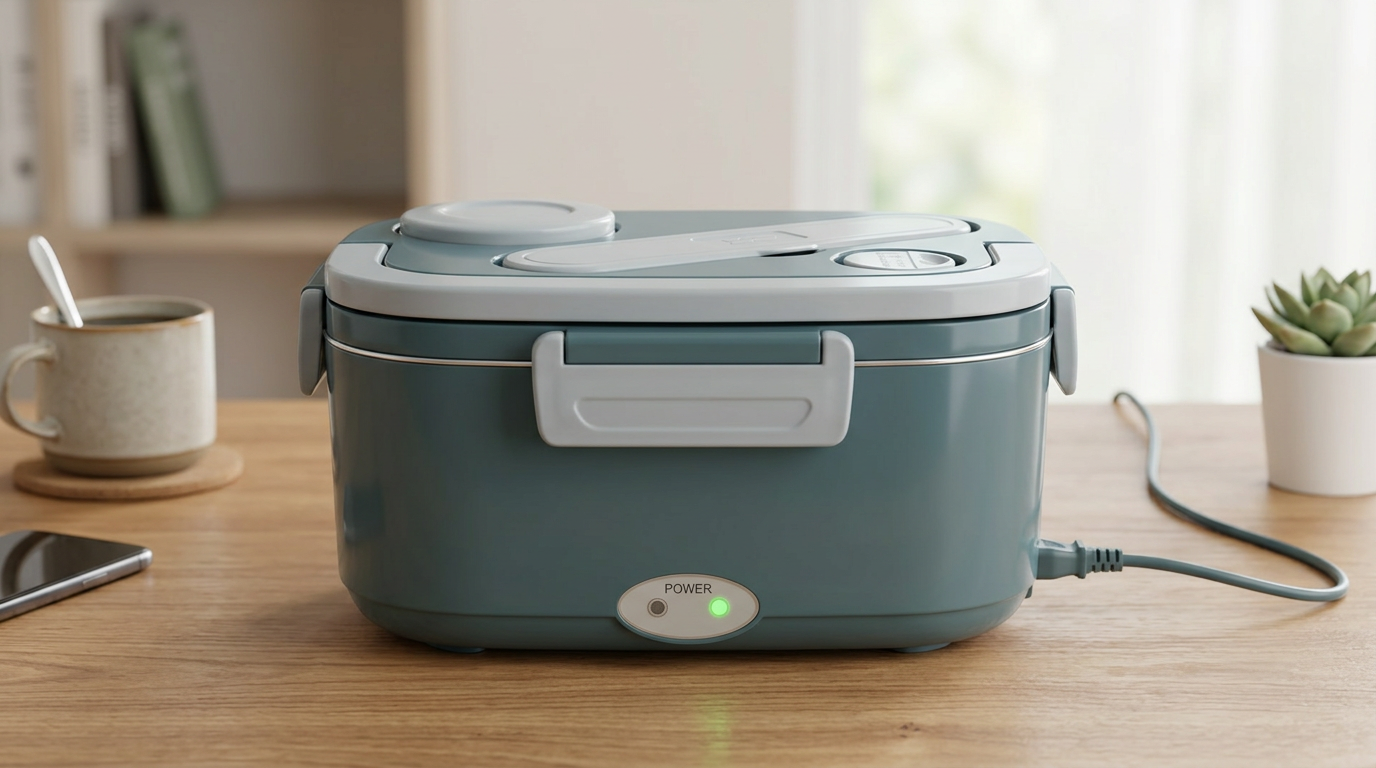
I haven't tested the HOLDRUBY Electric Heated Lunch Box yet. Everything here comes from the product listing, not from my own use.
On paper it looks a lot like the TRAVELISIMO. It has a 100W heater, a 1.5-liter bowl in 304 stainless steel, and a separate 0.45-liter plastic container for a side or sauce.
The listing says it works with 12V and 24V car and truck outlets. A fork and spoon are included.
It's usually one of the cheapest boxes in this group. That makes it worth a look if you drive and want to spend as little as possible.
I can't tell you yet how fast it heats, how even the food comes out or how well it lasts. I'll update this section once I've used it.
- 100W, 1.5-liter stainless-steel bowl
- Extra 0.45-liter container
- Low price
- Not yet tested
- Wall-socket support not clear in listings
- Warranty not stated
What to look for when buying an electric lunch box
Cordless or plug-in
This is the first decision, and it shapes everything else. Plug-in boxes are cheaper and lighter, and they never run flat.
Cordless boxes cost more and need charging, but they work anywhere. In my testing, that freedom is why the EAST OAK won.
Ask yourself where you eat. If it's always at a desk or in a car, plug-in is enough.
Power options
Plug-in models differ in which outlets they support. Cars use 12V, many trucks use 24V, and homes and offices use 110V in the US.
If you split your day between a vehicle and a building, look for a box that comes with cords for both, like the TRAVELISIMO.
Heating time
Every box I tested took 25 to 45 minutes to heat a refrigerated meal. None of them is a microwave replacement for speed.
Plan ahead and switch it on before your break. A scheduled-heating feature, like on the EAST OAK, does that for you.
Dense food takes longer. Stirring halfway helped with every model I tried.
Capacity
Capacities range from 20 ounces on the Crock-Pot to 2.8 liters on the LISHZEN. Most single-container boxes hold about 1.3 to 1.5 liters, which is enough for a normal lunch.
A side container or divider is more useful than it sounds. It keeps sauces, salads and snacks separate from the main dish.
Bigger isn't always better. A larger box takes more bag space and can take longer to heat.
Materials
Look for a stainless-steel food container. It doesn't hold onto odors the way plastic can, and it handles heat well.
If you have a nickel allergy, check the steel grade; common food-grade stainless steel contains nickel.
Cleaning
The food container must come out of the heating base. Every box here passed that test.
Never put the base in water. It holds the electronics and only needs wiping.
Seals and lid grooves catch sauce, so check that the gasket comes out for washing.
My tip: Rinse the container soon after lunch. Sauce and starch are much harder to shift once they've dried on.
Cordless batteries: what the numbers mean
Battery makers don't make comparing easy. EAST OAK quotes its battery in watt-hours (59.2 Wh), while Drafin quotes milliamp-hours (20,000 mAh).
Watt-hours tell you how much energy the battery really holds. Milliamp-hours only make sense alongside the voltage.
Lithium cells usually run at around 3.6 to 3.7 volts. At that voltage, 20,000 mAh works out to roughly 72 to 74 Wh, so the two batteries are in the same ballpark.
Treat that as a rough guide, not a promise. Real runtime depends on how cold the food starts, how much you pack, and whether you use a keep-warm mode afterwards.
In my testing, both cordless boxes handled a normal workday lunch on a full charge. Heating twice before recharging is where you'll need to watch the battery.
Lithium batteries also lose capacity over time. Charge with the original charger, and don't leave the box in a hot car for days.
If you fly, check your airline's rules before packing a cordless lunch box. Built-in lithium batteries usually have to go in carry-on luggage.
Which one fits your day?
The right box depends more on where you eat than on any spec sheet. Here's how I'd match them up after living with all five.
You work outdoors or move around all day
Go cordless. The EAST OAK is my pick, with the Drafin as the choice if you need more room.
Field technicians, gardeners, builders and teachers on yard duty all fit here. You don't have to find an outlet or leave a car running.
You drive for a living
The TRAVELISIMO plugs into 12V and 24V outlets, so it suits both cars and trucks. It also has a wall cord for the depot or home.
Plug-in also means no battery to manage on long shifts.
You're hungry, or you like a proper meal
The LISHZEN has the most space, and the two layers let you pack a main and sides.
Just make sure you have room for it in your bag.
You sit at a desk and eat light
The Crock-Pot Lunch Crock is simple and small. It's ideal for soup, chili or a bowl of leftovers.
If you want a bigger lunch at your desk, the LISHZEN or TRAVELISIMO make more sense.
What to pack, and what to skip
The foods that worked best in my tests were the moist ones. Rice, pasta, stews and soup all reheated well.
Meat and vegetables did fine too, as long as I kept the lid closed so the steam stayed in.
Dry foods are harder. Plain pasta or rice without sauce can dry out at the edges, especially in a small container like the Crock-Pot.
Anything meant to be crispy will come out soft. These boxes heat with gentle, steamy warmth, so fries, breaded food and pizza crust lose their crunch.
Keep salads, bread and fruit out of the heated container. Use a separate compartment or pack them in the carry bag.
Thick, dense portions are the slowest to heat. Spreading the food in an even layer helps it warm through.
Using an electric lunch box in a car
Car use is one of the main reasons people buy these boxes. A few things are worth knowing first.
A 100W heater on a 12V socket draws a little over 8 amps. Most car accessory sockets are fused at 10 to 15 amps, but check your car's manual if you plan to run other gadgets from the same socket.
Some cars cut power to the socket when the engine is off. Others keep it live, which can drain the car battery if you heat for a long time without driving.
Trucks often use 24V sockets. Only use a box that says it supports 24V, like the TRAVELISIMO.
Set the box flat on the floor or a seat where it can't tip over. Don't leave it running in an empty car.
How much does it cost to run?
Very little. A 100W box running for 40 minutes uses about 0.07 kWh of electricity.
At a typical US home rate of around 17 cents per kWh, that's roughly one cent per lunch. Even heating every workday for a year costs only a few dollars.
Cordless boxes cost about the same to recharge. The bigger long-term cost is the battery wearing out after a few years of daily use.
Compared with buying lunch out a couple of times a week, an electric lunch box can pay for itself fast.
How I scored them
Each tested box got a rating out of 5, shown as a test score out of 10 on this page. The score weighs six things I checked with every model.
Heating: how long a refrigerated meal took, and how evenly it warmed.
Food quality: whether rice, pasta, meat and vegetables stayed moist or dried out.
Portability: how easy it was to carry, and where I could actually use it.
Capacity: whether a real lunch fit, and whether sides could stay separate.
Ease of use: setup, controls and, for cordless boxes, the charging routine.
Cleaning: whether the food container comes out, and how much effort washing took.
No box was best at everything. The EAST OAK won because it did well across the board and could be used in more places than any other.
Food safety with an electric lunch box
An electric lunch box sits between the fridge and your plate for hours, so food safety matters.
Bacteria grow fastest between 40°F and 140°F, the so-called danger zone. Food that sits there too long is the problem, not the box itself.
Keep your lunch cold until you heat it. An ice pack in the bag helps if the box will sit for hours before you switch it on.
Food safety experts advise reheating leftovers to at least 165°F. A cheap probe thermometer is the only way to be sure.
Use the box to reheat cooked food, not to cook raw meat or eggs. And once your lunch is hot, eat it rather than letting it cool slowly for hours.
Electric lunch box, thermos or microwave?
| Electric lunch box | Insulated food jar | Microwave | |
|---|---|---|---|
| Starts from | Cold food from the fridge | Hot food from home | Cold food from the fridge |
| Time to hot food | 25 to 45 min | Ready when packed | 2 to 4 min |
| Needs power at lunch | Yes, unless cordless | No | Yes |
| Keeps food hot for hours | Yes, while powered | Food cools slowly | No |
| Queue at work | Never | Never | Often |
| Best for | Rice, pasta, leftovers | Soup, stew, porridge | Anything, if one is free |
An insulated food jar is great if you heat soup at home before you leave.
An electric lunch box is better for rice, pasta and leftovers that you want hot hours later, without the microwave line.
Tips to get better results and make it last
- Add a splash of liquid
A spoonful of water or sauce helps rice and pasta stay moist. Dry food was the weak spot on the Crock-Pot in particular.
- Spread food out flat
A thick mound heats unevenly; a flatter layer warms through faster.
- Stir halfway
Every box I tested heated the edges first. One stir fixes most cold centers.
- Keep the lid closed
Opening it to check lets heat and steam escape, and dries the food out.
- Charge cordless boxes the night before
Make it part of your routine, like charging your phone.
- Keep the base dry
Wash only the removable parts. Wipe the base with a damp cloth.
What I'm testing next
Next, I'll test the HOLDRUBY and add it to the ranking if it earns a spot.
I'll also measure food temperatures with a probe thermometer, and time how many meals each cordless box heats on one charge. I'll update this guide with the results.
Frequently asked questions
How long does an electric lunch box take to heat food?
In my tests, a refrigerated meal took 25 to 45 minutes, depending on the model and how dense the food was.
Can an electric lunch box cook raw food?
None of the models in this guide is designed to cook raw food. Use them to reheat food that's already cooked.
Which is better, cordless or plug-in?
Cordless if you eat where there's no outlet. Plug-in if you're always near a desk or car outlet, since it's cheaper and never runs flat.
Can I use an electric lunch box in my car?
Yes, if it supports 12V. The TRAVELISIMO and LISHZEN worked from my car; the Crock-Pot only works at a wall socket.
Are electric lunch boxes dishwasher-safe?
The removable food containers usually are, but the heating base never is. Crock-Pot lists its inner container and lid as dishwasher-safe.
Which electric lunch box heats fastest?
The LISHZEN and TRAVELISIMO were quickest in my tests, at about 25 to 35 minutes for a refrigerated meal.
How much food fits in an electric lunch box?
It ranges from 20 ounces in the Crock-Pot to 2.8 liters across two layers in the LISHZEN. Most single-container boxes hold 1.3 to 1.5 liters, enough for a normal lunch.
Do electric lunch boxes use a lot of electricity?
No. Heating a meal with a 100W box for 40 minutes costs around a cent at typical US electricity prices.
Can I take a cordless lunch box on a plane?
Built-in lithium batteries usually must go in carry-on luggage. Check your airline's rules before you fly.
Is it safe to leave food in it all morning?
Keep the food cold until you heat it, for example with an ice pack in the bag, and reheat it to 165°F.
- My hands-on tests of five models with refrigerated meals
- Manufacturer and retailer specifications for EAST OAK, LISHZEN, Drafin, TRAVELISIMO, Crock-Pot and HOLDRUBY
- University of Maine Cooperative Extension, lunch box food safety guidance
- First version published, with hands-on tests of five models. HOLDRUBY listed but not yet tested.